
Miami-Dade considers quicker inspections for condo towers in rewrite of 40-year rules
The administration of Miami-Dade Mayor Daniella Levine Cava may rewrite a central part of the county’s safety checks for older buildings with a proposal to shrink the mandated 40-year recertification process to 30 years.
Announced as part of a potential update to county building laws in response to the June 24 partial collapse of the 40-year-old Champlain Towers South condominium complex in Surfside, the shorter recertification window would mean condo and apartment buildings would lose an entire decade of waiting time before mandated inspections for structural safety and electrical problems.
“All processes can stand improvement,” said Lourdes Gomez, Levine Cava’s director of Regulatory and Economic Resources, the agency that oversees the county’s building department.
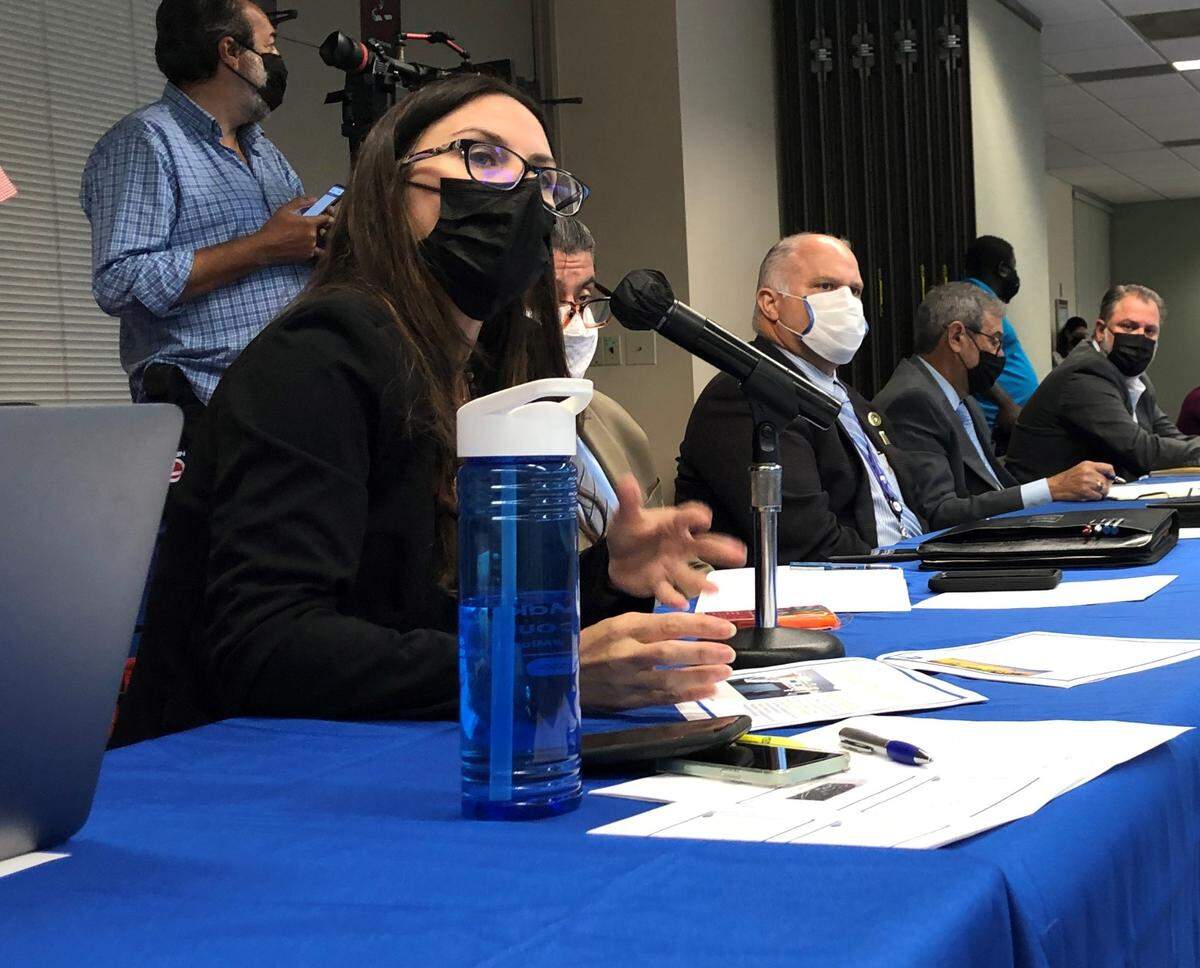
Gomez revealed the proposed change in a presentation during the first meeting of a post-Surfside reform panel led by Levine Cava and Jose “Pepe” Diaz, chairperson of the Miami-Dade County Commission.
The group was created as a forum spanning all levels of government to coordinate legislative changes to improve building safety and condominium law after a catastrophic structural failure that killed 98 people.
“Almost 100 lives were lost in this tragedy,” Diaz said. “And there’s no excuse for it.”
What changes will Miami-Dade make after the Surfside collapse?
Other proposed changes in Gomez’s presentation include: a required two-year notification of a pending recertification requirement, instead of the current 90-day warning; restricting recertification reports to structural engineers for buildings at least four stories tall; and a requirement that buildings obtain a safety certification from an engineer before any extension of a recertification deadline.
Changes would apply countywide, inside and out of city limits. But any rewrite of Miami-Dade’s building laws would require approval by the 13-member county commission.
The commission has a separate committee, led by Commissioner Raquel Regalado, that will be proposing reforms. In remarks after the meeting, Levine Cava stopped short of endorsing the proposal as outlined by her top building official.
Will the 40-year recertification change after Surfside?
“We’re exploring a range of options,” Levine Cava said when asked if she was backing a 30-year recertification requirement for Miami-Dade. “Certainly that is one of the things we’re considering.”
Champlain Towers South had started its recertification process early, with the condo board receiving an engineer’s structural report in 2018 outlining defects that needed to be repaired but providing no indication the building was in danger of failure. The association was in the process of obtaining bids for the repair work when a portion of the 12-story complex fell after 1 a.m. on June 24.
It could be years before a government agency publicly concludes what caused the Champlain Towers collapse. Miami-Dade is largely relying on the National Institute of Standards and Technology, the federal agency that investigated the 2001 collapse of the World Trade Center during the 9/11 terrorist attacks, to discover what caused Champlain Towers to fall.
The top NIST investigator of the Surfside collapse, Judith Mitrani-Reiser, told the panel that NIST will wrap up its evidence collection this week at the Surfside site. After that will come a lengthy comparison of the building’s actual composition, as determined by structural samples, to the original Champlain Towers South design and how all of that compares to various building codes in place during construction.
How long will the NIST Surfside investigation take?
That’s just a part of the NIST probe, which includes an analysis of any underground issues that may have compromised the building, a study of the building materials recovered from the collapse site, and designing a computer model to recreate the Champlain South failure.
“This will not be a quick process,” Mitrani-Reiser said. And while NIST plans to hold regular public meetings on the probe, the findings won’t be released until the investigation is finished — a process expected to last at least two years.
Surfside’s mayor, Charles Burkett, told the panel he wants answers sooner on what caused the Surfside collapse so that governments can make informed decisions on law changes. “The cause is going to drive the solution... Once we know why the building came down, we can zero in on exactly those things we need to do to make sure something like that never happens again.”
What will Florida do about condo reserves after Surfside?
Condominium finances are also a target of the panel. Julio Robaina, a former state representative active in pushing post-Surfside reforms, said he’s expecting the Florida Legislature to tighten condo rules and make it harder for associations to waive requirements for cash reserves to fund recertification repairs.
Larisa Svechin, vice mayor of the coastal city of Sunny Isles Beach, told the panel there are 20 buildings going through the recertification process under the city’s building department. “Each of them is looking at, potentially, a $15 million assessment,” she said. The buildings are “completely filled with people that are living on Social Security.”
Sally Heyman, the county commissioner who represents Surfside, said a federal loan program to cover reserves will be critical to keep condo residents from being priced out of their homes through sudden payment requirements for repairs.
“Without a lot of reserves in place,” she said, “we may create displacement with high assessments.”
This story was originally published August 30, 2021 at 6:45 PM.