
‘Debtors’ prison’: Night court, Zoom could help people with suspended licenses in Miami
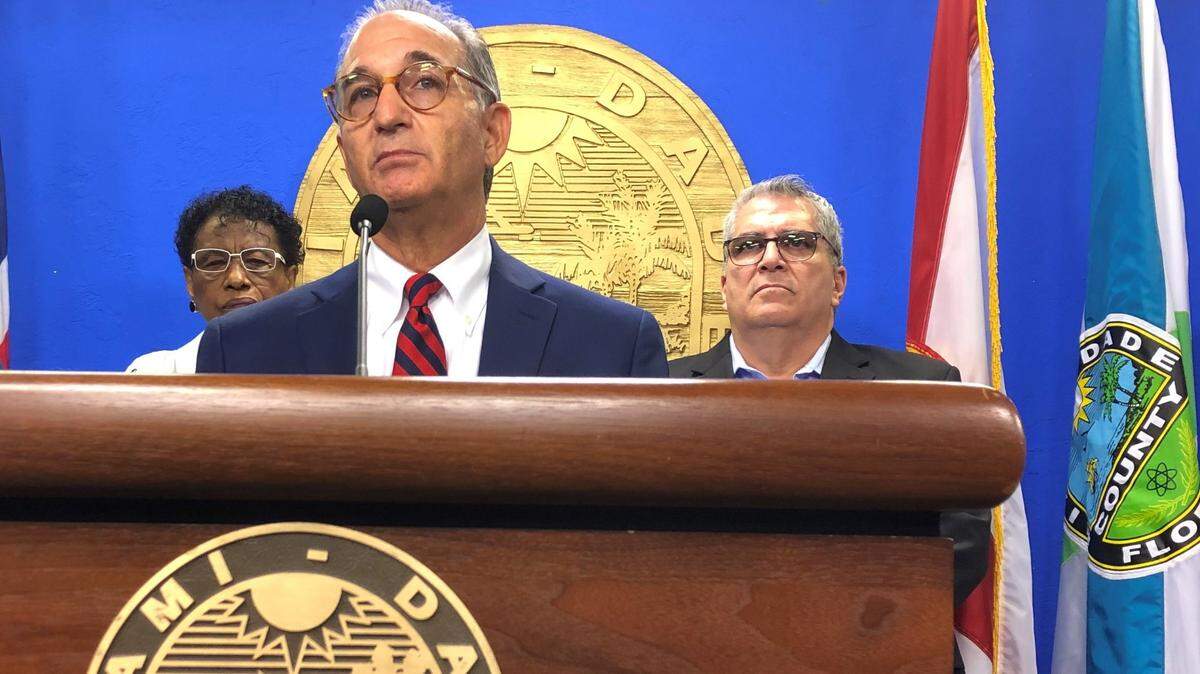
A Miami-Dade County judge wants to reduce a source of so much of the traffic in the courtrooms he supervises: suspended licenses tied to unpaid fines for minor offenses.
“If you ever want to see a grown man cry, come to our court as we’re able to help someone get their license back for the first time,” Judge Steve Leifman said Tuesday during the first meeting of a county task force on suspended licenses. “It’s only because we’re waiving fees. And making it possible for them to get a fresh start.”
A third of Miami-Dade licenses are suspended
In Miami-Dade, more than 630,000 people have suspended licenses, tied to about 1.3 million open court cases, according to statistics provided by Leifman. That means more than a third of Miami-Dade’s drivers have suspended licenses. Most were suspended for unpaid fines that trace back to a ticket for something other than dangerous driving, such as failing to present an insurance card during a traffic stop, a parking citation or failing to pay a toll.
The new task force will look at the cycle generating a cascade of suspensions — where county debt collectors tack on 40% surcharges on unpaid fines and many violators keep driving while suspended in order to remain employed.
Leifman said the traffic magistrates he oversees can occasionally waive fees, but the problem is too large to tackle without changes in the system itself.
“We’ve created a debtors’ prison,” said Leifman, an administrative judge with the county’s courts system. “That’s really what we have done. It really puts people into a spiral.”
The task force includes a seat for the county’s police chiefs association, public defender and prosecutors office, as well as for the court clerk’s office responsible for ticket processing and fine collections.
Can Miami-Dade reduce suspended licenses?
The first meeting was mostly a discussion of the breadth of the suspension issue, but some potential fixes were mentioned. Those included:
- Making traffic court more accessible by extending the pandemic practice of online proceedings, and extending hours into the evening and on weekends.
- Court notices that are texted, rather than only sent through the mail.
- Redesigned tickets that make it clearer what’s next in terms of court options and locations.
- Amnesty for some unpaid fees.
Most of the rules involving license suspensions are set in Tallahassee. That includes a law that allows “hardship” licenses letting people drive to work after a drunken-driving citation but denies them for people with a license suspended over unpaid fines, according to a presentation by Ker-twang, an anti-poverty consulting firm in Miami.
Florida law also allows 40% fees by collection agencies the local court systems hire to collect unpaid fines.
“If you have money, it’s almost certainly the case you’ve never had a license suspended for more than five or six years,” Harris Levine, a partner at Ker-twang, told the task force.
Ker-twang cited data from the Fines & Fees Justice Center showing that in 2017 more than 250,000 suspension notices went out in Miami-Dade, but only 2,232 were connected to what the non-profit considers “dangerous driving,” such as drunken driving and reckless operation of a vehicle.
Suspensions can last for more than a decade, as back fines pile up and violators rack up more offenses for driving illegally.
“Most of these people had their driver’s license suspended not because they were terrible drivers. But because they were having trouble paying their fines,” said Commissioner Eileen Higgins, sponsor of the legislation that created the panel. “We have a system in place that punishes people further simply because they’re poor.”