Chauvin conviction won’t itself change policing. For many, the fight just began
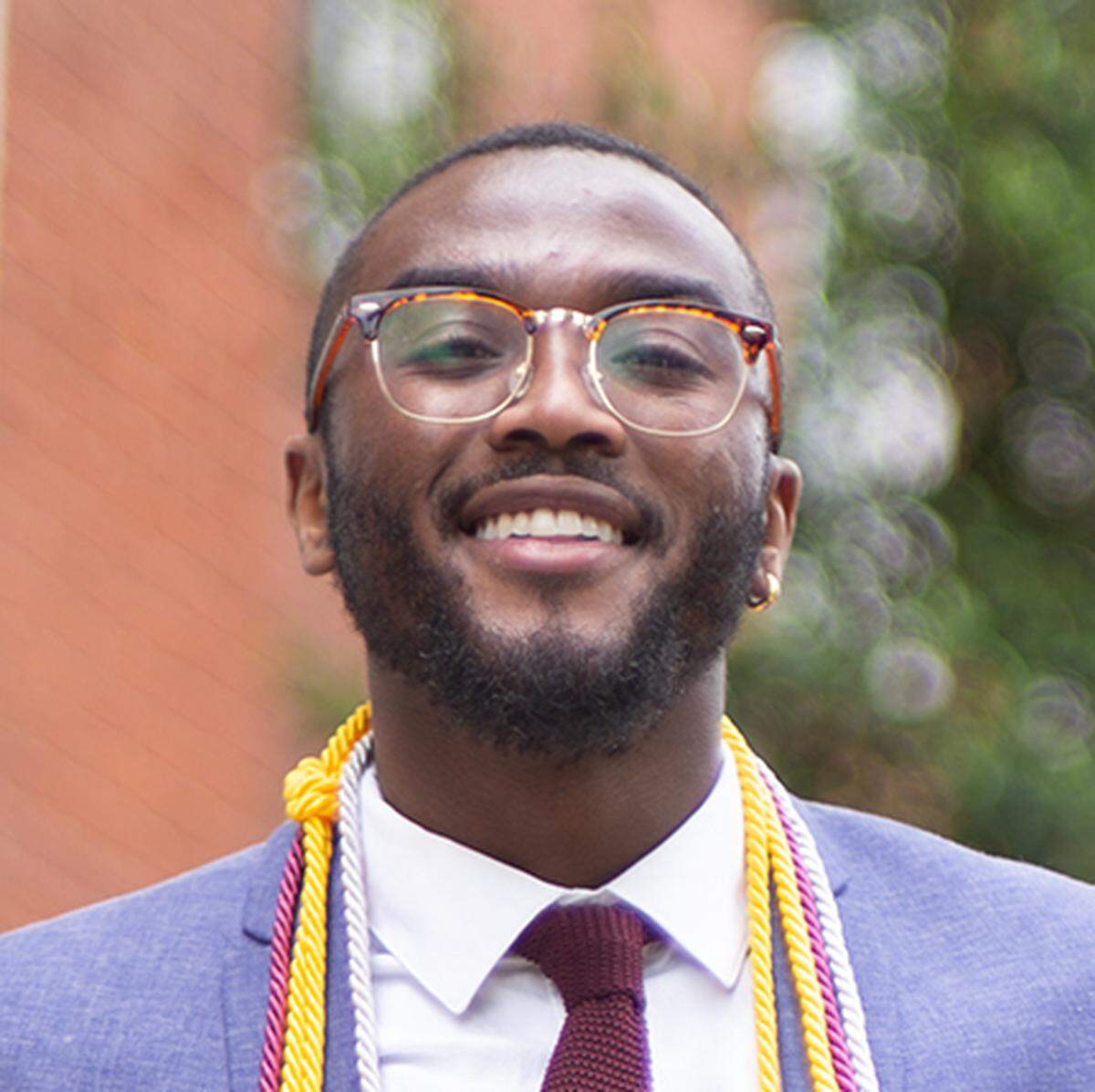
Ashley Toussaint was just 8 years old when he felt the sting of handcuffs around his wrist for the first time.
Upset at Toussaint and his brother, a neighbor called the police, who quickly wrestled the second-grader into the back of a squad car while he watched officers put a gun to his brother’s head. Two subsequent run-ins with police — one at age 13 and another at 26, both of which he described as “walking while Black” — ended with him spending a total of four nights in jail.
In Toussaint’s view, such incidents are far too common among Black Americans to expect that they will end any time soon — despite Derek Chauvin’s conviction.
Many police, he said, have “a fear of the Black body,” Toussaint, now 40 and a teacher at KIPP Miami as well as owner of Toussaint Immigration & Consulting. “... One trial is not going to change the way they look at us.”
Other Black South Floridians said they felt cautiously optimistic after a jury found Chauvin guilty of second-degree murder, third-degree murder and manslaughter on Tuesday. But while the verdict was a deviation from the norm — most police involved with shootings don’t end up fired, let alone convicted — it does not solve America’s race problem, they said. Several pointed to Florida’s recently passed HB 1 “anti-riot” bill that has already raised First Amendment concerns.
“What happened to Chauvin was accountability for a murderer,” said Valencia Gunder, an activist and treasurer of The Black Collective. “But the call for defending Black lives, the call for Black Lives Matter is [seeking] transformational change. We’re looking for justice for all of the tens of thousands of people who the police have murdered in the United States.”
Gunder pointed out the timing of Chauvin’s verdict and that of another fatal police shooting in Columbus, Ohio, of 16-year-old Ma’Khia Bryant.
There’s “an issue with the entire law enforcement institution in America,” she said.
The failure to convict in cases of violence against Black people has left her distrustful, Gunder said, naming perpetrators including George Zimmerman in the 2012 killing of Trayvon Martin; Darren Wilson in the 2015 killing of Mike Brown; Jeronimo Yanez in the 2016 killing of Philando Castile. Before Chauvin’s verdict, she feared yet another instance of Black death unpunished, she said.
“My heart breaks every single time because they find a loophole and they make an excuse for murder.”
Prepping for an acquittal, she even watched Chauvin’s verdict announcement with her sneakers on, a sign of her readiness to hit the streets. The new HB 1 law was an afterthought.
“Honestly, we were most likely going to be met with all of the force because you know the only time [police] don’t meet people with force is when they do an attempted coup with their Trump 2020 shirts on,” Gunder said, referencing the Jan. 6 Capitol riots.
Even Marlon Hill, an attorney at Weiss Serota Helfman Cole & Bierman, P.L., doubted whether Chauvin would be convicted. The prosecution’s argument was sound but that minimal amount of “distrust in our legal system” still crept into his psyche, he said.
“Even though my lawyer brain said it was a guilty verdict, my layman citizen heart had that 1% shadow hanging in the horizon,” Hill admitted.
Hill draws a line between accountability and justice. In his view, the trial shifted the bar in terms of accountability of what society deems as acceptable behavior from police. The verdict, however, wasn’t exactly justice, he said — though he does view it as progress.
“Justice takes more than one case to happen,” Hill explained. “It takes the transformation of a culture, of a society.”
‘What is real change going to look like?’
When Carole Ann Taylor, 76, first heard the verdict, her mind went to one person: Emmett Till. Taylor was still a little girl when two white men kidnapped Till and brutally beat the 14-year-old to death in 1955. She considered Chauvin’s conviction “retribution” for Till, whose assailants were never convicted — so much so that she even felt empowered.
“The victory has given Black people a sense of encouragement,” said Taylor, retailer and founder of Miami Gifts To Go. She added that these type of wins “bring people together and take them to the next level.”
What to do with this collective power is to push for more change, Gunder said.
“It is time for America to start having another conversation about public safety,” she said. “It is time for America to reevaluate its principles and its foundation as it relates to how it treats Black people, people of color and under resourced populations.”
Whether America is ready to have that conversation is another issue, said Harold Ford, the NAACP Florida State Conference area director for Miami-Dade and Monroe counties. Ford singled out textbooks that preach American exceptionalism instead of the uninhibited truth, or “the good, the bad and the ugly” as he called it, about the country’s history. Adjusting what’s taught in schools might help spur an awakening of the next generation — though it might be too late for their parents, Ford said.
“What is real change going to look like?” he asked. “It’s going to be ugly because you’re going to have a large segment of the population who’s not going to be willing to accept it.”
Recent history has shown that some of those fighting acceptance work in law enforcement. But City of Miami Police Sgt. Stanley Jean-Poix insists that the Chauvin verdict could help weed out some of those rogue officers.
“Racism is taught. It’s a deeply ingrained mind-set,” said Jean-Poix, who also serves as president of the predominately Black Miami Community Police Benevolent Association. He added that the trial emphasized that rogue officers will be “held accountable for their actions” and “they just shouldn’t be a cop.”
Ford is concerned that while Chauvin’s guilty verdict was a move in the right direction, the Black community could fall into complacency. “I don’t want people to get so emotionally tied to this that we let our guard down and stop fighting,” he said.
Legislation like HB 1 could make that fight a bit more difficult. The law, which Gov. Ron DeSantis signed the day before Chauvin’s guilty verdict was announced, enacted stiffer penalties for protesters who act “violent.” Destroying “historic property” is now a second-degree felony with a maximum sentence of 15 years, drivers being able to escape culpability if they mow through a crowd, and an inability to post bail until after a first court appearance are just a handful of the bill’s elements.
“HB 1 is against everything America stands for,” Gunder said. “America wouldn’t be America without freedom of assembly [and] free speech.”
Said Jean-Poix: “You can tell it’s targeted at one particular group: African Americans and Black Lives Matter protesters.”
Ford warns that the new HB 1 law could worsen the Black community’s relationship with the police.
Toussaint is a big fan of community policing, in which officers embed themselves in the areas which they serve so both residents and police see each other as neighbors rather than adversaries. He likes how many European countries handle policing, with an emphasis on de-escalation and the average officer unarmed.
Although the constitutionality of HB 1 has already been challenged in court, Toussaint has little faith in policy changes as the answer to police brutality. A core issue, he says, is some officers’ incapacity to see him and people who look like him as human.
“That’s the way the system is set up; it doesn’t allow them to see us as human,” Toussaint said. “… We need to bring humanity to the institution of law enforcement.
“If they don’t want to do that, then every time a cop sees a Black person, they’re going to be triggered,” Toussaint said. “And when a Black person does something anybody else would do, it’s always gone be a threat.”