
Clash of Miami-Dade toll boards: GMX ready to take over 836 and more, defying county
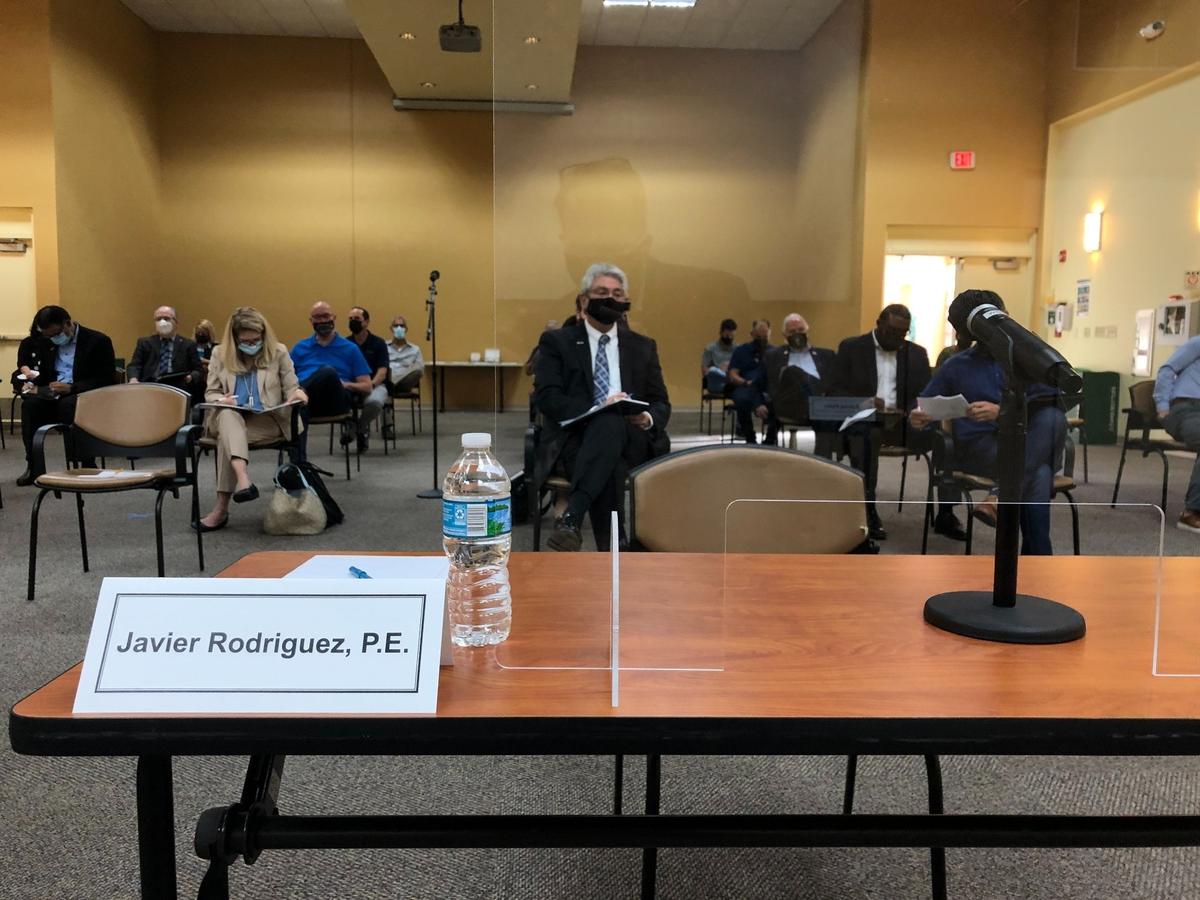
.jpg "The court battle over MDX, the agency that operates Miami-Dade’s expressways and collects tolls for using them, continues as the replacement agency created by Florida law in 2019 held its first board meeting on Friday, April 9, 2021.")
The power struggle over Miami-Dade’s toll highways escalated on Friday when appointees of Gov. Ron DeSantis held their first meeting as a new toll authority to replace the Miami-Dade Expressway Authority, an independent board that has run State Road 836 and other tolled highways since the 1990s.
Friday’s meeting at the Miami-Dade office of the Florida Transportation Department marked the formal launch of the “GMX” nearly two years after the Greater Miami Expressway Authority was created by state law to replace the Miami-Dade Expressway Authority, best known as “MDX.”
MDX and its backers in Miami-Dade government fought the law, which gives Tallahassee veto power over how some toll money is spent in Miami-Dade but would otherwise shift control of five expressways from one appointed board to another.
And MDX, formed in 1996 to take over Miami-Dade toll roads, is still fighting to keep alive its litigation against the 2019 law that would dissolve the agency and replace it with GMX.
A recent appeals ruling tossing the lawsuit gave the DeSantis administration an opening to call the new agency’s first meeting. While the law automatically shifts MDX staff to GMX control, MDX management skipped Friday’s session, citing the ongoing litigation.
“It’s a little disappointing the staff didn’t show up for the meeting,” Rodolfo Pages, a DeSantis appointee to the GMX board, said as he looked at two empty tables with nameplates for MDX director Javier Rodriguez and the agency’s general counsel, Carlos Zaldivar. “We’re here in good faith to learn as much as possible that we can about the issues.”
‘A bizarre situation’
Sponsored by two Republicans in Miami-Dade, Rep. Bryan Avila of Miami Springs and Sen. Manny Diaz Jr. of Hialeah Gardens, the law at the center of the dispute rewrites who controls the five MDX expressways and the more than $200 million in toll revenue they generate each year.
It passed just as the prior MDX board was pursuing a $1 billion extension of State Road 836 into West Kendall, a project supporters said would die if the new board took control under the new law’s requirements for potential toll rebates and other changes. The law also gives the Legislature’s budget commission the ability to reject bond agreements to fund GMX projects by borrowing against future toll revenue.
DeSantis controls four of the nine GMX board seats, with the power to appoint three members and an administrator of his Transportation Department holding a fourth.
That leaves five appointed locally: two by the Miami-Dade County Commission and three by the Transportation Planning Organization, a board where the commission controls a majority of the seats. That’s a similar arrangement to MDX’s governance, where the governor fills four seats and the county commission fills five.
Ever since DeSantis signed the GMX bill into law in July 2019, county leaders and MDX staff have worked against the dissolution of the toll agency. Commissioners declined to fill any seats, a move opponents of the bill hoped would rob a new GMX board of the quorum needed to conduct business. On Friday, the GMX board members opted to move ahead, saying a quorum of the filled seats was present.
The only motion passed was for GMX to hire its own lawyer if Zaldivar declined to represent the new agency.
Hours before the 9 a.m. meeting began at the Transportation Department’s Sweetwater offices, Eugene Stearns, the Miami lawyer representing MDX in the anti-GMX litigation, released a statement calling the proceedings a “show” involving “an agency that only exists through the unconstitutional act of rogue legislators.”
Stearns said he plans to appeal MDX’s recent loss to the Supreme Court, and he’s also urging Miami-Dade itself to file suit to block the GMX takeover. The First District Court of Appeal ruled March 31 that MDX didn’t have legal standing to sue the Transportation Department to block enactment of the law.
The situation made an easy target for GMX board members.
“Are you saying they’re continuing to spend our money to continue to try and eliminate this board?” GMX board member Marili Cancio asked a Transportation Department lawyer involved in the case. The lawyer, Jason Gonzalez, confirmed that was the case.
“It is a bizarre situation,” he said.
This story was originally published April 9, 2021 at 2:49 PM.