‘Ghost kitchens’ are popping up in Miami parking lots. More could come under new law
Zavier Bolton and Chardae Barnes came to Brickell looking for a restaurant and wound up eating in a parking lot.
The couple, visiting from Atlanta, found the restaurant Man vs. Fries listed on the Grubhub delivery app and wandered into Miami’s Manhattan, past high-rises, looking for it. They spotted what looked like a food truck rally next to the Metrorail, in the back of a full parking lot.
“We thought it was in one of the buildings across the street. Then we saw the trucks,” Bolton said.
Food trailers, humming with power generators and roof-mounted air conditioners, lined the U-turn end of the parking lot at 1324 SW First Ave. Delivery drivers on scooters, e-bikes and cars zipped between them, picking up food orders from trailers that listed several restaurant names. The couple ordered from their app and ate French-fry-stuffed burritos at wooden picnic tables on green artificial lawns as Celia Cruz played overhead.
More parking lots could soon host mobile kitchens like this one, after city of Miami commissioners passed a new ordinance brought by Mayor Francis Suarez to create formal regulations for these so-called ghost kitchens. Unanimously approved Thursday, the legislation creates a yearlong pilot program championed by the Miami-based, billion-dollar technology and real estate company, REEF Technology, that owns or leases many such lots and operates the kitchens.
REEF is already running these pop-up eateries at 15 Miami-area locations while operating in a somewhat gray area — the kitchens have business licenses and health permits but, prior to the creation Thursday of the city’s pilot program, Miami’s zoning code didn’t explicitly set out where they can operate.
In a city of sky-high rents and stubborn red tape, proponents see ghost kitchens as low-cost expansion opportunities for up-and-coming restaurateurs, and the future of dining at a time when people have become accustomed to ordering their food on apps and eating at home.
But critics worry this approach could bring a nuisance to lots near residential areas. And they say its fast, unwieldy growth could further disrupt the restaurant industry in a hospitality-driven city that’s still recovering.
“I don’t know if this is the best thing in the world or the worst thing in the world,” said downtown businessman Gary Ressler, a board member of Miami’s Downtown Development Authority.
The law, believed to be the first of its kind in the United States, creates the code to officially allow these pop-up kitchens on vacant land in certain zones. REEF works with independent food businesses to create delivery-only food concepts that are cooked in trailers at these sites by REEF employees and delivered by companies like Postmates and Uber Eats — but have no storefront.
“This policy framework is like nothing done in any other city before, so yeah, we’re championing it,” said Mason Harrison, REEF’s head of communications. “We’re full-throated supportive of it.”
And this could be just the start: REEF officials want these unused parcels of land — some as tiny as unpaved wedges between buildings — eventually used for everything from kitchens to storage of retail items that could be shipped to shoppers in hours.
REEF also wants Miami residents and commissioners to see the promise of these vacant parcels of land as locations for 5G towers, computer server farms, solar arrays and delivery-only grocery stores — even as a place to set up health clinics in shipping containers.
“It’s rethinking the use for these vast swaths of under-utilized space,” Harrison said. “We are trying to think of new uses for this real estate.”
Forward-thinking or ‘unfair’
The pilot program only permits the kitchens on commercial lots in neighborhoods such as Allapattah, Wynwood, Liberty City and Coconut Grove.
Still, some commissioners said they worry mobile kitchens will get an unfair advantage over small local businesses who weathered more stringent permitting, licensing and inspections for brick-and-mortar locations with greater overhead costs.
Commissioner Manolo Reyes, whose district wouldn’t be affected, said he thinks an expansion into retail is even more worrisome, especially if it allows national brands to edge out mom-and-pop retailers.
“They want the ability to serve as a little store, and I’m totally opposed to it,” Reyes told the Herald prior to Thursday’s vote.. “In my opinion, it’s unfair competition to the brick-and-mortar businesses who have paid for permits and invested.”
After REEF stopped pursuing the sale of sundries for the pilot, Reyes on Thursday softened his stance and supported the mayor’s proposal.
Others are more bullish and see the potential for pop-up kitchens to partner with local restaurateurs to expand their reach, even if it’s not clear how the sites might impact areas next to residential neighborhoods. Commissioner Ken Russell, one of the ordinance’s sponsors, said REEF’s model is interesting but city leaders should keep eyes and minds open during the pilot.
If the idea were to later expand the way REEF executives want, mini-logistics hubs could spring up in areas where property owners would have a right to cry foul. A Chicago neighborhood has already encountered traffic problems after a brick-and-mortar ghost kitchen facility opened up in a mostly residential neighborhood. The California-based company operating there, CloudKitchens, bought property in the Miami area last year and is eyeing expansion in several U.S. cities, according to the Wall Street Journal.
“I think about quality of life and traffic,” Russell said. “If they create some sort of logistics network in a residential neighborhood, that’s an issue that we need to address.”
The expansion of ghost kitchens fits neatly into Suarez’s pro-business, pro-tech agenda. The mayor, who does not have a vote under Miami’s system of government, recently championed REEF’s launch of self-driving delivery robots in downtown.
Suarez also has ties to one of REEF’s top investors, SoftBank. In January, SoftBank executive Marcelo Claure partnered with Suarez to promote the conglomerate’s $100 million Miami startup initiative. Claure is also part owner of Inter Miami CF, the city’s Major League Soccer franchise that is seeking to lease a city-owned golf course to develop a $1 billion commercial and stadium complex for the soccer team. Suarez is a major proponent of the idea.
Millionaire Ghost kitchens
It’s easy to see why REEF is attracting everyone from aspiring business owners to established restaurateurs like James Beard award winners Michelle Bernstein and Michael Schwartz, who have each signed on for a new delivery-only concept.
REEF’s network of hundreds of parking lot kitchens allows a local brand name to expand quickly to more than 40 markets across the country, including Seattle, Portland, Austin, Chicago, Las Vegas and Miami.
William Bonhorst’s San Francisco-based Man vs. Fries went from 15 REEF kitchens in September to 101 this month.
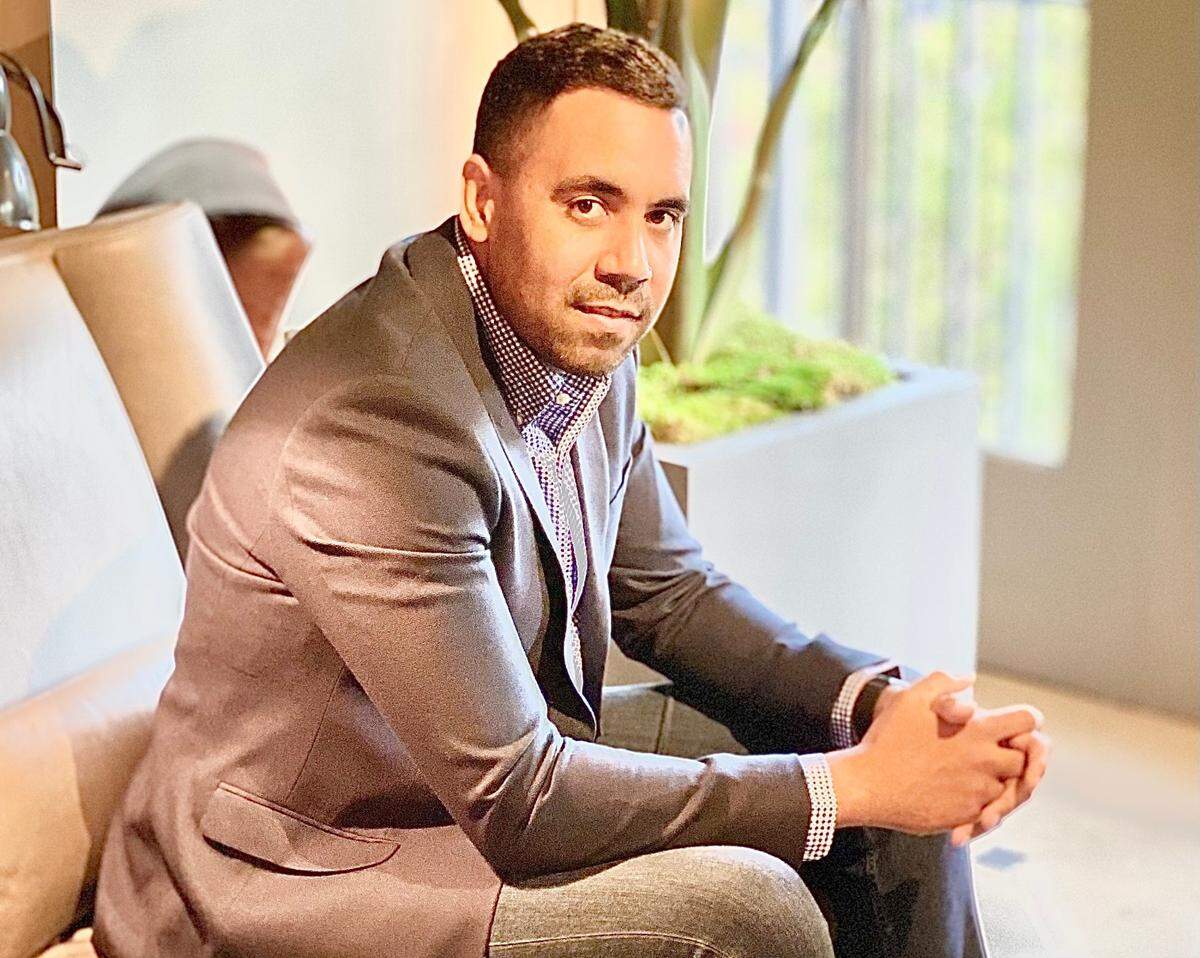
“We’re a $50 million company that wants to be a $100 million company,” Bonhorst said.
Outsourcing the work to REEF, he says, helped his company grow exponentially.
“I’m a small, Black-owned business. The small guy can still make it in this space and that was unheard of two years ago. That just didn’t happen in the old school model of brick and mortar,” Bonhorst said.
REEF covers the cost of everything from food and employees to marketing and coordinating with delivery services like Uber Eats and Door Dash. Kitchen staffs are full-time employees of REEF and are offered vacation time, health insurance, even paternity leave. REEF recently set out to hire 250 new cooks in Miami — at a time when restaurant workers are scarce.
For this, REEF takes a portion of gross sales, a sort of licensing deal.
That was good enough for Schwartz. He tried running a ghost kitchen, Genuine Deli, out of the kitchen of his landmark 12-year-old restaurant in the Design District, Michael’s Genuine, last year. It was too much to coordinate.
So Schwartz outsourced the work to REEF and created a burger concept, Genuine Burger. He created the menu item, taught the REEF kitchen how to make it, then turns over his name and brand to REEF.
“You try to find somebody that won’t ruin your brand,” Schwartz said. “I care about my reputation.”
That’s the point where critics say things can go wrong. Each parking lot kitchen might be cooking food from as many as six different restaurants, preparing sushi, burgers, and chicken parmesan in the same place.
And with more than 100 kitchens across the country, quality can vary greatly without the original owner onsite. That’s why Bonhorst has made it his full-time job to regularly visit all 101 kitchens that are making his menus rather than “set it and forget it.”
He thinks, as people got used to ordering delivery during the pandemic, that REEF’s mobile kitchens will become the new face of fast food — regardless of where the meal was cooked.
“The only thing that matters is, ‘Did I get the food on time and was it good?’ ” Bonhorst said. “People aren’t necessarily concerned about where it came from.”
This story was originally published April 21, 2021 at 6:00 AM.