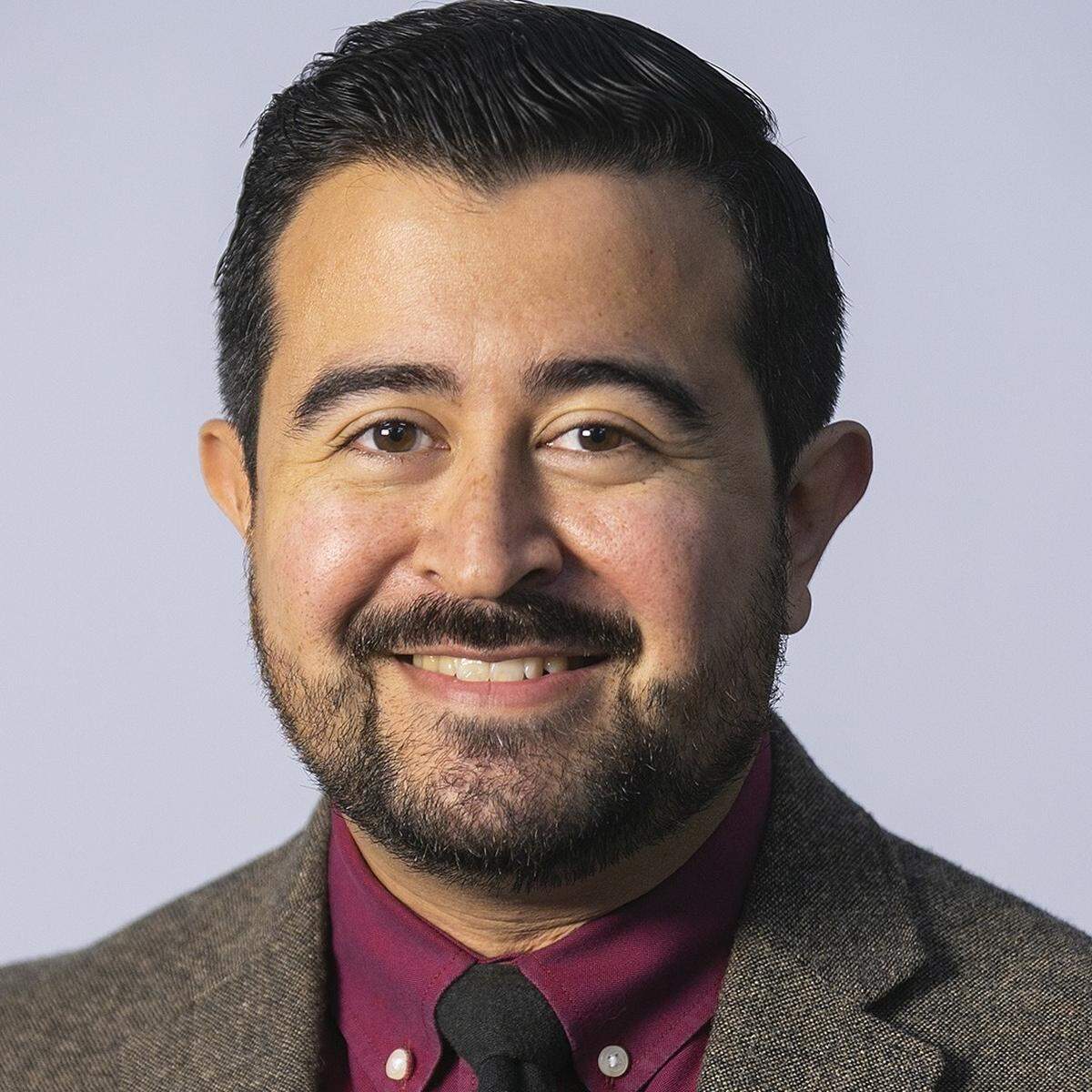
Mayor tells president in White House summit that Miami is ready for more vaccines
Representing a metropolis hit hard by the pandemic, Miami Mayor Francis Suarez told President Joe Biden during an invite-only White House summit on Friday that his city is ready to dramatically increase the number of vaccinations administered if the federal government can provide the shots.
Suarez, among a bipartisan group of mayors and governors who met with Biden in the Oval Office, encouraged the new president to forge a more direct relationship between Washington and the Magic City when it comes to vaccine distribution and federal dollars for relief programs. Suarez said his administration is helping to vaccinate at least 7,000 people per week at Marlins Park, a number Miami officials estimated could jump to 45,000 vaccines a week at various city sites, if only the supply were there.
“From my perspective, the fact that we have the capacity to do three or four times the amount of vaccinations of that we were doing is important,” Suarez told the Miami Herald before boarding a plane back to Miami.
Miami, like other cities, has received millions in federal stimulus dollars and thousands of vaccine shots to administer, but has had to rely on the state of Florida to act as a pass-through after previous aid packages limited direct aid to most cities. A $1.9 trillion COVID stimulus package pushed by Biden, called the American Rescue Plan, would provide funds to cities and states.
Suarez, a Republican, was invited to discuss the proposed stimulus package with a Democratic president trying to reinforce his campaign promise to govern for all of a fractured America. Suarez was joined by Atlanta Mayor Keisha Lance Bottoms, Maryland Gov. Larry Hogan, New York Gov. Andrew Cuomo and others, and spoke to reporters during the daily White House press briefing along with Detroit Mayor Mike Duggan.
Suarez was one of four Republicans in the delegation with four Democrats. Another Republican, Arkansas Gov. Asa Hutchinson, told reporters after the White House meeting that he thought the $1.9 trillion cost of Biden’s plan is too high, and a compromise with Republicans could bring relief faster.
“I agree with the urgency of it, but the urgency can be accomplished just as quickly with compromise,” Hutchinson said. “I think it sets a bad precedent to ram that through on a partisan vote.”
Suarez, a vice president of the U.S. Conference of Mayors, said the conversation was “very positive.”
“I have great hope that we can pass this legislation to benefit not only Miami residents but all of the residents of the United States,” Suarez, who is Cuban American, said in Spanish from the briefing room lectern.
Suarez, elected mayor in 2017, said it was an “incredibly spirited conversation” and called it “wonderfully productive.” He said he has already spoken more to Biden and Vice President Kamala Harris during their first month in office than he did the Trump administration in its entirety.
Suarez told the Miami Herald that he also used his face time with White House staff to ask whether federal officials were discussing the possibility of imposing domestic travel restrictions. McClatchy and the Miami Herald reported earlier this week that the White House and Centers for Disease Control and Prevention were considering all of their options to help slow the spread of variants, which appear to be surging in states such as Florida and California.
“There are active conversations about what could help mitigate spread here, but we have to follow the data and what’s going to work,” a White House official told McClatchy.
The mayor said he was told “the president has no intention of changing any domestic restrictions.” White House Press Secretary Jen Psaki echoed the assertion during her press briefing, stating that reports the administration intends to impose new restrictions such as testing on domestic flights are inaccurate.
Suarez’s Oval Office visit — his first, he said — was the latest high-profile event for a mayor whose national profile is rising during a reelection year.
The meeting was also a potentially big moment for Miami.
Though the state and county have largely assumed the role of providing vaccines and relief programs, Suarez has tried to steer more aid directly to his city government, which has mounted its own rental, mortgage and food assistance programs. Direct shipments of vaccines would ostensibly allow Miami to leapfrog Gov. Ron DeSantis, a Republican whom Suarez has criticized for limiting cities’ power over local commercial and mask-wearing regulations. Dozens of mayors from across the U.S. have asked Biden’s administration to send vaccines straight to them to speed up inoculations.
If Miami received direct aid, federal dollars would also skip the administration of Miami-Dade Mayor Daniella Levine Cava, Miami-Dade County’s highest-ranking Democrat who in November became the first woman elected as county mayor and the first Democrat since 2000.
Suarez noted that Miami fell just under a 500,000 population threshold that would have directed $80 million to the city instead of the $8.5 million the city received from the CARES Act in the fall. The city received another $15 million in January under the stimulus package Congress approved in December.
“The people of our city and of America are still hurting,” Suarez said. “We need this assistance to get through until the vaccine has gained wide acceptance.”
While making the case for direct payments to City Hall, the mayor referenced a fight over federal aid last year in Miami-Dade County.
The county received almost $1 billion from the CARES Act last year. About half the money came tied to specific government functions such as Miami International Airport and the transit system. The remaining $474 million was left open-ended for local governments to cover coronavirus-related costs and offer direct aid to struggling residents.
Political leaders from Miami-Dade’s cities sparred with County Hall over how to split up the federal aid — and who gets to take credit for handing it out. County officials have set up several separate programs directed at county residents.
Regardless of where it comes from, South Florida agencies working on the front lines of an economy battered by the pandemic say the need for financial relief is deep. On Thursday, Miami approved spending $14 million granted from the U.S. Treasury on rental and utility assistance for people living inside city limits. About $100,000 of that will pay attorneys to represent tenants through nonprofit Legal Services of Greater Miami, Inc.
“Some people have been out of work since March, and some people are just now losing their jobs,” said Jeff Hearne, director of litigation at nonprofit Legal Services of Greater Miami. “Some people now owe a year’s worth of rent, and some people are behind a few months. Hopefully the money can get there quick.”
This story was originally published February 12, 2021 at 2:51 PM.