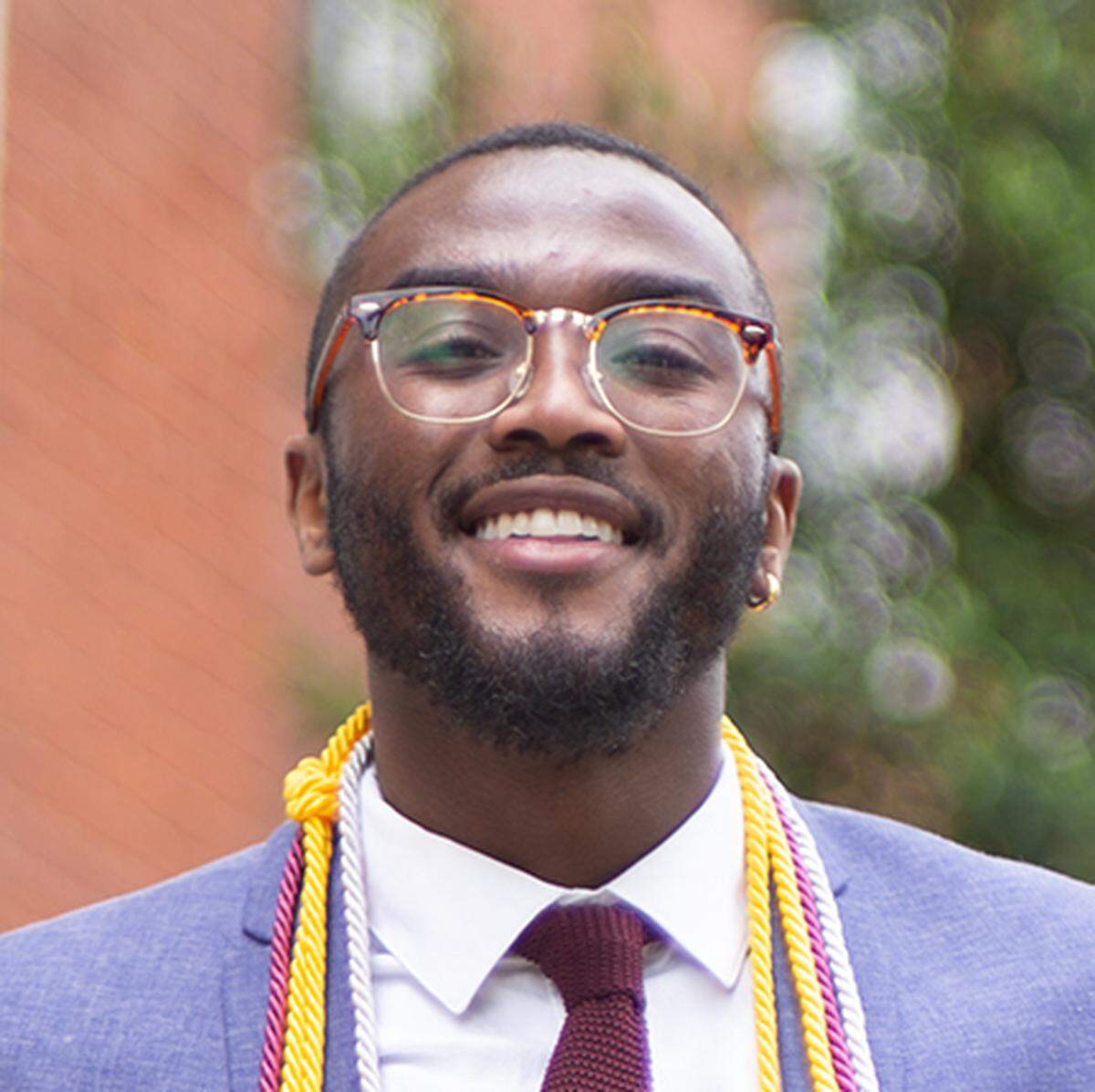
Matthew Beatty joins Carrie P Meek Foundation as COO. Its new role: systemic issues
The year 2020 created a void in Matthew Beatty.
After eight years at The Miami Foundation, Beatty yearned for more. Sure, he had accomplished a lot during his time there — namely the creation of both the State of Black Philanthropy and Give Miami Day campaigns — but the slew of tragedies affecting the Black community that have come to define 2020 left him wanting to make an impact.
Centuries of marginalization have created systemic barriers that “take a heightened level of intentionality to address,” Beatty said.
With that in mind, Beatty decided to join The Carrie Meek Foundation as its vice president and chief operating officer. His move comes as the nonprofit prepares to relaunch in an effort to eliminate these deep-rooted issues in Black and brown communities.
“The devastating COVID-19 pandemic has left thousands of residents needing food, stable housing and family support, especially in underserved communities,” said Foundation President and CEO Lucia Davis-Raiford, who hired Beatty. “Matthew’s experience leveraging philanthropy and nonprofits will help us get resources to organizations meeting this immense need, while positioning the Foundation to support permanent socioeconomic solutions for residents in Miami-Dade and across the region.”
Since its inception in 2001, The Carrie Meek Foundation has primarily worked to fund organizations working in education, housing, health, and economic development. That mission doesn’t change with Beatty’s appointment. What will differ, however, is how it goes about it.
In the past, the Meek Foundation has focused on services. Now, said Beatty, the focus will work to identify the root causes of poverty and inequity — “why residents need these services.”
Said Davis-Raiford: “Making sure that we provide the platform for thought leadership, that we do the kind of analysis and deep, heavy lifting that it takes to understand the systemic problems [is our goal].”
Achieving equity requires a group effort, Beatty said.
It “will take all of us,” Beatty said. “It will take people in the nonprofit, for profit. It’ll take residents. It’ll take government elected officials. It’ll take administrators. It’ll take media. It’ll take every single person to co-build this thing in order for it to be truly what this community needs.”
Beatty’s ability to bring people together makes him a great fit for this role, said friend and Miami Gardens Councilwoman Linda Julien.
“He’s a connector of all sorts,” Julien said. “You can go to Matthew with a potential project or something you’re looking to do or if you’re seeking a solution and he will sit back and he will think and he will look to see how he can connect you with an organization that will be able to help.”
More than just a networking savant, Beatty possesses an uncanny appetite for critical listening. Employing this skill — with residents, with community leaders, with anyone who claims to know Miami-Dade — will be key, he believes.
“There’s no substitute for lived experience,” Beatty said. “You really have to understand how are people’s lives impacted by these issues in order to understand how to address them effectively.”
Beatty intends to let the community guide his work. He’s not one for the accolades nor the praise. At this stage in his career, what matters most to him, he says, is making his hometown a better place. That, however, won’t happen if goes at it alone.
“My main focus here is for this to be not so much about me and my vision but really help the community to understand... in order for something to last and be really effective, it has to be built with the community.”