
It took 50 years but this Miami Vietnam War hero was finally buried at Arlington
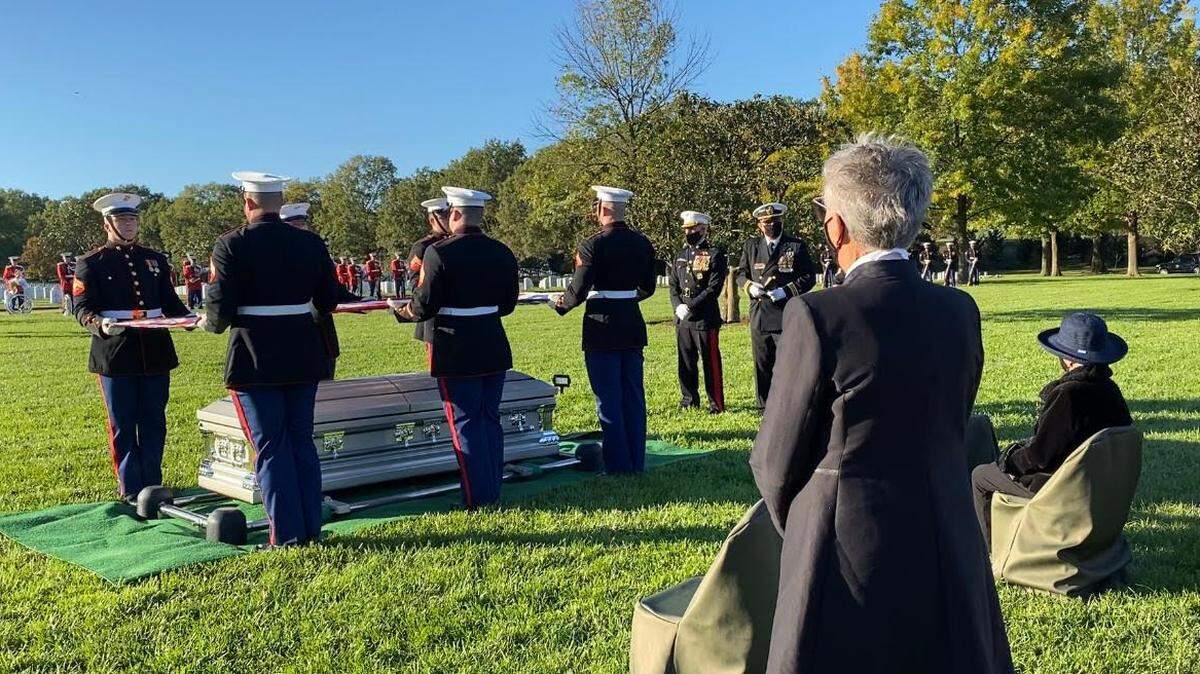
The body of a Miami war hero who jumped on a grenade in Vietnam to shield his comrades was re-interred on Wednesday at Arlington National Cemetery.
Marine Pvt. First Class Bruce W. Carter, 19, a radio operator, died while serving in the Vietnam War. His remains were recently exhumed from a local cemetery and flown to Virginia, where Arlington is located.
“Fifty years have passed, and Pvt. First Class Bruce Carter’s legacy remains strong,” said Rep. Mario Diaz-Balart, at a sendoff event held Oct. 30 at Miami International Airport. “Today serves not only as a tribute to his heroism, but as an important reminder to all that a soldier’s life is always valued, no matter how much time has passed.”
.jpeg "Screen Shot 2020-10-30 at 9.45.00 AM (1).jpeg")
Carter served in the U.S. Marine Corps during the Vietnam War in Company H, 2nd Battalion, 3rd Marines. He died on Aug. 7, 1969, in the Quang Tri Province.
.jpg "tank (1).jpg")
Vice President Spiro Agnew, on Sept. 9, 1971, posthumously awarded Carter and four others the nation’s highest medal for valor in combat, the Medal of Honor, according to the Richard Nixon Presidential Library & Museum.
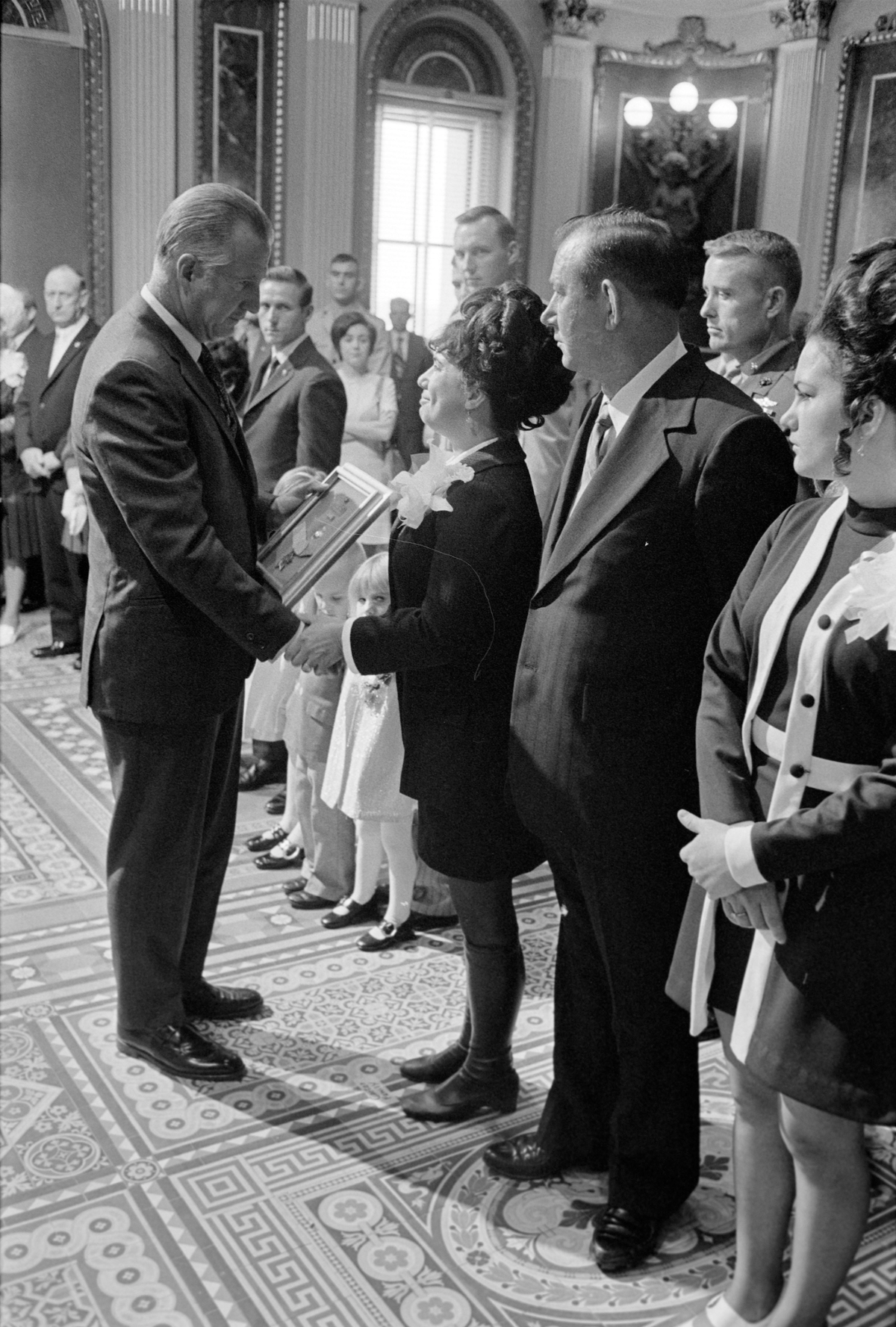
The medal is normally awarded by the president, but Nixon was busy that day with Raymond P. Shafer, chairman of the Marijuana Commission, his diary shows. Three months earlier, Nixon declared drug abuse as “public enemy number one.”
“One important measure of a nation’s worth is the willingness of her sons to defend her,” said Agnew. “Because of them, our country will be stronger at a time when strength is sorely needed.”
Robert Wilkie, the current Secretary of Veterans Affairs, also weighed in.
“His [Carter’s] Medal of Honor citation said his ‘indomitable courage, inspiring initiative, and selfless devotion to duty upheld the highest traditions of the Marine Corps and the United States Naval Service,’ ” Wilkie said in a statement.
Georgie Carter-Krell, Carter’s mother, who lives in Virginia Gardens, said she was “young and didn’t understand things” in 1969 and decided last December to move her son. Eligibility for in-ground burial at Arlington is the most stringent of all U.S. national cemeteries.
“Any service member killed in action has the eligibility to be buried at Arlington,” said Barbara Lewandrowsky, a spokeperson for Arlington National Cemetery. “It is up to the family.”
After five decades, Carter-Krell felt her son should be laid to rest with his friends, and cut through arduous red tape with the help of Diaz-Balart and his staff.
“We have finally achieved what should have been done 50 years ago,” said Carter-Krell, 90.
A longtime advocate for the soldier, Diaz-Balart co-sponsored a bill in 2008, introduced by former Rep. Ileana Ros-Lehtinen, to name the Department of Veterans Affairs medical center in Miami as the “Bruce W. Carter Department of Veterans Affairs Medical Center.”
A few miles away, in Carter’s hometown of Virginia Gardens, population 2,380, Mayor Spencer Deno IV pushed to rename a busy thoroughfare in his honor and a memorial plaque was placed in front of the Village Hall.
An all-American teen, Carter attended Miami Springs High School and transferred in 1967 to West Jefferson High School in Louisiana, where he fancied muscle cars and the band Buffalo Springfield. He dropped out in June 1968 and enlisted at age 17 in the Marine Corps, where he was dispatched to the jungles of Vietnam.
“PFC Carter had a couple of seconds to make a decision and knew he would die,” said Miami-Dade County Commissioner Jose “Pepe” Diaz, a former Marine who represents the Village of Virginia Gardens. “He gave his life to save his team.”
The word hero is often overused and thrown around loosely but Carter met the threshold, Diaz said.
Carter’s legacy continues to inspire young people through youth Marine programs, namesake 5Ks and outreach activities.
This story was originally published November 5, 2020 at 6:00 AM.