Miami bars can soon reopen. Cubaocho owner says he can’t afford to wait
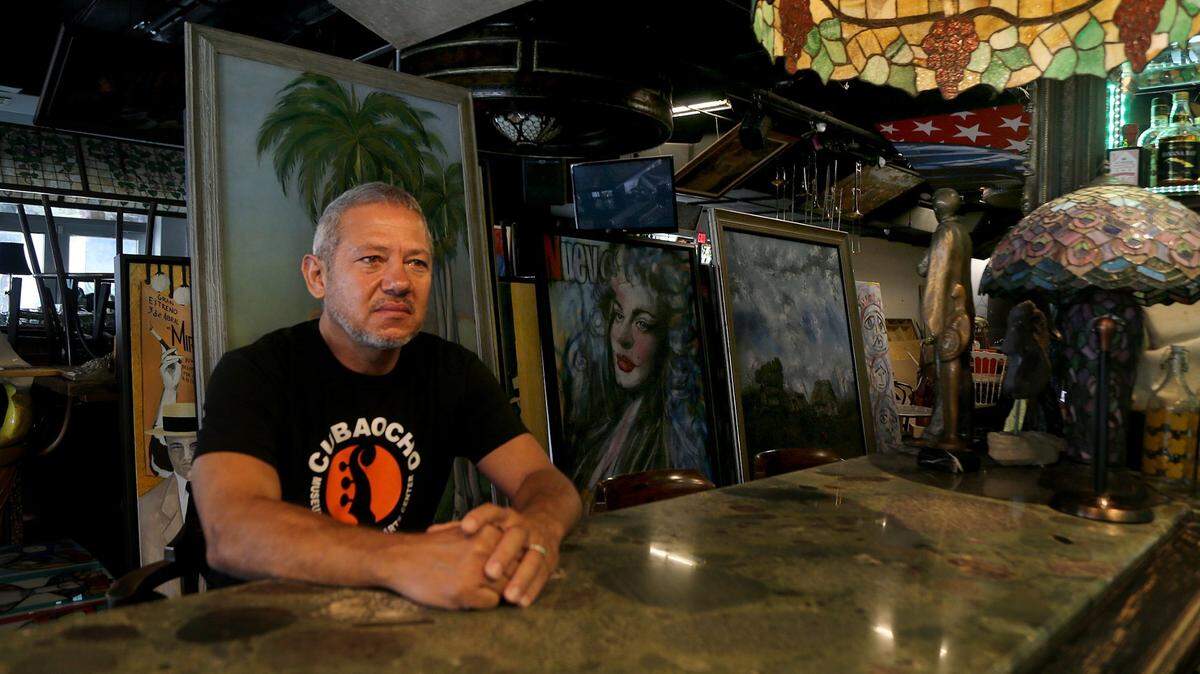
Roberto Ramos remembers hearing from European tourists that they had come straight from the airport to his Cubaocho Museum & Performing Arts Center because it was the place to go in Little Havana.
That was before the pandemic. Now, Ramos is facing losses of nearly half-a million dollars. If he can’t reopen soon, he worries that he will have to close for good.
“I had a very public place, with a lot of international publicity. And now I’m in debt, bankrupt. That’s why I’m screaming before I die,” said Ramos.
When the pandemic hit, Ramos quickly shut his museum-bar-live music venue at Calle Ocho and SW 14th Avenue. ”I wanted to protect the employees and my family,” said Ramos. Still, many — including Ramos and his wife — contracted COVID-19, though they had already quarantined.
Last week’s pronouncement by Miami-Dade Mayor Carlos Giménez on Spanish-language radio that bars would remain closed until a vaccine became available sparked a heated response from Ramos and other nightclub owners facing ongoing losses. Some staged a peaceful protest Monday in Wynwood, demanding that bars and clubs be allowed to reopen.
Wednesday, the mayor shifted his stance, saying bars and strip clubs will be able to open in two weeks — but with service only at tables, and no dancing allowed.
Ramos pointed out that in Little Havana many businesses have already gone bankrupt.
”I am not asking for help; I am asking that they let me work,” said Ramos. He has had no relief on his monthly $13,000 rent; he has not even been able to speak with his landowner despite multiple attempts to contact her.
Despite Gimenez’s order, Ramos plans to open this Friday. Museums are already open, he noted, and he has already submitted an application to sell food. “If the keyword is ‘fried croquette’, I’m going to sell them,” said Ramos.
Even before Wednesday’s revision from the county, Miami Mayor Francis Suárez
said he was talking with bar owners about the table-service approach. ”It could mean having a bar that works like a restaurant,” he said.
Employee impact
Ramos said he decided to speak out not only because of the stress on his business but also the impact that closures are having on his employees and the musicians and artists whose work is instrumental to Cubaocho’s ambiance.
“I am their voice, I have been listening for six months when they ask, ‘Now what are we going to do?’ Are they going to die of hunger, of stress?” said Ramos.
He and his wife have worked second jobs to make ends meet. Ramos worked as a kitchen helper; his wife worked online.
Ramos also received $40,000 from a federal loan from the Paycheck Protection Program (PPP). The amount was limited because many of his workers are not permanent.
He distributed it among 35 employees. ”It lasted 15 days.”
This article has been updated to include information about the county’s decision to reopen bars.
This story was originally published September 16, 2020 at 11:55 AM.