Hundreds join caravan through Miami-Dade to shine light on 2015 fatal police shooting
For more than five years, the story of Edward Foster II’s death at the hands of a Homestead police officer hasn’t made it past Exit 1 of Florida’s Turnpike, his family says.
So on Sunday, they took to the streets in a 200-car caravan.
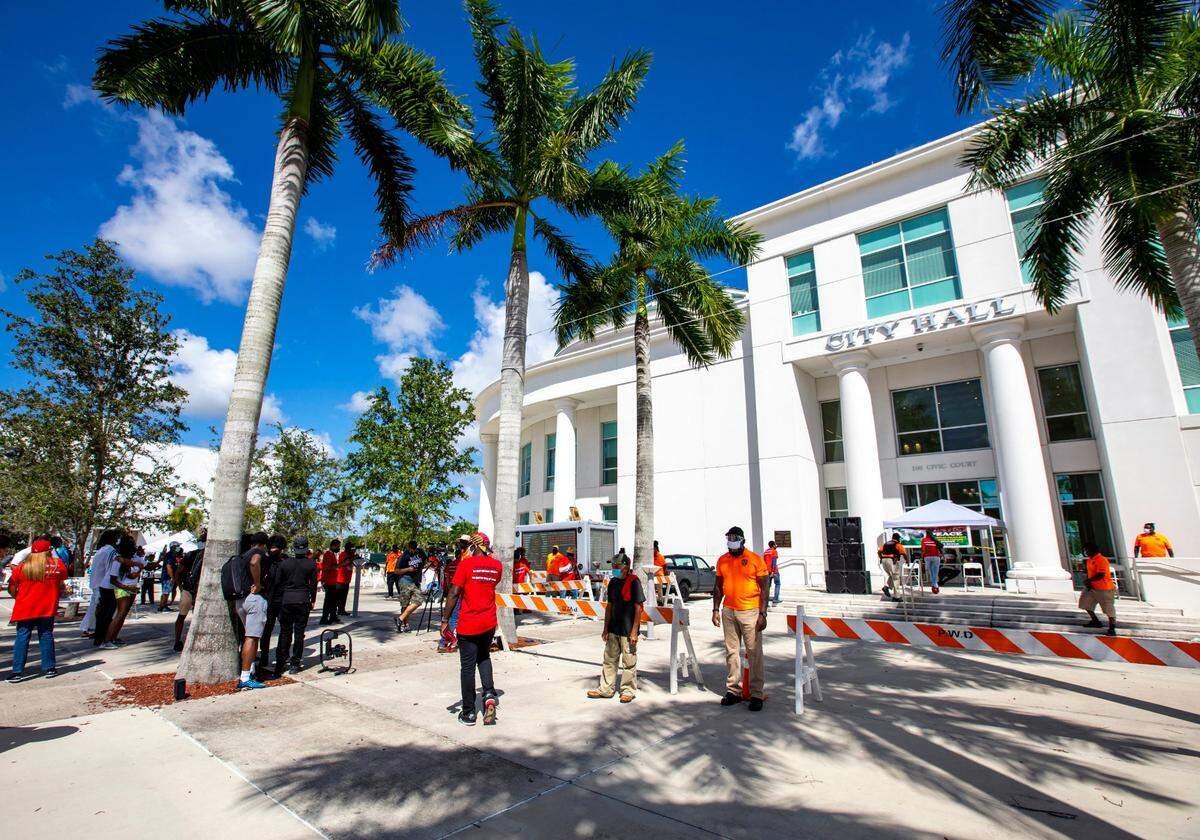
The privately escorted procession of vehicles snaked its way from the northernmost part of Miami-Dade County – Miami Gardens – all the way down to Homestead City Hall, the nucleus of the remote town where family and friends say they’ve been met with “hostility and closed doors” since Foster’s shooting death in 2015 by Anthony Green, who’s now a detective at the department.
“There’s no attention in Homestead. It’s exit 1, so nobody cares,” said one caravan organizer DeMario Lee as he pointed at a map that showed the caravan’s route. “We want to bring the news to the public domain. We want the world to see what’s going on down here, so we took our cries to Miami Gardens, Overtown, Coconut Grove, South Miami, Naranja, Goulds — everywhere.”
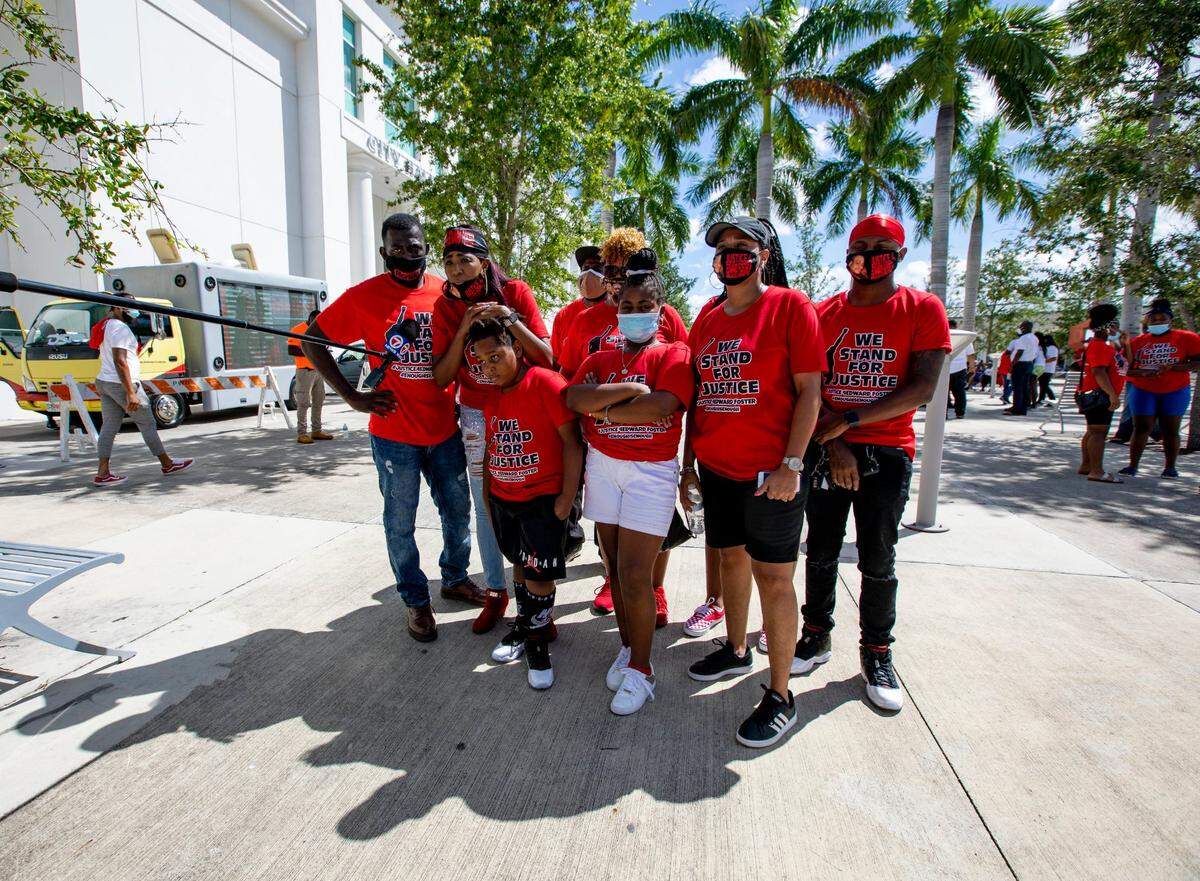
Foster’s sister, Crystal Foster, chimed in: “It’s five years since my brother was killed and we still have no answers. No accountability.”
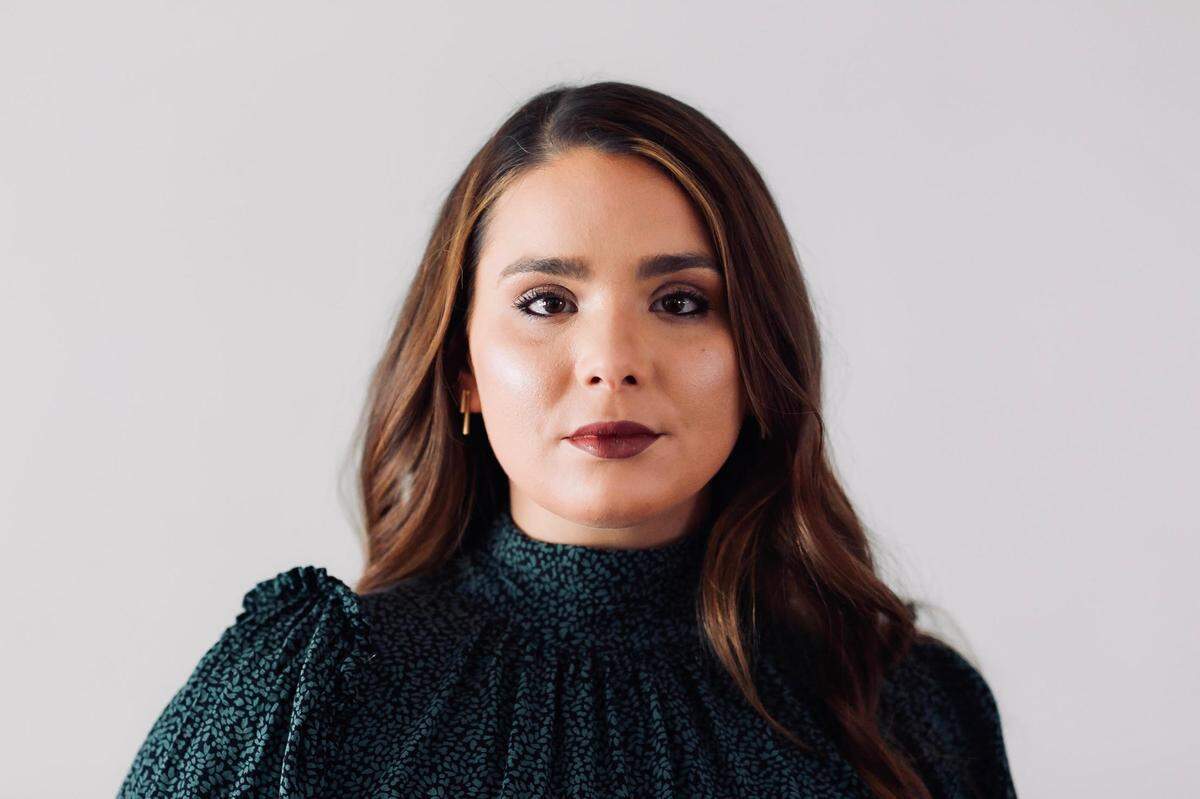
But on Sunday, the Fosters announced their “silver lining:” Melba Pearson, who’s currently in the running for Miami-Dade County State Attorney and participated in the caravan.
Running on a campaign of criminal justice reform, Pearson — who once served as deputy director for Miami’s American Civil Liberties Union and as a Miami-Dade County assistant state attorney — is hoping to dethrone her former boss and mentor, Katherine Fernandez Rundle, who has held the job for 27 years. The primary election is Aug. 18.
“New leadership is our only answer,” Crystal Foster said as cars honked beside her, many of them adorned with Pearson campaign posters.
“We are devastated and emotional,” Foster added. “For years we’ve called on the state attorney’s office and have had no voice. Now we have the voice to speak and the only way to hold people like Officer Green accountable is to have leaders that listen and take action when they see injustice against Black lives.”
In July of 2015, Homestead Officer Anthony Green, inside his patrol car, shot and killed the Black father of six at an intersection. Police said Foster, who at the time was on probation for attempted murder and armed robbery, was armed with a 9mm pistol. His family doesn’t believe he was a threat.
Whatever really happened, the public doesn’t yet know the details of the investigation. The reason: Fernandez Rundle’s office has yet to conclude its probe.
As part of the nationwide protests of police brutality against Black people, the long-running investigation into the police shooting has come under scrutiny again. At a rally last month, protesters singled out Green, who has been involved in — and cleared — in two other fatal shootings, as well as longtime Homestead Police Chief Al Rolle, the longest serving Black chief in Miami-Dade County.
Five years is a lengthy delay even by the standards of Miami-Dade, where it’s not unusual for police-shooting investigations by prosecutors to drag on for years.
During almost three decades in office, Fernandez Rundle has filed plenty of cases of police misconduct, but never any against officers in a fatal shooting. Over the decades, few state prosecutors have either. Florida law gives officers broad leeway to use deadly force, even allowing cops to shoot suspected felons who are fleeing under the assumption they may harm others.
.jpg "unnamed (10).jpg")
The Miami-Dade State Attorney’s Office confirmed Sunday that the investigation of the Foster shooting is still ongoing because “there were additional potential witnesses and potential evidence the family and their lawyers wished reviewed.”
“For weeks now we have been trying to obtain contact information to schedule the taking of a sworn statement of an individual who indicated online that he was an eyewitness to the shooting,” Miami-Dade state attorney’s office spokesman Ed Griffith said Sunday. “To date, we still have not been able to accomplish that task. According to information we received, the witness has refused to meet at MDPD headquarters or our office for the taking of that statement.”
Griffith added: “It is absolutely essential that we collect and review all possible evidence and interview all eyewitnesses in order to have a complete and thorough understanding of the facts before we conclude our investigation. Once that has been accomplished, we will conclude our investigation, finalize our report and forward it to our Police Shooting Review Committee.”
Green, who is white and has been with the police department for three decades, was no stranger to deadly force. In 2005, Green shot and killed an unarmed man named Jason Williams during a struggle outside a convenience store. He claimed Williams was reaching for his gun, and prosecutors cleared him of any wrongdoing.
Two years later, he shot and killed Anthony Cinotti, a convicted murderer who police believe was trying to woo back his girlfriend. Green shot Cinotti, police contend, when Cinotti pulled out a knife and stabbed his girlfriend and her 11-year-old son. Again, Green was cleared of any wrongdoing. A year later, in 2008, Green fired his weapon again. This time he shot at a suspect in what was described as an armed robbery. The suspect was shot twice in the stomach and survived.
In an interview with the Herald last month, Chief Rolle defended his force.
“The Homestead Police Department takes all of its complaints extremely seriously and we are proud to say that the members of our agency have stepped up to the plate on several occasions to report and advise when one of their own is suspected of not following the rules,” Rolle said.
But during Sunday’s rally outside Homestead City Hall, not one officer was in sight. A spokesperson for the police department said that’s because “we encourage peaceful protests. They have the right to express themselves and we will not get in the way of that unless there is lawlessness.”
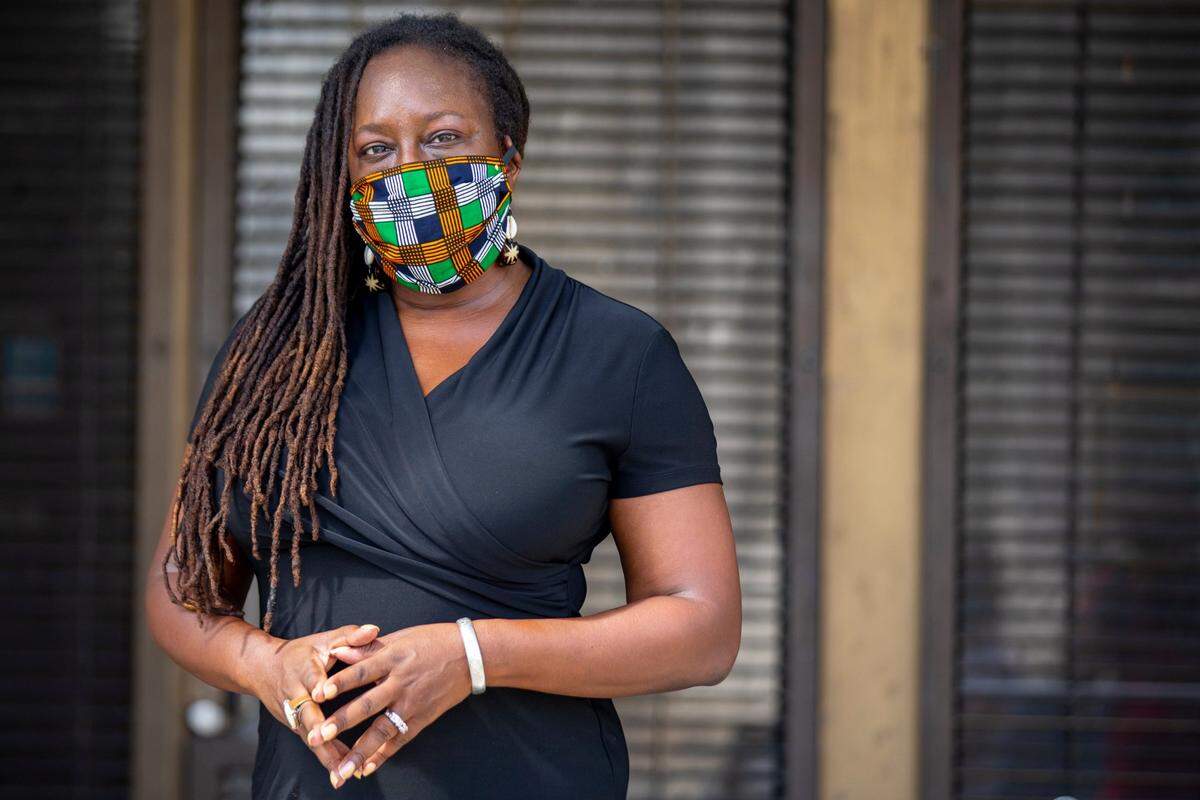
Pearson, who participated in the 45-mile trek, said the lingering Foster case is a “reminder” of why she’s running for Miami-Dade state attorney.
“Caravans have been a tool since the civil rights movement,” she said, noting that she and the protesters are also grieving the recent death of civil rights legend John Lewis. “So we are throwing it back old school, to a tactic that’s been used for decades.”
She added: “But also, too many times, people in this county have not seen their state attorney. They don’t feel like they have access to the system except when they are getting pulled into it. I want people to know that they aren’t just going to see me on the campaign trail, but they’ll see me in the community -- including those that are far away and often forgotten, like Homestead.”
“Ya’ll are gonna see me,” she said.
Pearson addressed the crowd, vowing to look into cases like Foster’s. She also said if elected she would create a civil rights unit that would collaborate with nearby state attorneys offices.
Among those at the protest: Amara La Negra, an Afro-Latina bachata singer and online influencer, as well as Luther Campbell, also known as “Uncle Luke,” a Liberty City rap legend who led the band 2 Live Crew in the 1990s.
“This case hits home,” said the rapper, producer and community activist. “I know there are the George Floyds and all those other cases of the world, but Edward Foster is us, Edward Foster is Miami.”
As the rally came to a close, Foster’s 17-year-old son, Johnathan, grabbed the microphone with a message “just for the kids.”
He called over about half a dozen youngsters eating free ice cream.
“I want y’all to know that as all you get older, you may not understand what’s going on right now,” the teen said. “But when you are ready, you can all go to your parents, or to me, or whoever you feel comfortable with and we will explain.”
He paused and took a knee so he could look into their eyes: “I just want you all to know, you all are loved.”
This story was originally published July 19, 2020 at 3:27 PM.