
In County Commission District 11, candidates focus on coronavirus
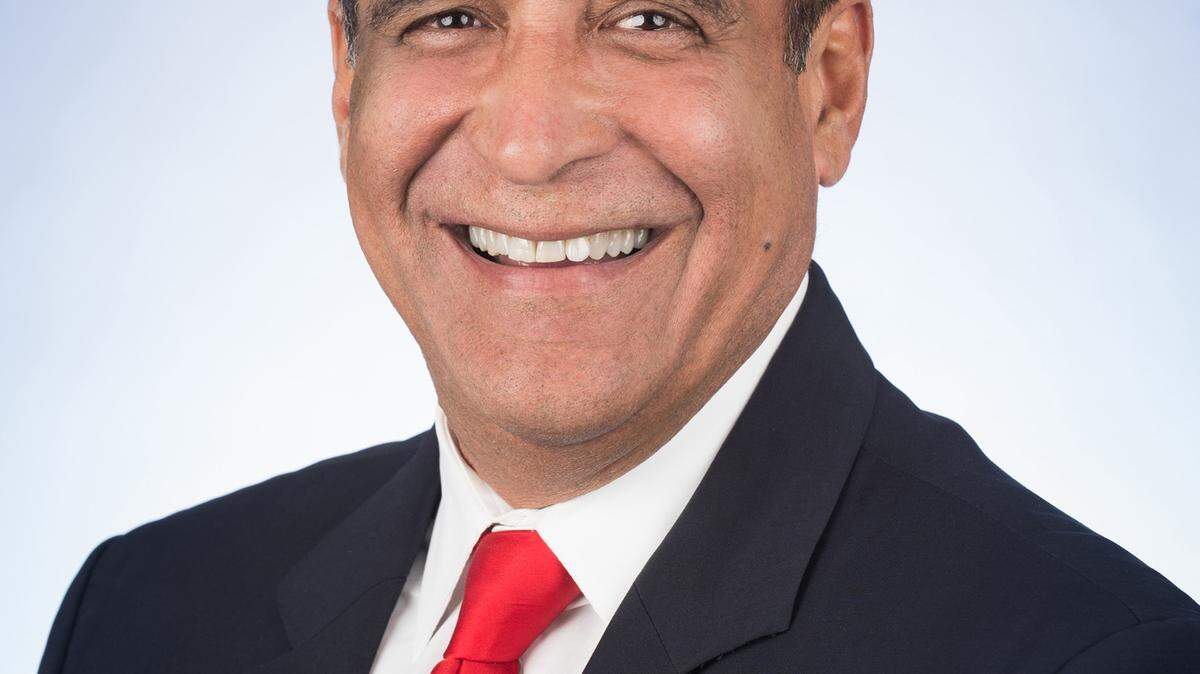
With three candidates aspiring for the seat, the Miami-Dade County commission race in District 11 is crowded. Former state representative Robert Asencio and former candidate for the Colombian Congress Cristhian Mancera are challenging incumbent county commissioner Joe A. Martinez.
The district includes unincorporated areas of west and southwest Miami-Dade, including west Kendall, Kendale Lakes, Bent Tree, Lakes of the Meadows, and Country Walk.
Martinez, Asencio, and Mancera are all contending with how they would guide COVID-19 prevention and management as county commissioners.
The three candidates have different stances on the recent business closures announced by County Mayor Carlos Gimenez on July 6, which include shutting down restaurants (except for takeout and delivery,) gyms, ballrooms, party venues and banquet facilities, among others. However, Gimenez ended up sparing outdoor dining and gyms, provided people wear masks while using fitness facilities.
Commissioner Martinez, 62, does not fully agree with the executive order.
“Restaurants are being penalized for what some people are doing when in fact they are following the rules,” he told the Herald in email. “... Businesses have spent thousands of dollars making sure they are in compliance with the new normal guidelines.”
Martinez, first elected to the county commission in 2000, told the Herald that the priority of the county commission’s COVID-19 response should be to slow the spread of the novel coronavirus and ensure the hospital system is not overwhelmed.
“The more we can contain the contagion, the more time our scientists will have to develop a vaccine,” he said over email. He said that the county’s role is “setting the rules to keep people safe and enforcing [the rules].”
However, the commissioner also emphasized citizen responsibility.
“Ultimately in this type of situation, the burden falls on the people. They have to realize that it is up to them, not only to the government, to slow the spread,” said Martinez, who has cumulatively held his seat for 16 years and lived in District 11 for 37 years.
Asencio critical of COVID reopening
Asencio, 56, said that Martinez and the local government have not been doing enough to stop the spread of the disease. He told the Herald it was the lack of comprehensive policies that led Miami-Dade County to shut down again on July 6.
“It’s the actions that were taken quickly to open up without clear-cut guidance of safety protocols that I believe have led us to this,” Asencio said of the rise in cases in Miami-Dade and Florida.
On June 29, the former state representative shared a statement with the Herald and other media outlets criticizing the local government’s COVID-19 response.
“Willful ignorance, arrogance, and an absence of leadership have led to a slapdash approach to the pandemic that threatens to turn Miami-Dade County into the COVID-19 capital of the world,” it said. “Many business owners and their employees, starved of economic support from our government, rushed to risk their lives, dying to go to work, because they believed our leaders had their ‘best interest’ at heart. And, moreover, that they knew what they were doing.”
Asencio also stated that Martinez “lacks the capacity, character, and vision to do what is needed in order to protect his constituents” in the face of this pandemic. He cited an emergency coronavirus meeting in March, where Martinez said he was “tired” of hearing about the coronavirus.
Asencio retired from the Miami-Dade Schools Police Department in 2015. After 26 years on the force, the former captain ran for office. He served as a Democratic state representative for one term until he lost his seat in a tight race in 2018 against Republican Anthony Rodriguez.
Mancera says ‘closing is not an option’
Mancera, 41, said that the first county closure of nonessential businesses was “a necessary sacrifice and measure,” despite its harsh economic impact. While he supports strict guidelines for businesses, the use of masks, and social distancing, he does not favor Gimenez’s recent executive order and said “closing is not an option.”
“I do not agree with continuing to put additional burdens on our businesses in Miami-Dade. Closing and rolling back opening up measures only makes things worse.. ... Sends the wrong message at a time where we should be moving forward,” he told the Herald in email.
Mancera said the reopening plan should have been kept as it was before the July 6 executive order.
“Who said the virus is only transferred in closed environments like restaurants? I mean why are we punishing this industry? It makes no sense,” he said.
Mancera also added that the “county has to be more proactive in solving this crisis.” He said it was possible to reopen in smarter ways, like by using cellphone apps that tell Miami-Dade residents the real-time occupancy of beaches, parks, restaurants and bars to avoid contagion. He said the apps could also be used to indicate who is infected with the virus and local coronavirus hot spots. (Apple and Google have both developed coronavirus tracking tools.)
Mancera has a law practice that principally serves Colombians in the diaspora. He also runs the Miami-based United Languages and Media Group, which teaches English via in-person and online classes. In 2018, Mancera ran unsuccessfully to represent Colombian expatriates in the Colombian Congress.
Agreement on testing, contact tracing
Despite differing opinions on reopening plans, all three candidates say that the local and state government should expand testing and contact tracing capabilities.
Martinez said that contact tracing was “extremely important,” but noted there might be challenges in collecting data. “People may not want to share who they have been in contact with or where they have been,” he said.
Asencio said public officials and local leaders need to start demanding that local and federal authorities increase COVID-19 testing and be transparent with results. He views testing as the backbone of any future reopenings and public health response.
“We must test constantly, assess data, and adjust according to results, always maintaining a viable window for measuring whether cases are increasing, or if the health system is capable of managing any sudden spikes in contagion,” he said in the June 29 statement. He also asserted that in developing a step-by-step reopening plan, experts providing input should have no political or economic ties to Miami-Dade county commission members.
In 2018, Mancera filed for a Chapter 13 bankruptcy to create a payment plan that restructured his debts and those of his language academy. Mancera said he experienced financial difficulties after moving from Colombia to Miami in 2008.
“It hasn’t been an easy ride. I think I’m the typical story from Miami-Dade as an immigrant,” Mancera said. “... I want to bring a different type of leadership [that] allows people like me ... to have different opportunities.”
In November 2019, the Miami New Times reported that Martinez had participated in an active criminal investigation. The Herald later reported that he had met with prosecutors, but the “nature of the probe and target” was not publicly known.
Views on COVID-19 economic relief and recovery
▪ Martinez created the county’s COVID-19 Economic Recovery Task Force to support businesses in post-pandemic recovery. The task force’s job is to find and assess resources such as grants and loans as well as provide recommendations to the County Commission. The task force is made up of professionals who mostly come from business backgrounds. “Their suggestions to date have been very real and not hypotheses of what could and should happen to effect a smooth return to business as usual if there is such a thing,” he said. He described the task force members as “people who want to cut through the red tape and get things done.”
▪ Asencio supports the “release of federal rent relief funding for qualified applicants,” as well as using all relief funding for “infrastructure, transportation, and government recovery” as soon as possible. He said he hopes this will “stimulate the economy through job growth, business expenditure, and enhance revenue streams.”
▪ Mancera says that the county commission should “evaluate the idea of granting recovery aid for rent, both for landlord and tenant” and “recovery aid for all residents just like the federal government has done.”
Views on transit
▪ Martinez wants to see a conclusion to some of the transit projects that the county commission has already begun, citing examples of road work currently underway. He cited the widening of Southwest 157th Avenue between Tamiami Trail and Bird Road, the widening of Southwest 137th Avenue between Tamiami Trail and Coral Way in conjunction with MDX, which would make “that avenue four lanes all the way down to SW 184th Street,” and the completion of the park and ride on Southwest 147th Avenue and Tamiami Trail “with a dedicated lane.”
▪ Asencio wants to improve mass transit by extending hours of operation, updating routes, adding stops to buses, and lobbying for state and federal funds for transportation. Asencio also wants to analyze why people are leaving the area daily, whether for work or recreational purposes. “We also need to consider reversing the traffic because building out roadways is very expensive,” Asencio said.
▪ Mancera, on his campaign proposal page, says that the “emphasis should be on mass transit and not more roads with tolls.” He told the Herald that as commissioner, he wanted to establish a plan called Unified Transport system. It would “involve the use of all transport alternatives to connect the whole of Miami-Dade,” he said.
This story was originally published July 21, 2020 at 12:31 PM.