
How the Church must step up to heal America’s racism
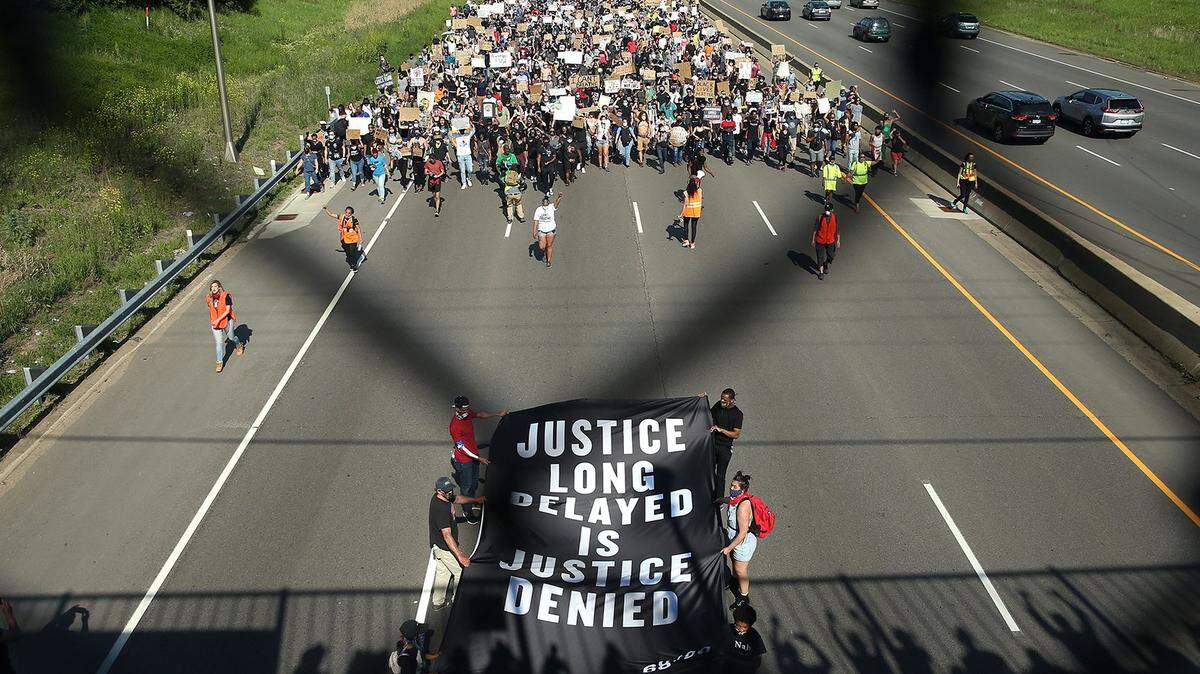
Watching the protests following the murder of George Floyd, my thoughts turned to the Church. What can the Church do to heal the land?
Floyd, 46, is the Minneapolis black man who was killed when Derek Chauvin, a Minneapolis white policeman, pressed his knee on Floyd’s neck for nearly nine minutes as he lay on the street’s rough pavement. I thought of the many black men and women who have died unjustly at the hands of unlawful, so-called lawmen.
What was even more awful was the look on Chauvin’s face as he applied pressure on Floyd’s neck — it was a look of hate.
Chauvin knew what he was doing, and he knew he was being recorded. But given the mood of America, a country that has a long history of police brutality against blacks, where the police often get away with their dirty deeds, Chauvin had no reason to believe he would be charged with Floyd’s murder.
But the country, indeed the world, had had enough. And the protests began, worldwide. (Chauvin has since been charged with second-degree murder and manslaughter and third-degree murder.)
Thinking about the murder of Floyd and so many others, I wonder about the Church and its role in cleaning America of racism, and thereby uniting us as a nation.
Seriously, what can the Church do? I believe that if the Church had taken a firm stand, even centuries ago when blacks served as slaves in this country, we would be in a better place today.
While I don’t want to ignore the strides blacks have made in this country, scenes like the 2020 Memorial Day murder of Floyd tell me we still haven’t come far enough. And that, for the most part, we are still treated like non-citizens.
The killing of Floyd was simply the last straw. It caused the painful and unjust treatment blacks have suffered for generations to surface, a raw open wound.
As a believer, I cannot ignore the fact that many slaves became Christians because of the word of God they heard from slave owners. But back then, slave owners weren’t interested in saving the slaves’ souls. The word was meant to scare the slaves further into submission.
Still, the real truth of God’s word — that Jesus came to bring peace and justice to all — seeped through and many slaves became believers. I am still amazed at the way truth found a way into the hearts of slave men and women, and sustained hope for the burden-laden slave for generations.
At first, the Society of Friends (also known as Quakers) took a stand against slavery, believing that all human beings are equal and worthy of respect. Later, the Congregational Christian Church, which became the United Church of Christ, also stood up against slavery.
I am thankful for the brave stance these denominations took, giving the slaves hope.
As our nation grew and slavery was abolished, blacks still found solace in our houses of worship. The Civil Rights era, led by the late Dr. Martin Luther King Jr., a reverend, was nurtured in the black church.
The Church was where we came to “... tell God all about our troubles,“ crying out in agony at times, such as when four young black girls were killed when evildoers bombed their Birmingham, Alabama, church on Sept. 15, 1963, while they were in Sunday school, learning to love their enemies.
The Church is not only a place of worship, it is where we come to celebrate life — weddings and baby dedications and funerals. The Church is where we once came to protest and to seek our rights, such as the right to vote.
And it is where we still come to gain strength to keep on fighting for what is right. Even so, black churches, as well as the houses of worship of Jews and Muslims, have been burned and vandalized. People gathered for prayer and worship have even been killed at the hands of hateful people.
Still, in the wake of violence against houses of God, the Church is still a giant of goodwill. It still carries the banner of righteousness. And it can still right the wrongs that have cast a dark shadow on the greatest nation in the free world.
Yet, today, with so many integrated congregations, the Church in America on any given Sunday is still the most segregated place in the U.S. This ought not to be.
By standing together, the Church, like a good parent, can take a stand for what is right by holding our leaders accountable. The Church cannot sit quietly by and watch as our country descends into ruin.
It cannot whitewash the wrongdoing of anyone. The Church must speak out against discrimination and racism in any form, with holy boldness.
Then, the Church must come together as one — not as the black church, or the white church, but as the Church of God going into battle against the demonic actions that are in place to divide America.
While I believe the burden of healing our nation falls on the shoulders of each American citizen, the bulk of the burden is on the Church. Within the Church, I believe, is the cure for the systemic pandemic of racism.
This story was originally published June 11, 2020 at 4:48 PM.