In Surfside, anti-hate resolution devolves into ‘all lives matter’ and middle fingers
A resolution condemning discrimination against Asian and Jewish people during the COVID-19 crisis sparked a heated debate among commissioners in Surfside on Tuesday, culminating in an elected official giving Mayor Charles Burkett the middle finger after Burkett accused her of harboring “apparent anti-Christian zeal.”
The proposal, whose original language was drafted by the Anti-Defamation League and which has passed unanimously in other South Florida cities, didn’t sit well with Burkett or Commissioner Nelly Velasquez. On May 26, the resolution’s sponsor, Vice Mayor Tina Paul, withdrew it after Burkett and Velasquez asked for more “inclusive” language, with Burkett saying that naming Asians and Jews without other groups was “picking winners and losers.”
Paul returned this week with an updated version, adding language about the ways in which black and Latino people have also faced unique challenges during the pandemic. She cited the controversial handcuffing of a black Miami doctor who helped test the homeless for COVID-19 in Overtown, and the fact that Latino people are disproportionately considered “essential” workers and therefore may be more vulnerable to the disease.
But Burkett brought his own proposal that added Christians — and evangelicals in particular — as targets of hate. He cited a New York Times opinion piece originally titled, “The Road to Coronavirus Hell Was Paved by Evangelicals.” After backlash, that article’s headline was later changed to, “The Religious Right’s Hostility to Science Is Crippling Our Coronavirus Response.”
The mayor pointed to that piece as evidence that Christians are being unfairly blamed and discriminated against during the pandemic.
“Needless to say, as a Christian myself, I was appalled at the [original] headline’s sentiment and also offended that our town has been put in the position where we could now be labeled as anti-Christian,” Burkett said in a prepared statement during Tuesday’s virtual meeting.
He added: “If any group ever needed to be included among other victims in a Surfside resolution such as the one in front of us that condemned hateful speech, spread of misinformation, blame and conspiracy theories ... it’s Surfside’s Christians.”
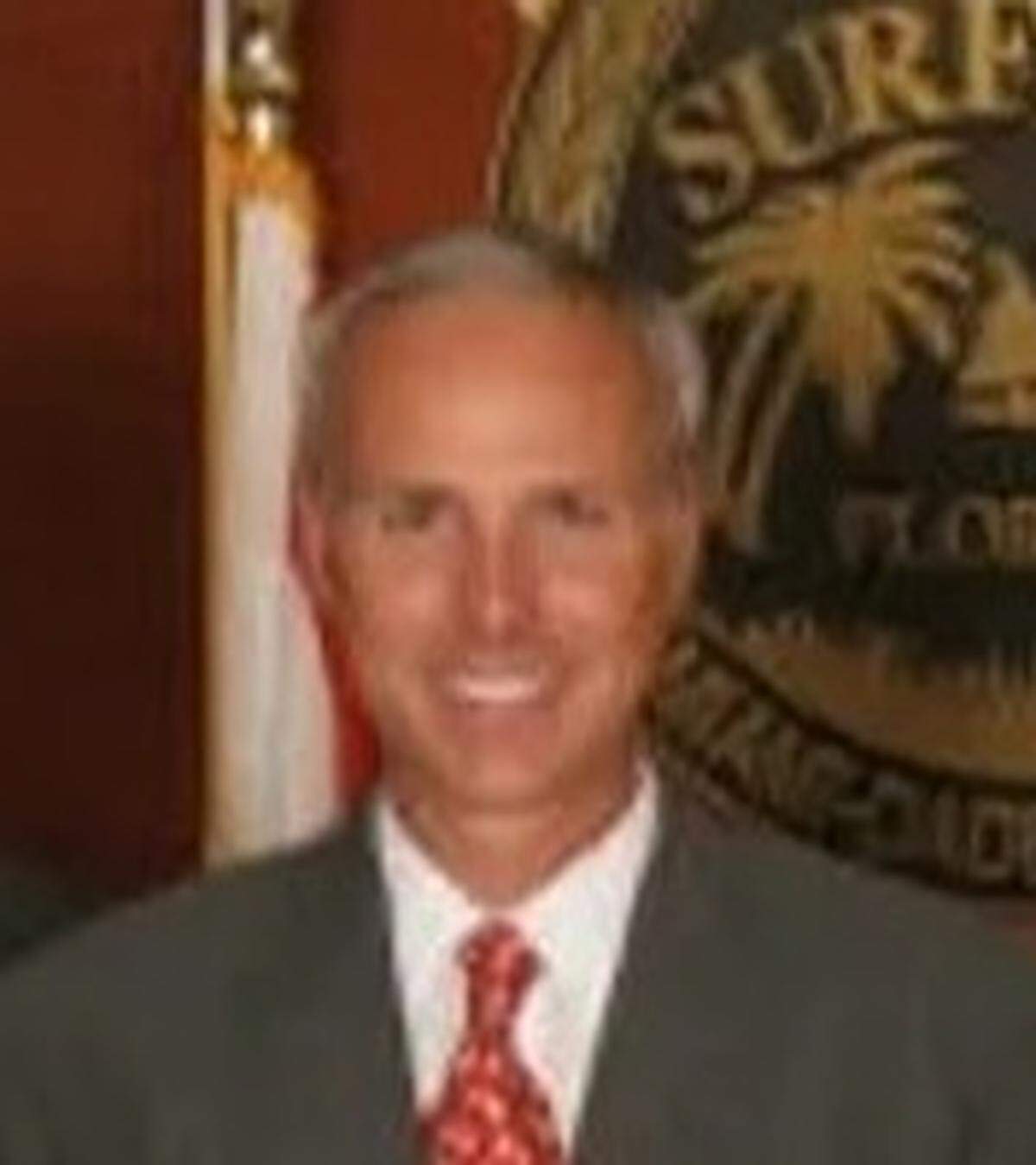
The mayor later accused Eliana Salzhauer, who is Jewish, of sending a “seemingly anti-Christian” email to city officials about his proposal. In the email, Salzhauer said the New York Times op-ed had accurately placed blame on leaders in the evangelical community who encouraged their members to defy social distancing norms.
“What started as a well-meaning gesture to protect Asians ... has turned into a community joke,” Salzhauer’s email read in part.
Burkett responded Tuesday: “A joke? Really, commissioner? Commissioner Salzhauer, protecting all victims, not just some victims, from hate, blame, intolerance, injustice and violence is no joke, and I call on you to immediately retract that statement. Jewish, Islamic, Christian, Asian, black, white, Hispanic, Latino [people] and other victims of hate don’t consider attacks on themselves a joke, and neither should you.”
The mayor also appeared to refer to the fact that Salzhauer and Paul are Jewish. “Why some commissioners feel that it’s OK to justifiably include their victimized religion, but exclude victimized Surfside residents who are Christian, is dismaying,” he said.
And he took issue with Paul’s specific inclusion of Latino workers, citing language in her resolution that says Latino workers have been exposed to COVID-19 “in ways that many American workers are not.” (The dichotomy is inaccurate because the term “Latino” refers to United States residents with Latin American roots.)
“Left out of the resolution are ‘American workers,’ ” Burkett said, “because as the resolution states, Latino workers are considered essential workers, American workers are not.”
He continued: “Simply because one group says American workers are exposed less than Latino workers to [COVID-19] hate and blame, they don’t deserve any expression of support from this commission? Why is that? That’s wrong on many, many levels. Our American workers surely deserve better.”
Salzhauer became visibly upset as Burkett spoke, at one point jumping in to say the mayor was “misquoting” from her email.
“You can’t just talk for 20 minutes and bad-mouth me when I can read my own email,” she said. “No, you can’t do this. It’s not acceptable, Mr. Mayor.”
Burkett, who controls the “mute” button during town commission meetings held via Zoom, muted Salzhauer and continued his statement.
“I’m gonna finish my comments and then you’ll get to speak, OK?” Burkett said.
That’s when Salzhauer, still muted, emphatically stuck up both of her middle fingers. A few seconds later, she placed one middle finger against her cheek for a brief moment.
On Wednesday, Salzhauer told the Miami Herald it wasn’t “ideal behavior,” but that “it was the last straw.”
“He was constantly muting me every time I would talk,” Salzhauer said. “So I flipped him the bird. I’m from New York. It’s what we do.”
In a statement to the Herald, Burkett said he hadn’t seen Salzhauer’s “irresponsible two fingered gesture” until someone emailed him the clip Wednesday morning.
“It’s very sad and an embarrassment for our Town — our residents deserve better,” he said. “Her unconcealed hostility was apparently in response to my effort to include victimized Christians, among other victimized groups, in an anti-hate resolution, which I put forward, and she voted against.”
Ultimately, Paul’s revised resolution passed, 4-1, with only Velasquez opposed. The mayor’s own version of the resolution, which included the clause about Christians and evangelicals, failed later in the evening, 2-3, with only Burkett and Velasquez in favor.
“I don’t know why it’s such a big deal,” Burkett said as he advocated for his version. “I don’t know why there’s such a strong objection to adding Christians into a resolution that includes everybody else.”
Earlier in the meeting, Velasquez had sided with Burkett on the matter, saying Paul’s resolution “seems like discrimination” because it doesn’t include “absolutely everyone.”
“All lives matter,” Velasquez said. “This is not about just me not being included. This is clear discrimination, OK? And yes, all people have suffered under this [COVID-19]. Not just the Asians, not just the Jewish.”
The draft language provided by the Anti-Defamation League — a Jewish organization that opposes anti-Semitism and extremism — focuses primarily on hate directed toward Asians and Jews. It cites a rise in “hate crimes, discrimination and aggression” against those groups because they have, in some cases, been unfairly blamed for the spread of COVID-19.
“COVID-19 is a public health issue, not a racial, religious or ethnic one, and the deliberate use of terms such as ‘Chinese virus’ or ‘Kung Fu virus’ to describe COVID-19 only encourages hate crimes and incidents against Asians,” the resolution says.
The Jewish community, the resolution adds, “has been targeted with blame, hate, antisemitic tropes and conspiracy theories about their creating, spreading and profiting from COVID-19.”
Aventura and Hallandale Beach have unanimously passed versions of the Anti-Defamation League’s resolution in recent weeks, while North Miami Beach commissioners are expected to vote on it next week.
Surfside is home to two large Orthodox Jewish synagogues, The Shul and Young Israel of Bal Harbour, and its Orthodox population has grown steadily over the past decade, Salzhauer said.
The blowup at Tuesday’s meeting reflected simmering political tensions in the tiny coastal town, which sits north of Miami Beach and has about 5,800 residents. Burkett was elected mayor in March — after a past stint as mayor from 2006 to 2010 — as he defeated incumbent Daniel Dietch. Salzhauer, Velasquez and Charles Kesl beat two incumbents to win their first terms, while Paul was the lone incumbent to keep her seat.
The newcomers are on the same page in some respects, including in their belief that Dietch was too friendly to developers and in their desire to preserve Surfside’s small-town feel, in part by changing zoning laws. But the commissioners and mayor have clashed on a host of other issues in recent weeks.
Earlier in Tuesday’s meeting, a proposal by Salzhauer to rename the town’s higher education scholarships to honor a 15-year-old girl from Surfside, Arya Gray, who was shot and killed last month sparked a debate, with several commissioners saying they didn’t see a direct connection between Gray’s case and the scholarship in question.
They passed a revised version of the proposal that included a memorial paver for Gray at the town’s community center and implemented a gun safety component in the town’s summer camp programming, but excluded renaming the scholarship.
Salzhauer called it “the saddest thing I’ve ever sat through.” The commissioners revisited the matter at the end of the meeting, ultimately agreeing to rename the scholarship while including an essay question about gun safety on the application.
“We do all want to do what’s best for the town, and we agree on a lot of the bigger issues,” Salzhauer said. “That’s why it’s frustrating that we have to waste all this time on baloney.”
This story was originally published June 11, 2020 at 10:39 AM.