
Miami traffic court is back, but different. Here’s how you can fight your ticket now
You were going to have to fight that speeding ticket eventually. At least now, you can do it from your couch.
After nearly two months of suspension because of the coronavirus, Miami-Dade traffic court resumes Monday as authorities debut hearings on Zoom, the now-ubiquitous video conferencing service.
It’s a soft launch. The first few weeks of hearings will be attended by lawyers representing motorists, most of them facing possible fines and drivers-license points for tickets given before the pandemic largely shuttered courthouses in late March
But within a few weeks, court officials are hoping that motorists without lawyers will be able to represent themselves via video, and even go to trial through Zoom if they want.
“Most importantly, it enforces social distancing so we don’t have to worry about exposing anybody to the virus,” said Miami-Dade County Judge Steve Leifman, who heads the traffic division.
Court officials last month also debuted another online system that allows Miami-Dade motorists to go online to settle tickets issued for not having proof of insurance, no car registration or driving without a valid license. The website, called the Online Dispute Resolution, saves drivers from having to travel to courts to show their documents.
The majority of traffic cases unfold at Miami’s Richard E. Gerstein Justice Building, which also hosts hearings for misdemeanors and felonies ranging from burglaries and batteries to kidnappings and murders.
Traffic court, by far, touches more people’s lives. With about 1.1 million cases heard each year, Miami-Dade traffic court is the busiest in Florida. Only about 20 percent of those cases go to trial, but that’s still thousands of cases that must be tried in front of lawyers hired as specially designated “traffic magistrates.”
The sheer volume of cases has long led to gridlock at the justice building: long lines to clear security, few parking spaces and jam-packed escalators, inconveniences that now seem terrifying as people try to avoid catching the virus.
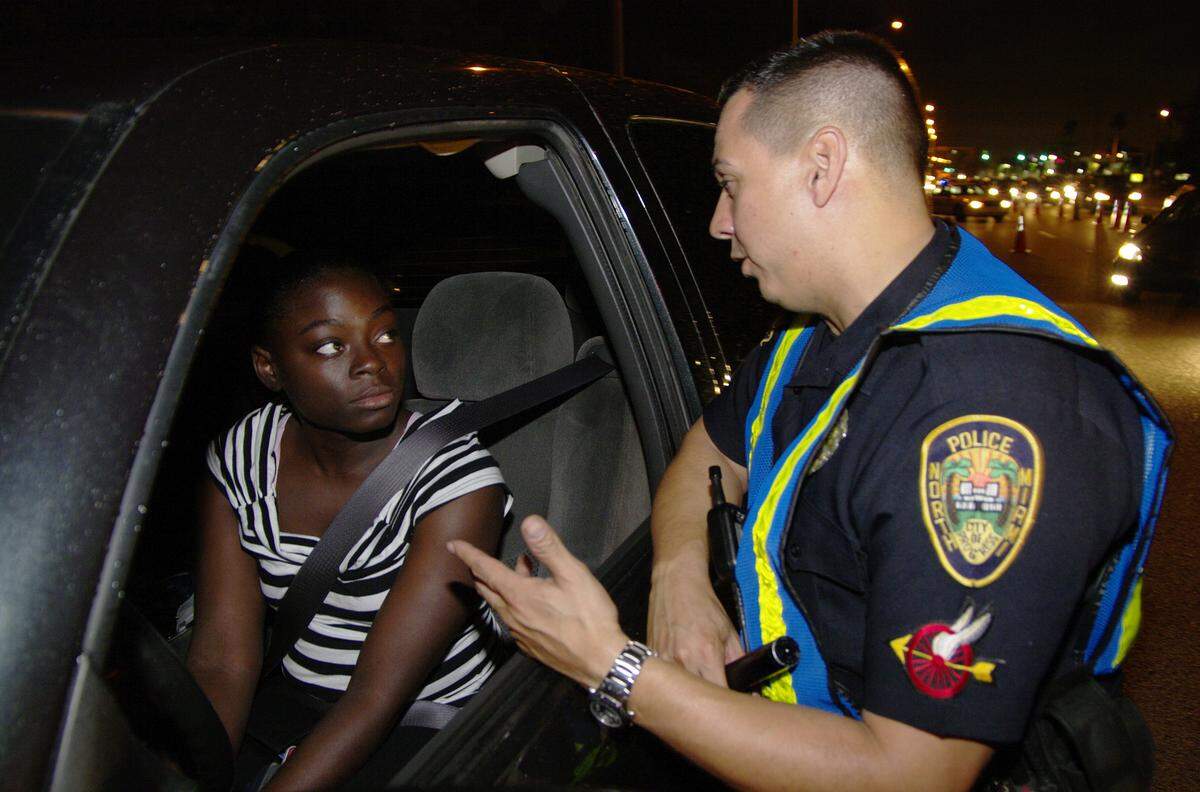
Even before the pandemic, Miami-Dade court officials had hoped to move many traffic hearings online, to alleviate the crowds and make life easier for motorists. “You have working people and it’s hard for them to come here and lose a couple of hours,” Leifman said.
Traffic court is also often a hassle for the cops who serve as witnesses, many of whom work afternoon or midnight shifts and must spend hours waiting in a courtroom waiting for their cases to be called.
The pandemic spurred Florida courts to shut down jury trials and suspend most hearings, save for emergency matters. And it forced courts statewide to quickly pivot to new technology to keep justice limping along. Even the Florida Supreme Court is all in, hosting oral arguments this month via Zoom.
The Florida court system purchased licenses for Zoom, the video conferencing service that has skyrocketed in use for professions of all stripes.
In Miami-Dade, routine criminal hearings are now conducted via Zoom, with lawyers, witnesses and members of the public logging on to watch or participate. Jury trials are still suspended until at least July, but some important matters — like self-defense claims or hearings on pre-trial detention — are now regularly underway.
Traffic trials don’t require juries. But making traffic court succeed via Zoom is still going to be a massive logistical feat for cops, court clerks, county tech workers, lawyers, magistrates — and motorists themselves.
The Dade County Association of Chiefs of Police has given its blessing to the plan, but each department still has to figure out how officers — under their union contracts — will appear when they are not on duty.
Patrol cops across Miami-Dade County will soon carry pamphlets explaining to motorists, after they’ve been stopped and cited, how to request Zoom hearings and join in the proceedings.
“As with all new information technology processes, all that has to be explained as much as possible, so there’s no confusion,” said Miami Beach Police Maj. David de la Espriella, the vice president of the Dade Chiefs of Police Association. “And this is a pretty big new. So we have to educate the motorists as much as possible.”
For ticket-defense lawyers — a cottage industry in a town with notoriously bad drivers — the return of hearings, if even by Zoom, is being welcomed.
The number of traffic tickets in Miami-Dade has plunged since many businesses closed and governments ordered residents to shelter at home.
In April 2019, police agencies filed nearly 19,754 traffic tickets. This past April, with the roads mostly empty except for essential traffic, cops ticketed just less than 4,000 — a stunning 80 percent decrease.
As society inches toward a new normal, and cars returns to the roads, the number of tickets being issued is bound to rebound along with Zoom hearings, lawyers say.
“Both attorneys and individual defendants have the benefit of avoiding to drive to court, sit in traffic, and pay for parking, all of which in turn will reduce costs for attorneys,” said Nicholas Sanchez, a managing partner at Miami’s Estrella Law Firm. “Since these things are so time consuming, it gives attorneys more time to work on other cases and even take on more hearings.”
Still, there are plenty of concerns about Zoom traffic court.
The video platform has been vulnerable to “Zoom bombing,” people disrupting meetings with profanities, music and even racist slurs. The company says its fixed many security vulnerabilities since use of the platform became so popular.
Access is also complicated because in Florida court, where the public is supposed to have the right to observe, only people with passwords will be allowed to enter — although the passwords will be given to whoever wants to watch.
Many drivers, particularly older or poor ones, might not have access to smartphones, tablets or computers to log onto Zoom. Leifman, the traffic judge, said those defendants will be allowed to appear by telephone and will have to answer a series of questions to ensure they are who they say they are.
Physical court hearings won’t go away completely either.
“We’ll still have limited in-person hearings for those who don’t have the means or sophistication to appear electronically,” Leifman said. “But there will be fewer people.”
Some lawyers worry that traffic trials themselves won’t be fair.
Internet connection problems, for instance, could hamper video and audio quality. That might be crucial in speeding trials, for instance, where cops will have to show their radar-gun documentation by holding up paperwork directly to their camera.
Miami ticket attorney Anthony Mallo said he believes it will be more difficult to cross-examine the police officers who are the chief witnesses to speeding, running red lights or failing to stop.
“It’s easier to lie when you’re behind a video than if you’re sitting in a courtroom taking the witness stand,” Mallo said, adding: “The accused always has the right to confront their accuser, and on Zoom you miss out on a lot.”
Leifman, the traffic judge, stressed that traffic court will be “rolled out slowly and carefully,” with plenty of time to work out technical kinks.
Even when the pandemic wanes, he said he believes Zoom traffic court will save taxpayers money, cutting down on overtime costs for police officers and helping motorists who might normally have their licenses suspended because they skipped a hearing.
Said Leifman: “Our hope is to make this permanent.”
This story was originally published May 14, 2020 at 6:00 AM.