
Two years after fatal collapse, Florida ready to build new FIU pedestrian bridge
Two years after a flawed design led to the deadly collapse of a pedestrian bridge that was under construction at Florida International University, the state said Wednesday it’s ready to restart the project with “enhanced safety measures.”
Florida’s Department of Transportation announced it will launch a bid process to select engineers and contractors who will design and build a new “signature” bridge over Southwest Eighth Street. The footbridge would connect the state school’s Modesto A. Maidique Campus to new apartment buildings for students and faculty in Sweetwater’s small downtown.
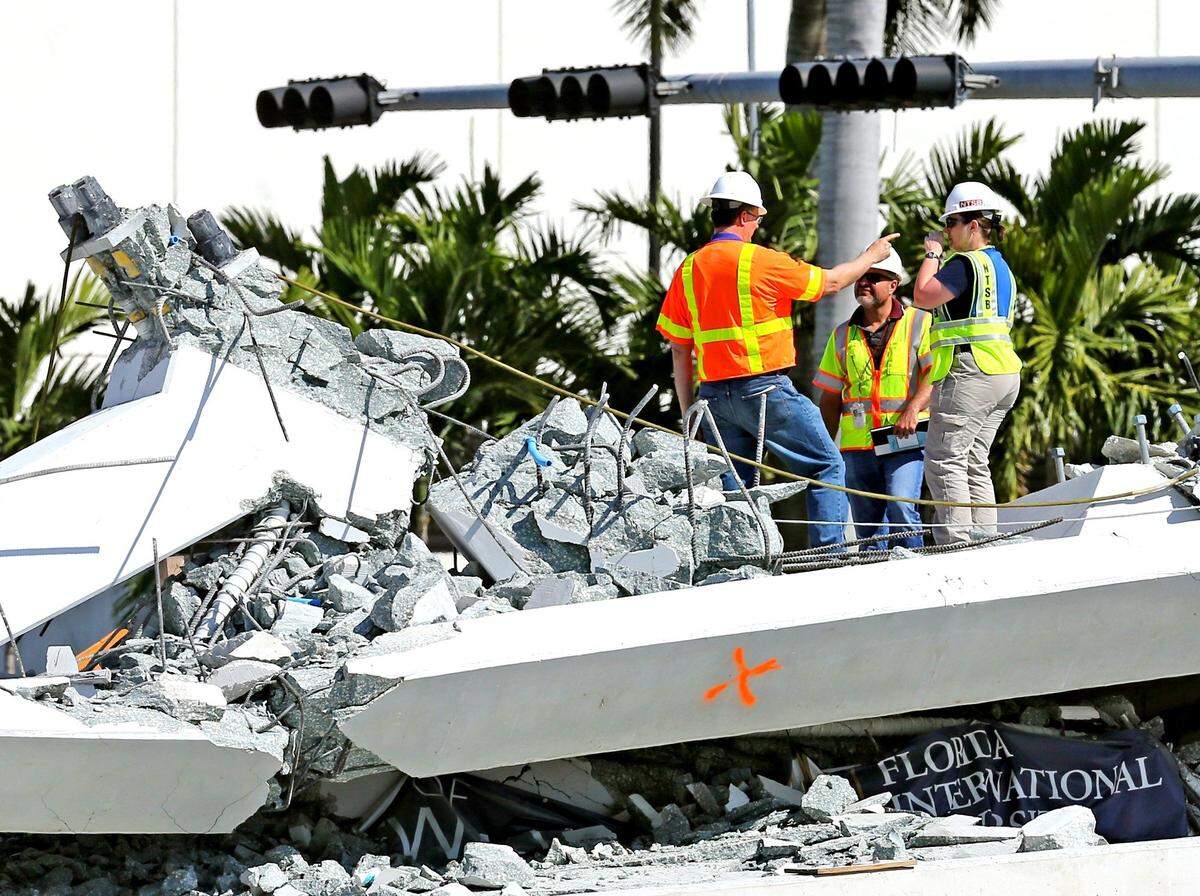
A federal probe faulted designers of the previous, doomed version of the FIU bridge for failing to flag structural flaws in their blueprint, and authorities for opting not to close the busy roadway on March 15, 2018, as crews tried to repair a series of cracks that appeared at the north end of the span after it was hoisted into place five days earlier.
The repair work caused the damaged concrete span to collapse as motorists waited at a red light below it, killing six people, including crew members and an FIU student, and seriously injuring others.
The 2019 report from the National Transportation Safety Board took aim at all parties involved in the project, including FIU, the state and the school’s contractors, for failing to exercise due diligence in addressing “abnormal” cracks that had been growing and spreading through a crucial support junction at the span’s north end. The report concluded the connection was left critically weakened by “significant” but overlooked design errors by FIGG Bridge Engineers. FIGG engineers erroneously downplayed the significance of the cracks, the report said.
Under a complex project setup, FIU drew up the proposal and hired the firms to design, build and manage the federally funded project, while FDOT, which has authority over Eighth Street, was part of the team overseeing planning and construction.
This time, FDOT will select the project team and a new design and also directly oversee construction, the state agency said. FDOT said it will incorporate safety recommendations from the NTSB in the process, though it provided no specifics.
FIU said the new bridge will cost $14.6 million to design and build, or about $2 million more than the old version, because of increased construction costs. The school told federal highway officials they will use a $9.5 million settlement from the contractors on the failed bridge, nearly $3.3 million in federal TIGER grants and unspecified, unused grants from the state and other agencies to pay for the bridge. Gov. Ron DeSantis has lifted a hold on the TIGER grants for the project that was instituted after the bridge collapse, FDOT said.
In a letter to the Federal Highway Administration, FIU senior vice president Kenneth Jessell wrote that “the need for the pedestrian bridge is greater today” than when the project was initially proposed in 2013. A new, privately developed student apartment tower is about to open at the foot of the future bridge, one of a cluster of recently built affordable residential projects in Sweetwater geared to serving the university.
In a statement released by FIU, Jessell said the new bridge project would include “an appropriate way to memorialize the victims of the 2018 accident.”
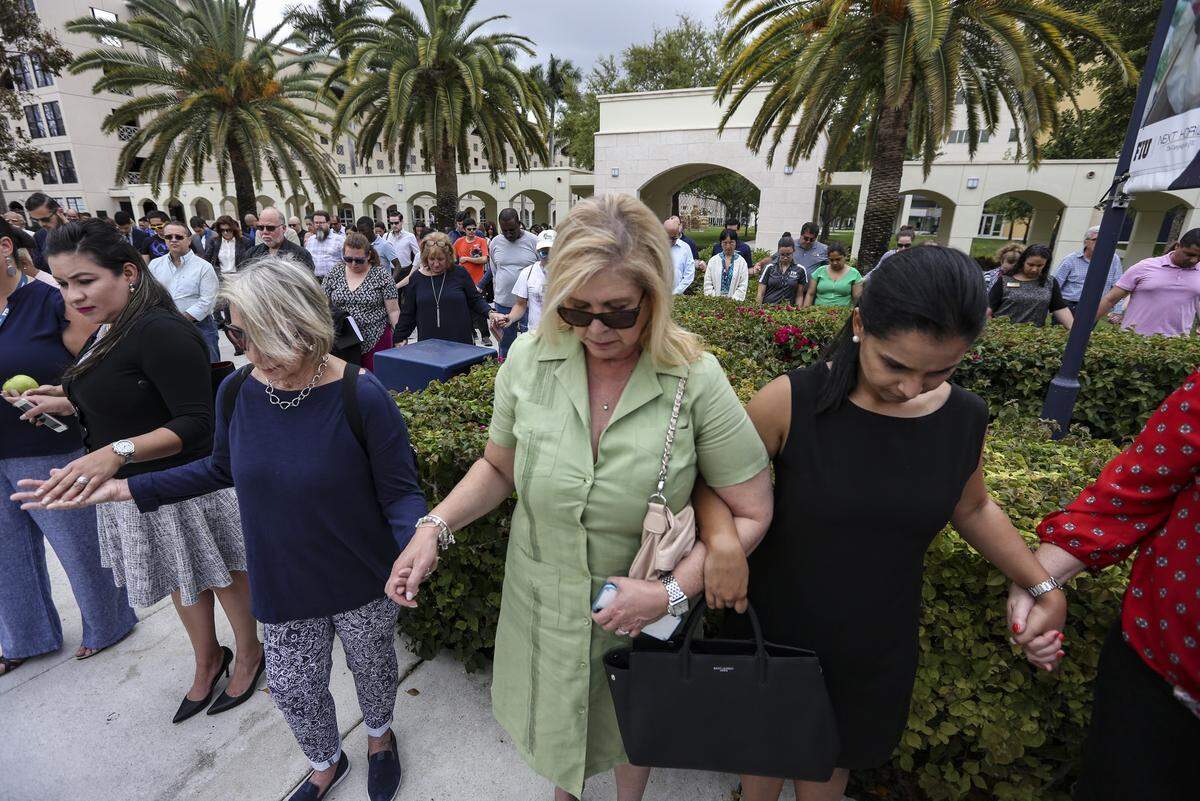
“We look forward to working collaboratively with FDOT and the City of Sweetwater on the new bridge to help keep our students safe,” Jessell said.
Sweetwater Mayor Orlando Lopez said he was “blindsided” by Wednesday’s announcement from the state. “We’re trying to get a little bit of information,” he said. Later in the day, his office released a statement from Lopez welcoming the “much needed” bridge.
”I am very pleased that we are forging ahead with the new pedestrian bridge project,” he said.
FDOT said it will “consult” with FIU on the bridge aesthetics. An FIU spokeswoman said the new bridge must still hew to the original vision for the project, which called for an iconic bridge to create a new gateway for the university and the town of Sweetwater. Such a “signature bridge” is a condition of the federal TIGER grants, FIU said.
FIU had chosen a proposal from Munilla Construction Management and FIGG for a striking concrete bridge with an unusual variation on a standard “truss” structural design that engineers say rendered it vulnerable to collapse if one support element failed. Federal investigators concluded the FIGG design would have stood up had the design error been detected and corrected.
But the consultants who helped FIU draw up its concept, TY Lin International, had recommended a traditional structural design with “redundant” support to ensure that failure of one piece would not bring the entire bridge down.
The MCM plan included use of accelerated bridge construction, a tested approach in which the main span was fabricated by the side of Eighth Street, then lifted into place in one day, to avoid extended or repeated closures of the high-traffic road. Though the so-called ABC technique initially drew scrutiny as a potential contributor to the bridge failure, federal investigators concluded it played no direct role in the collapse.
FIU said it could not say whether the technique, which the university’s engineering school has promoted, would be used for the new bridge until proposals from contractors come in.
Florida’s transportation department “has learned valuable lessons since the tragic events surrounding the FIU bridge collapse two years ago,” Kevin J. Thibault, transportation secretary under DeSantis, said Wednesday in a statement. “The Department will ensure all safety measures are in place and are followed so we may provide a safe option for pedestrians in this high-traffic area.”
The release cited the June 2017 death of an FIU student who was trying to cross Eighth Street as a reason to resume the pursuit of a pedestrian overpass for the school. Construction would take two years after a two-year design process, according to the release, suggesting a completion date in 2025.
This story was originally published May 6, 2020 at 11:13 AM.