
Miami’s arts and culture scene was flourishing. The coronavirus crisis is battering it.
Miami artist Michael Loveland, whose sculptural paintings and installations grace museum and private collections across the country, spent February and part of March making art at a residency program in Colorado. Uncharacteristically, he was unplugged from the news and blissfully unaware of the gathering pandemic.
When he returned home, Loveland said, “I came back to a different world.”
Within days, all his sources of income evaporated. The Coconut Grove gallery that sells his work closed indefinitely. The art he made in Colorado is stuck there. The worst blow came when a complex project he’s been working on for a year — curating three major exhibitions for the upscale Azamara cruise line — was abruptly canceled as that industry foundered.
Loveland found himself with a big warehouse studio in Little Haiti he could no longer afford. After 14 years there, he traded down to a much smaller shared space, borrowing a truck for the move. Since then, Loveland, his wife and two children have been surviving on her earnings from teaching yoga classes online and, with scant savings, wondering how long they can keep making the mortgage payments on their home.
Along with restaurant and hotel staffs and domestic workers , the broad economic shutdown stemming from the coronavirus pandemic is also battering the constellation of artists, actors, dancers and curators who, together with hundreds of nonprofit organizations and institutions and their support staff, make up the city’s increasingly vital cultural industry.
Like low-wage hospitality and retail workers, many of the estimated 44,000 arts and culture workers in Miami-Dade County eke out a living with little economic cushion in the best of circumstances. Now many of them — gig workers, performers and institutional staff alike — find themselves with no income and no ability to work.
Marquee organizations like the Frost Museum of Science, the Arsht Center for the Performing Arts, the Perez Art Museum Miami and Miami City Ballet are meanwhile taking multimillion-dollar hits to their bottom line as their doors are shut and shows and fundraising events canceled or postponed. All have added virtual programming, most of it free.
To date, PAMM and the Arsht, both of which receive substantial public operating support through Miami-Dade County, have managed to retain their employees. But the ballet company sent its 52 dancers home after canceling the season’s final series of performances. Frost Science, which does not get public operational support, furloughed more than half its 100-person staff. The science complex doesn’t have the relative luxury of going totally dark, however: It must retain the people needed to keep the fish and animals in its aquarium and nature exhibits alive, a costly proposition.
Though it’s impossible to tell yet how deep or long-lasting the damage might be, members of Miami’s cultural community fear the pandemic could endanger a blossoming but still-fragile cultural ecosystem that’s been carefully nurtured over decades — not to mention artistic careers that have taken years of painstaking work to build.
“Artists are just freaking out and not knowing if they will be able to keep going,” Loveland said. “I have friends who have spent thousands of dollars preparing for shows that may not happen.”
Arts backers worry that many of Miami’s smaller groups, which operate on shoestring budgets, might not survive a prolonged shutdown. A 2018 report commissioned by the Miami-based Knight Foundation, which has invested over $150 million in local arts grants, found that more than a third of the city’s cultural groups lacked cash reserves or adequate endowments even as the local scene exploded.
“At this point, the arts are in an economic free fall,” said Laura Bruney, president of the Arts and Business Council, a Miami organization that runs programs that advise and assist some 500 nonprofit cultural groups. “The initial impact is devastating to all the groups, especially the performing-arts groups. Even the bigger ones are undercapitalized in the best of conditions.”
The pandemic has underscored an aspect of Miami’s cultural class that’s often overlooked, Bruney and other supporters say: Its local economic impact, estimated by Miami-Dade County at $1.5 billion annually. They emphasize that the cultural community has been critical in raising Miami’s global profile, increasingly serving as a singular calling card for the city.
“That’s pretty substantial,” said Dennis Scholl, president and CEO of Oolite Arts, which provides free studios for visual artists, referring to the dollar impact. “In the last decade, you can’t talk about Miami without talking about our cultural community. It’s one of the drivers of tourism and our economy.”
Beyond that, of course, they say the arts serve as a source of community identity, comfort and even hope in normal times, something that’s especially true during the pandemic. Anxious people stuck at home are increasingly turning to the expanded and often creative offerings being put online by artists and performers and virtually every large cultural institution, they note.
“To quote something [artist] David Hockney said, the things that are important today are food and love, and art is love,” said Sergio Cernuda, co-owner of LnS Gallery, which represents Loveland. “We have a great moment now where we can help people who are having a hard time through culture and the arts. Culture is important, now more than ever.”
Artists and groups alike are now scrambling for assistance. Many hope to qualify for relief for jobless individuals and small-businesses and non-profits included in a massive bill passed by Congress. National groups like Americans for the Arts are setting up programs to help artists apply for low-interest loans and other relief. The Knight Foundation is working with its grantees on a case-by-case basis, in some cases reshaping the terms of grants, according to Victoria Rogers, Knight’s Vice President/Arts.
Local assistance efforts are also underway. Miami-Dade’s department of cultural affairs, a principal source of grants and financial and operational support for local arts groups and institutions, has sent out a survey to artists and organizations to determine their needs and design a response, as well as a financial tracker to help them document the personal or organizational economic impact of the pandemic.
Groups from Oolite Arts to the South Florida Theater League are organizing local relief programs to send money to help artists and actors, respectively, survive. Oolite put up $50,000, an amount matched by the Lynn and Louis Wolfson II Family Foundation. Developer and art collector Jorge Perez’s family foundation added $10,000. The Perez foundation also announced a $200,000 contribution to the Miami Foundation’s community recovery fund, a donation earmarked for assistance to local arts and cultural groups affected by the crisis.
Oolite plans to quickly send checks of up to $500 to over 200 artists, Scholl said.
“We have sadly been overwhelmed by applications. We’ve received hundreds. We’ve also been overwhelmed by generosity, so that Miami-Dade artists can have food on the table and make their rent for the month,” Scholl said.
In the meantime, many local artists, actors, dancers, musicians and organizations are turning their creativity to virtual performances and online exhibitions and studio and museum tours to keep audiences engaged — and, in some cases, to keep at least some staff and cultural workers employed. Some art galleries hope the effort will translate into sales to keep their businesses running.
For institutions like PAMM, Miami City Ballet and the Frost, it’s also encouragement for those fans and patrons still in a solid economic position to support the organizations by making or advancing donations, or purchasing memberships and subscriptions for use when the pandemic recedes.
“We decided it was a hopeful message to send: ‘This is what we do. We’re artists. We bring grace to people. We’re here for you,’ ” said Lourdes Lopez, artistic director at Miami City Ballet, which decided to go ahead with a planned subscription drive for next season in spite of the uncertainty. ”We got a very positive response out of the gate. I don’t know if it’s going to continue.”
The Coral Gables Art Cinema, which operates on a tight $1 million annual budget, has put a collection of classic and cult films that can be streamed free on its website, along with new releases that can be viewed online with purchase of a virtual ticket. It’s also offering discounted memberships and appealing for small donations, an effort that cinema founder Steven Krams said has proven effective.
The city of Coral Gables, its landlord, has also abated its already low rent, he said. The cinema, which is marking its tenth anniversary, is also applying for a small nonprofit business relief loan from the federal government. Because it recently received grants from Miami-Dade and the Coral Gables Community Foundation, he said the theater is in a relatively good position — for now.
But he noted that half of its budget comes from ticket sales, its café and venue rentals. That meant he had to lay off all but half a dozen of his 21 paid staff members, Krams said.
“We hope that this doesn’t go on for very long,” Krams said. “Being shut down is very serious for us. It could threaten the existence of the organization.”
Oolite has moved the art classes it offered at its Lincoln Road studios online. The classes are free, but Oolite will continue paying the teachers, Scholl said.
Loveland’s gallery, the three-year-old LnS, is also turning to technology. Gallerist Cernuda is designing virtual 3D exhibits of the gallery and has begun live-streaming studio visits with artists, starting with an Instagram live studio talk with artist William Osorio on Wednesday that’s now available through a link on the gallery website.
Cernuda said the shutdown has been especially tough because it came in the middle of what he called a “dream show” he had mounted after years of planning of paintings by the late Cuban master Carlos Alfonzo.
.jpg "Witnessing Perpetuity_ Works by Carlos Alfonzo_Obras en sala_LnS_Gallery, 2020CA Installation Shot 4 (LB).jpg")
Sales have been virtually nonexistent since the closure because art handlers and shippers are also shut down and collectors, like most Americans, are in isolation, he said.
“It’s certainly prolonged and it’s going to be until further notice. Nobody even wants to receive their artwork,” Cernuda said.
Gallerist Mindy Solomon, who was instrumental in organizing a group of art galleries in the Little Haiti and Little River area to host a popular monthly Sunday “Progressive Brunch,” said the forced closures came as the long-struggling local commercial scene was finally attaining economic stability. Sales in the past year or two, she noted, were “amazing for most galleries.”
“Everyone was feeling excited. Now it’s like we’re off the train. It’s like a science fiction movIe,” Solomon said. “The challenge is, do these businesses have the reserves and wherewithal to stay viable during this period? Most people don’t really feel like buying art right now. They’re worried about their jobs.”
If they can weather the shutdown, Solomon said, she’s confident business for galleries could pick up again after the pandemic subsides. Solomon recently purchased a warehouse in Allapattah to move and expand her gallery, and she still intends to go through with the plan.
“I just made a commitment to dig in deep. We all put deep roots in, and once we get past this, and we will, and we put on another brunch event, I think we’re going to have a tremendous amount of people coming,” she said. “People are going to want it. They’re going to want to feel good, to go to art openings. I would like to believe that we will come back and the public will be very excited.”
But Solomon said much will also depend on how the city’s larger cultural institutions and events, in particular the annual Art Basel Miami Beach fair, react. Art Basel’s parent company has postponed its main Switzerland fair in June to September. Though the vitally important Beach event is still on for early December, she questions how it may be affected by the postponement and whether galleries and collectors that have taken a big financial hit will still make it to the fair.
Grass-roots performance groups are also struggling to figure out a way to stay in operation as expected revenue from shows vanishes and prospects for reopened venues recede further into the future.
Dimensions Dance Theatre, a small ballet company founded in 2016 by former Miami City Ballet principal dancers Jennifer Kronenberg and Carlos Guerra, depends on performance fees for more than a quarter of its slender $275,000 annual budget, most of which comes from grants and donations. But the lauded company was forced to cancel nine performances and send its company of 14 dancers home indefinitely after its principal venues, the county’s South Miami-Dade Cultural Arts Center and another in Vero Beach, closed.
Kronenberg said they still hope to put on the company’s summer program. They worry about their dancers, who rely not just on a small income from Dimensions but from other performances and from teaching — all of which have dried up. Kronenberg and her husband also have lost the income from a ballet school they run.
“Sometimes it’s a blessing to be a small organization with less. Our staff is minimal. It’s not an administrative staff of 20,” she said.
“The serious thing for us is that we don’t quite see an end. How do you plan? We wake up every morning, and the situation has changed.”
Miami’s larger museums and performance groups meanwhile are gaming out multiple scenarios as the pandemic scrambles not just their financial picture but also exhibition and show schedules. Most are assuming they can resume normal operations by fall, if not sooner, but they’re also assessing options in case of a longer interruption. Few of them are good.
The grants and government subsidies that for most of the organizations represent a big chunk of operating budgets continue flowing for now, and most report that donors are not yet pulling back. But even under the best scenario they’re looking at having to make up millions of dollars in lost revenue at a time when the global economy may be crashing.
“We have never seen anything like this and we’re all trying to figure out how to maintain our programmatic presence, but dealing also with the human side and the business side. And that’s where we are,” said PAMM director Franklin Sirmans. “We have revenue that comes from our building being open, and right now we’re not open. I hope we can turn some corner soon to provide us some degree of, not comfort, but of how this is the way we’re going to get through.
“We just don’t know the when or the what. It’s just that weird kind of feeling.”
Luckily, he said, the museum had just pulled off two successful fundraising events, including its annual gala, just before the pandemic hit. Still, he said, he projects the museum’s potential revenue loss could be as high as $5 million, a big piece of its $14.7 million budget for the year, if it can’t reopen soon.
At Miami City Ballet, the cancellation of performances of the company’s full-length Don Quixote ballet in Miami, Fort Lauderdale and West Palm Beach, combined with postponement of a fundraising gala to September and other revenue losses, mean a “massive” revenue hit of around $6 million out of a $20 million budget, said artistic director Lourdes Lopez.
Its popular ballet school, another revenue source, has gone online, but Lopez can’t say whether in-person classes can restart for the summer session.
So the company had to make the “horrible” decision to send its dancers home four weeks early, Lopez said. She hopes to make it up by rescheduling Don Quixote performances for the fall.
Preparations for the next season are nonetheless underway, and the company’s skilled wardrobe staff have been making medical masks on the side for Nicklaus Children’s Hospital and other healthcare workers.
“As you sit down to plan a response as a leadership, the unknowns are so many,” Lopez said. “How many people are going to get sick? When is the apex going to be in Miami? We want to be agile. But do we move drastically now, or change something for a future we don’t know?”
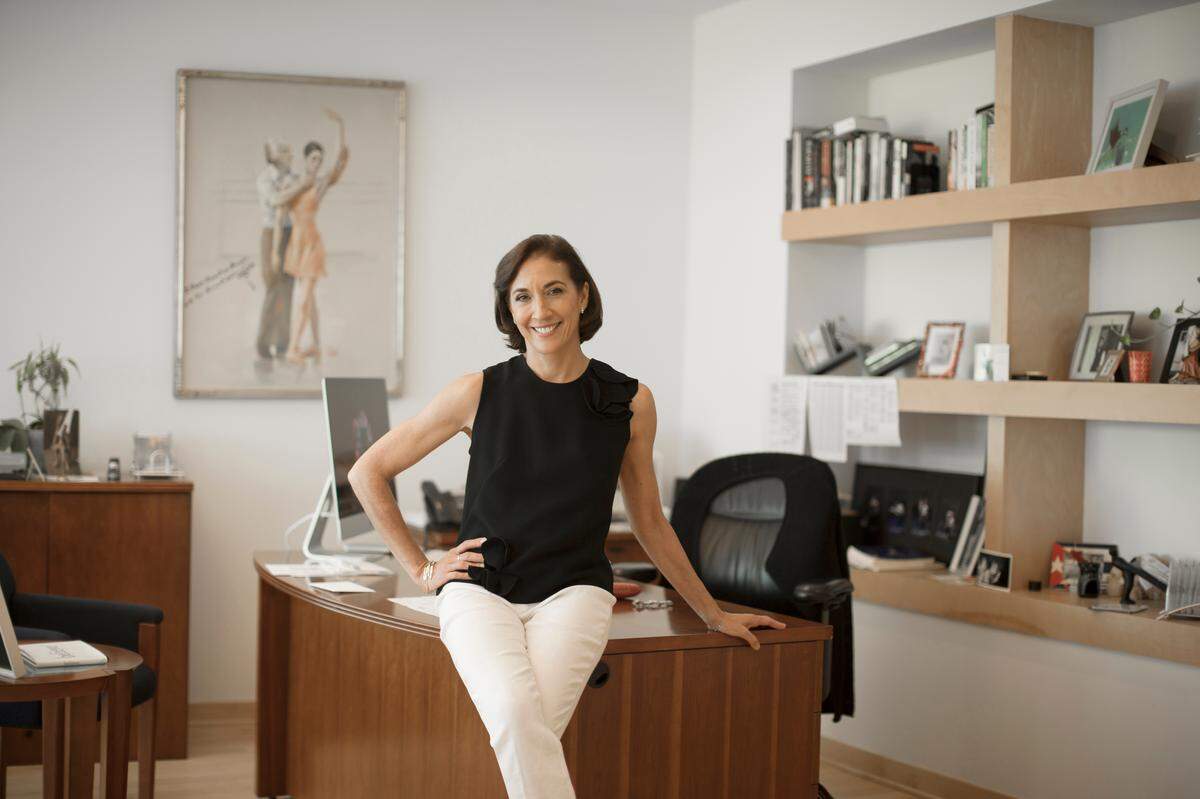
The fiscal crunch from the outbreak is especially acute for Frost Science, which receives no public operating subsidies after making a deal with Miami-Dade to advance the museum funds it needed to finish its new facility in downtown Miami.
As a consequence, the Frost relies on admissions, concessions and special events for 80 percent of its $18 million budget, said museum president Frank Steslow, and that’s money that’s not coming in. Its April 25 gala has been postponed at least until fall.
By furloughing most of its staff, Steslow thinks the museum will weather the blow if it can reopen by then, and if it qualifies for two pots of federal crisis assistance it’s applying for — all of that a big maybe.
“I think we can get through the short term. But it depends on what happens six to nine months down the road,” he said. “Are we still in an environment at that point where tourists and residents feel comfortable coming? We rely on that earned revenue probably more than another other cultural institution. And that’s where my efforts are focused.”
While it’s shut, the museum is still trying to meet its mission of promoting science, Steslow noted. It’s turned over the powerful servers at its planetarium to scientists using crowd-sourcing to model virus proteins through the University of Washington and Cal Berkeley.

The fiscal crunch is somewhat less grim for the moment at the Arsht, which has built up a solid donor and subscriber base and can boast millions of dollars in philanthropic grants and public support, in particular from Miami-Dade County. Administrators have been able to reschedule some big shows, and are asking ticketholders to retain their admissions or turn them into the Arsht as charitable donations, a spokeswoman said.
While its theaters are shut, the Arsht is launching Arsht@Home, an online series that center president and CEO Johann Zietsman says will offer tutorial videos from about 25 teaching artists, as well as “Miami Monologues” by theater artists and companies, intimate musical performances by local artists dubbed “Couch Cabaret,” and more. The teaching artists will be paid.
New World Symphony, the training academy for young classical musicians, is in a relatively enviable position, thanks to a donor who helped set the organization up with a $100 million endowment when it built its Frank Gehry-designed campus in Miami Beach a decade ago.
That backstop hardly means it’s in the clear, though, said president and CEO Howard Herring. The organization had to cancel the last eight weeks of its busy performing season and send its 87 fellows to socially isolate in its nearby residence facility, where they can still get coaching — and even perform — virtually.
But New World has kept its 80-member staff fully employed and working remotely. Most donors, subscribers and ticket buyers are fulfilling pledges and holding onto tickets or donating them back to New World, Herring said. Some large events that bring in substantial rental revenue have been reset for later in the year.
“They continue to be generous,” he said of New World supporters.
And while some fellows have opted to go home, most are still taking advantage of what New World has to offer, even if it’s online. Every Friday at 7 p.m., fellows are performing solos and duos on Facebook Live from the residential complex’s common room. They’re calling it “Live from our Living Room.”
“Music is important, but it’s equally important that you see the faces and hear the voices of those fellows talking about how they put those performances together. Also they tell you what they cooked for dinner last night, at Michael’s insistence,” Herring said. “As soon as we realized that there would be no more in-person sessions, we continued to do what we’ve already been doing, but in a more intense way.”

As of right now, New World plans to go ahead with its new season in October as scheduled, though Herring warns that could change if conditions warrant it. The organization’s board is hesitant to tap into the endowment, which has dropped with the stock market, but could dip in if necessary, Herring said — a luxury most other Miami-Dade cultural groups don’t have.
“We are fortunate,” Herring said. “But we’re all going to be confronted here. You can’t shut an economy down for four or five weeks or months and expect it not to have an impact.
“We are going to persevere.”
This report was supplemented by material from Christine Dolen of Artburst Miami.
This story was originally published April 6, 2020 at 7:00 AM.