
Starting Monday, Miami-Dade buses can use shoulders to dodge traffic on 836 expressway
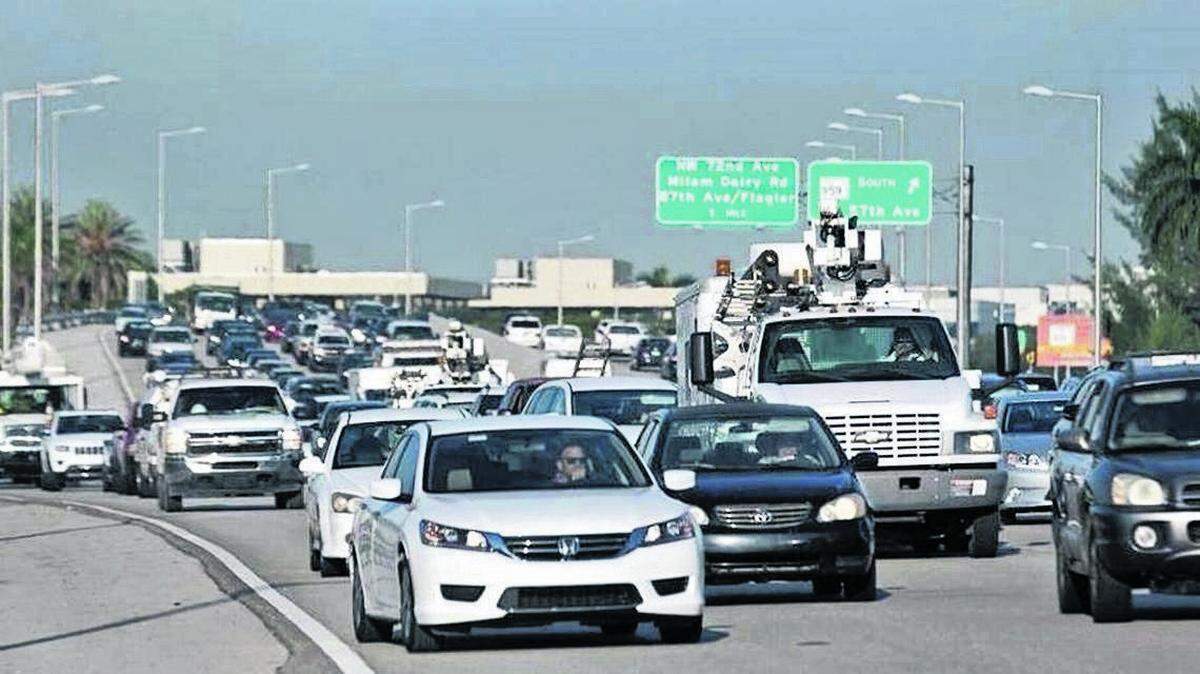
Miami-Dade buses plan to start rolling on the red-painted shoulders of the 836 expressway on Monday, launching an express service designed to let transit riders bypass traffic jams on the busy connection with downtown Miami.
The express bus service will link a new county park-and-ride facility by the Dolphin Mall with Metrorail and bus stations downtown. Buses are scheduled to leave every 10 minutes during morning and afternoon rush hour. The buses would use the new red “bus only” shoulders on the toll highway when regular traffic slows, and ride on the regular lanes the rest of the time.
When will the red bus lanes open on the 836?
Shoulder service was supposed to start last year by the independent toll agency that runs the 836 and planned to fund express buses from the Dolphin Station Park-and-Ride lot at 12065 NW 12th St. But the agency, the Miami-Dade Expressway Authority, is caught up in a legal fight over its existence, suing to block enactment of a state law that would replace it with a new agency.
The former MDX announced in June it wouldn’t hire an operator for the bus service, even as toll-agency crews were finishing the modified shoulders to accommodate the vehicles. Miami-Dade Mayor Carlos Gimenez serves as chairman of the MDX and has led the fight against the state law. The county transit agency he oversees agreed to take over the 836 shoulder operation, and announced Thursday its buses will begin running the route March 2.
Parking is free at the Dolphin park-and-ride lot, and a bus ticket costs $2.25. It will stop there and then have multiple stops between the Overtown Metrorail station and the main bus terminal near the Government Center Metrorail station.
The county Department of Transportation and Public Works said the new service will cost $2.8 million a year to run. Buses can use the new wider shoulders when traffic is moving slower than 30 mph, and the buses can travel no faster than 35 mph when on the red lanes, said Transportation spokesman Luis Espinoza.
This story was originally published February 28, 2020 at 5:02 PM.