
Bearing witness to the witnesses — Miami students document what Holocaust survivors endured
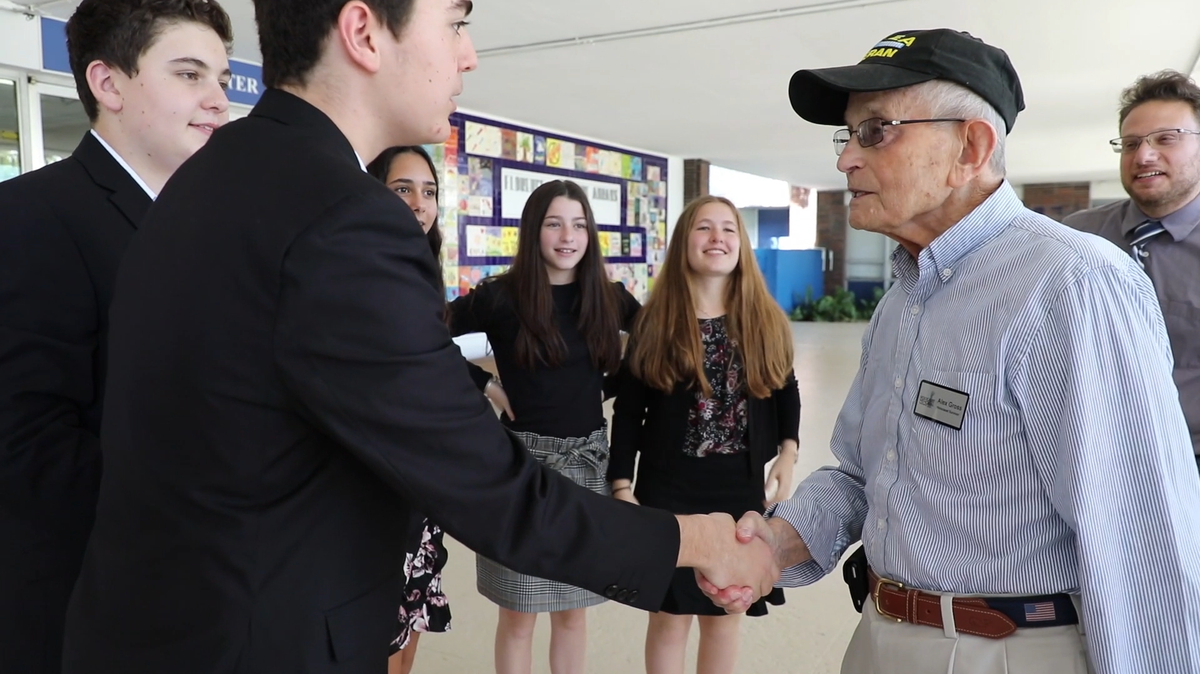
When Miriam Klein Kassenoff went to South Miami High School last year to tell her story about surviving the Holocaust as a young child, she wasn’t expecting anything different from the dozens of other times she’s shared her story.
But when she arrived at the school, she was greeted by the ROTC with a full military welcome, ushered to the school’s film studio and was introduced to about 12 students. She was then directed to sit in a chair, and three or four students asked her questions about her life in Slovakia before fleeing with her family in the early years of World War II. They also asked her what happened during and after the war.
All the while, students filmed the interview.
“They were inquisitive, interested and empathetic,” said Klein Kassenoff, a longtime Holocaust educator. “For me, it was a beautiful experience — they were warm and engaged.”
.jpeg "image1_resized (1).jpeg")
The interview and subsequent video made by the students was part of an oral history film project and curriculum called Names, Not Numbers, created by award-winning educator Tova Rosenberg 16 years ago.
A film about the program, using the videos created by Miami-Dade students and interviews the filmmaker had with the students about the experience, will premiere at the Miami Jewish Film Festival Monday evening. The 70-minute film includes both interviews of the survivors and of the students who took part in the program in Miami-Dade.
The public schools that were part of the program included South Miami High, Miami Coral Park Senior, Beach High and Fienberg-Fisher K8 Center in Miami Beach. Hebrew Academy, a private Jewish day school in Miami Beach, also participated.
Following the screening, Michael Berenbaum, author, scholar and founding project director of the United States Holocaust Memorial Museum in Washington, will moderate a panel discussion.
Rosenberg said she never could have imagined that a small program she started in a private Jewish school in Pennsylvania 16 years ago would spread the way it has.
“This is a completely different way of learning history,” she said. “It is a collaborative project that allows students to take ownership.”
With the number of survivors dwindling due to their passing — only about 80,000 Holocaust survivors remain alive in the United States, according to the Conference on Jewish Material Claims Against Germany — the videos serve as testimonials, Rosenberg said.
“Names, Not Numbers” is divided into several parts. The students watched previous films produced during the program, got training on video equipment and learned from journalists how to interview people, research their story and develop questions about a particular survivor.
The students then interviewed their survivor for two hours and took turns on the camera, learning how to make documentary films and editing their work, post-filming.
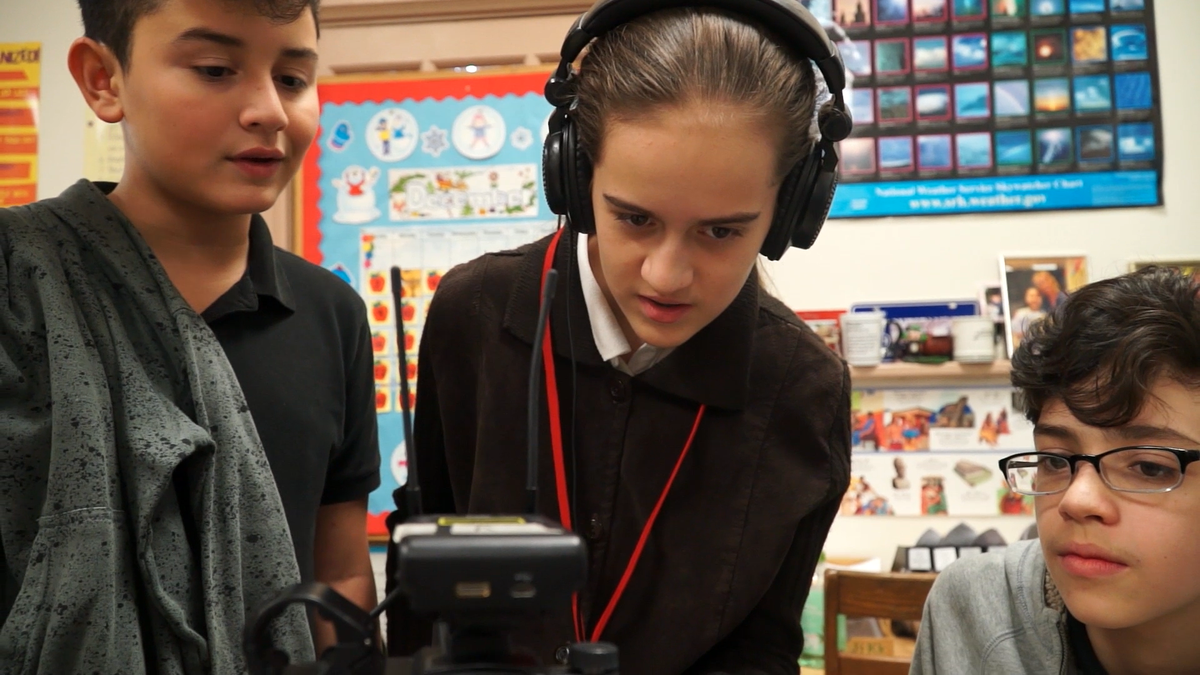
The film, “Names, Not Numbers,” is a culmination of the students’ video interviews with the survivors, along with their reflections captured by professional filmmakers.
The Miami-Dade students’ involvement in the project stemmed from a collaboration with the Holocaust Memorial Miami Beach.
Last year, the Florida Department of Education gave the Holocaust Memorial Miami Beach a $400,000 grant to support educational programs. Danny Reed, education coordinator with the Holocaust Memorial Miami Beach, had heard about “Names, Not Numbers” and decided it would be a great project to bring to the county.
“The end impact it had on students is tremendous,” said Reed. “I think it’s life-changing. These students are now the witness to the witnesses.”
Reed brought the idea to Klein Kassenoff, the education chairperson at the Holocaust Memorial Miami Beach, the founding director of the Teacher Institute on Holocaust Studies for the University of Miami’s School of Education and education specialist for Holocaust Studies for Miami-Dade County Public Schools.
Holocaust education has been required in Florida schools since 1994, when the Florida Legislature passed the Holocaust Education Bill. Other states that require Holocaust education include California, New York, New Jersey, Oregon and Virginia.
“The Holocaust is a reminder of the dangers of unchecked anti-Semitism and how hate can infect a society. We have to condemn it and confront it,” Klein Kassenoff said. “As Holocaust survivors, we know all too well what it feels like to be targeted simply for being who we were — Jews.”
Teachers signed up and the project began.
Klein Kassenoff, who said Miami-Dade County has one of the most robust Holocaust educational programs in the state, said the videos created can be used as part of the curriculum in the future.
Michael Puro, the filmmaker, said he has seen the benefit of allowing the students to create their own mini documentaries.
“As a filmmaker, I enjoyed the aspect of seeing kids explore documentaries,” Puro said. “They take their work very seriously.”
Klein Kassenoff, who was 4 or 5 when she and her parents and infant brother fled Kosice, Slovakia, in 1941, said she was hesitant at first to agree to be interviewed. She said her story of survival is quite different as she, her parents and her infant brother survived on their own and did not wind up in a concentration camp. After fleeing to Lisbon, they ultimately made it to the United States.
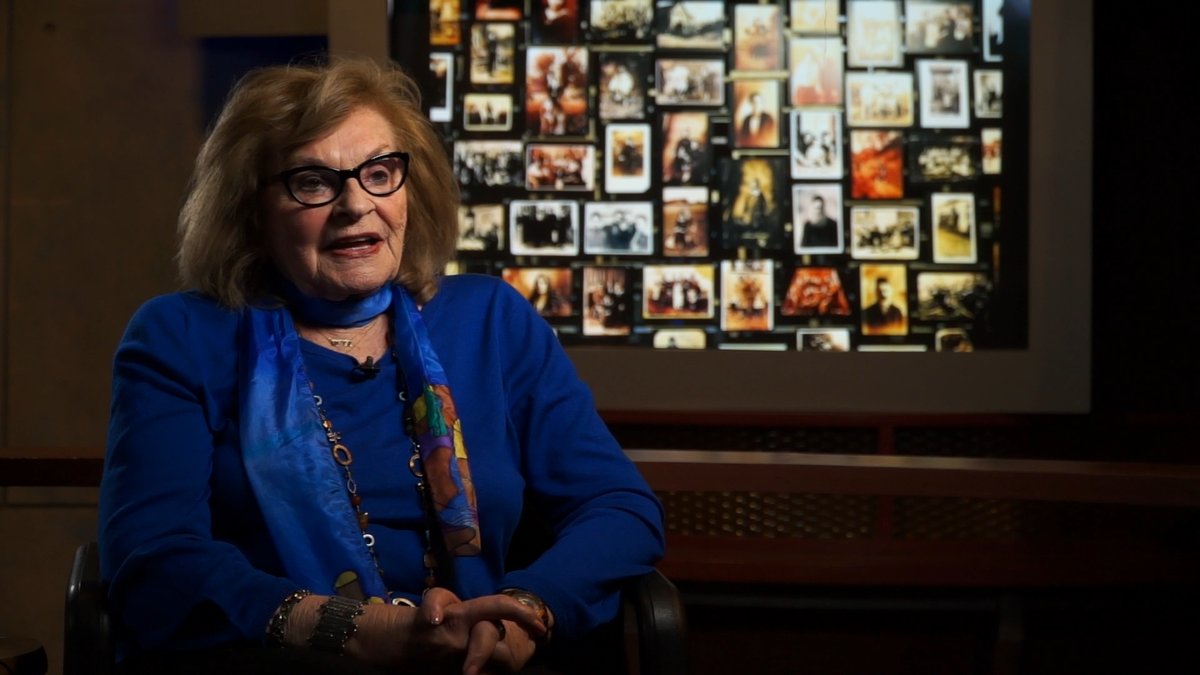
She wanted to give the spotlight to other survivors in the community. But eventually she agreed to do the project.
“I am so glad he talked me into it,” Klein Kassenoff said of Reed. “We must teach not always of the brutality of the Nazi Perpetrators but more of the humanity of the victims and survivors — let’s tell their story and teach how they survived.”
One of the students who participated was Jonathan Tanen, 15. He was in ninth grade at Miami Beach Senior High when his teacher David Reese asked for volunteers to participate. He said yes immediately.
“Actually talking to a survivor makes you feel more connected,” said Jonathan, now in 10th grade, who said he has been learning about the Holocaust for most of his life. “This was a great opportunity.”
Reese said he’d been teaching about the Holocaust for years, but this was different because the students got so involved.
Igor Shteyrenberg, executive director of the Miami Jewish Film Festival, said he suggested a full-length film because he had seen some of the students’ videos and “immediately saw the value” of having a film that would be part of the festival lineup. He contacted the others involved in the project to develop the idea.
The film is one of 107 films shown from Jan. 9-23 during the festival, now in its 23rd year.
“There is burden of responsibility we feel to give the survivors the recognition they deserve,” he said. “This film takes viewers on a journey.”
Klein Kassenoff’s take on the film: “The moral of this film project is that these survivors DID survive and here they are today — energetic and articulate and eager to tell their story and to contribute to our community.”
If you go
What: World premiere of “Names, Not Numbers” as part of the Miami Jewish Film Festival
When: 7 p.m. Monday
Where: Jewish Museum of Florida, 301 Washington Ave., Miami Beach, FL 33139
Cost: General admission $15, seniors and students $14, and members of festival $11
Contact: Visit https://miamijewishfilmfestival.org or call 1-888-585-3456.
Seeking stories of women who contributed to World War II effort
As part of a special program, “How Did American Women Act? Heroism on the Home Front,” the U.S. Holocaust Memorial Museum, working with the Miami Herald, Miami Dade College, and the National Women’s History Museum, is collecting stories about American women’s contributions during World War II., from serving in the Armed Forces to working on the assembly lines to produce war-related goods.
We are also interested in hearing about American women who helped rescue Jews from the Nazis.
The Miami Herald will feature stories that relate to South Florida as part of the program, which will be at 7 p.m. Feb. 20 at Miami Dade College, Wolfson Campus, Chapman Conference Center, 254 NE Fourth St.
Share your stories at hrld.us/awa
To register for the event or for more information, call 561-995-6773 or visit ushmm.org/events/women-miami
This story was originally published January 17, 2020 at 7:00 AM.
