Meet Miami’s fat cat, a 35-pound Siamese. She’s part of a pet obesity epidemic
No loving pet owner condones body shaming, but Amy is one fat cat.
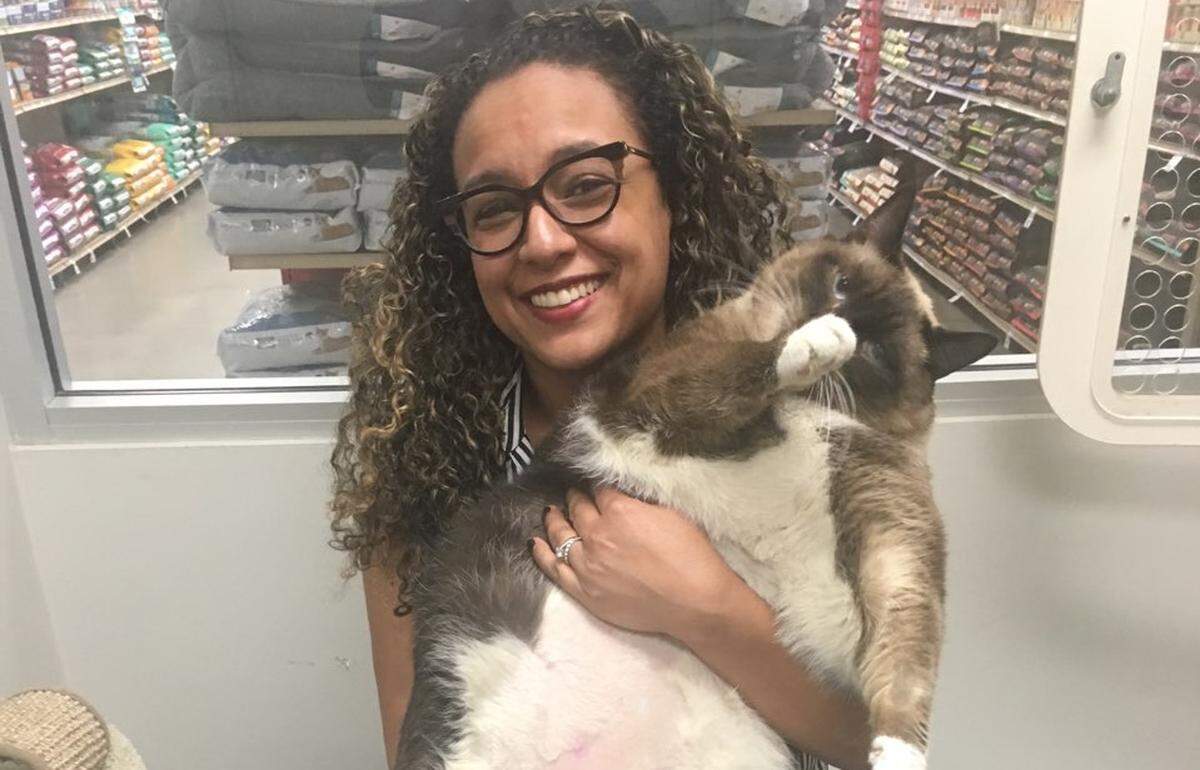
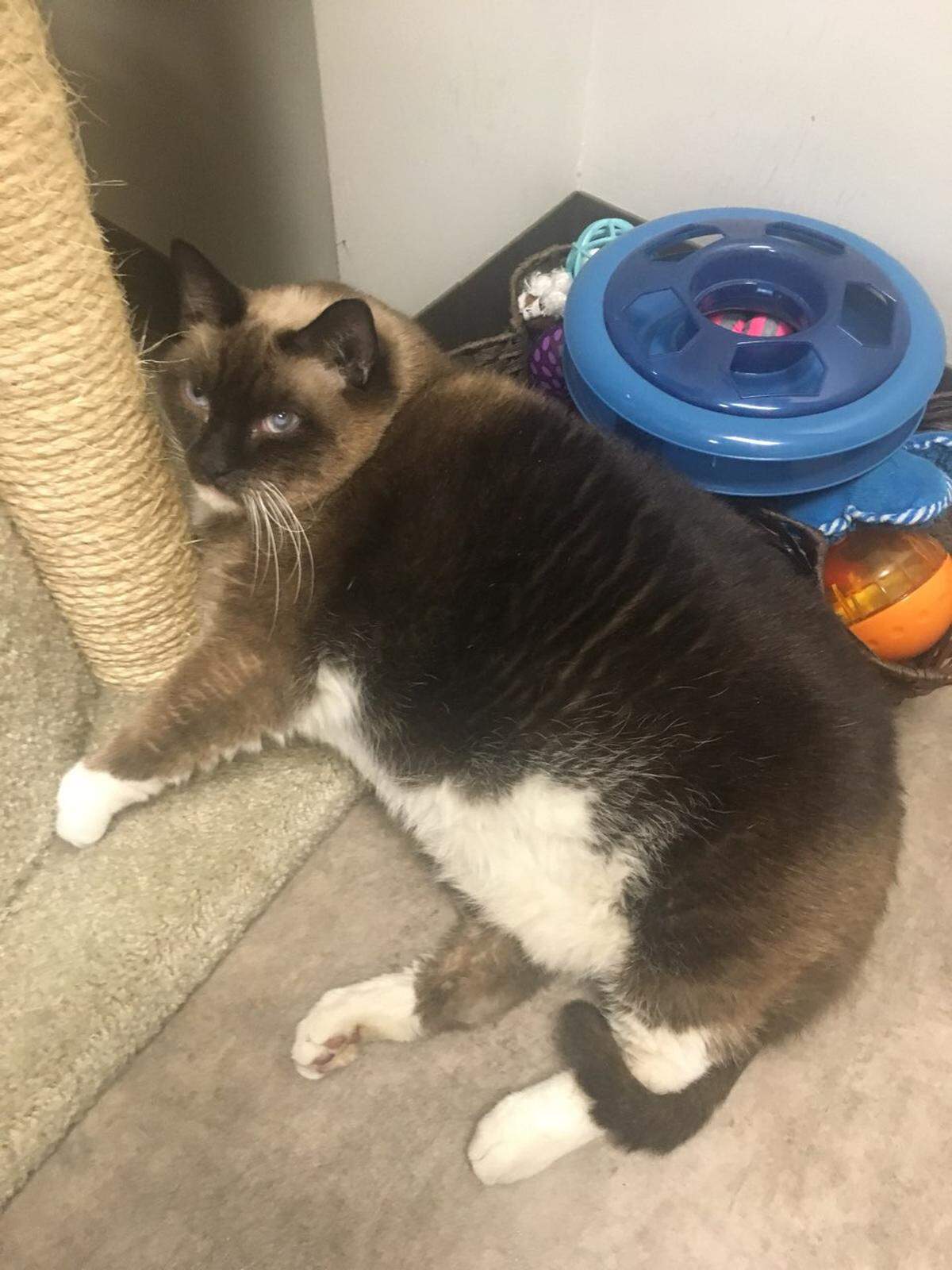
Amy, a 5-year-old Siamese, weighs in at 35 pounds, 23 pounds over her ideal weight. She weighs more than a microwave oven, or two bowling balls. She has a sumo wrestler’s build. If there was a Super Bowl for cats, Amy would play defensive tackle.
Don’t pick on Amy, though. American pets, like their American owners, are stuck in an obesity epidemic.
Amy, the full-figure feline, is a lot to handle. Perhaps that’s why her owner surrendered her to the Miami-Dade Animal Services shelter, where she was put on a diet and fitness regimen. She could barely walk, so staffers attached a harness and leash and coaxed her into waddling a few yards across the floor.
But Amy gave it a go, unlike Cinder-Block, the obese 22-pound cat who became a celebrity when a video of her half-hearted workout on a veterinary clinic treadmill went viral in October. Viewers could relate to her sitting next to the machine, with one front paw moving limply with the belt as she meows in plaintive tones. Cinder-Block, a gray 8-year-old from Bellingham, Washington — her name was Cinder “but we added ‘block’ because she was fat,” vet Brita Kiffney said — was turned in by an owner caring for a relative with dementia who asked to have the cat euthanized. But the clinic adopted her and she has since walked on the treadmill and shed a couple of pounds toward her goal of reducing to 12 pounds in two years and helping her cope with the arthritis that limits her mobility.
Miami’s Amy is even fatter, but size did not matter to Ana Rhodes, who adopted Amy on Saturday. She was enchanted by Amy’s sweet disposition. She’s also been rescuing pets for 25 years.
“She’s awesome and so beautiful,” said Rhodes of West Miami, who added Amy to her brood of two cats and two dogs. “You pet her and she purrs. Siamese tend to be talkative. She’s a big chunk of love.”
Amy was previously turned in to Animal Services as a 32-pound stray in 2018. She has had three owners since. Rhodes suspects she was fed table scraps and kept in a confined space.
“It makes me sad to see such a fat kitty cat who has a hard time reaching around to groom herself,” said Rhodes, who founded a cat adoption and foster organization called Forever Saved with her friend Criquet Summerlin. “We’ve got her on special food and will have bloodwork checked to see if there’s an underlying cause. But she is healthy and in good spirits.”
Veterinarian and Animal Services clinic supervisor Alejandra Duran said Amy is on the path to a slimmer future with Rhodes.
“Amy has probably been subject to boredom and anxiety so she eats instead of walking around,” Duran said. “Cats tend to stress eat just like humans.”
If pets are a reflection of their owners, it’s no coincidence that obesity rates are climbing for dogs, cats and humans.
Nearly three-quarters of Americans are overweight and 40 percent of them are obese, which means their Body Mass Index, an indicator of body fatness, is 30 or higher, according to the U.S. Centers for Disease Control. Studies and surveys show that about 56 percent of dogs in the U.S. are overweight, with 18 percent obese, and 60 percent of cats are overweight, with 28 percent obese.
Owners are in denial about their sedentary, overfed pets. The Association for Pet Obesity Prevention found that 95 percent of owners do not think that Rover or Bella is chubby, causing the “fat pet gap.”
“People ignore warnings about pet obesity the same way they disregarded that smoking was deadly for decades,” said Ernie Ward, a vet who founded the association, adding that 20-pound cats were unheard of 20 years ago but are commonplace today. “Obesity affects nearly everyone — human and animal — in some harmful manner, steals billions in medical bills, and robs quality of life and life expectancy for hundreds of millions.”
Overweight dogs and cats are at increased risk for developing diabetes, arthritis, cancer, hypertension, kidney disease, skin infections and chronic fatigue. Indoor XXL cats deprived of stimulation can use up their nine lives more quickly than outdoor cats, Duran said.
“We get pets and we aren’t responsible about exercising them. We go to work for 8 or 10 hours and they’re left sitting at home,” she said. “We don’t give them the proper types of food or pay attention to the proper quantity of food for ideal weight. Chihuahuas and Labradors need different amounts of food according to their size, as do kittens and puppies.”
Offer meals on a set schedule and pick up any uneaten food after 15 minutes rather than keeping the bowl full. Limit snacks and avoid high-calorie chews or biscuits.
“You wouldn’t feed your child candy or Chicken McNuggets all the time so why would you give your cat junk food?” Duran said.
While dogs can snack on carrots or crackers with peanut butter, Duran does not recommend human food for cats because their gastrointestinal systems are more sensitive than dogs.’ Milk can cause a stomachache. Grapes and raisins are toxic to cats.
Recreation is essential. Try hikes or urban walks. Cats can be put on a harness and trained to go on walks, or put your cat in a stroller and get him or her outside. Allow indoor cats to perch by a window so they can see what’s happening. Dogs enjoy swimming or playing fetch. Create food puzzles to make pets work for their food.
“Our pets don’t watch Netflix or read novels so they need challenges, activity,” Duran said. “You can make homemade toys. You can grow catnip. You can take an old towel, put cinnamon on it and let your cat pounce at it. Indoor cats aren’t chasing lizards and birds so they need a chance to be a predator inside. Bond with quality play time rather than providing food that lasts a moment and it’s gone.”
Dogs need at least 30 minutes of exercise per day and cats need at least three five-minute periods of intense movement, according to Ward, who wrote a book called “Chow Hounds.”
Heavyweight pets need to shed pounds gradually. Crash diets can lead to sudden, life-threatening liver failure in cats. Cats can safely lose 0.5 to 2 percent of their body weight per month, and for dogs, it’s 1 to 3 percent per month.
Keep an eye on your pet’s body condition and if he or she looks portly, visit the vet and construct a health plan.
“Is my pet overweight? This is the most important question you must ask your veterinarian — and one your vet may not be eager to answer,” Ward said on his website. “The American Medical Association officially defined obesity as a human disease in 2013. I’d like to see the American Veterinary Medical Association follow.”
Rhodes rescued her first cat from boys throwing rocks and bottles at a Siamese with a damaged ear at her grandmother’s apartment complex in 1996.
“I got involved with the Cat Network and now I’m adopting out eight or nine cats per month and we’ve got about 35 cats and dogs matched up in foster care,” said Rhodes, who makes sure pets are spayed or neutered and vaccinated. “If we could get more people involved in fostering pets, it would make a huge difference.
“Now, Amy, she’s going to require more attention but she’s 35 pounds of cuteness and sweetness, and I couldn’t resist.”
This story was originally published January 17, 2020 at 6:00 AM.