
What Miami was like in January 1977, on the day it snowed in the city
It happened. It was unbelievable. But it happened. On a bitter cold Miami day, Jan. 19, 1977, it snowed in Miami.
And to this day, those who remember it, still talk about it.
Miami was a different place back then. The downtown skyscrapers had not yet sprouted. West Miami-Dade was rural or industrial. Miami struggled with issues of diversity and inclusion.
Join us for a look back at the day it snowed and for a glimpse at Miami in 1977 through the archives of the Miami Herald.
WHAT MIAMI WAS LIKE IN 1977
Published Aug. 26, 2007
By Paul George
Greater Miami in 1977 seems light years away from the city of today. Yet the trends that shaped and characterize 2007 Miami-Dade County, including development and population growth, were well underway 30 years ago.
Horse and farm country a couple of decades earlier, Kendall in 1977 was pushing west. Northwest Dade, also heavily agricultural until the recent past, was undergoing urbanization, too, with Miami Lakes, Carol City and Palm Springs leading the way.
Closer to the core, Brickell Avenue, one of the area’s most attractive residential streets, was on the cusp of great change, as developers began razing aging homes to make way for high-rise condominiums. By the end of the decade, the Palace, Atlantis and Imperial -- each designed by the innovative new firm Arquitectonica — were in the works. Developer Tibor Hollo, who believed in the future of the decaying area north of downtown, opened the heralded Omni Shopping Mall, complete with a 21-story hotel. Farther north along Biscayne Boulevard, Florida International University, Miami’s new state university, opened a second campus in North Miami.
Proponents of downtown, which was ailing from a dwindling residential base and the flight of businesses and professionals to suburbia, hoped Metrorail, still at that time in the planning stages, would bring more people to the old quarter. Bicentennial Park, which opened on the site of the earlier Port of Miami in January 1977, disappointed its champions, as visitors failed to materialize. Historic preservation, a new mindset, was in the air in run-down South Beach where Barbara Capitman and the newly formed Miami Design Preservation League started a movement to save the area’s Art Deco buildings.
Meanwhile, the rapid “Latinization” of Miami, which would ultimately transform it into an international city, moved forward. By 1977, about 500,000 Hispanics lived in Greater Miami, more than 85 percent of whom were Cubans. Depicted in the media as an exotic venue, Little Havana was already a popular destination for visitors. Many visitors would come in subsequent years to the Calle Ocho Open House, created in 1977, and later known as the Calle Ocho festival.
Many companies conducting business in the Caribbean and Latin America had established headquarters in the South Florida area as a result of the rising influence of Hispanics — though the political empowerment of Cuban Americans was still several years away. Instead, Greater Miami’s power brokers remained, however tenuously, white males who spoke with a slight Southern accent, and, as often as not, pronounced their hometown “Mi-am-uh.”
After civil rights legislation was passed, the area’s long-repressed black population recorded impressive gains. The dynamic Dr. Johnny Jones was appointed superintendent of the county’s large public school system in 1977. Father Theodore Gibson, the area’s preeminent civil rights leader, held a seat on the Miami City Commission. The Black Archives, History and Research Foundation of South Florida opened in Liberty City in the new Joseph Caleb Center.
Since its early days, the history of Greater Miami has been marked by controversy and filled with flamboyant characters; 1977 was no different.
The day before snow fell in Miami for the only recorded time in its history, the County Commission passed an ordinance banning discrimination against gays, setting the stage for a bitter battle with conservative forces led by singer and Miami Beach resident Anita Bryant, who succeeded in forcing the overturning of the law.
That and other controversies appeared quaint in the years immediately following 1977, when Greater Miami was racked by the cocaine wars, racial rioting and the chaotic influx of more than 125,000 Cubans in a six-month period during the Mariel Boatlift.
Paul S. George, a professor at Miami Dade College.
MEMORIES OF THAT DAY
Published Aug. 26, 2007
By Mohamed Hamaludin
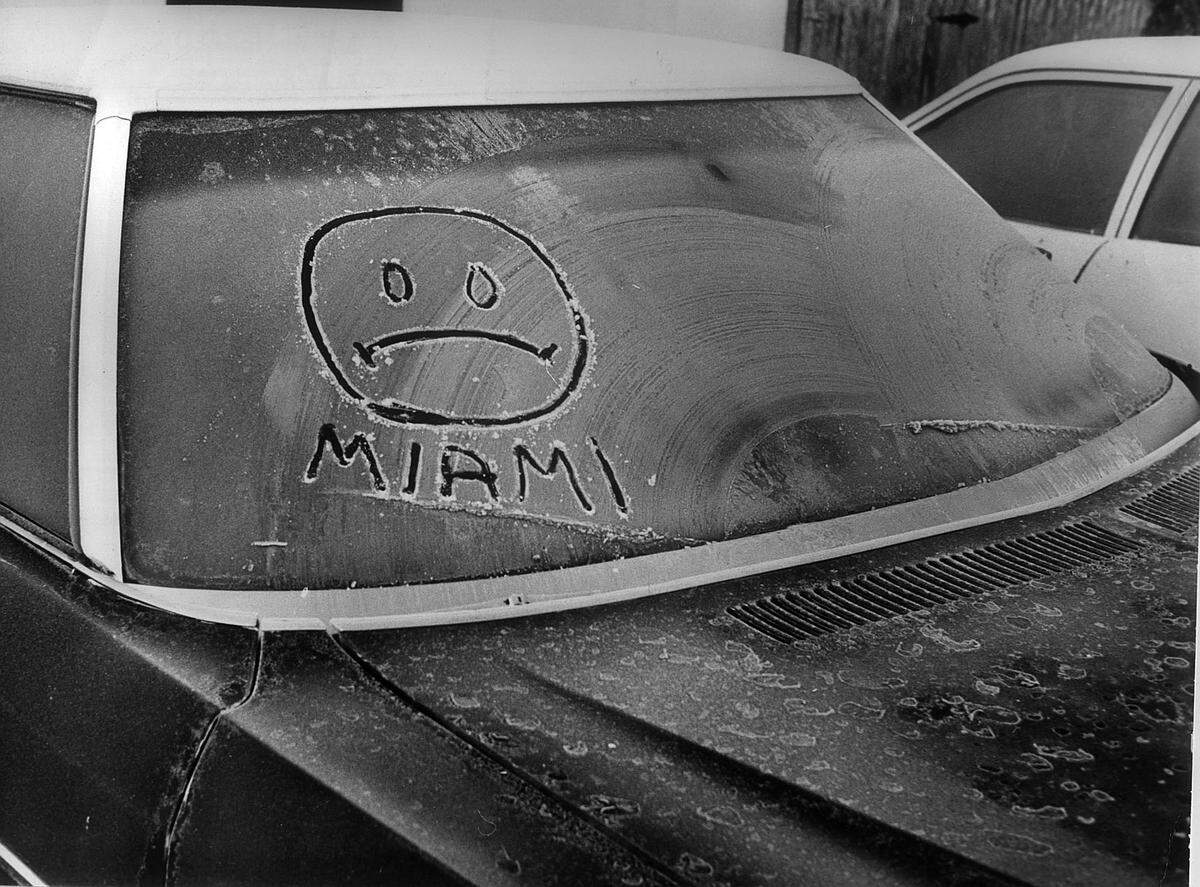
Rick Sanchez remembers well the morning of Jan. 19, 1977: Snow fell in South Florida. A teenager then, Sanchez rushed out of his Hialeah home, scraped some of the white stuff off his father’s car and took it into the house. He put the snow in the refrigerator to preserve it.
The snow didn’t last, but the memories of that day and all of 1977 have stayed with Sanchez, now a CNN weekend correspondent and news anchor, and with his fellow Hialeah High graduates through the decades.
“It was one of the greatest years of my life and certainly one that defined my future,” said Fabiola Santiago, now a Miami Herald staff writer.
“What stands out most for me is the work we, the journalism students of Hialeah High School and our advisor, Mrs. Bonnie Sipe, published in The Hialeah High Record, against threats of censorship by the administration.
“The most notable and enterprising was a spread on sexuality pegged to the debate on gay rights, and it included interviews with Bob Kunst and Anita Bryant, as well as a survey of the student body on sexual attitudes and practices.
“It left me no doubts about what I wanted to do with my life.”
Nancy Rheaume Hernandez, then a cheerleader and now an accountant, still remembers “the feeling of safety and friendships forever.”
“Back then, you could do a lot of things you won’t allow your children to do now, like such a simple a thing as taking a bike ride,” she said.
Hialeah Mayor Julio Robaina shares that sentiment about 1977.
“I was in middle school, and in the afternoons I would ride my bike around 12th Avenue and Eighth Street,” Robaina said. “I would also play football on the street with my friends. We would mark the field with paint on the street, something that is not allowed now. I loved growing up here, and I hope that 30 years from now the city is even better.”
Councilman Jose Caragol was a state of Florida interpreter in 1977.
“Hialeah had very few houses, and it used to feel really far to go from Miami to Hialeah or vice versa,” he recalls. “There was almost only one way to cross from one city to the other, and that was Okeechobee Road.”
Santiago remembers the roads. Red Road — Northwest 57th Avenue — ended in a field of dirt and weeds at what is now Miami Gardens Drive.
Also, she recalls, the area was starting to see an influx of Cubans with the development of the Lake Stevens area west of 57th Avenue just past the Palmetto Expressway.
“A brand-new three-bedroom, one-bath home there sold for a little more than $20,000,” Santiago said.
When Cubans started to move in in large numbers throughout the 1970s, white non-Hispanics whites began to sell their homes and move away.
Retired U.S. Sen. Bob Graham, a Democrat from Miami Lakes, recalls those days, also. The northwest, which had largely been an area of agricultural farms, was rapidly becoming urbanized, he said. Miami Lakes and a half dozen communities around it, such as Carol City and Palm Springs, were all growing rapidly.
Miami Lakes, Hialeah’s neighbor, was about 15 years into its development in 1977, said Graham, whose family created the community that a few years ago incorporated into a town.
“It was a good year, generally a prosperous time in South Florida. We were fortunate in having a steady flow of people interested in buying homes in Miami Lakes and occupying one of our offices,” Graham said.
Meanwhile, long before there was the Miami International Mall or shopping plazas lining the stretches of Doral Boulevard, residents living in the swath of undeveloped area then called West Dade had to travel to Miami Springs and Miami Lakes to do their grocery shopping, Morgan Levy recalled.
Levy moved to what is now Doral in 1985 from Westchester; in the ‘70s, his trips to the West Dade area were few and far between.
“Very few people drove out there,” Levy said. “There really wasn’t much to see or do. The Florida’s Turnpike extension didn’t even exist out there at the time.”
By the early 1980s, the area started to see some growth, and Levy and other residents from the area formed the West Dade Homeowners Federation to protect the area’s interests before the County Commission and became its long-serving president.
He said Northwest 87th Avenue was “a little two-lane road at the time.
“It was a bunch of empty lots. The area was totally undeveloped; 36th Street was just a two-lane road to nowhere.”
Still, Levy said, residents knew it was only a matter of time before their tranquil community would turn into the bustling 15-square-mile city it has become.
“West Dade was the only way the county could expand,” Levy said. “Everyone knew more developments were coming our way; we just wanted a say in what was coming in.’
Hernandez, who lives in Miami Lakes, spoke as she led the planning for the 30th anniversary reunion of the class of 1977 held July 27-28 in Miami Beach.
The class had just under 800 students. Sal Susi was the principal, the valedictorian was Mercy Barreras and the salutatorian was Helga Rippen.
Other notable alumni, Hernandez remembers, include Ross Jones, who played Major League baseball; business owner Orlando Sharpe; and Dale Wallace, who owns several Melting Pot restaurants.
Sanchez remembers the graduation as a special occasion for a teenage Cuban American living in a city poised for a major demographic shift. But during his youth, it was dominated by white Southern culture.
“We had to go to the sock hops; everybody had to do it in the gym,” Sanchez recalls.
But Hialeah was being changed in a way that would reflect “what Miami was, what Miami was to become, kind in the middle then.”
“Now here was I, a Cuban kid, coming to Miami, my parents getting a culture shock,” said Sanchez, who immigrated with his parents in the 1950s.
He saw the culture shock in his father’s attitude toward football: “He called it a bully sport because, you know, everybody jumps on the one guy with the football.”
Ironically, Sanchez himself not only ended up playing football at Hialeah High, but football launched him on the path that has led him to his national television job, based at CNN’s headquarters in Atlanta.
“I don’t know how many people from our area and our era ended up going on national TV and doing the news for one of the best networks in the world,” he said. “I bring a lot of who I am to what I do, and growing up in Hialeah was a big part of that,” Sanchez said.
Graham expects continued growth in the northwest area, which, in the 1970s, was “one of the fastest-growing regions in South Florida, becoming a very diverse community, especially with the influx of Latinos.”
“In my neighborhood,” he said, “there are people from Peru, Chile, Panama, Colombia, Venezuela, as well as large numbers of Cubans and Nicaraguans.”
“I think that pattern is likely to continue. The type of economy has been like the character of the population: diversified. There are significantly more international businesses in Miami Lakes -- there must be a dozen Latin American headquarters for companies, including some large companies such as American Express and Caterpillar Tractor.
“It has also become a high-tech area; the largest employer in Miami Lakes is Johnson & Johnson, which makes a variety of medical equipment. I think that diversification into high-tech, high-paying jobs will continue.”
WHAT WE WERE DOING
Published Jan. 20, 2007
By Michael Vasquez
Do you remember, too?
Dozens of Miami Herald readers — escorted on a chilly trip down memory lane by a Friday story chronicling the 30th anniversary of a morning when snow fell in Miami — responded by posting their own recollections on MiamiHerald.com.
Among the postings:
Frank Piloto Jr., who said he was working the day shift as a cop with the Miami-Dade Police Department on Jan. 19, 1977 -- the day of the only South Florida snowfall on record in the 20th century.
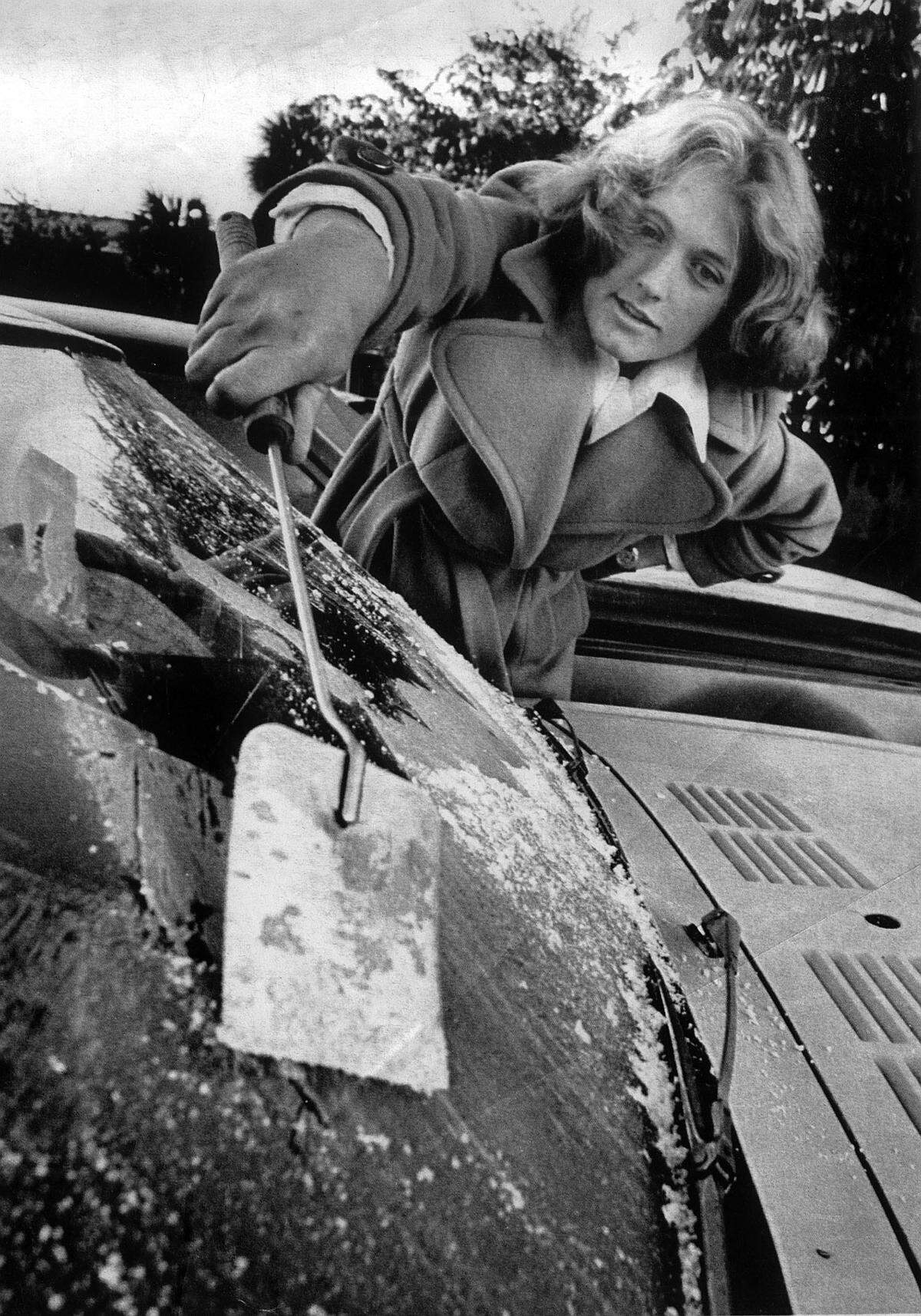
“I was at [Jackson Memorial Hospital] with the victim of a heart attack when I looked out the ER front doors and saw my partner, John Miller, struggling to walk across the parking lot toward the ER. John was from Indiana, I from Chicago. As we prepared to leave back on the road, we cleaned the windshield with our bare hands and threw the few flurries we could pick up at each other, our Miami version of a snow fight.”
It was by no means a blizzard — even calling it a dusting is an exaggeration. But in those early-morning hours, snowflakes fell as far south as Homestead and daytime temperatures for the region dipped into the low 30s. By 9:30 a.m., South Florida’s big snow show was over, melted by the sun.
There wasn’t enough snow to give birth to fat, round snowmen, or allow the dashing of sleds down a nearby hill. Weather record books give Miami credit for only a “trace” of snow that day. The word “magical” does not appear.
Except in the musings of those who were there.
“After 42 years in South Florida, I still talk about this day today,” Pat D’Angelo wrote at MiamiHerald.com. “I was a senior at Piper High School in Sunrise. I remember one girl crying and screaming. She couldn’t believe it!”
“It’s still probably the most unforgettable day I can remember in Miami,” posted a reader named George.
“I was 14 years old and an eighth-grader at North Miami Junior High. I recall my Mom driving me to school . . . listening to radio reports of snow falling in West Palm Beach and hoping, PRAYING it would make it to Miami.
“Well, sometime around the end of the first class the news spread like wildfire. It WAS snowing! The school emptied in a flash and we all stood outside amazed at the sight . . . for all the supposedly ‘gorgeous’ weather in Miami, it’s the day that it snowed that will ALWAYS retain a special place in my heart.”
Of course, South Florida has always had its share of transplants from colder climes, some of whom were around in 1977 to witness Miami’s brief flirtation with the powdery stuff. To them, the question at the time was “What’s the big deal?”
“Originally from New Jersey, I had seen snow before, and wasn’t too impressed,” posted Rob G. “I mean, the snow was changing to rain as it was falling!”
“I was on winter break from UMass, and being from Boston could not understand what the big deal was,” wrote Mark Wolosz. “A [number of] years later (WOW) . . . now I know why! A great memory.”
And perhaps one with White House implications? Juan Paxety was living in Atlanta at the time, a city buzzing over the recent election of Georgian Jimmy Carter as president.
A day before the presidential election, a psychic appearing on a Georgia radio station had been asked to weigh in on Carter’s chances.
“The psychic’s answer — it will snow in Miami before Carter becomes president,” Paxety remembered.
“After Carter was elected, I just thought the psychic was wrong,” Paxety wrote. “Then came the morning of Carter’s inauguration. The radio reported the huge East Coast snowstorm -- including a report of snow in Miami. The psychic was right after all.”
Other out-of-towners drew their own conclusions as news of Miami’s sub-freezing temperatures traveled the nation.
“I live in New York,” wrote Diane Lapson. “I remember hearing it was snowing in Miami and thinking -- is this the end of the world?”
THE FORECASTER
Published Jan. 19, 2007
By Luisa Yanez
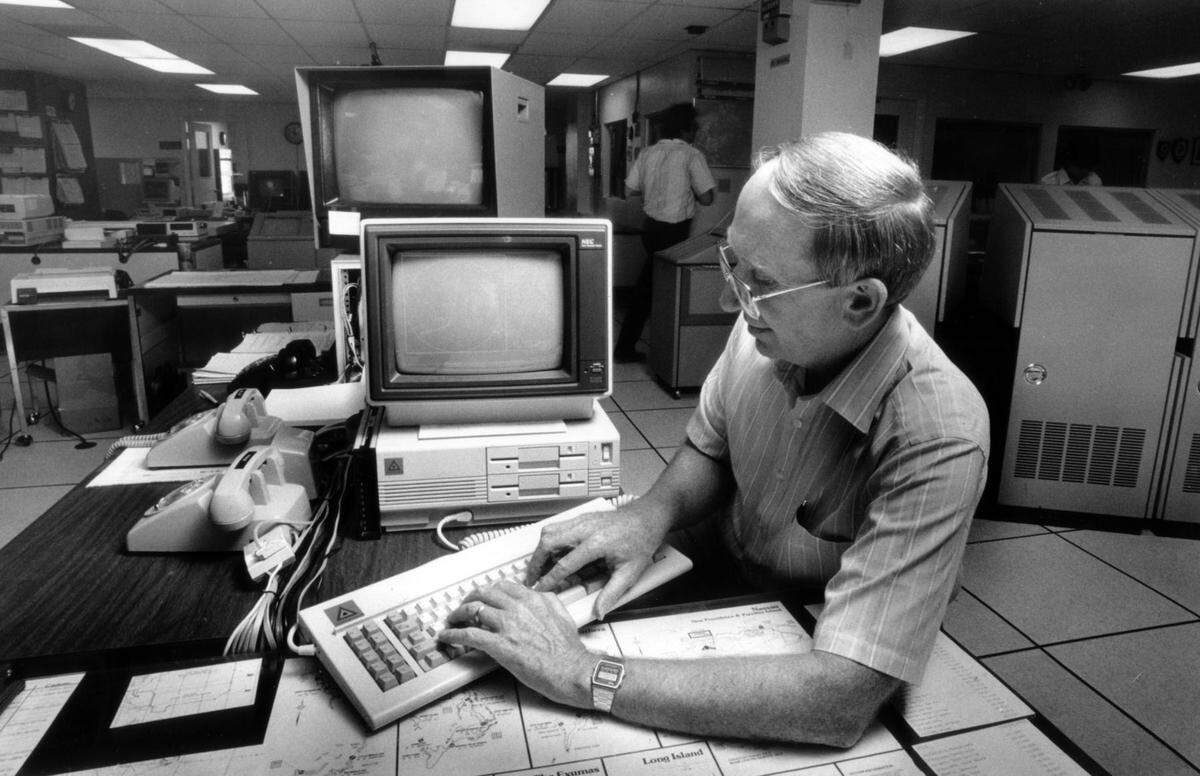
Forecaster Ray Biedinger looked at the screen of his trusty weather radar in the wee hours of Jan. 19, 1977, and knew what he had to do.
The bitter cold front barreling south across the state during his midnight shift at the old National Weather Service office in Coral Gables left him no choice but to hold his breath and issue one of Miami’s most unusual forecasts:
“Cold with rain showers and the possibility of snow,” Biedinger wrote.
“I didn’t put snow first, if you notice,” he said recently. But he got it right.
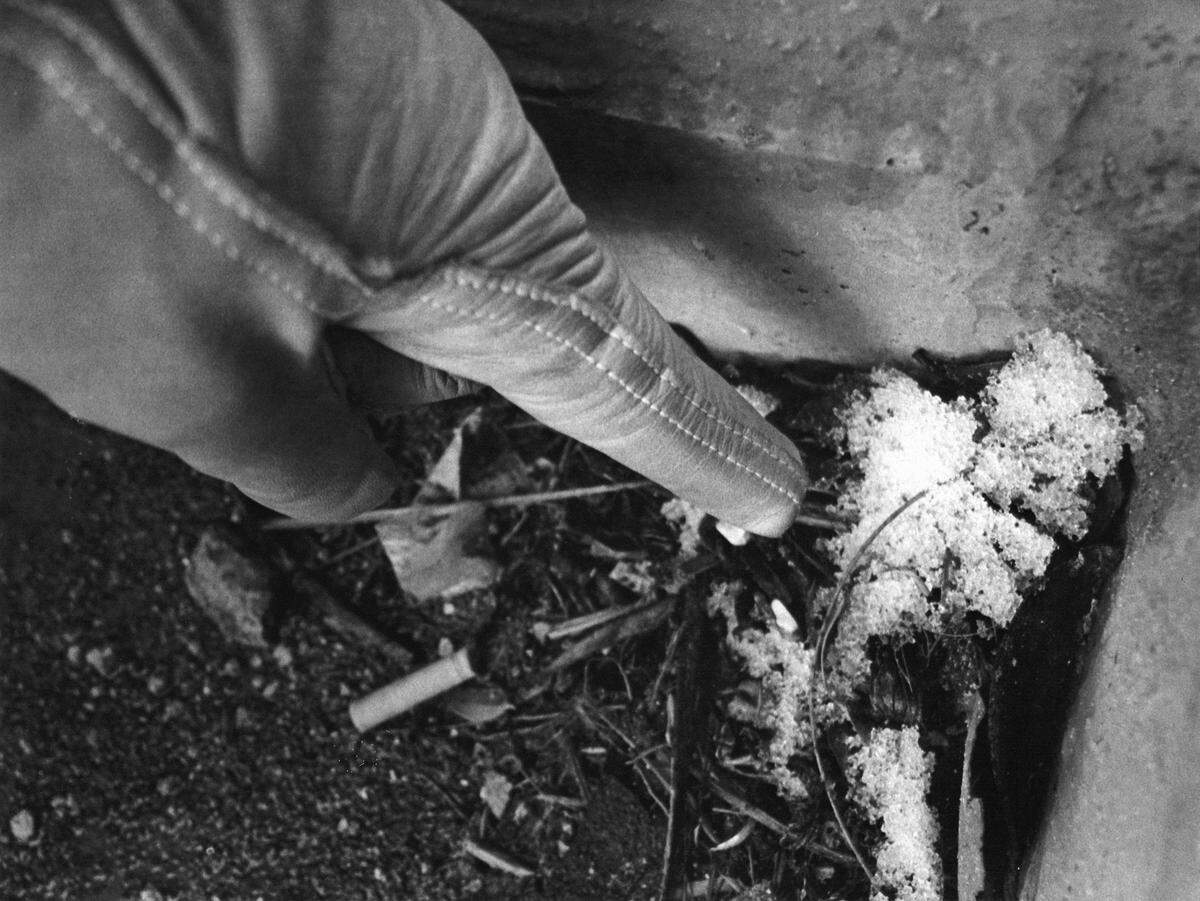
Thirty years ago today, snowflakes briefly dusted palm trees, windshields and people from Miami to West Palm Beach — a freak but brief winter wonderland and the only South Florida snowfall on record in the 20th century.
Shivering South Floridians, young and old, looked up into the sky in total amazement as flakes landed on their faces.
In those early-morning hours, snowflakes fell as far south as Homestead and daytime temperatures for the region dipped into the low 30s. But by 9:30 a.m., South Florida’s big snow show was over, melted by the sun’s rays.
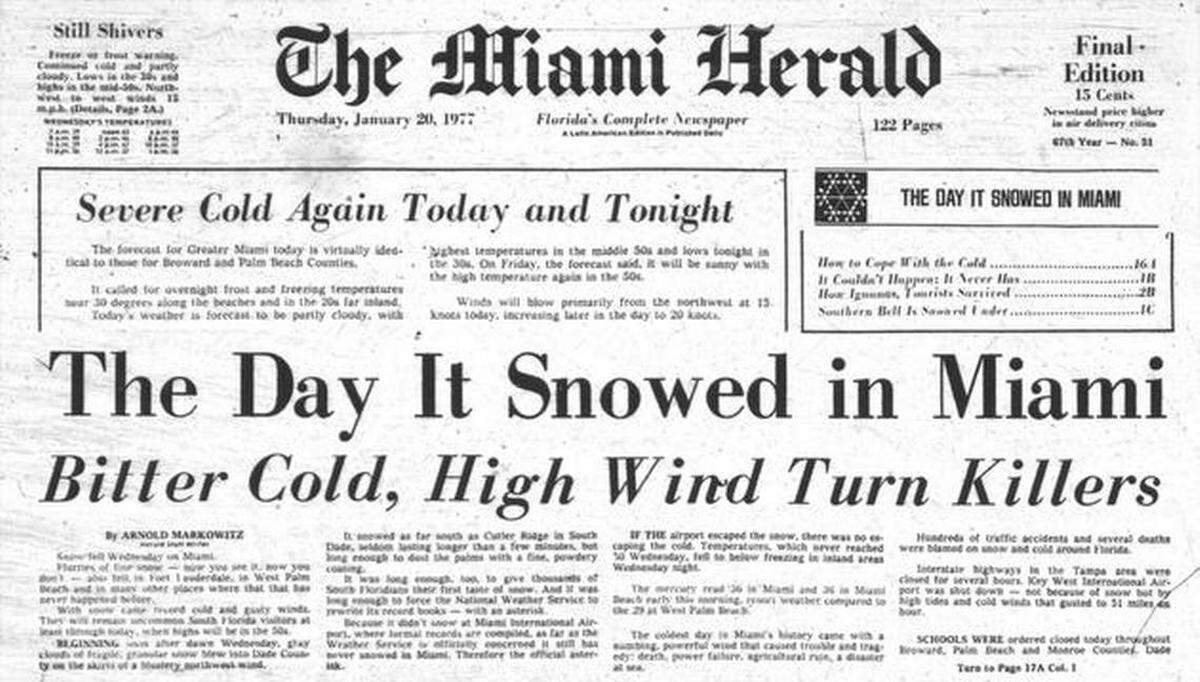
The Miami News’ headline that afternoon screamed: “Snow in Miami!” The next day The Miami Herald’s read: “The Day It Snowed in Miami.”
The rare event remains a special memory for those who witnessed it. Hurricanes come and go, but snow in Miami? That’s once in a lifetime.
“I remember it like it was yesterday,” said Matt Levinson, of Weston. He was 5 at the time and living in Southwest Miami-Dade.
“I remember standing on the front lawn of my house and as the snow was falling, I tried picking it up, but it melted as soon as it hit the ground,” said Levinson, now 35, who works in public relations.
Across town that morning, Leon Strickland of North Miami was at a rock-pit work site.
“At first, I didn’t know what was falling from the sky, it was so light,” said Strickland, now 65 and retired. “You had to be wearing a navy blue jacket to really see clearly it was snow. But I’m here to tell you, it snowed that day.”
His 10-year-old son saw it, too. Norm Strickland was in class with 600 other pupils at North Miami Elementary when the principal’s voice came over the loudspeaker about 8:40 a.m.
“I remember he said: ‘Children, we’re going to do this in an orderly manner. We are all going to go outside because it’s snowing,’ “ said Strickland, 40, a pharmaceutical salesman who now lives in Huntington, W.Va., with this wife and two daughters.
“Well, once he said snow, forget order,” said Norm Strickland. “The principal couldn’t have announced there was a nuclear bomb in the building and gotten us kids out of class faster.
“Everybody went crazy,” he said. “Total glee is what I remember.”
At Sabal Palm Elementary in North Miami Beach, 10-year-old Susan Schwartz was walking in a hallway when someone yelled, “Snow.”
“We all ran to the sidewalk. I don’t remember the teacher even trying to stop us. We were trying to catch the snow in our mouth, but it would melt,” Schwartz, 40, now an educator in the Broward County school system, said of her first snow experience.
Many South Floridians missed the brief snow event. So there were skeptics. Veteran radio disc jockey Rick Shaw tried to set them straight from his Broward radio booth.
“I was working at WAXY-106. Someone said something about seeing snow coming down,” said Shaw, who is retiring this year. “We ran back to a big window and, my gosh if it wasn’t snowing in Fort Lauderdale! Being from St. Louis, I knew what snow looked like. I ran back into the studio and started playing Bing Crosby’s White Christmas.”
He said listeners who didn’t see or feel those fine granules were calling the station and asking why they were playing that song in the middle of January.
“Cause it’s snowing outside!” Shaw told them. “It was quite a day.”
Ferris Thompson, of South Miami, a district inspector for the Florida Department of Transportation, was driving to Fort Pierce on Interstate 95 that morning.
“I remember the snow flurries hitting my windshield; the farther north I got, the more snow I saw settling on the side of the road,” said Thompson, now 79 and retired.
Back home the next day, Thompson and his wife, Joan, hoped for a repeat. They got up before dawn and went outside in their heavy coats, waiting for snow. Jan. 20 proved to be an even colder day as temperatures dipped into the mid 20s, but no snow fell.
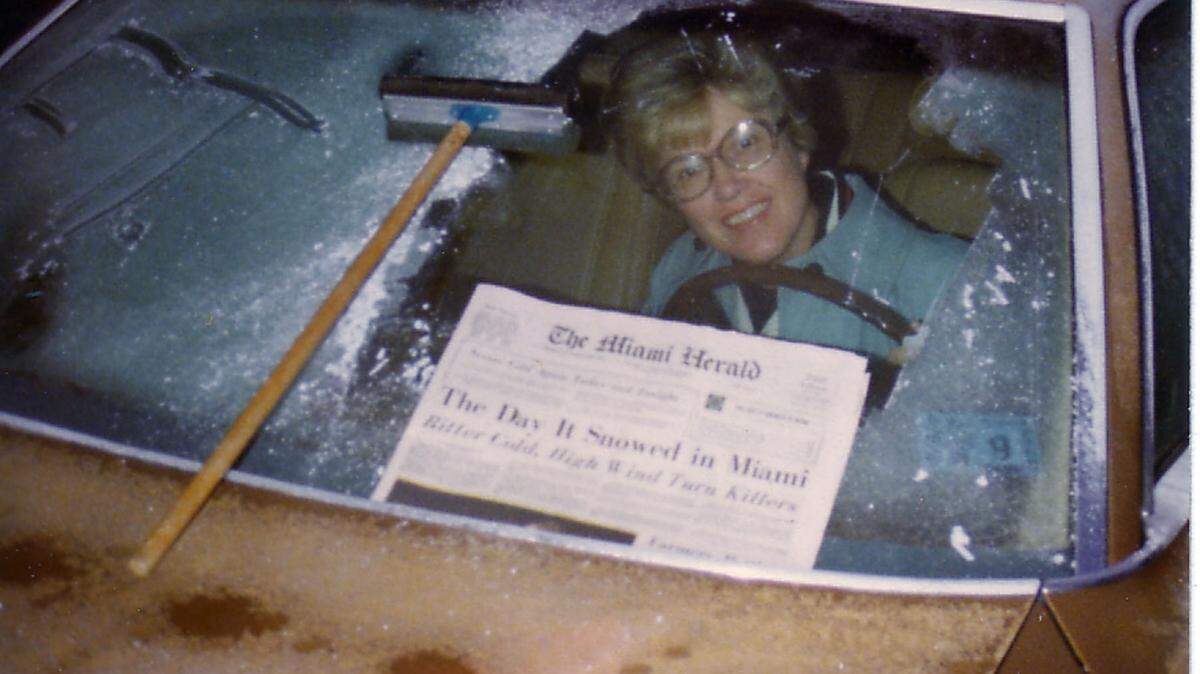
The couple snapped a photograph that shows Joan sitting in the family car, the windshield half covered with snow. On the dashboard is that day’s newspaper.
Snow fell on an eventful week in Miami-Dade — and the United States.
Newly elected President Jimmy Carter’s inauguration was scheduled the following day; Miami-Dade commissioners had passed the controversial county ordinance banning discrimination against gays the day before, setting the stage for a bitter battle between singer Anita Bryant and homosexuals.
And on television, a highly anticipated mini-series was about to air. In Miami, Dorothy Jenkins Fields, 64, founder of the Black Archives and then a school librarian, said the snow is a blur to her. That’s because the mini-series Roots, based on Alex Haley’s book, was about to premiere.
“Yes, snow in Miami — I remember it but it didn’t leave much of an impression on me because I was mesmerized with Roots. The snow came and went, but Roots stuck with me.”
For Biedinger, the excitement of correctly forecasting snow was quickly forgotten at the weather bureau.
“We were very concerned about the South Dade farmers who were about to get hit by another cold night,” he said.
The snow and the low temperatures put Florida’s citrus and vegetable industry in a death grip. Both were nearly wiped out, and some 150,000 migrant workers lost their jobs in the state -- including 80,000 in Miami-Dade, Broward and Palm Beach. Then-Gov. Reubin Askew declared a state of emergency.
Officially, snow in Miami is not on the weather record books.
“It was an unmeasurable amount that fell, so it’s written down as ‘a trace’ of snow,” said Biedinger, 66, now retired and living in Titusville.
Only once before, in 1899, had something resembling snow fallen over South Florida. And not this far south, only down to Fort Pierce.
Biedinger said he’s always considered his accurate prediction “a novelty thing.”
“It was a kick to do it one time, maybe the only time in the history of Miami,” Biedinger said.
It also made Biedinger a celebrity in certain circles.
“For the rest of my career,” he said, “I was known in the weather office as the guy who predicted snow in Miami.”
Could snow fall here again?
Yes, say local weather forecasters.
“It would be rare, but the way I see it, it happened once, so it can happen again. If the same weather conditions line up, we could have the same scenario,” said Robert Molleda, a meteorologist and warning coordinator with the National Weather Service in West Miami-Dade.
Miami’s snow fall during the Blizzard of 1977 was caused by a combination of two artic cold fronts -- one passed the region on Jan. 16 followed by a second faster-moving one in the middle of the night the day it snowed.
That second front chilled the region and moved so quickly that moisture -- usually ahead of such fronts -- instead lagged behind, setting the stage for the snow.
“Basically, what happened is that the precipitation formed in the clouds did not have enough time to melt before it reached the ground,” Molleda said.
“If that had happened in the middle of the day, there probably would not have been snow,” he said.
But Miami is not the only place where a snowfall is major news. On Wednesday, the mountaintops near Malibu Beach in California were dusted in white.
This story was originally published January 14, 2020 at 7:00 AM.