
Miami-Dade approves new $267 million courthouse downtown to replace 1928 building
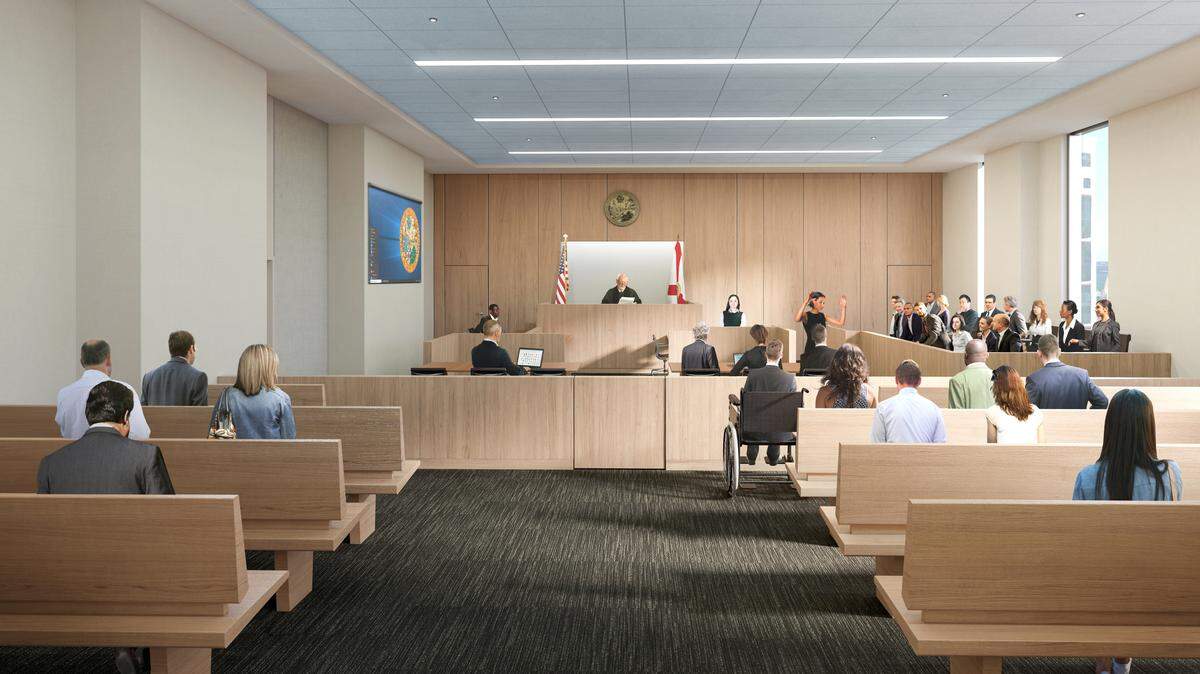
After five years of stalled plans and proposals, Miami-Dade commissioners on Tuesday approved a development plan for a new civil courthouse downtown, ratifying a novel agreement that will let a developer build and operate the facility on Flagler Street for 30 years.
The unanimous vote followed persistent efforts by Miami judges and lawyers to secure public dollars for a modern, $267 million building to replace the existing 1928 facility, an aging structure with a history of leaks and air-quality issues and a legacy that stretches back to an Al Capone trial. Voters rejected a tax increase for the project in 2014, leaving Miami-Dade to tap existing dollars for a long-term development deal that multiple building groups tried to win.
“You inherited this problem after decades of accrued, deferred maintenance,” Judge Bertila Soto, who spearheaded the courthouse campaign, told commissioners. “This is a very important morning.”
Miami-Dade plans to pay developer Plenary Group yearly payments starting at $25 million, an $852 million expense over 30 years that will come out of county funds for police, parks and other services. The administration of Mayor Carlos Gimenez says the courthouse payments will add to projected revenue shortfalls in the coming years.
Plenary receives its first planned payment in 2024, and Gimenez told commissioners Miami-Dade had no choice but to move forward with the most affordable courthouse proposal it could muster.
“It’s not going to be cheap,” Gimenez said. “But it’s our responsibility to provide this facility to the people of Miami-Dade County.”
It’s the first public-private partnership deal for Miami-Dade — a mechanism often referred to as “P3.” It allows Plenary to provide the development dollars upfront for the $267 million construction project, then gets repaid with profit over the coming decades, along with a fee for operating a building currently maintained by county workers.
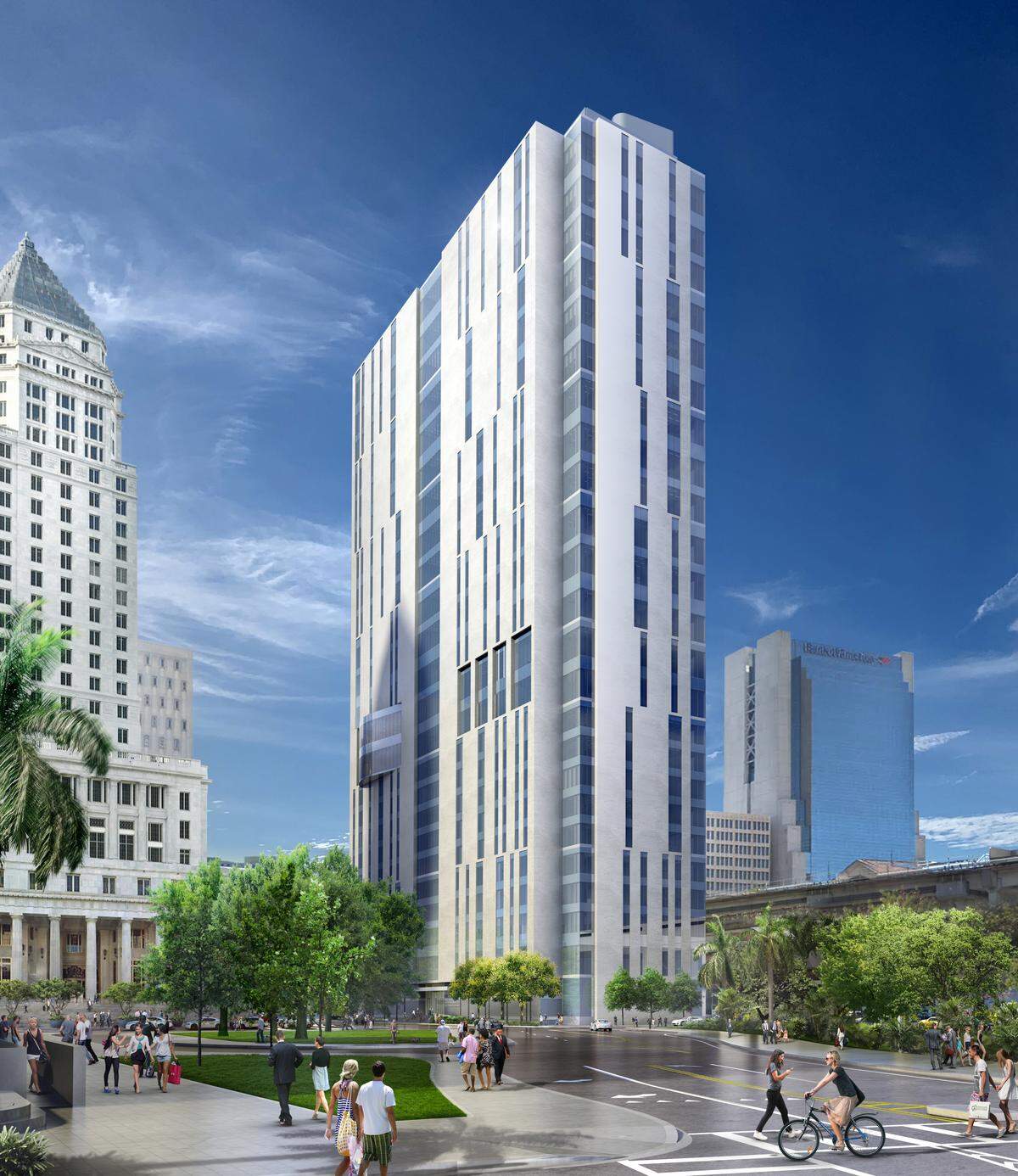
The Plenary deal is expected to cost $852 million over 30 years, though the developer’s yearly payments can drop if it fails to meet maintenance and service requirements. Miami-Dade plans to put the existing courthouse up for sale as a historic property for a developer to rehab into a hotel, office building or residential high-rise.
Construction on the new courthouse is scheduled to start in February, a Plenary spokeswoman said. The 23-floor building would rise on a county-owned parking lot between Flagler and First Avenue, next to the existing 28-story building. As a wider structure, the new courthouse would have 50 courtrooms, up from the existing 23.
Mike Schutt, a vice president for Plenary, a “P3” developer with headquarters in Canada and Australia, said the nearby Metrorail tracks will not be shut down during construction and that the construction site may expand into a row of parking spots on First Avenue. “That would be the primary disruption,” he said.
Commissioner Sally Heyman, a lawyer and sponsor of the courthouse legislation, was crying after the resolution passed and Soto and other judges came to hug her by the dais. Ahead of the vote, Heyman held up photos of peeling walls in the existing courthouse and other maintenance issues that have led to courtrooms and offices being temporarily closed due to mold concerns.
“To all those who seek justice and come there, you will have a building exceptionally accessible for all,” Heyman said. “It will be healthy.”
This story was originally published December 17, 2019 at 12:27 PM.