
Here’s what Motel Row looked like before Trump and other big buildings remade the skyline
It used to be called Motel Row. And for good reason.
Dozens of two-story motels lined Collins Avenue. Some had whimsical themes and architectural flourishes. Concrete camels, mermaids and pyramids, for instance. Families and retired northerners flocked to the low-key accommodations along A1A, then set out for a day at the beach and an early dinner at the Rascal House deli.
But the area had its wild side, too. Just ask the people who danced and drank the night away at the Wreck Bar in the Castaways.
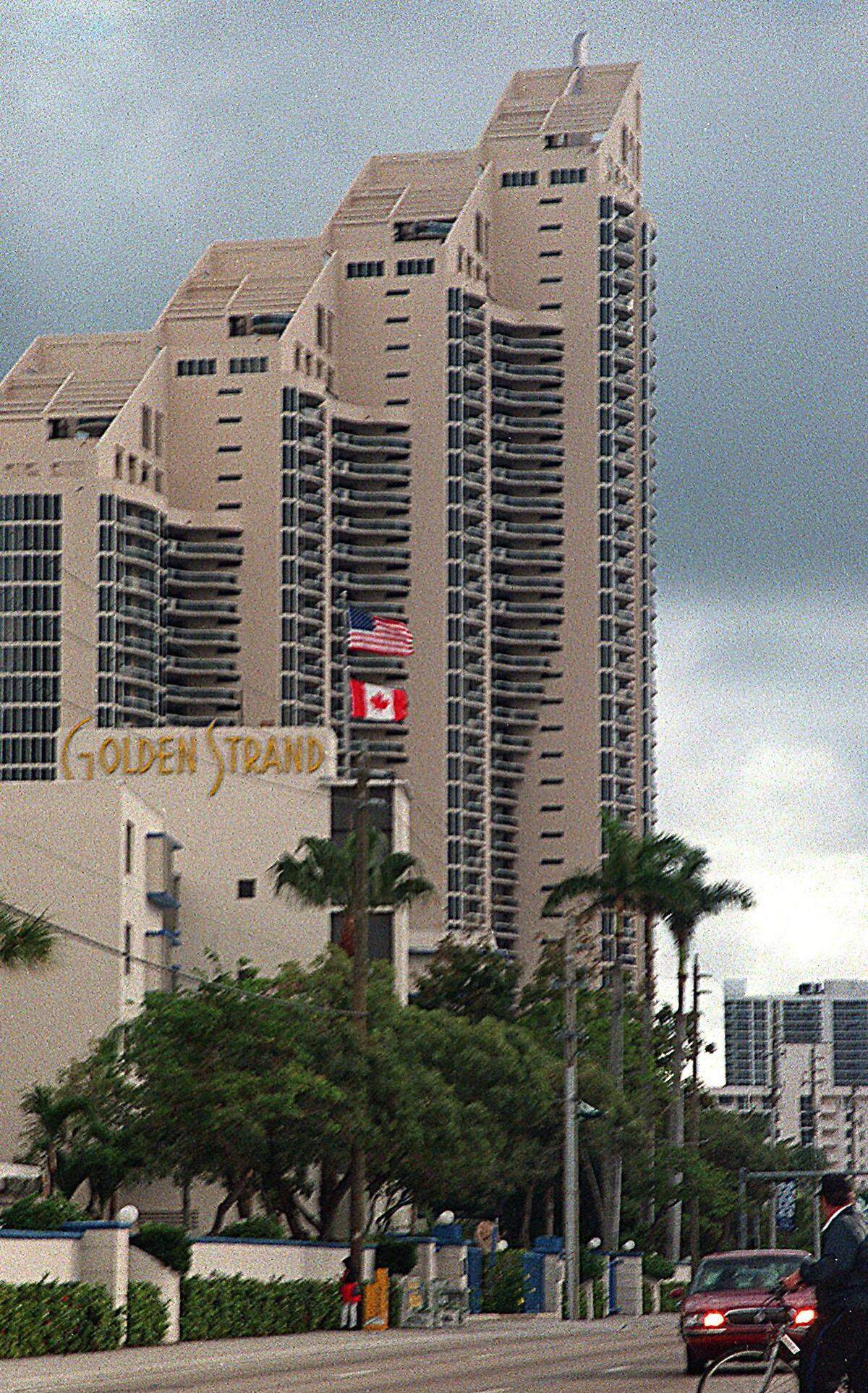
Times change. And in the case of Sunny Isles Beach, the buildings have, too. Most of the small motels are gone. In their place: skyscraper condos with names like Oceania, Aqualina and Trump.
While the oceanfront remains, along with stores and restaurants across the street, the skyline has changed.
From the archives of the Miami Herald, here is a look back at what Sunny Isles Beach used to look like and what has changed through the years.
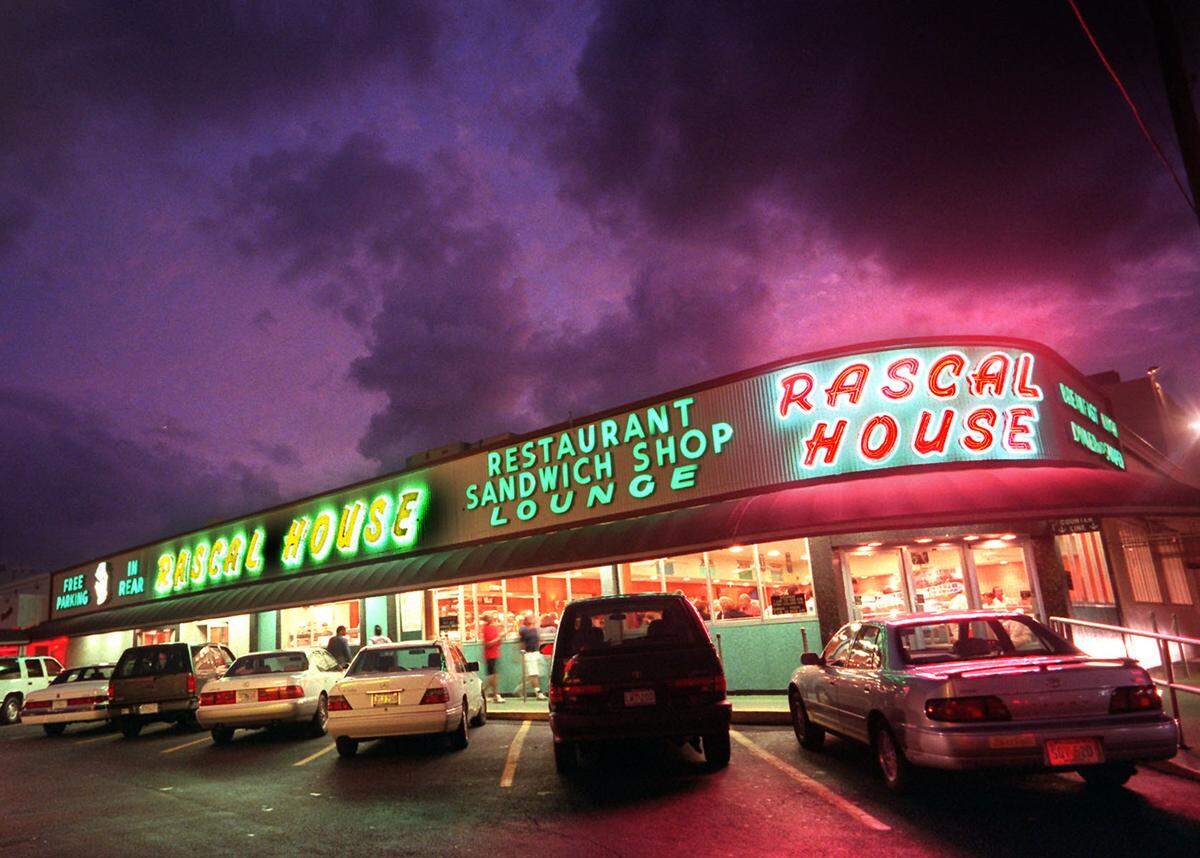
GOODBYE, RASCAL HOUSE
Published Dec. 21, 2006
Wolfie Cohen’s Rascal House, a Sunny Isles Beach landmark known for more than 50 years for its kitschy sign, its striped orange and teal awning and its too-big-to-handle sandwiches, is slated to become the latest casualty of the small city’s building boom.
“Things change,” said Sunny Isles Beach Mayor Norman Edelcup. “We are creating a new, luxurious Sunny Isles Beach.”
The City Commission this month gave the restaurant’s owners, Jerry’s Famous Deli Inc., the go-ahead to level the existing one-story restaurant at 17190 Collins Ave. and build a 15-story mixed-use project that will include an Epicure market, office space and residential units.
Epicure, owned by the same company, is known for its gourmet foods, an element Edelcup encourages in the new glamorous Sunny Isles Beach.
“We have come a long way from the two-story motels and corner diners of the past,” Edelcup said.
.JPG "NE lambotini AD_02 (1).JPG")
There is no closing date scheduled, but the developers have two years to start construction.
“The owners will have to decide when they want to get it done,” said Stephen Helfman, the attorney representing Jerry’s Famous Deli.
For some of its 20,000 residents, this latest step in the city’s drastic change from motel row to high-rise heaven means saying goodbye to a place that defines the small coastal city.
Robbie Moore, who had eaten the roast turkey platter with all the fixings at the Rascal House right before the announcement of its planned demise, said he couldn’t “imagine the city without it.”
“It saddens me terribly to see that place go,” said Moore, who often visits South Florida from New York.
Replaced by a towering skyline are old motels like Castaways, Dunes and Colonial Inn.
The Greater Miami Convention and Visitors Bureau is setting up shop down the street from where Rascal House now sits to promote the city’s brand-name hotels such as Acqualina, a Rosewood resort; LeMeridien, and Trump International Sonesta Beach Resort.
The restaurant that Wolfie Cohen built in 1954 hasn’t changed much over the years. The red Rascal devil holding a pitchfork greets patrons as they walk to the entrance. If its walls could talk, Rascal House’s would share the secrets of Clark Gable, Judy Garland, Katharine Hepburn and gangster Meyer Lansky.
But gone are the days when lines of hungry diners wrapped around the building.
Golden Beach resident Sydell Herrick said she and her husband Alfred have been going to the restaurant since it opened. When they’re in town - they live half the year in New York - they go to the restaurant every Monday so Alfred can get the pea soup. Sydell said her favorite is the stuffed cabbage.
“There really is no other place like it around,” she said.
New York-style delicatessens have virtually disappeared from South Florida’s landscape. With the recent closure of longtime favorite Corky’s, which started in North Miami Beach and later moved to Pembroke Pines, diners are finding it hard to get a bowl of matzo ball soup.
Joe Bardinella, who had been a regular at Corky’s in North Miami Beach, had switched to Rascal House for his oversize sandwiches and pickles on the table.
“I hate to see it go. It is the only lasting old-world deli in the area,” he said.
The Nevels took over in 1984, buying it from Ed Lassman, who had owned it for 36 years. Jerry’s Famous Deli’s father-and-son owners, Isaac and Jason Starkman, now run Rascal House.
Attorney Helfman said the owners want to fit into the new Sunny Isles Beach, and Epicure will steer it in that direction.
For Ellen Wynne, who has lived in Sunny Isles Beach since 1952 and has been going to the restaurant since it opened, the shiny new skyline is no match for her memories of the Rascal House’s sweet rolls.
“Rascal House is a part of our family,” she said. “We are losing everything that is Sunny Isles and that has been Sunny Isles. We don’t have anything left.”
Tourist memories
Published Feb. 15, 2003
Salvatore Lamattina remembers when Sunny Isles was a magic place. He remembers hotdog stands on the boardwalk. Shows at the Colonial Inn and the Marco Polo. Outdoor tiki bars behind every motel. Bands playing under the stars.
“There were parties all day and all night,” Lamattina, 81, recalled one recent afternoon, reminiscing with friends on the now-quiet patio of the Golden Nugget Hotel, at 18555 Collins Ave. “It’s not a friendly place now like it was.”
Many of the landmark motels are gone now, and the few that are left are no longer the hot spots that made memories for the Northeasterners who spent their winters here.
As the worn motels and apartments of Collins Avenue are leveled to make way for high-rise condos that target a more affluent international market, the snowbirds who have flocked here each winter for decades are seeking other roosts.
Some of them shifted north to these quirky haunts when the Art Deco hotels of South Beach were renovated and rates shot up in the late ‘80s. Now, as snowbirds look for winter homes in Broward, Palm Beach or farther north, historians and tourism officials say Miami-Dade County is losing its most loyal vacationers.
Lamattina, a retired jeweler from Peabody, Mass., said he and his friends have been wintering in Sunny Isles for decades.
They first came 40 years ago, toting kids and beach balls, for a week or two. They returned 20 years later as retirees to spend the whole winter.
Incorporated in 1997 as Sunny Isles Beach but known for years as just Sunny Isles, this two-mile stretch of barrier island in northeastern Miami-Dade County attracted Lamattina and his friends because it was affordable and fun.
But what brought them back to the same hotel, year after year, was the tight-knit community of friends.
“We all say this is our Florida family,” said Lucy Licari, 80, a widow from St. Johnsville, N.Y., whose friends call her the leader of the group. “We take care of each other.”
For three months each winter, Licari’s flock converges at the same hotel. They chat on the patio, stroll along the boardwalk, host dinner parties in cramped hotel rooms.
For many years, they stayed next door at the Heathwood Motel, until - like so many others - it was torn down to make room for condominiums in 1998. “Look at it now,” Licari said, leaning her head back to take in the Millennium, a white monolith towering over the Golden Nugget.
The following winter, some of them stayed at the Blue Mist. When it was torn down in 2000, they reconvened at the Golden Nugget.
Now it’s slated to be leveled within four years and the Golden Nugget gang is looking north. Some say they might relocate to Century Village in Pembroke Pines or Deerfield Beach.
Snowbirds who remember Sunny Isles’ livelier days say they’re pained to see the symbols of those times disappearing.
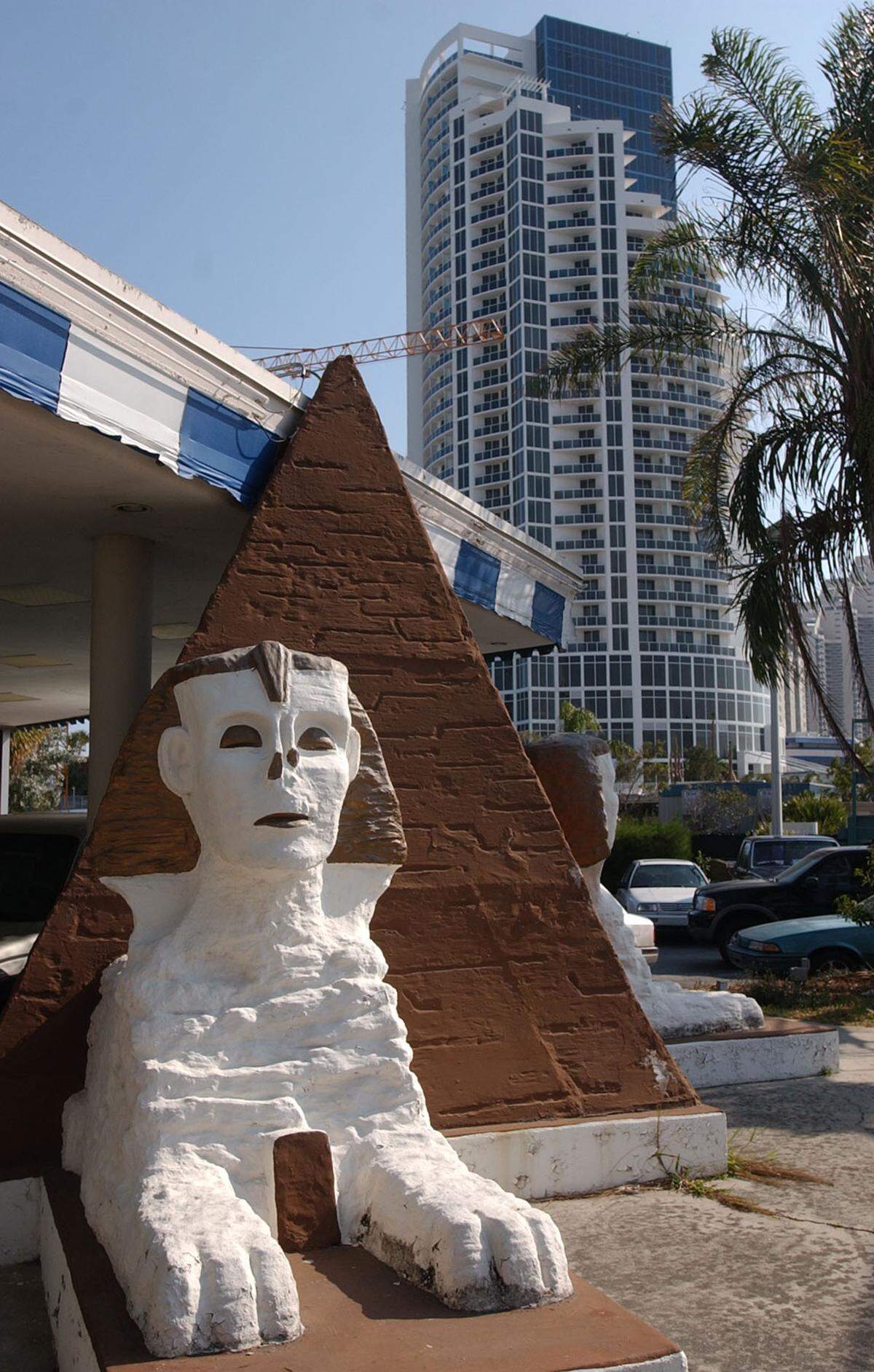
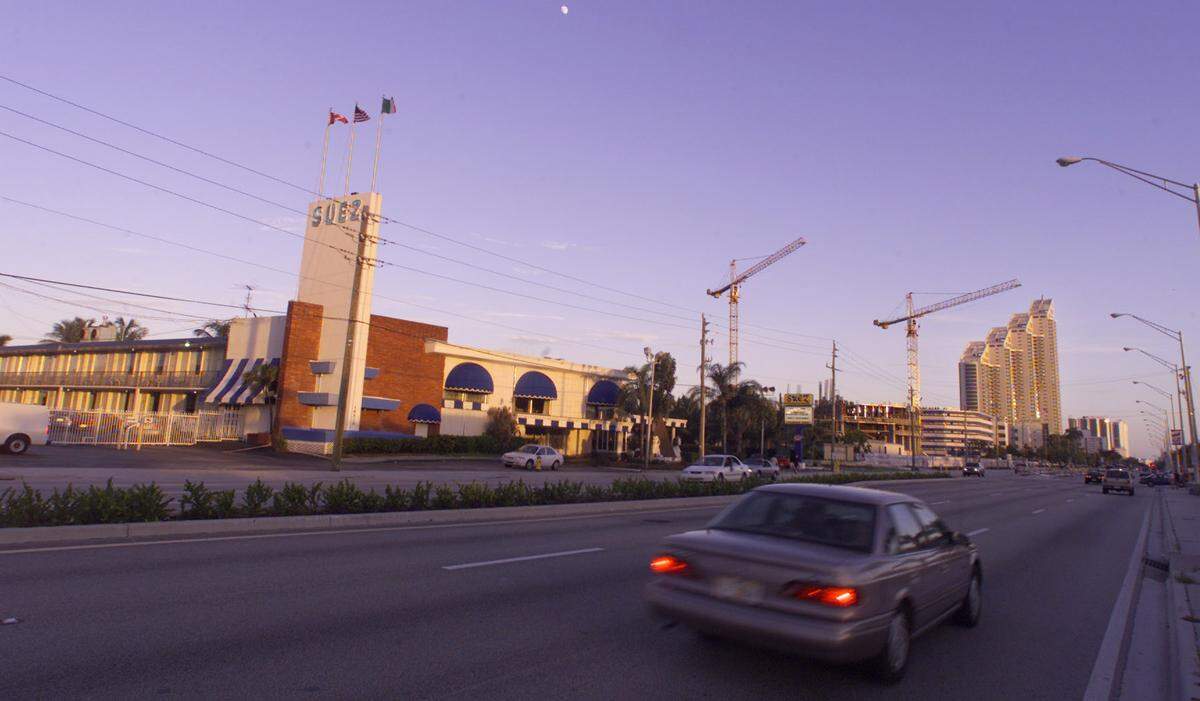
The hotels built in the 50s for tourists seeking cheap lodgings had quirky names and facades to match - a pyramid at the Suez, mermaids at the Blue Mist, horses pulling a black carriage at the Colonial Inn.
They’re being replaced by glass-and-concrete towers with nondescript titles like Aqualina, Millennium, Ocean I, II and III.
And as the smaller hotels dwindle, so do the snowbirds who have been a seasonal fixture of this community for decades.
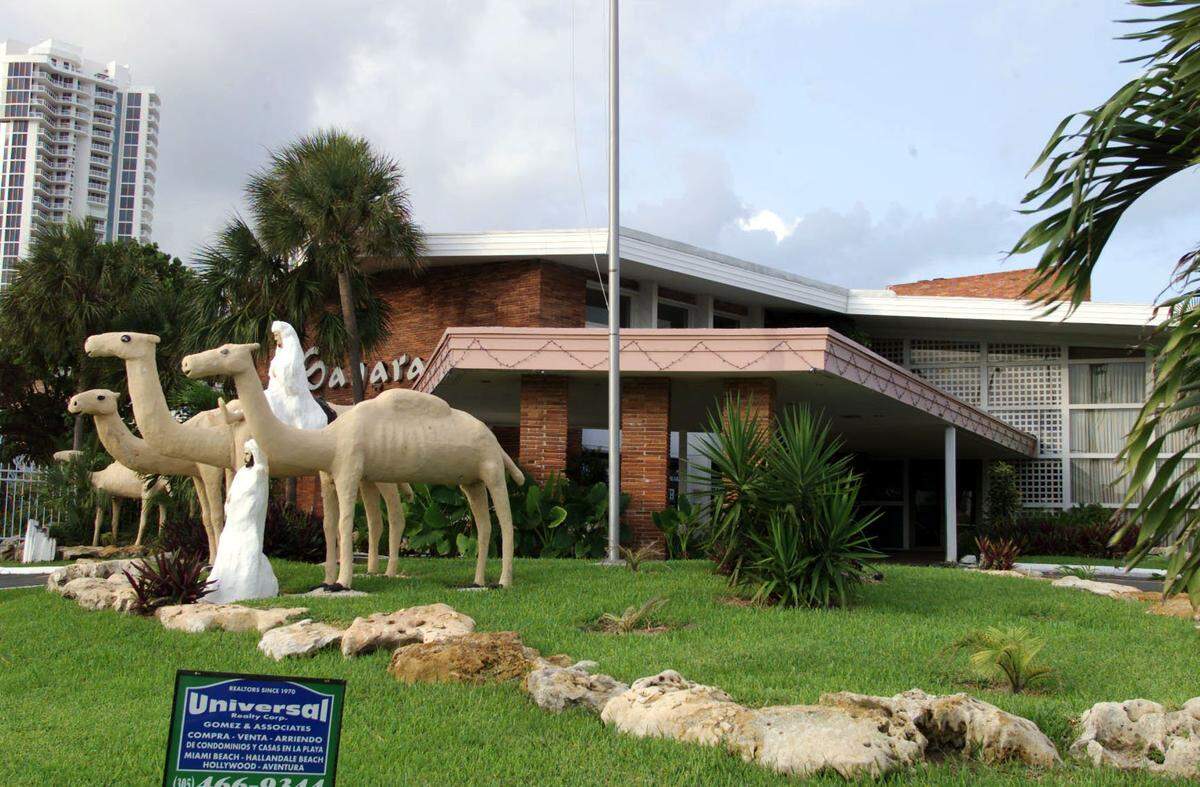
“I feel like we’re getting kicked out,” said Mary MacDonald, 67, of Boston, who spends four months every year in Room 115 of the Sahara Beach Club, at 18335 Collins Ave.
The Sahara lobby that once welcomed celebrities like Frank Sinatra and Dean Martin is empty and locked. Residents call greetings to one another on a resurfaced patio behind the building. The motel is now a condominium cooperative.
So far, the Sahara’s residents - all of them seasonal - have rejected overtures by Dezer Development Co., which has already bought up most of the beachfront property in Sunny Isles.
“Where are you going to go for this price?” said MacDonald, who bought in 20 years ago for $28,000. “Even if they offer you a condo, how are you going to afford the maintenance?”
Gil Dezer, of Dezer Development Co., said condo prices in his newest building, Trump Royale, range from $320,000 to $6 million.
The company is marketing heavily in Europe and South America, Dezer said. As for the historic motels: “It was cute when it was there, but . . . it’s evolving into another world.”
Dezer said he’s saving what items he can from the buildings that gave Sunny Isles its offbeat flavor. The horses from the Colonial Inn - razed in 1999 to make room for a 55-story building now under construction - are tethered behind Dezer’s temporary office building next door, waiting to be transferred to a park in Sunny Isles.
The pyramid and sphinxes from the Suez, scheduled to be demolished on March 1, also will go to the park, Dezer said.
Those might soon be the only reminders of the motels of Sunny Isles - and the people who stayed there.
“I find it a real loss,” said Paul George, a historian at the Historical Museum of Southern Florida and professor of history at Miami-Dade Community College. “We’re losing the people who were loyal to us when Miami wasn’t glamorous.”
These are the folks who rented rooms in South Beach for a song when Essex House was nothing more than a flop house.
These are the folks who - as the Art Deco area became gentrified - moved north in search of affordable lodgings and landed on Collins Avenue above 163rd Street. That’s when Sunny Isles became Snowbird Central.
But it won’t be for much longer.
In three years, five more towers will be under construction, Dezer said. In 10 years, this ocean-side strip will be an uninterrupted row of high-rise condos.
Some snowbirds are making alternate plans. We’ll go up the coast a bit, they say, or move inland - heck, maybe we’ll go to Acapulco.
Others say if they can’t winter here, they’ll just stay home.
But MacDonald says she’s not going anywhere.
“I’m staying to the end,” she said. “They’ll have to carry me out.”
SUNSET FOR MOTEL ROW
Published Aug. 5, 2001
They’re just gimmicks, really, whimsical mascots designed to lure passing tourists.
“Pull over,” they scream, “and vacation here.”
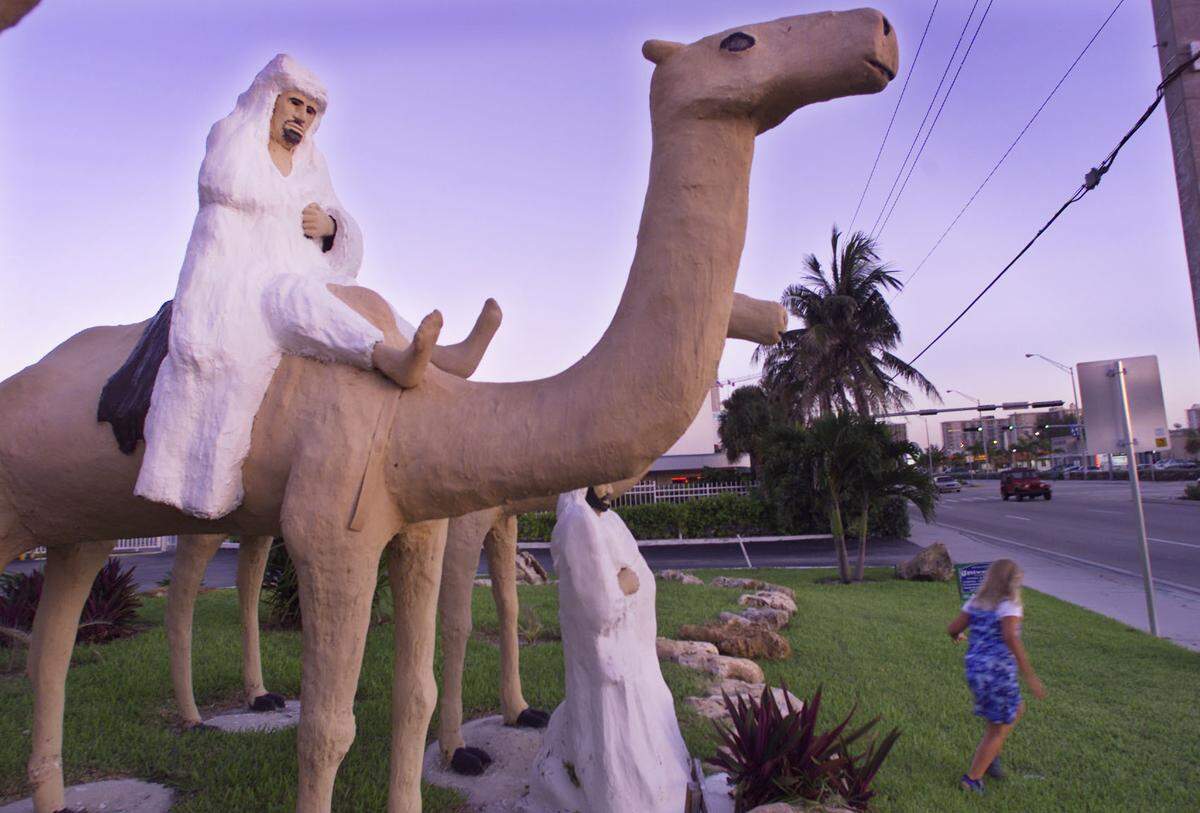
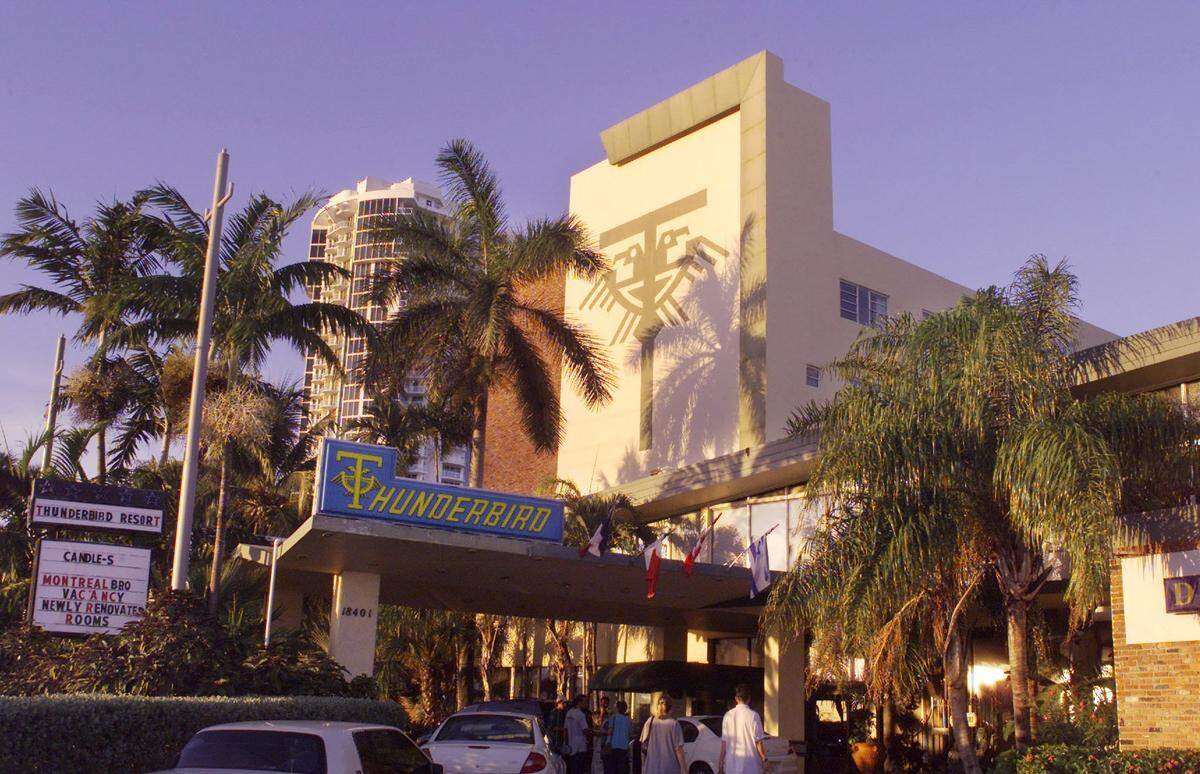
These are the monuments of Motel Row on Sunny Isles Beach: a phoenix rising on the Thunderbird; life-size concrete camels and Bedouins in white robes at the Sahara; a fiberglass Sphinx at the Suez; a leaping prospector and yellow neon at the Golden Nugget.
Dwarfed by the modern high-rise condominiums sprouting around them, these motels - with their kitschy relics - linger less as lodgings than as sentimental reminders of South Florida’s post-war boom and a nation’s budding love affair with the road trip.
“These were fun buildings,” said Norman M. Giller, the Miami Beach architect who designed nearly half the oceanfront motels on Sunny Isles Beach. “And they were economical buildings.”
But “fun” and “economical” are no longer guiding principles. Like a memory that fades over time, Motel Row is slowly losing its low-rise, low-rent motels. During the next few years, the Thunderbird, Suez, Driftwood, Blue Seas and other vintage buildings on the 2.5-mile beachfront along Collins Avenue will be demolished to make room for high-rise condominiums.
And as these motels disappear forever, they take with them both a revolutionary architecture and the last tangible reminders of a defining era in South Florida’s history.
The years were 1950-55. Nearly 10 million Americans had returned from World War II, starting families and igniting the baby boom. They bought cars, and those cars brought them freedom to vacation like never before.
Frequently their destination was sunny South Florida. And once here, they wanted inexpensive places to stay.
Each motel, competing for passing vacationers’ attention, tried to outdo the others with eye-catching elements: sculptures of pharaohs on horse-drawn chariots at the Dunes; a staircase to nowhere at the Colonial Inn; a 20-foot-tall plaster cast lighthouse at the Newport. And their names evoked exotic locales: Bali, Tahiti, Mandalay, Tangiers.
Undervalued for their signature post-war architectural style, known as Miami Modern, these motels define an era and South Florida’s role in it, say preservation groups.
“Route 66 certainly has its place in Americana,” said Herb Sosa, executive director of the Miami Preservation League, “and I think A1A and that strip is Miami Beach’s version of that.”
Lacking the urgency of a Miami Circle or Miami Beach’s Art Deco district, Sunny Isles’ motels are in desperate need of a champion if they are ever to survive. But chances are slim a savior will emerge.
Condominium construction is just too lucrative to pass up. New construction added $166 million to the 1999 tax roll in Sunny Isles Beach, which incorporated four years ago and, within two years, topped all other cities in Miami-Dade County in tax-base growth.
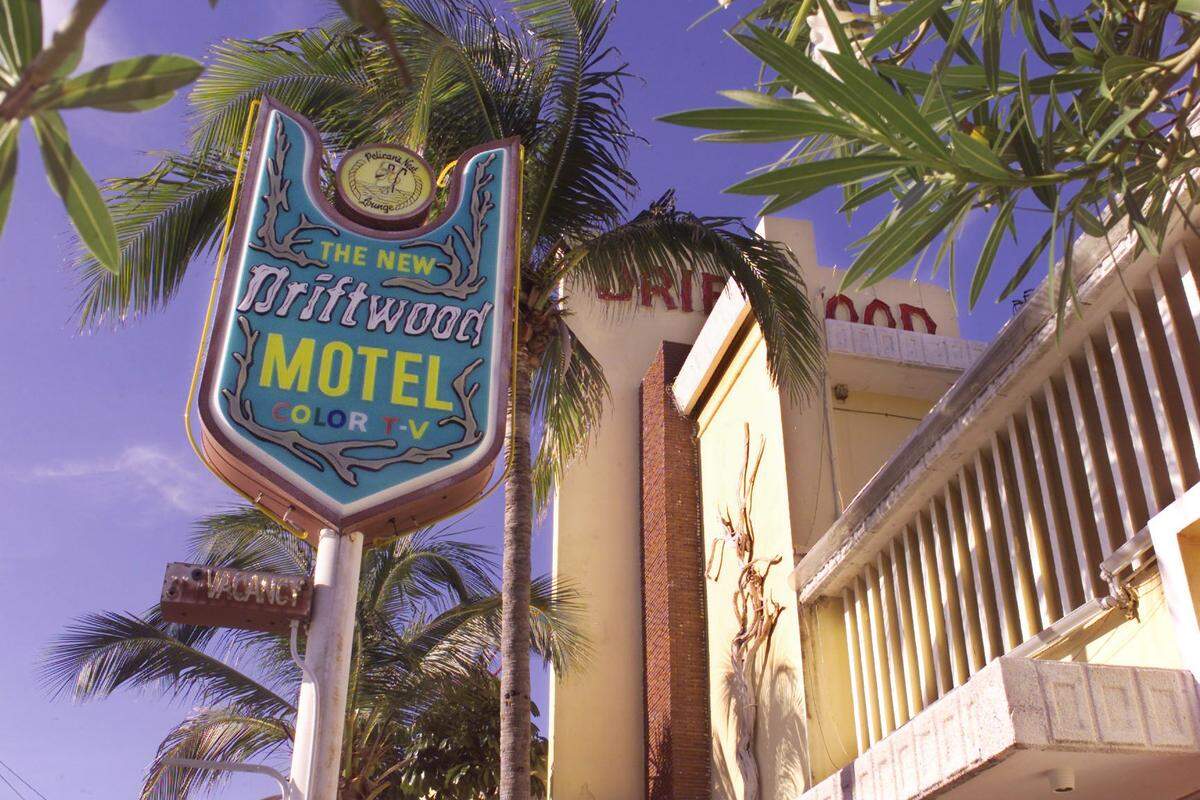
So, alone the motels stand against progress - the Driftwood’s plaster pelican and its pals versus a wrecking ball swung by developers, city leaders and time.
Where the legendary Castaways - and its infamous bar, the Wreck Room - once stood at 163rd Street and Collins Avenue, the Oceania condominium’s five towers now stand.
On the former Tangiers site, at 186th Street and Collins Avenue, the Bellagio condo-hotel will rise, with 200 apartments starting in the high $300,000s.
A few blocks south on 173rd Street, where the Blue Seas gasps its last breath, Apex Development will build the 23-story Michelangelo condo-hotel. Prices there also will start in the high $300,000s.
The Ocean Grande towers, which replaced the Colonial Inn and Best Western motels, will house condos averaging $650,000, according to the developer, Dezer Properties.
But as these towers rise atop Motel Row, a piece of South Florida’s history vanishes, said Randall Robinson, a planner for the Miami Beach Community Development Corporation.
“They’re definitely worth preserving,” Robinson said. “They say a lot about where America was at during the 1950s.”
Americans were flush with disposable income and automobiles in 1955 - a fact that formed the basis of a Newsweek article that January.
And they were taking vacations like never before.
The article, which architect Giller clipped and preserved in a scrapbook, cites Sunny Isles’ 55 motels as representing a $50 million investment, “with 250,000 guests last year, mostly from the 79 percent of tourists who came by car.”
As opposed to the Art Deco hotels in Miami Beach, which catered to people who came by train and were taken to their lodgings by cabs, the Sunny Isles row was nothing short of revolutionary for its time.
New construction technology and methods allowed architects to be bold, Giller said. He designed eye-catching buildings such as the Driftwood, with its enormous expanses of glass, and the Fountainhead, with its curved shape and a massive crab-orchard stone fountain 40 feet above the ground.
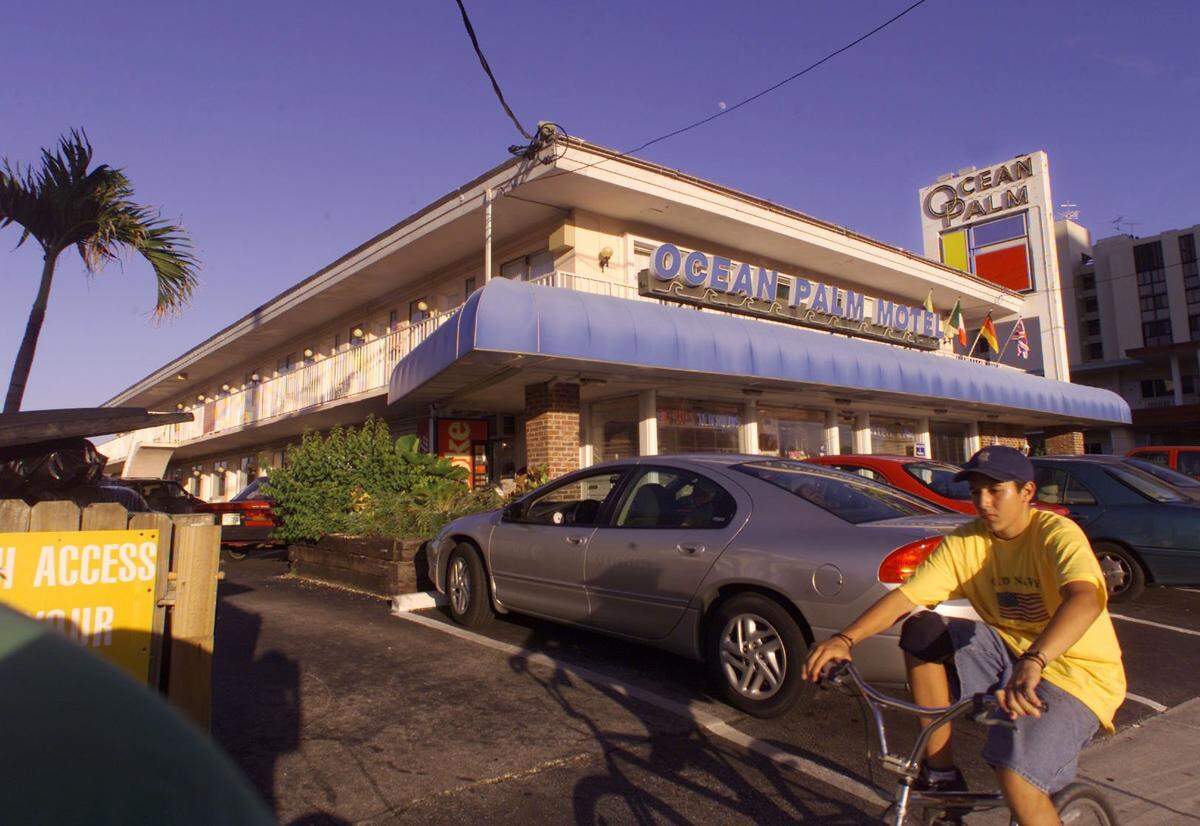
But it all started with Giller’s design for the Ocean Palm, a simple two-story motel that debuted on New Year’s Day in 1951 and launched Motel Row.
“Every one in one way or another copied the Ocean Palm,” Giller said. “That’s the whole reason the area suddenly became Motel Row.”
.JPG "Good Year blimp CLO NEW DS (1).JPG")
The Ocean Palm was important because, until then, motels were one-story buildings. Yet its design was inexpensive, in part, because Giller lined up all the bathrooms back to back, requiring only one pipe.The Ocean Palm also changed the way tourists viewed motels, Giller said. At the time, motels were seen as places to rest en route to one’s destination. With the Atlantic as its backyard, the Ocean Palm redefined the motel and made it a place to vacation.
Because the motels were inexpensive to build, Giller could experiment with the designs and motel owners could charge low rates. When the Thunderbird opened in 1956, the going rate for a double-occupancy room was $4.“The demand was there,” Giller said. “We were able to do things that under normal circumstances you couldn’t do.”
Demand was so great that after the Driftwood opened in 1951, Giller was commissioned to expand his original design two years later - adding 60 rooms to the existing 50.
Despite his significant hand in the evolution of Sunny Isles, though, Giller does not believe in preservation for nostalgia’s sake.
“I don’t think just because a building is old that it’s good,” he said. He added, “I’m in full accord with taking the old buildings that are good architecture and preserving that.”
Giller cites two buildings he designed, the Thunderbird - the first four-story motel on the row - and the Ocean Palm for their architectural and historic significance. But for others, it’s probably too late - many of Motel Rows boldest buildings are destined to endure in memory only.
JUST A MOTEL MEMORY
Published Oct. 3, 2000
The $35 oceanfront motel room is fast becoming a distant memory in Sunny Isles Beach.
The Thunderbird, Golden Nugget, Driftwood, Blue Seas and other vintage motels lining Collins Avenue are all slated for demolition over the next few years to make room for what could become South Florida’s next condo canyon. These days, oceanfront land is simply too valuable to house cheap motel rooms.
“It’s the classic real estate story,” said Tom Daley, marketing director for the Related Group of Florida, which is building pricey condominium units in Sunny Isles Beach. “The more land becomes worth, the more you recycle.”
Not everyone’s thrilled about recycling. Some motel operators who have spent their lives running these places say that, despite the millions coming their way, they would have preferred to stay.
“We were forced to sell out. We don’t want to,” said F.W. “Bob” Lucas, who has owned the Suez Oceanfront Resort for 33 years and has run it with his son Robert for 20. “But the powers that be downtown do not want this to be a resort-motel destination for the regular middle class anymore. They’re trying to get just the high-rollers.”
The transformation is more about economics than anything else. As waterfront land evaporated along Miami-Dade’s southern coastline, developers sought new opportunities closer to the Broward border. Property values soared.
Sunny Isles Beach boosters like Mayor Dave Samson, who helped lead the drive to incorporate the 2.5-mile-long, three-block-wide city three years ago, speak fervently about upscale potential.
“I’m very proud of what’s happening here,” said the 84-year-old mayor. “This is going to be a beautiful place.”
He and others have complained for years about the dated Motel Row, where two-story motels still feature life-size camels, a mummy, a rooftop lighthouse and other campy ‘50s relics. Now Samson rattles off more than a dozen high-rise projects he hopes will take their place, if the economy continues chugging along.
“Fifteen years from now, there won’t be any of the old motels left,” Samson said at City Hall, which is housed in a strip mall. “They were all rat traps. That’s what they were.”
Rightly or wrongly, city leaders yearn to overcome their inferiority complex. Sunny Isles Beach is surrounded by Aventura to the west, Golden Beach to the north and Bal Harbour to the south - three of the most prosperous communities in Miami-Dade County.
“Frankly, we were tired of being the orphan,” said Bill Lone, executive director of the Sunny Isles Beach Resort Association. “We’re a peninsula 2.5 miles long between the Atlantic and the Intracoastal. We should be the oasis.”
In the past few years, developers like Daley have staked their claim in Sunny Isles Beach, encouraged by land availability, relatively low prices, no height restrictions and a government that encourages Pdevelopment - factors missing in Miami Beach.
Last year, in fact, new construction added $166 million to the tax roll in Sunny Isles Beach. Most of the increase came from three new condo projects: Daley’s Ocean One, the Millennium and Golden Bay Club.
The Dezer family, a commercial landlord in New York, plans to add millions more to the tax roll. Today, the Dezers have one of the biggest voices in determining Sunny Isles’ future.
“This is going to be the next Bal Harbour,” said Gil Dezer, who’s heading the family’s Sunny Isles Beach development efforts with his father Michael. “Right now there’s nothing to buy in Bal Harbour other than resales. Everyone wants a new building.”
Michael Dezer, an Israeli immigrant, came to Miami 15 years ago, buying a Holiday Inn at 87th Street and Collins Avenue and converting it into a 1950s-themed hotel called the Dezerland Beach Resort.
Then, he discovered Sunny Isles Beach. Since 1997, Dezer and his son Gil have invested $80 million to buy 10 motels and obtain a two-year option on an 11th, giving them nearly 30 acres of oceanfront land, the younger Dezer said. When they started buying, land cost about $2 million an acre. With their most recent deal - an option on the three-acre Suez property - Dezer said they would pay almost $7 million an acre.
Dezer Properties’ first project is the two-tower Ocean Grande development at 18101 Collins Ave., which Dezer said is about 70 percent sold. The first tower - the 362-room Sonesta Ocean Grande Resort Hotel - is a condo-hotel, allowing buyers to rent out their units when they’re not using them. A second, 40-story tower - to rise on the site of the Best Western and Colonial motels - will house condos averaging $650,000 apiece, he said.
The rest of their plans range from luxury loft apartments to a boutique hotel to avoid overcrowding the market with any one product type, Dezer said.
The Dezers said international buyers have accounted for about two-thirds of sales at the Ocean Grande project. But they expect more locals to buy in the future.
“We have a lot of the Aventura people who are moving to the beach,” he said. “Take for instance Williams Island. It has nice views, but the land used to be swamp. We’re here. The beach is the beach.”
Sunny Isles Beach also appealed to French developer Gilbert Benhamou, chief executive of Apex Development Group, which is building the Grand Venetian condo in South Beach. Apex already purchased two sites for two 25-story condo-hotel towers it hopes to break ground on within one year.
“You can not build any more on Miami Beach,” Benhamou said. “There are no sites or properties for a price that makes sense to build. The only place left was Sunny Isles.”
A NEW CROWD
Jan. 10, 1999
Coming soon: Electric cars rolling on Collins Avenue. More open expanses along the ocean and Intracoastal. Lots of palms and tropical flowers.
Or so Sunny Isles Beach leaders promise as they reinvent their year-old city of 14,000.
Once dominated by a strip of kitchy, neon-lit motels on Collins Avenue - many of them rundown - Sunny Isles Beach is getting a new life thanks to a ‘90s luxury condo boom.
The tiny city is nestled between Haulover Beach and Golden Beach (south and north, respectively) and the ocean and the Intracoastal on the east and west. But with millions of dollars of property taxes pouring in, Sunny Isles Beach is awash in city-improvement projects.
In the works: Two multimillion-dollar parks, a 33-member police force, lavish landscaping, underground utilities and, yes, electric police cars and buses.
The city, said Mayor Dave Samson, “is turning into a gem.”
Ready to move in are Dr. Miguel Martinez and his wife, Elena. They just bought a three-bedroom, three-bath condo at the Pinnacle, a 40-floor condominium recently completed at 17555 Collins. Its 242 units range from $370,000 to more than $1 million.
“I love the view - I feel like I’m right on the beach,” said Elena Martinez. Now living in Kendall, the Martinezes plan to use their condo as a second home until they retire and live there full time.
Some residents fear, though, their once-ignored community may be growing too quickly. And they’re concerned that another round of million-dollar penthouses will translate into beaches with limited access and dark days from shadows cast by the tall towers.
“The city needs to slow down a bit,” said Cecile Sippin, a nine-year resident who lives at Winston Towers, high-rise condos that were built in the 1970s west of Collins Avenue. “It’s growing up way too fast.”
At their Jan. 21 meeting, commissioners will debate the city’s growth. They’ll try to figure out how to fit in more growth while allowing more open space along the Intracoastal and the Atlantic. One solution is to require developers to build “skinny” high-rises, so more open land surrounds their projects.
Sunny Isles was one of the last oceanfront communities to develop.
When Mayor Samson arrived in South Florida in 1949, the area was still mostly open land.
Then in 1950, the Ocean Palm opened. It was the nation’s first two-story motel. A flock of similar motels quickly followed, offering an affordable alternative to Miami Beach’s luxurious hotels.
The motels borrowed exotic, even hokey designs from Las Vegas: the Desert Inn sported concrete horses and a wagon; the Maids of the Mist boasted towering mystic sirens wrapped around the motel’s front pillars; and the Castaways went all-out, with a South Seas motif, including a pagoda-shaped Wreck Bar.
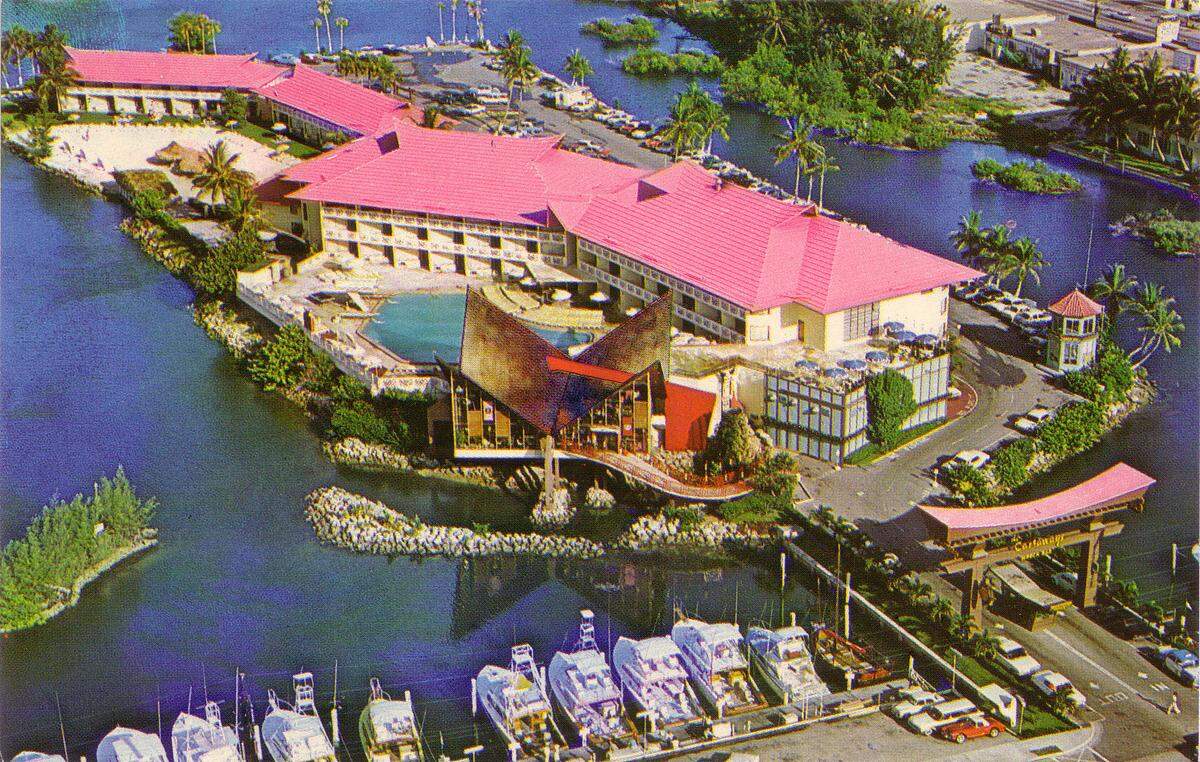
Ellen Wynne, a longtime resident, said the Beatles spent most of their time at Sunny Isles’ Peppermint Lounge and the Castaways’ Wreck Bar during their 1964 visit to South Florida. Both nightspots have since been demolished.
By the 1980s many of Sunny Isles’ motels had become rundown - and offered some of the cheapest nightly rates in the county. But Wynne feels that Sunny Isles got a bad rap when it was labeled “seedy.”
“South Beach was much worse than Sunny Isles at one time,” she said.
Seldom do communities get a chance to start over. But blessed with the ocean as a neighbor, the new city, named Sunny Isles Beach, has developers scrambling to get in even if they have to pay millions for dilapidated motels they plan to tear down.
Sunny Isles Beach has “some of the nicest beaches,” said Al Piazza, president of Coscan, a major developer of Aventura, which is building the 27-story hotel-condominium Ocean Point Beach Club at 17375 Collins Ave. Expected to open in the spring of 2001, it will have condos that range from $200,000 to $500,000.
“We’ve been looking at sites for a long time,” said Manny Rodriguez, executive vice president of the recently opened $130 million Pinnacle. “We kept seeing that the community was changing, that it was going to become one of the nicer places to be.”
A city-paid beachfront redevelopment study, finished last month, suggested Sunny Isles Beach could end up with a lot more Pinnacle equivalents - or another $1 billon in new construction value. That’s in addition to the $600 million in projects under construction. Driving the building boom
Sunny Isles Beach, in fact, is helping fuel the entire county’s building boom - although it covers only one-tenth of a percent of the county’s 2,000 square miles.
Sunny Isles Beach, along with its neighbor to the west, Aventura, accounts for 40 percent of all luxury condominium construction in the county, according to real estate analyst David Dabby, senior vice president of Appraisal and Real Estate Economics Associates.
Some residents, however, fear their once-overlooked community may be loved too much.
In just four years, the city expects another 6,000 residents, for a total of 20,000. That would be a 43 percent increase - in a city that is a mix of small motels, towering luxury condos, older condos and a small neighborhood of ‘40s and ‘50s stucco homes.
“The main thing is we want beach access. We don’t think the condominium owners should be the only ones to use the beach,” said Wynne, president of the Golden Shores Homeowners Association. Wynne is wistful as she remembers earlier days when she didn’t need air-conditioning.
“The breezes were so great,” said Wynne, 80, who bought a two-bedroom home in 1952 for $18,500 just a block west of Collins Avenue. “I could leave the windows open at night and I could hear the ocean roar. It was a wonderful feeling.
“Now that has all changed. Now all you can hear is traffic.”
The good news: City leaders are listening - and trying to make the city into what residents want, said Wynne, who was appointed to the Sunny Isles Beach Citizens’ Planning Advisory Committee.
“I feel the mayor and commissioners are doing a good job,” added Sippin, another Sunny Isles Beach civic activist who was appointed to the advisory committee.
There’s a moratorium on approvals for new construction projects while city leaders work on a master plan. But they concede that’s only temporary.
While the county had already approved about a dozen developments before Sunny Isles Beach became a city in November 1997, the commissioners will be able to look closely at any future ones, said City Manager James DePietro.
Already DePietro is proposing that the new high-rise projects be set back 75 feet instead of the current 50-foot requirement. And he wants to create more open areas from Collins Avenue to the beach for public beach access. A wealthy little city
All the growth of the ‘90s, he added, has proven a boon: It has made Sunny Isles Beach a wealthy city with a $1.2 billion - and growing - tax base. For its size, it has one of the highest tax bases in the county.
“With a very fine tax base, we can afford the luxury of planning it right,” DePietro said. “A poorer city is under pressure to invite all the builders in.”
It can also afford to splurge on a police force that Mayor Samson wants to increase from 33 to 38 officers, two new multimillion-dollar parks - one on the ocean, and a $2 million-plus beautification project to plant trees and flowers along Collins Avenue and the William Lehman Causeway. The city also is placing its utility lines underground, thus reducing the risk of hurricane damage.
New Yorker Hal Rosenstein is glad to see the changes - so much that he and his wife Isabel now spend half the year at their 18th floor condo at the Oceania condominium complex, built on the site of the Castaways, which was demolished in the 1980s.
“I call it our tropical paradise,” said Rosenstein. “We have the four S’s: surf, sun, sand and serenity. It’s a wonderful way of living. I’ve done extensive traveling and I just feel so much more comfortable living here.”
He and other residents feel safe walking in the city. They also are enjoying the cosmopolitan feel of the area. The new condos are attracting Europeans and Latin Americans, many of whom are buying them as second or third homes.Brazilian artist Fernanda Meirelles Lima bought a two-bedroom unit at Oceania - then bought a bigger Oceania unit. “I love the beach here,” she said.
Sunny Isles Beach, while predominantly populated with retirees, also is becoming younger.
Luxury condo buyers include young couples just starting out and 40- and 50-something empty-nesters, said Sari Dromi, sales manager for the 33-story Millennium condominium at 18671 Collins Ave. With 90 percent of its units sold, the Millennium will open in March. Its 116 units are priced from $250,000 to more than $1.2 million.
Oceania’s developer, German-born Gerti Kleikamp, helped pioneer the boom in the city. She first came in 1982 to run The Castaways for its new owners, two German businessmen.
After the company tore down the Castaways, Kleikamp oversaw building the first Oceania tower in 1990. “People thought we were fools,” Kleikamp later told The Herald. “But luckily there was demand for it.”
Indeed, Oceania built three more towers with units ranging from $200,000 to $2 million. And it is building a fifth, with two more more planned.
Today, Sunny Isles Beach’s skyline is punctuated with condo towers that hover over the last remaining motels. It’s a city remaking itself.
Yet, like a child growing up, it has to work out some issues. Last year, 80 percent of the area’s residents voted to become a city to help control the growth - and keep the beach open to all.
Wynne pointed to one high-rise posting a “no trespassing” sign on its property.
Another company building a high-rise temporarily took over an area that had public oceanfront parking spaces, Wynne said.
“But the public area will be reopened permanently once construction is finished,” said City Manager DePietro.
DePietro tries to reassure residents that they will have even more access to the beach with the soon-to-be, 2.1-acre municipal city park on the Atlantic, plus the required public access of new condos. In a year, the park is expected to have a restroom, a shelter and a concession area.
Sunny Isles Beach is already attracting developers, he said, willing to put up “skinny” towers to conform with the city’s mandate of providing open vistas of the ocean. And they’re willing to give up some of their land for public access to the beach.
That’s what keeps Wynne at Sunny Isles Beach - despite the changes.
Said Wynne: “I don’t plan on leaving.”
This story was originally published December 15, 2019 at 8:30 AM.