
A little boy named Elian arrived on a raft in 1999. A look at how the saga began
On Thanksgiving 1999, a little boy was found clinging to a raft. His mother, who made the perilous trip with him from Cuba, was dead.
The arrival and survival of 5-year-old Elian Gonzalez warmed the hearts of South Florida. But his saga soon turned into an international custody battle, pitting Elian’s Miami relatives against his father in Cuba. And the U.S. federal government and Havana.
We are unlocking the Miami Herald archives and re-publishing pictures and articles starting with what happened at the beginning of the saga.
What follows are the first few stories from November 1999 documenting his arrival, and also the story documenting his seizure by armed federal officers in April 2000.
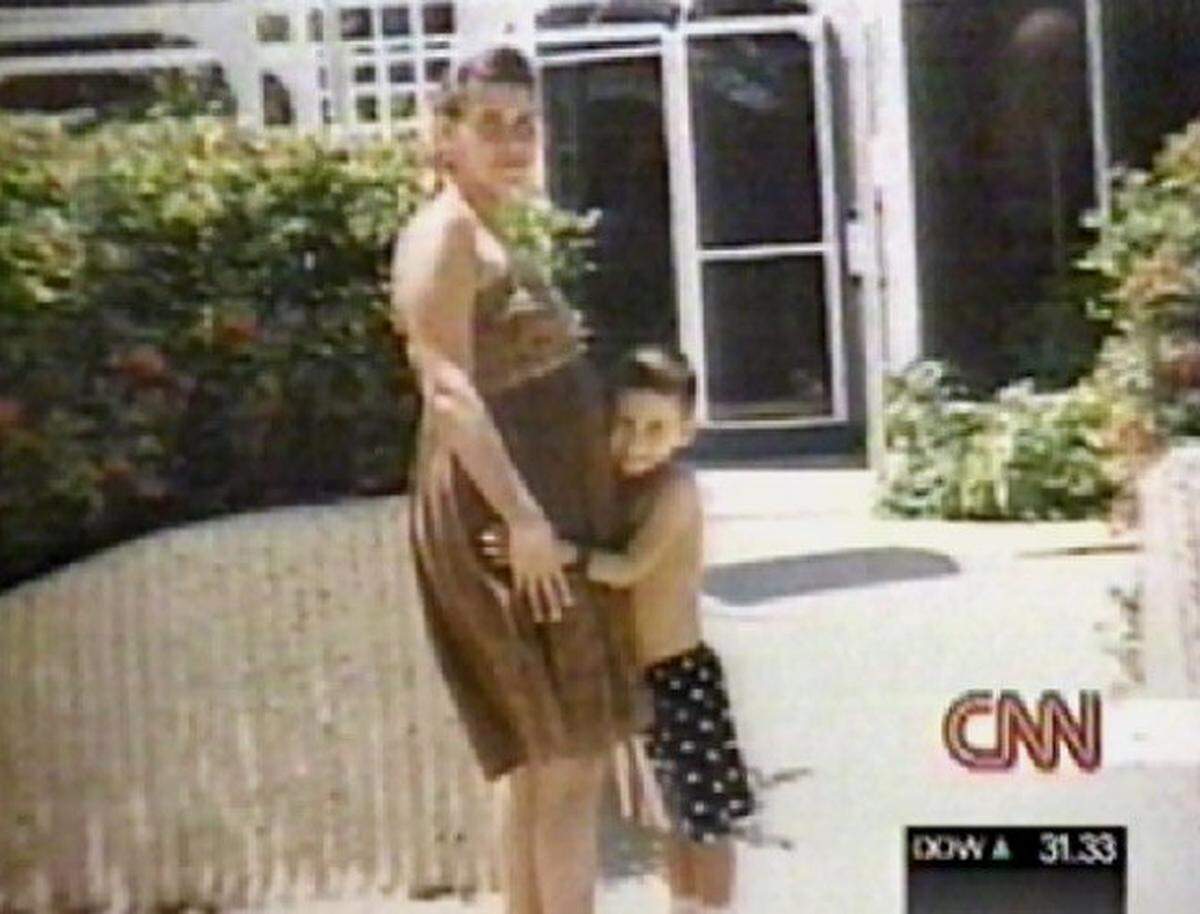
THE ARRIVAL
Published Nov. 26, 1999
A 5-year-old boy found clinging to an inner tube three miles at sea on Thursday morning was among three survivors of a boating catastrophe that may have killed 11 refugees fleeing Cuba, the Coast Guard said.
Rescued off Fort Lauderdale, the boy, Elian Gonzalez, was listed in stable condition. Later, searchers found the body of a woman who apparently had been tied to the inner tube but broke free. “The ocean is a dangerous place. And on this day, Thanksgiving, some family, somewhere, is having to face a horrible, horrible tragedy,” said Mike Gilhooly, a spokesman for the U.S. Immigration and Naturalization Service. “We’ve learned it time and time again.”
The 14 Cubans left Cardenas, a city east of Havana on Cuba’s north coast, at 4:30 a.m. Sunday aboard a 17-foot aluminum boat, the Coast Guard said. The boat broke apart and sank somewhere between the island and South Florida about three days ago.
Seven refugees drowned almost immediately, survivors told rescuers. The remaining seven clung to two inner tubes - five on one, and two on the other.
Those two - a 33-year-old man and a 22-year-old woman - were picked up by fishermen and brought to the Crandon Park Marina on Key Biscayne at about 6:30 Thursday morning. Both were in fair condition at Jackson Memorial Hospital late in the day.
The woman, Arianne Horta, described the trip to her uncle Ranieri Horta and his wife Mirta Rivero from her hospital bed.
“First, the motor stopped. Then it started to rain and the boat sank because it broke apart,” Ranieri Horta, of Hialeah, said in an interview with The Herald late Thursday.
When the boat sank, the women went onto one inner tube and the men onto another, and they tied the two together with a piece of rope. “One by one, she witnessed all the women slip into the sea. At some point, her boyfriend became delirious and started losing consciousness.
“She untied herself from the raft, and went to the other raft, where her boyfriend was and she started slapping him to bring him back to consciousness.
“She said a woman who came with her two grown sons - all three drowned. The two sons drowned first and then the woman said, ‘If my sons died, then I don’t care anymore,’ and she just let go. People tried to grab and screamed at her to hold on, but nobody had any strength.”
Arianne Horta told her uncle at least three boats passed very close to them at night. “They all screamed at the top of their lungs, but nobody heard or saw them . . . Last night, they could see the lights of Miami and it gave them more strength, but when they tried to swim or paddle over to the shore, the current pushed them back.”
When Arianne Horta woke up, she could see the marina, so she swam, pulling the inner tube to the pier. Somebody finally saw them and helped Arianne and her boyfriend onto the pier. By that point, her boyfriend was delirious.
Ranieri Horta said his niece is sunburned and has wounds all over her legs from the salt water. Doctors told him she would be kept at Jackson for a couple of days before being sent to Krome detention center for processing and release.
Throughout Thursday, the Coast Guard searched for any other survivors from Islamorada to Boca Raton, using a Falcon jet, three helicopters, the 110-foot cutter Maui, a patrol boat based in Miami Beach, and a 41-foot rescue boat from Fort Lauderdale.
Also, Brothers to the Rescue founder and leader Jose Basulto took up a plane to help search after receiving a 7 a.m. phone call. He returned, dejected, about 2 p.m.
“Nothing. We found nothing. Poor people,” he said. “It’s very difficult when what you are looking for is the size of a person only. Imagine trying to find a coconut floating in the water from a plane flying at 150 miles an hour over the sea.”
Authorities were alerted to the tragedy early Thursday morning when police were called to Crandon Park Marina to pick up Horta and her boyfriend.
Firefighters from Station 15 on Key Biscayne also responded.
“I’ve had other rafters, a couple of encounters,” firefighter Jose Huguet said. “These two had been in the water, you could tell.
“Some of the others didn’t even ask for water. But these were definitely rafters. They had low blood pressure, they were thirsty, they couldn’t walk, really. They’d been through an ordeal.”
The two Broward fishermen who discovered the 5-year-old boy described much the same situation.
The cousins were on an early morning dolphin expedition when they saw an inner tube bobbing in the ocean shortly after 9 a.m. Thursday.
“I told my cousin we should cast over there because fish tend to school under things,” said Sam Ciancio, of Lighthouse Point. “We caught a dolphin, and then my cousin said to me, ‘Hey, I think there is somebody in that tube.’ “
Ciancio, 41, was skeptical at first, thinking maybe someone had lashed a doll to the tube. But his cousin, Donato Dalrympler, 39, of Lauderhill, insisted - saying he thought he saw a hand moving.
When Ciancio realized a child was clinging to the tube, he pulled off his shoes and pants and jumped into the water. He swam back toward the boat, towing the boy and lifting him into Dalrympler’s arms.
“I’ve traveled around the world as a missionary, but I have never felt like this,” Dalrympler said. “What a gift to find this kid today. I would like to see his face again.”
The pair traveled to Joe DiMaggio’s Children’s Hospital in Hollywood later Thursday to visit the boy, but authorities would not let them, Ciancio said.
“All I care about is that he is OK and that he has someone to take care of him,” he said. “I don’t want to see him end up in the system. If there is no one to look after him, I will look after him.”
The boy told the Coast Guard that his parents had drowned.
An hour later, the body of a woman between 50 and 60 years old was recovered five miles to the south. The boy told the Coast Guard that a woman had been on the inner tube with him and his parents. Rope found with the woman’s body was similar to rope on the tube, authorities said.
Late Thursday, Cubans who believed their relatives might have been on the boat gathered outside Jackson, where the two survivors from Key Biscayne were taken.
“We are desperate for news,” Ivonne Suarez, who believed her aunt and several cousins were among the 14 on the boat, said in an interview with WSVN-Channel 7. “We need to keep looking for them and save them. . . . Maybe they can find them. I have hope and faith that they are alive.”
The relatives said the group was being brought from Cuba by a man named Lazaro Moreno, who is believed to be the 5-year-old boy’s stepfather.
Moreno came to the United States from Cuba on a raft and went back recently to get his stepson and his wife, relatives said. The boy’s father is believed to be a police officer in Cuba.
Ranieri Horta said he believed his niece and her boyfriend paid $1,000 for the trip.
On her radio show, Cuban American National Foundation spokeswoman Ninoska Perez-Castellon said the tragedy represents the tyranny of Fidel Castro’s government.
“That image of a child floating alone in an inner tube is the image with which Fidel Castro should be received in Seattle if he shows up,” she said, referring to the possibility the Cuban leader will attend a World Trade Organization meeting in that city next week.
She also compared the voyage of the rafters to those made by pilgrims who first landed on Plymouth Rock. “They were the first refugees. The pilgrims would not have survived without the natives’ help,” Perez-Castellon said.
No decision had been made Thursday evening on how long the search will continue.
“You have to consider a lot,” said Petty Officer Scott Carr, a Coast Guard spokesman. “You have to take survivability rates into consideration. The boat went down Tuesday. The longer someone is in the water, the less chance they can survive.”
Border Patrol officials, who took the lead in the investigation, said it wasn’t clear if this was a case of alien smuggling.
“We’re just trying to piece together the facts,” said Verne Eastwood, special agent with the Border Patrol’s anti-smuggling unit and lead investigator on the case.
The U.S. Border Patrol says that since 1993 at least 140 Cubans and Haitians have drowned while trying to reach Florida. So far in 1999, U.S. authorities believe at least 58 may have drowned.
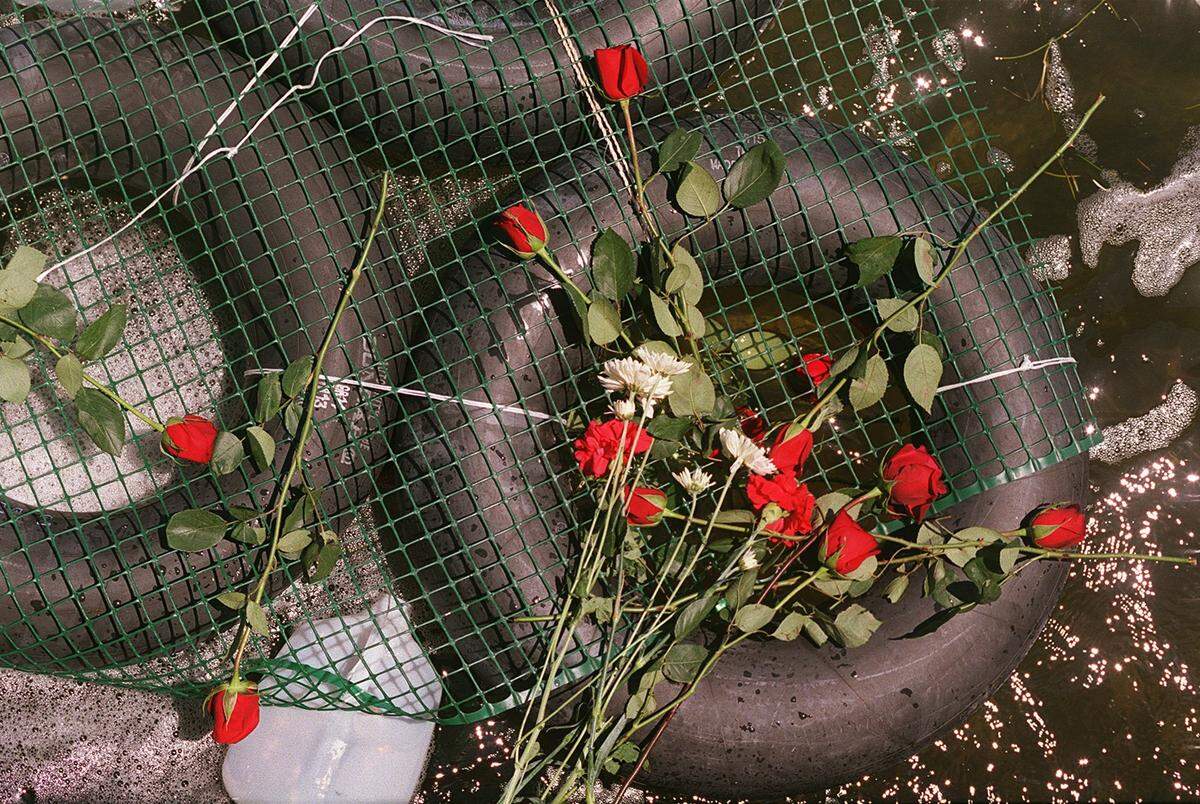
OUT OF THE HOSPITAL
Published Nov. 27, 1999
Emotionally traumatized but physically healthy, the 5-year-old survivor of a rafter catastrophe that almost certainly killed his mother and nine others was out of the hospital and in relatives’ care Friday, as U.S. authorities said the voyage was apparently a for-profit smuggling operation led by a South Florida man thought to be among the dead.
Meanwhile, the U.S. Coast Guard picked up the bodies of six others presumed to have drowned in the ill-fated venture, all of them afloat within a vast search area between Fort Pierce and Jupiter Inlet.
The Coast Guard said it would continue its search for the three others today. One body was found Thursday.
Two adult survivors, who drifted up to a Key Biscayne marina on a truck-tire inner tube early Thanksgiving Day, remained in fair condition at Jackson Memorial Hospital in Miami, where they acknowledged to U.S. Border Patrol investigators that they had agreed to pay $1,000 to be brought to the United States.
The surviving boy, Elian Gonzalez, found atop another inner tube off Fort Lauderdale by a pair of fishermen, was released from Joe DiMaggio Children’s Hospital in Hollywood after treatment for sunburn and dehydration.
The youngster, wearing new clothes and a baseball cap, appeared shaken and weak as he stood between two cousins before a throng of photographers and reporters. Doctors said they were amazed that the child, who they believe went without water for as long as two days, survived.
“God wanted him here for freedom,” said Marisleysis Gonzalez, 21, Elian’s second cousin. “And he’s here and he will get it.”
Though in “pretty bad shape,” according to Border Patrol deputy chief Michael Sheehy, the two adult survivors were able to give investigators what Sheehy said is a credible if still-incomplete account of their harrowing ordeal.
Based on their account, which Sheehy said was bolstered by other sources he did not identify, investigators now put the number of those presumed dead at 10, rather than the 11 initially reported. The reason: the small powerboat that left Cuba sometime last weekend originally carried 14 passengers, but turned back to the island after experiencing engine trouble. Before venturing back out to sea, the group apparently left behind one passenger, a child, Sheehy said.
“I don’t know why they did, but I’m glad for that,” Sheehy said.
Sheehy said investigators believe the 13 remaining passengers comprised two family groups, one of five and one of six people, and the two adult survivors, Arianne Horta and Nivaldo Fernandez Ferran, who are a couple. Elian, the boy, was traveling in a group with his mother and other relatives, Sheehy said.
The South Florida man who organized the trip - whose name investigators have not yet firmly established - is believed to have been the boyfriend or common-law husband of Elian’s mother, Sheehy said. Also possibly in the group was the man’s brother, he said.
One scenario investigators are considering is that the suspected smuggler organized this venture to bring his wife, her son and other relatives to the United States, and charged the other passengers money.
“This individual went to Cuba in his boat to bring back at least a number of family members,” Sheehy said. “The survivors did tell they had agreed to pay $1,000. We felt there was some commercial gain here.”
Elian was turned over to his biological father’s uncle and aunt, Lazaro and Angela Gonzalez, of Miami, after the Immigration and Naturalization Service verified the family relationship.
Family members said they believe the boy’s mother, whom they identified as Elizabeth Broton Rodriguez, 28, may have taken Elian without telling his father and grandfather, both of whom live in Cuba and shared custody of the child with the mother. But they had kind words for her.
“She wanted everything a mother could want for her son,” said Georgina Cid, Elian’s great-aunt, in a phone interview. “She dedicated herself to him.”
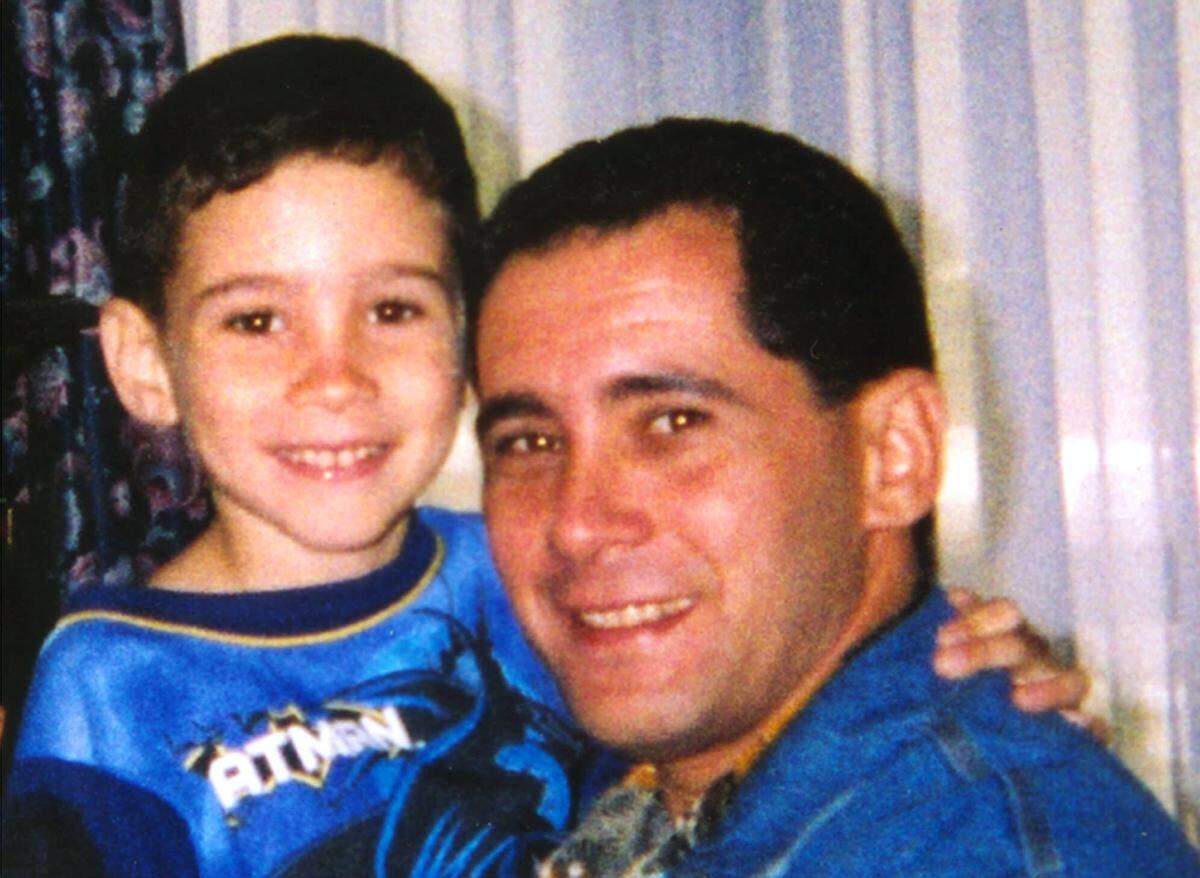
Although the boy’s parents were separated, Cid said, his mother remained in contact with her husband and his family. Cid said the boy’s father, whom she identified as Juan Miguel Gonzalez, works at a hotel in Varadero, the famed resort town about an hour and a half east of Havana.
Family members say they are willing to help the boy’s father seek legal entry to the United States to reunite him with his son.
The family said Elian was still frightened by his new surroundings and was slowly meeting relatives, some of whom knew him through visits to Cuba and through pictures and videotapes.
Relatives said the boy was able to say little to his family about his experience, apparently recalling almost nothing about it.
“He just said the boat turned over,” said his cousin Marisleysis Gonzalez.
That boat, powered by a 50-horsepower outboard engine, was probably not more than 20 feet long, and grossly overloaded, the Border Patrol’s Sheehy said.
The adult survivors, whom Sheehy described as cooperative, still must be re-interviewed to address gaps in their stories, he said. But their tale confirms and adds new detail to an account given earlier by relatives who spoke to them at the hospital.
After first leaving Cuba, the couple said the boat made it to a deserted island near Cuba, possibly Cay Sal, before having engine problems, according to Sheehy. After repairs in Cuba, they set out once more, only to have the engine quit for good somewhere directly south of Islamorada.
They drifted north in the Gulf Stream “for quite some time” until a storm came up, turning sea conditions rough, Sheehy said. The boat began taking on water over the side.
“They probably got nervous, started moving around, and capsized the boat, because of their own weight shifting around,” Sheehy said.
Though times and dates are still unclear, Sheehy said he believes the capsizing took place in the early morning, shortly before dawn, possibly on Wednesday.
All 13 passengers were able to stay with the boat, hanging onto the overturned hull before somehow managing to turn it right-side up, Sheehy said. But the boat continued to take on water, and the passengers apparently decided they would be better off ditching it and taking their chances on two large inner tubes they carried as life preservers.
The women and the boy went on one, the men on the other, holding on to the rubber. At one point, Fernandez Ferran began hallucinating and Horta, his girlfriend, swam over to join the group at his inner tube to help.
Then they began dying, one by one.
Investigators believe the first to go were the suspected smuggler and a relative. One man decided to swim for land. When he ran into difficulty, the second followed to assist. When they appeared to get in trouble, a third man went to help. The three then disappeared from sight of the others.
A woman related to some of the men - according to the survivors’ relatives, their mother - “decided she had no reason to live,” let go, and drifted off, Sheehy said.
“A number of them pretty much did the same thing,” Sheehy said, until the only ones left were Elian and the young couple, on separate rafts.
He says Elian probably survived because the others protected him while they could, covering him and keeping him out of the water. About 27 hours passed between the time the engine died and the survivors were rescued, Sheehy estimates.
Dr. Yvonne Rutherford, one of Elian’s physicians, called his stamina remarkable.
“This probably is a very special child,” she said. “I don’t know how many children might have panicked or let go.”
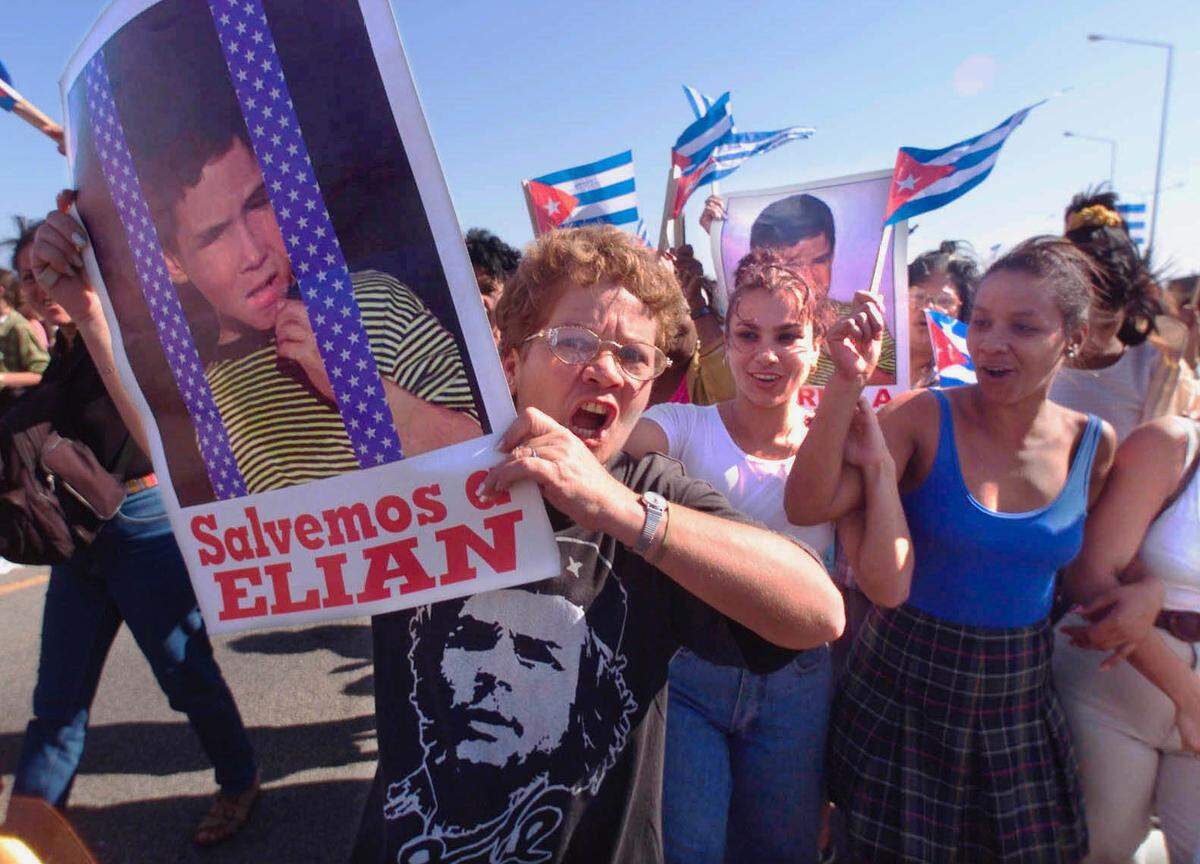
CUSTODY BATTLE
Published Nov. 29, 1999
Elian Gonzalez, the 5-year-old boy who survived the Thanksgiving Day rafter disaster that likely killed his mother and nine other Cuban refugees, is now the focus of the latest diplomatic spat between Havana and Washington and a custody battle among relatives on both sides of the Florida Straits.
The boy’s father, Juan Miguel Gonzalez, and the Cuban government have demanded that the child be returned and Havana has blamed the United States for the tragedy.
In Miami, the child’s relatives have retained an attorney to block any move by Havana or the boy’s father to take the boy back and to become his legal guardians.
Under Florida law, some local legal experts say, the boy could be returned to Cuba if his biological father wants him back.
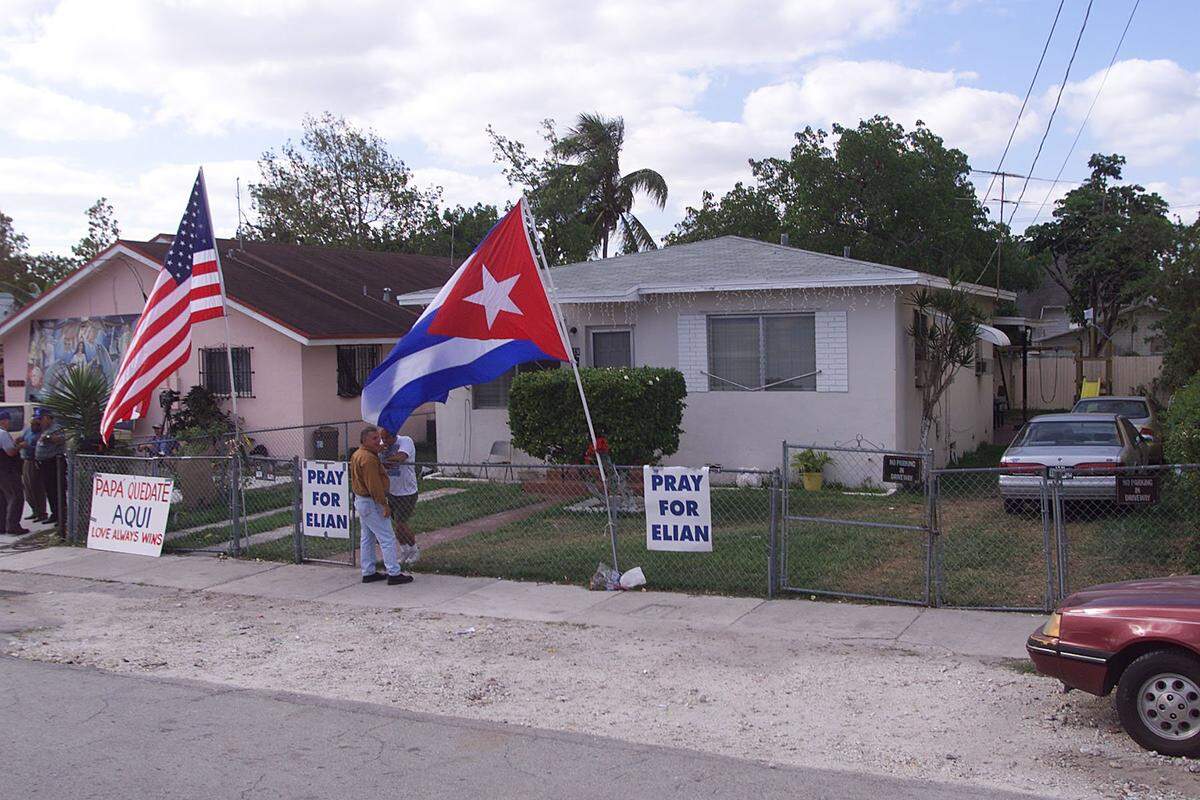
But the boy’s Miami family attorney, Spencer Eig, says U.S. immigration and federal judges ultimately will be the ones to rule not on what the father wants but whether staying here is in Elian’s best interest.
“He has a family here in the United States, and Elian has already told them that he wishes to stay here in the United States and not return to Cuba,” Eig said.
Family members told reporters not to ask Elian questions and refused to provide a telephone number for the father in Cuba. He could not be reached independently.
But the family acknowledged that Elian’s father is taking steps to get his son back. The family learned late Sunday that Elian’s father has filed a complaint with the United Nations to get international attention to his custody demand.
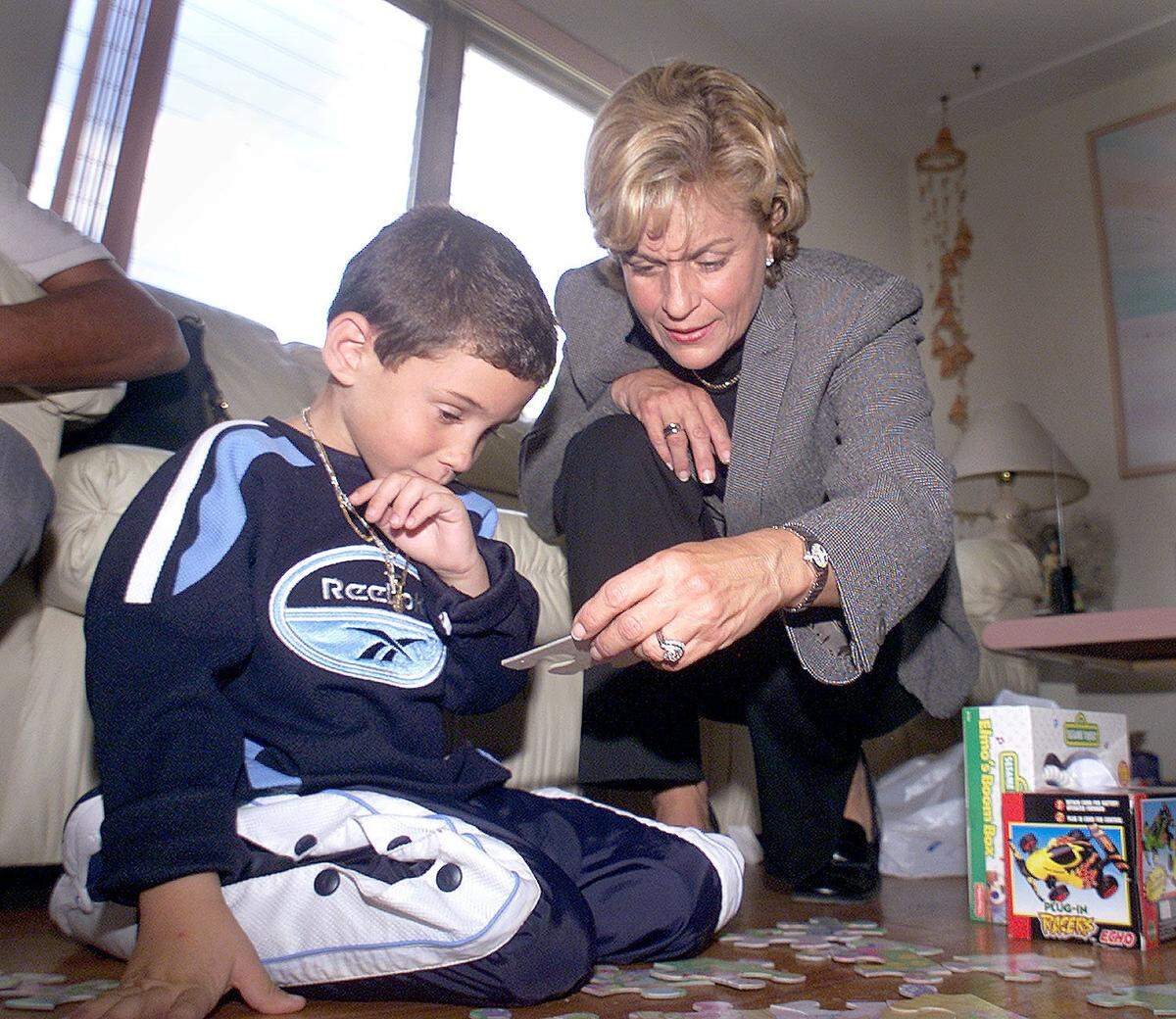
U.S. Rep. Ileana Ros-Lehtinen, who visited Elian on Sunday, weighed in on the issue.
“We don’t know how much of that request has been coerced by the dictatorship or how much of it is real,” said Ros-Lehtinen, R-Miami. “I’m not second-guessing his intentions, but the court should take into account his mother’s wishes. You know that her last breath and prayers to God must have been for him to reach liberty and live in freedom.”
Elian’s story has taken on major international ramifications.
The Cuban American National Foundation has literally turned him into the poster child of the anti-Castro movement mounting a photo of the rescued boy on a poster to be sent to an international trade meeting starting in Seattle on Tuesday.
The poster of the boy, who was found clinging to an inner tube three miles off the coast of Fort Lauderdale on Thursday, will be distributed among delegates to the four-day World Trade Organization meeting that - rumors say - Fidel Castro may attend.
The foundation has mailed posters and fliers of the boy to organizations in Seattle, as well as to Cuban-American residents there, to protest Castro’s policies.
“Forty years later, children are still victims of his dictatorship,” said Ninoska Perez Castellon, a foundation spokeswoman. “We feel that’s the only welcome Fidel Castro should have.”
A Cuban Foreign Ministry statement Sunday said the boy’s father claimed his son was taken illegally. Havana also blasted U.S. immigration policies saying they encourage tragedies like the one involving Elian and claimed it could have been prevented.
In a statement published Sunday, the Cuban government said it alerted the U.S. Coast Guard about the boat but claimed U.S. authorities did nothing to intercept the vessel.
The statement, published in the Juventud Rebelde newspaper, said that last Monday a Cuban border patrol boat spotted a motorboat near Cardenas, a city east of Havana on Cuba’s north coast, that carried about 15 people.
Cuban authorities, the statement said, urged the boat to return and relayed the information to the U.S. Coast Guard claiming its warning was ignored.
U.S. Coast Guard officials refuted Cuba’s contention that it did nothing, but acknowledged receiving a warning.
After getting word via telex from the Cuban government about the boat, Coast Guard planes and cutters searched for it for three days, to no avail.
The world learned of the tragedy on Thanksgiving Day when the 5-year-old was found clinging to the inner tube off Fort Lauderdale and two other survivors were brought to Key Biscayne.
“We are out there every day trying to intercept and stop these boats,” said Lt. Ron LaBrec, a Coast Guard spokesman. “It’s a matter of having the aircraft and boats to do it. Do we stop all of them? We all know we don’t.”
As the tragedy’s legal and diplomatic implications rippled from Havana to Miami to Washington, little Elian began to adjust to a new routine with his aunts, uncles and cousins in a neighborhood north of downtown Miami.
Elian was in good spirits Sunday as he played with new toys and ran around the yard with his little cousins, Lazaro Gonzalez, 5, Natalie Gonzalez, 6, and Michelle Mora, 5. Streams of relatives filed in all day long carrying Toys R Us bags filled with gifts. Among his many visitors: Donato Dalrymple, who plucked him from the water Thursday, and Jose Basulto, leader of the Brothers to the Rescue humanitarian organization.
Elian’s family, meanwhile, braced for what may be a major legal battle to keep the child here.
Early on, family members said, Elian’s father wanted his child returned but gradually grew amenable to the idea of Elian staying in Miami.
On Sunday, however, the family learned of Gonzalez’s demand and realized he had changed his mind yet again - perhaps because of Cuban government influence.
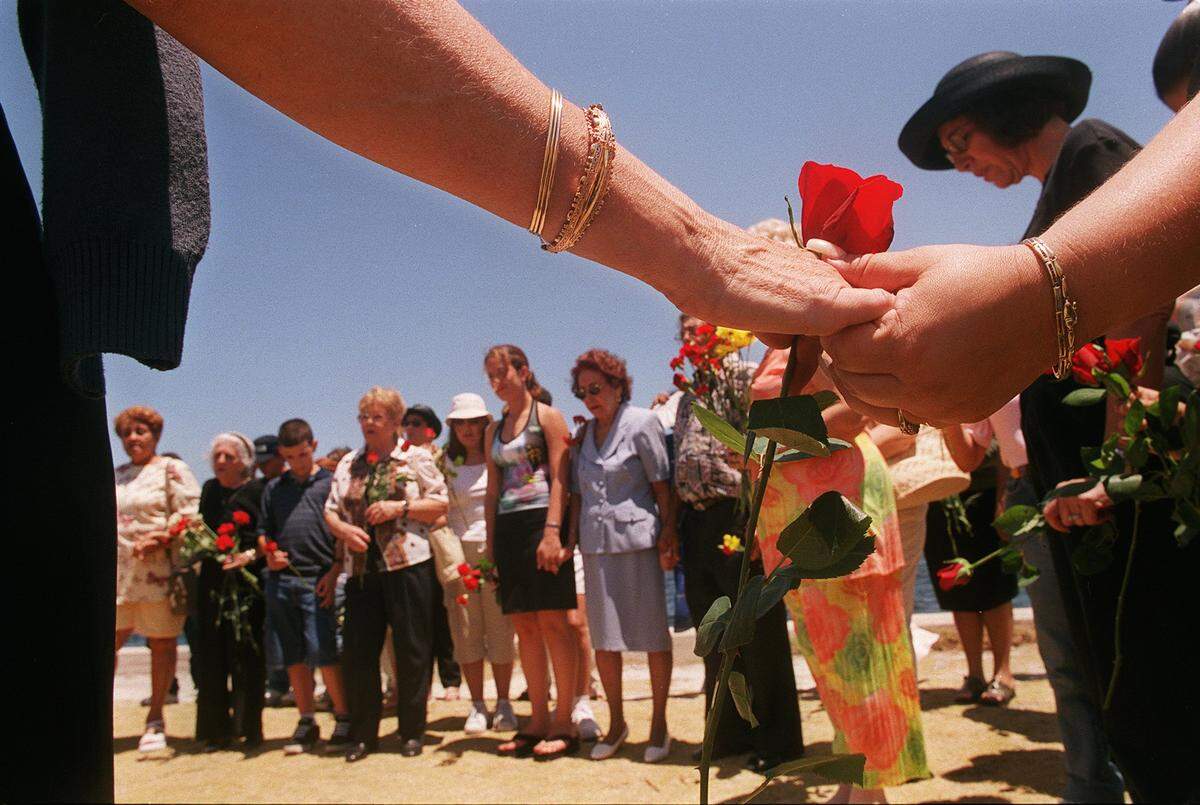
HOW IT UNFOLDED
Published Dec. 13, 1999
The international incident that has pitted Miami exiles against Cuban leader Fidel Castro in a custody battle over 6-year-old rafter Elian Gonzalez began on a beach east of Havana during Thanksgiving week.
That was when 14 people waded through shallow waters off Cardenas, pushing a 17- to 20-foot boat far enough from homes so they couldn’t be seen or heard. Destination: Miami. Only three people made it, including Elian, who was rescued off Fort Lauderdale by two cousins who were fishing.
Lost in the debate over whether the boy should be returned to his father in Cuba or left in Miami with relatives are the stories of the 11 others - who they were and why they risked the deadly voyage. Through interviews with two adult survivors and the family of the dead in this country and Cuba, pieced together with the account of the U.S. Border Patrol, The Herald has tried to re-create the tragic journey.
It is a story that dates back nearly 18 months, when Lazaro Rafael Munero Garcia, organizer of the ill-fated trip, first came to South Florida. The night of June 29, 1998, after landing near mile marker 71 in the Keys, he told Border Patrol agents he had come on a 12-foot boat with three other men. They were quickly apprehended.
Munero, then 23, spent the night at the Krome detention center and was released into the community the next day subject to a review of his status. He went to live in Flagami with his uncle, Jorge Munero, his aunt, Maria Lopez Munero, and their young daughter in a small addition they rent behind another home on Southwest Third Street. But Lazaro Munero couldn’t bear being apart from his family.
“From the beginning, he would cry for his parents, his wife and the boy,” Jorge Munero said.
Though his family doesn’t believe that Lazaro Munero was legally married to Elian’s mother, Elizabet Brotons Rodriguez, the two lived together for years.
“He considered her his wife,” Jorge Munero said. “He lived for her. He couldn’t be happy here without her and the little boy. He loved that boy, too.”
Shortly after arriving, Lazaro Munero wrote Elizabet a “beautiful” letter saying he couldn’t live without her, the uncle said. When he heard of the deaths, the uncle looked for the letter among the things his nephew left behind when he returned to Cuba three months after arriving.
“He must have taken it with him to Cuba,” said the short man with sad eyes who sighs.
Lazaro Munero worked at a carwash in Westchester seven days a week to send much-needed dollars back to loved ones in Cuba, his family here said.
“He would leave at 7 or 7:30 and not come home till 9 or 10 at night. Then he would eat something and go to sleep,” said his aunt, Maria Lopez Munero. “He never went out to parties or even to drive around. I once told him, ‘Come with me and the girl to the movies,’ but he said no, that he couldn’t enjoy it.”
In October, Lazaro Munero returned to the communist-ruled island he had fled less than three months earlier. He took a motorized inflatable raft and headed in a direction few venture: south. His stint in Miami cost him a 62-day jail sentence in a state security prison in Santa Clara. “Maybe they thought he was infiltrating the country to do some harm or something, since he came from here,” Jorge Munero said.
His nephew was released last New Year’s Eve and returned to normal life driving a cab in Cardenas, a city in Matanzas province near the tourist spot Varadero Beach two hours by car from Havana.
About two weeks before the tragic voyage, Jorge Munero spoke with his brother and nephew for what would be the last time. When he learned that Lazaro - called “Rafaelito” because he was the spitting image of his father, to whom he was very close - was home, he asked to talk with him, too.
“Hey, boy! How the heck are you?”
“As good as can be expected, uncle,” Lazaro answered. “But things will get better. You’re going to get a big surprise.”
“You had your chance - and you blew it.”
“Just wait, uncle. Just wait. It won’t be long.”
When his brother came back to the phone, Jorge Munero asked him what his nephew was talking about.
“Pay no attention,” Rafael Munero said. “You know how he talks craziness.”
In Cardenas, Lazaro Munero told the opposite to anyone who would listen.
“He said he would never go back,” said his aunt, Regina Munero. “But now it seems like that was all a lie.”
He told his best friend it was too hard and lonely in the United States. “You work just to pay your rent,” the friend quoted him as saying. “He missed his mom so much.”
Now, relatives realize that Munero’s intention was to gather the materials, money and family members to make life in the United States worth it. He was going to live in Florida, after all. He just wasn’t going to do it alone. His entire nuclear family - dad Rafael, mother Marielena Garcia, brothers Jikary and mentally disabled Ricardo, and his common-law wife, Elizabet - agreed to go along. He and Elizabet took her son, Elian.
Elizabet apparently discussed the plan with Zenaida Santos. The two were waitresses at the Punta Arena Paraiso Hotel in Varadero Beach. Santos was married to Nelson Rodriguez, the brother-in-law of Elizabet’s niece in Miami. The couple took the trip with Nelson’s brother Juan Carlos and the boys’ parents, Juan Manuel Rodriguez and Merida Barrios.
The whole family drowned. The body of Juan Manuel Rodriguez is one of four that have not been recovered. The others lost at sea are Lazaro and Jikary Munero and Elizabet Brotons.
In a house across the street from the Rodriguez home, Lilka Guillermo, 23, told her grandmother she was visiting her sister. She wanted to leave the country. Everybody knew that, her grandmother, Rosa Betancourt, said. But she planned to do it legally. In fact, Guillermo had two previous opportunities to leave illegally when a boyfriend and her mother - both rafters - left on separate trips. It is believed her boyfriend came last year with Munero.
But she was afraid, relatives said. She didn’t know how to swim. Nobody expected her to try this.
“If I knew where she was going, I would have gone after her,” said Betancourt. “I would not have let her go.”
Although so many people were part of the plan, many in Cardenas said nobody knew that Munero was building a vessel using spare parts, aluminum and a motor he fashioned. He used money he saved as a taxi driver and cash he got from selling his 1955 Chevrolet. He made himself captain of the voyage.
“He knew the most. He had experience,” said Munero’s best friend, who didn’t want his name published. “It looks like he talked the others into it.”
Days before the departure, the Muneros started parceling out the family’s belongings. A brand-new TV set and a refrigerator went to Rafael’s brother, other electronics to their friends.
But Rafael Munero, 49, felt uneasy. He was leaving behind his younger brother, Dagoberto, who worked with him and was more like a son. At 9 p.m. Nov. 20, the night before the voyage, Dagoberto went to his brother’s house to talk him out of it - or say goodbye.
Rafael seemed half-drunk and half-ready to stay home in Cardenas, his brother said.
“He didn’t want me to stay,” Dagoberto Munero, 41, said. “And I didn’t want him to leave.”
The younger brother tried to persuade Rafael to change his mind, but his sister-in-law Marielena was eager to go, and so was his brother’s son, Lazaro.
“I gave him advice,” Dagoberto Munero said. “I said, ‘Don’t go. Don’t go. Don’t go.’ I didn’t want him to go because he was like my father. I can’t live without him. But every time I tried to say that, my nephew would step in to say, ‘Why are you taking these ideas out of his head?’ We exchanged a few salty words.”
The argument ended badly.
“My nephew threw me out of the house,” Dagoberto Munero said. “I didn’t say goodbye.”
Meanwhile, Elizabet was telling her family that she was taking a two-hour trip to the big city. “She said she was going to Havana for a visit,” said her mother, Raquel Rodriguez. “I never saw her again.”
Arianne Horta Alfonso and her boyfriend, Nivaldo Fernandez Ferran, the only adult survivors of the voyage, also found out about the trip. They told U.S. Border Patrol agents that they offered Lazaro Munero $1,000 to take them.
Jorge Munero, Lazaro’s uncle in Miami, said the two survivors are the only passengers from the ill-fated vessel whom he didn’t know in Cuba before he left in 1992. He is sure his nephew didn’t charge anyone for the trip, all of them being family in one way or another. Elizabet was related to the Rodriguez clan through her niece Carmen, the wife of a third Rodriguez boy, Orlando, who left Cuba last year.
More likely, he said, Lazaro feared that if he didn’t take the couple, they would spill the beans.
About 4:30 a.m. Nov. 21, the 15 would-be emigrants made their way to Sierrita, a spot on the shore a block or so from a shipyard where the tin houses are far enough away so that no one can see you. There, a beaten path in the shrubbery opens out to a rough shore.
They carried water, bread, crackers, cheese and previously boiled hot dogs. Like many rafters before them, they also took three inflated inner tubes - just in case they needed them - which they tied and trailed behind the boat.
Soon, the voyagers had trouble with the outboard engine and returned to the Cuban coast for repairs. Arianne Horta dropped off her daughter, Estefani, 5, because she feared the trip would be too dangerous. Then, believing they had the problem fixed, the group set off again in the dawn that Monday.
The Cuban Foreign Ministry said in a statement three days after the survivors were found that it had alerted the U.S. Coast Guard about the overloaded boat headed for U.S. waters. The Cuban Border Patrol, it said, had spotted the boat Monday morning leaving the waters off Cardenas and patrol agents repeatedly warned the passengers to turn back.
U.S. Coast Guard officials acknowledged getting a telex from their Cuban counterparts and said agency planes and cutters were dispatched to search for the boat. They found nothing.
Late that Monday, from all accounts, the group ran into foul weather and the engine quit again. They drifted, bailing water that was coming in over the sides in the five-foot waves, until Tuesday night - it was dark, survivors said - when the boat capsized.
They clung to the hull for a while and righted it again, but the boat kept taking on water. Fearing they would sink, the group decided to use the inner tubes. Seeing that one was flat, they formed two groups on the others - women and the boy on one, the men on the other.
Then, one by one, they started slipping into the sea.
It is believed that Lazaro Munero and his brother Jikary were the first to go. One of them decided to try to swim for land and send help. When he ran into difficulty, his brother followed. When both seemed to struggle, a third man swam off to help them.
None of the three were ever seen again.
Perhaps the third man was their father, Rafael. Shortly after, Horta said, a woman who learned that both of her sons were dead decided she had nothing left to live for - and let go. It is believed that the woman was Marielena Garcia, Munero’s mother. Horta tried to grab her as she and others screamed for her to hold on. But it was too late and they were all weak.
The next day, Horta and Fernandez said, they saw at least two big ships. They aren’t sure if they were cruise ships or freighters. They screamed and waved - but the vessels didn’t stop.
At that point, Horta, the boy and another woman - perhaps Barrios, who is believed to have been the last one with Elian - remained on one inner tube, and Fernandez was on the other. Later Wednesday, Fernandez became delirious and started to lose consciousness, so Horta untied herself from one inner tube and swam to the other - at this point they were still connected by a piece of rope. She slapped him back to life.
That night, they could see little lights in the distance, and they were sure it was a shore. They tried to swim, but the currents kept pushing them back. Tired, weak and thirsty, they decided to rest for a while, keeping their eyes on the horizon.
In the night, they also became separated from the other inner tube, which disappeared. It could have been when Horta and Fernandez fell half-asleep for a short while; they couldn’t keep their eyes open. The next morning, when they saw some lights, the two started to kick and paddle toward the shore. They saw boats, a marina. They were just off Key Biscayne.
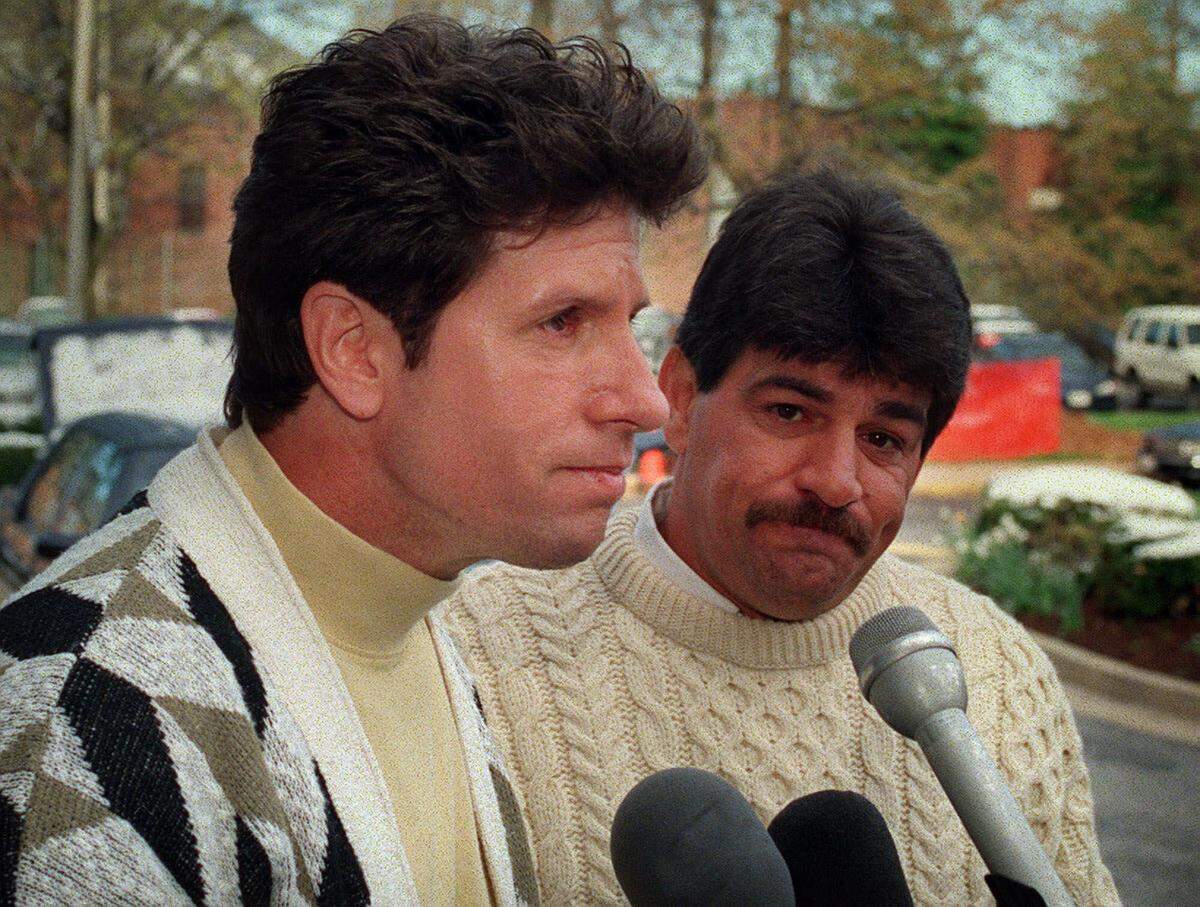
Meanwhile, Donato Dalrymple was at the controls of his cousin’s boat, setting off from the dock behind his cousin’s house on the Intracoastal Waterway in Pompano Beach for a fishing trip. Sam Ciancio had called him the day before to invite him. It was a rare treat. The two hardly ever see each other - maybe once a year, Dalrymple said.
“He said he wasn’t going to go if I didn’t go. I canceled two jobs to do it,” said Dalrymple, who has a small housecleaning business and is in the middle of moving.
They left about 7 a.m. on Thanksgiving Day.
Ciancio told Dalrymple to look out for floating debris under which fish sometimes gather.
“We were just out of Lighthouse Point, and I was zigzagging southeast at an angle,” Dalrymple said. “There were three- to five-foot waves. It was rough out there, very rough.”
About 8:30 a.m., Dalrymple spotted something - a dark thing, circular in shape. They neared it and Ciancio started baiting the poles, when Donato noticed what he thought was a person inside the floating black rubber doughnut. He saw what he thought was a hand and the top of a man’s head with dark, wet hair.
“Nah,” Ciancio said, still baiting.
“I’m telling you, Sam, there’s somebody in there.”
Ciancio looked again. “Isn’t that a sick joke? That somebody could tie a doll to an inner tube?”
Just then, there were tugs on the poles and both men began to reel in their catch. As Ciancio kept fighting with a fish on the end of his line, Dalrymple lost the bite on his. “So I went back to the steering wheel to get a closer look,” Dalrymple said. “I didn’t think it was a dummy in there.”
Something kept nagging at him. “I’m telling you there’s someone in that inner tube. I think he’s dead,” he yelled to his cousin. Then, as if on cue, he saw a hand move. It slipped a little, then reached up again to get a better grasp.
His cousin told him to pull the boat over as he stripped in seconds and jumped into the water. When he pulled the boy in, they couldn’t believe it.
“I asked him, ‘Do you speak English?’ and he didn’t answer,” Dalrymple said. “He didn’t look American, so I asked, ‘Tu hablas español?’ and he said, ‘Si.’ But real softly, like a little sigh.”
The boy never cried. “He never showed any tears or signs of being scared, even though he’s probably been through hell and back and I’m sure he’s never seen two Americans before,” Dalrymple said, his eyes widening as if he were telling the story for the first time.
The man with the tattoos covering both forearms cradled the weak foreign boy in his arms anyway.
“While my cousin is on the phone, I’m kissing his face, his forehead and his cheeks and his chin, and holding him,” Dalrymple said, crossing his arms on his chest as if he still held the child.
The exhausted boy immediately fell asleep, he said.

FEDS SEIZE ELIAN FOR A RETURN TO CUBA
Published April 23, 2000
Armed with automatic weapons and firing occasional rounds of tear gas, federal agents seized Elian Gonzalez from the home of his Miami relatives before dawn Saturday.
About 30 agents arrived at the home in white vans shortly after 5 a.m. and used rams on the chain-link fence and on the front door. A short time later, a woman brought Elian out of the home and put him in a van that drove away.
Some of the approximately 100 protesters gathered at the home climbed over barricades to try to stop the agents. The agents, wearing Immigration and Naturalization Service shirts, shouted, “Everybody move out of the way. Everybody get out of the way.”
They fired tear gas in front of the home and behind barricades, before departing with the boy.
“The world is watching!” yelled Delfin Gonzalez, the brother of the little boy’s caretaker and great-uncle, Lazaro Gonzalez.
“They were animals,” said Jess Garcia, a bystander. “They gassed women and children to take a defenseless child out of here. We were assaulted with no provocation.”
Carlos Saladrigas, a community leader in the home trying to negotiate a peaceful transfer of the boy, said the raid came as “we were on the phone talking to [Attorney General Janet] Reno.”
“We were in the house negotiating in good faith when we heard a noise and everyone started saying they are here,” said Saladrigas, chief executive officer of ADP Totalsource, an employer-services company.
“They pointed guns to our heads and released pepper spray. I’ve never felt so betrayed in my whole life. When the agents came in, everyone in the house started screaming and they couldn’t believe this was happening.”
Some threw rocks, garbage cans and chairs at the agents.
Within an hour of the raid, the crowd in Little Havana quickly swelled to about 300. Some threw rocks, garbage cans and chairs at the agents.
Elian was driven to Watson Island and then taken by helicopter to Homestead Air Reserve Base. He was put aboard a U.S. Marshals aircraft for the flight to Andrews Air Force Base in Washington, D.C., for an apparent reunion with his father.
Ramon Saul Sanchez, the leader of the Democracy Movement, called for a work stoppage, but urged the crowd outside the house to avoid violence. No serious injuries were reported.
Mayor Joe Carollo emotionally denounced the seizure of the boy. “What they did was a crime,” he said. “These are atheists. They don’t believe in God.
“I feel I cannot trust this government.”
The Miami family’s attorneys, Manny Diaz and Kendall Coffey, were in the home during the raid. Coffey said he was “ashamed” of the way the Justice Department for conducting the surprise raid.
Reno told a press conference that the raid was justified. She said that she had attempted to negotiate a peaceful surrender of the child, and that negotiators had called her to make one more offer but that the call came “after I had set the operation in motion.
“I tried till the final moment,” she said.
Representatives of the Miami family said they thought progress was being made in the talks. Reno was at her office early this morning engaged in an extraordinary, long-distance negotiation that began Friday afternoon.
The settlement was first proposed by civic leaders in Miami serving as intermediaries. Proposals and counterproposals flew through the night by telephone and facsimile machine between the Miami house, the Justice Department and the Washington office of the father’s lawyer.
All of that ended early today.
Carlos Gonzalez said he and several others tried to form a human chain in front of the door but were forced back at gunpoint.
The government and the boy’s father, Juan Miguel Gonzalez, insisted that any deal contain an immediate transfer of custody of Elian to him, but the Miami relatives have defied Reno’s order switching custody.
These relatives have cared for him since he was found clinging to an inner tube in the Atlantic after a boat carrying his mother and other Cubans capsized, killing her and 10 others. They and the Cuban exiles in the street do not want the boy returned to a Cuba ruled by Fidel Castro, whom they fled.
The deal under discussion called for Juan Miguel Gonzalez and Elian, Lazaro and his daughter, Marisleysis, to move to one of two foundation-owned conference centers near Washington - either Wye Plantation, a center on Maryland’s Eastern shore that has been used for Mideast peace conferences, or Airlie House near Warrenton, Va., according to a government official, who spoke on condition of anonymity.
The plan called for formal custody to transfer immediately from the Miami relatives to the boy’s Cuban father, but it was not clear that the relatives had accepted that, the official said.
Another sticking point was the length of the joint occupation of the compound. The intermediaries proposed that all family members stay until a court appeal is completed, in late May at the earliest. But Juan Miguel Gonzalez faxed a counterproposal back in late evening that called for a much shorter joint stay, the official said.
Reno, Immigration Commissioner Doris Meissner and other officials waited in Reno’s Justice Department office past midnight for the relatives’ reply to the counterproposal.
The Miami relatives lost a U.S. District Court battle to get a political asylum hearing for Elian. An appeals court has ordered Elian to stay in this country until it hears that case, but did not bar Reno from switching custody.
Reno met for 15 minutes Friday at the Justice Department with Juan Miguel Gonzalez. During the emotional session, the father said he had a very good 25-minute telephone conversation with his son on Thursday, the government official said. He also asked Reno to give him a date certain when he would get his son back.
But afterward, Reno said she told him “that I could not commit to a particular course of action or timetable.”
This story was originally published November 10, 2019 at 1:06 PM.