
Waiting for the bus in Miami-Dade, and waiting some more. A look at how to fix that
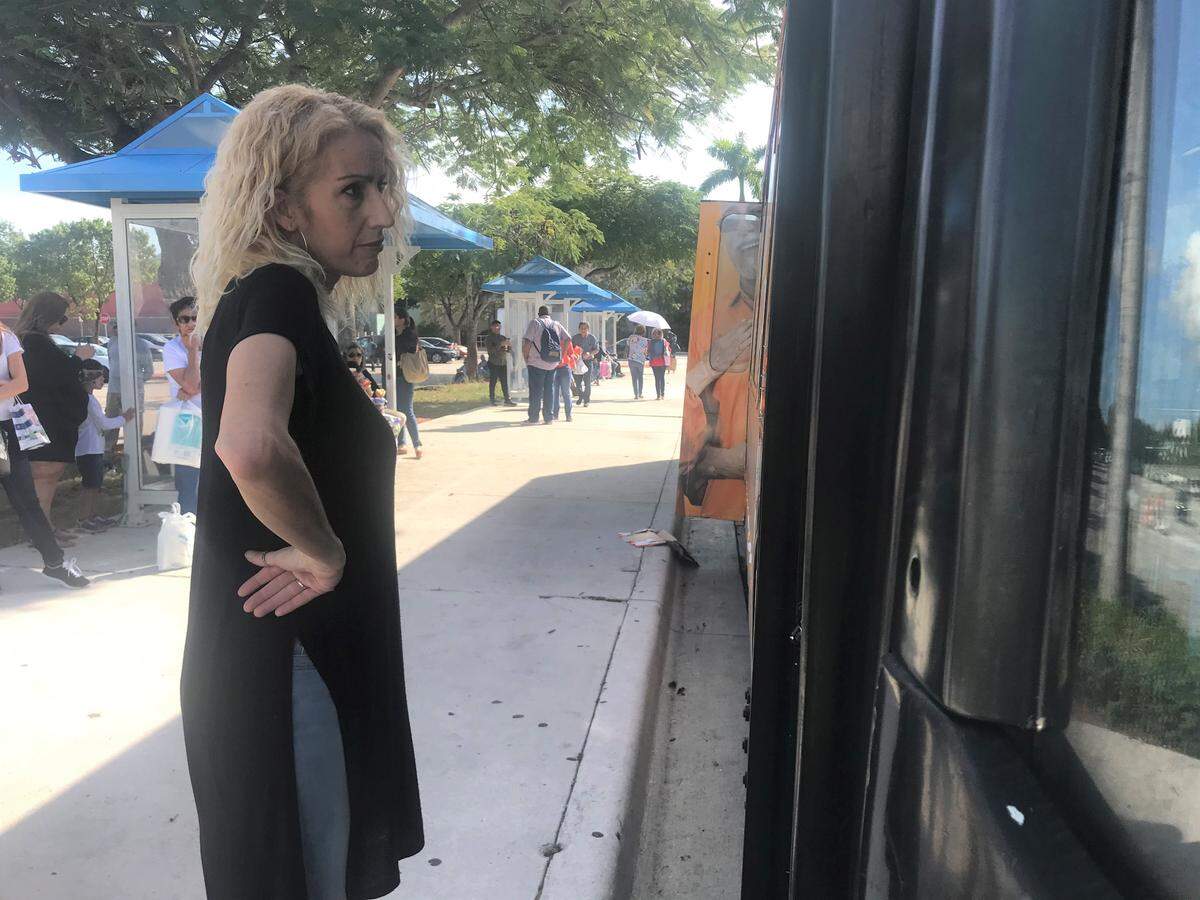
Ben Royall has been waiting for the No. 7 bus at the Dolphin Mall for about an hour, which doesn’t make this a particularly bad commute home for the 30-year-old regular user of Miami-Dade’s transit system.
“This is literally every time,” Royall, a retail manager, said as he refreshed his county transit app shortly after 3 p.m. to see an increasingly late arrival by the bus that takes him back to his neighborhood near Miami International Airport. “I’m probably not going to get home until 4:30.”
Royall happens to be the specific kind of frustrated bus rider the Transit Alliance Miami has in mind for an ambitious effort to rescue Miami-Dade’s struggling bus system, which has lost 31% of its riders since 2015 and is down about 3% this year. Called the Better Bus Project, the redesign effort aims to increase frequency along popular routes at the expense of some county bus stops that attract only a few riders per hour or can be served by city-funded trolley systems.
The improvement could be dramatic for a commuter on a popular route like Royall’s trip back and forth from one of the county’s largest malls. A Better Bus analysis found midday buses serving the mall arrive somewhere between every 30 minutes and every hour.
Under one Better Bus concept produced to show how the county could expand ridership without increasing its existing $242 million bus budget, the employment center would see double the bus arrivals. Two lines would pull in every 15 minutes throughout the day, rather than limiting frequent arrivals to morning and evening rush hours. One high-frequency route would run south, the other east. Hours would also expand, with more arrivals at night and on the weekend — a blessing for retail workers relying on bus schedules more geared for 9-to-5 commuters.
“If they had a bus at 10 o’clock, it would be great,” said Monica Rodriguez, 46, a clerk at a Dolphin Mall department store who said she often clocks out 30 minutes early just to make sure she catches the last bus south at 9:15 p.m. “I have to run,” she said. “If I miss it, I have to find a ride.”
If places like the Dolphin Mall would benefit from a bus network focused on transporting more riders, the rural neighborhood of Princeton in South Dade could see the downsides.
There Cameo Parrish rides the 248 bus route, an outsourced minibus that runs through the suburban neighborhood of Princeton near Homestead. The county’s latest transit report showed the 248 had an average of 116 riders a day, a tiny fraction of the 3,000 that ride the No. 7 back and forth from Miami and the Dolphin Mall on a typical day.
Under the most aggressive redesign produced by the Transit Alliance to show how expanding bus ridership would work, the 248 “circulator” goes away. Parrish said that would leave her feeling stranded, since she doesn’t have a car. “Other areas may need ridership,” Parrish said. “We need coverage.”
Parrish’s concerns capture the hazardous political route ahead of the Transit Alliance, which wants the Better Bus Project judged not just on the potential of the plan it produces but on how many routes actually get improved as a result of it. The process boils down to the County Commission approving a redesigned system based on a formula that would drive where buses go and where they don’t.
The Better Bus analysis estimates about 70% of Miami-Dade’s current routes focus on ridership — they serve relatively popular destinations, and manage to attract a decent amount of riders. The remaining 30% focus on coverage — they’re not transporting large numbers of people, but they serve areas that wouldn’t have transit without the stops on those routes.
So far, the Better Bus Project has produced two scenarios for how a redesigned network could look. Under the “Ridership” model — the option with so many added arrivals at Dolphin Mall — Miami-Dade would eliminate some routes serving isolated or relatively unpopular stops, like the Princeton circulator. That formula only allows 10% of the routes to focus on coverage.
By paring less popular routes, the Transit Alliance says Miami-Dade can bring far more useful transit to people who really need it.
The analysis found only 10% of county residents live within a quarter-mile of a bus stop where a bus arrives every 15 minutes. By shifting the system’s priority more toward ridership, that nearly triples to 28%. More than a third of people who experience poverty would live near frequent transit under a system focused on ridership, compared to 12 percent now. While only 8 percent of Miami-Dade’s African Americans live near frequent transit now, 33% would under the ridership model. The portion of car-free homes living near frequent transit would jump from 28% to 54%, according to the Better Bus analysis.
Under the less aggressive “Coverage” model, the ridership routes still grow from the current level, but only from 70% to 80%. The Dolphin Mall doesn’t get any buses arriving every 15 minutes outside of rush hour, but several are added running north and south. That includes one on the county’s South Dade busway and one running from Miami Gardens on 27th Avenue.
“Frequency equals freedom,” Transit Alliance director Azhar Chougle said at Thursday’s meeting of the County Commission’s Transportation Committee. When a bus arrives every 15 minutes, he said, riders can have confidence about getting on their way without extensive waits. “They go where they want to go without having to plan their lives around transit.”
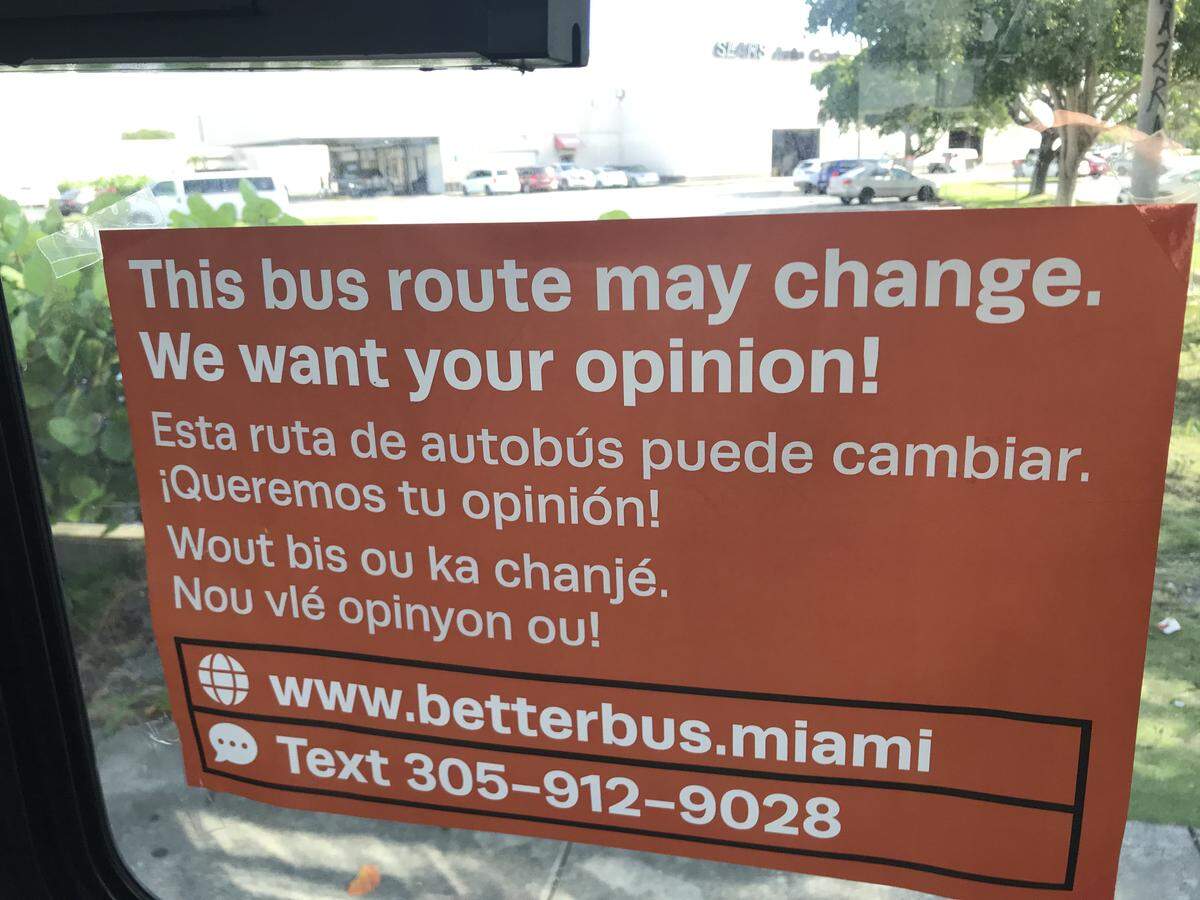
The Transit Alliance has held more than 100 workshops and town halls on the plans, and posted signs on buses encouraging passengers to text in their requests for a new bus system.
More than 3,000 messages have been received, plus nearly 2,000 responses on a related survey. The result has the Transit Alliance pushing a formula that falls somewhere between the two concepts, with 85 percent of the routes dedicated to ridership goals and the remaining 15 percent focused on providing coverage. Part of the recommendation includes giving priority to suburban areas outside of city limits for maintaining coverage with low-ridership county routes, since municipal trolley systems can pick up stops that would be dropped if Miami-Dade ends a bus line.
The push to win consensus for a shift toward more ridership than exists now has already hit friction. At last month’s Transportation committee meeting, a resolution by chairman Esteban “Steve” Bovo to endorse the group’s recommended 85 percent ridership model stalled after backlash over potential lost routes. Bovo formally withdrew the legislation this week.
“You can’t grow ridership if you’ve got no rides,” said Commissioner Dennis Moss, who represents South Dade. On Thursday, the South Dade branch of the NAACP issued a statement saying it wouldn’t support the Better Bus models because they “will adversely impact the communities and riders of South Miami-Dade, which are primarily persons of color.” The group called on Miami-Dade to adopt a plan creating more routes, not fewer.
The unprecedented review of Miami-Dade’s bus system arrives as the county is planning to launch its first rapid-transit bus system. The county hopes to win federal approval in early 2020 for a $100 million grant for the $300 million line running along the South Dade busway, a 20-mile system of dedicated lanes that runs parallel to U.S. 1. The Miami-Dade Expressway Authority also plans to launch express bus system on modified shoulders of the Dolphin Expressway.
The increased focus on buses adds Miami-Dade to a growing list of metropolitan areas trying to boost the popularity of municipal buses and use the data-driven, outreach-heavy redesign effort to sell residents and elected leaders on big changes for a bus system.
Austin, Texas, launched its bus redesign last summer, tripling the number of schedules with bus arrivals every 15 minutes and boosting weekend service. The city’s transit agency said ridership climbed nearly 12 percent in May.
Houston introduced its reworked bus system in 2015. Results there weren’t stellar, with ridership inching up less than 1 percent in 2017. But with most transit systems across the country bleeding riders that year — Miami-Dade saw a 9 percent drop — Houston’s performance was described as a standout by advocates of bus redesigns. The strategy was to rethink how buses run, ditching old models in favor of those that would move more people between in-demand destinations.
“Downtown was always well served by the previous network,” said Christof Spieler, a transportation planner and engineer who served on the Houston transit board during the implementation of its bus-network redesign. “Now the network does a much better job connecting secondary employment centers.”
In Indianapolis, an early phase of an ongoing bus redesign focused on the kind of off-peak arrivals that were missing at Dolphin Mall on the recent afternoon when Royall and Rodriguez were trying to get home. Bryan Luellen, spokesman for the city’s transit agency, said a main goal is to even out schedules and not just focus resources on weekday commuting rush hours. For many transit users, the traditional 9-to-5 schedule isn’t reality.
“They’re more likely to have lower incomes. They’re more likely to be students. They’re more likely to be working shift jobs,” he said. In terms of bus demand, “increasingly, weekends are looking like weekdays.”
For Pauline Velasquez, the wait for a bus in South Dade brought a medical episode last year. The 72-year-old said she was at a bus stop in Naranja on Election Day for more than an hour when the heat got to be too much and she fainted. “Right over there,” Velasquez said during a recent chat with Parrish and New Florida Majority organizer Kelli Ann Thomas as they were handing out fliers to promote a Better Bus town hall in the neighborhood.
Thomas argued that past cuts and service reductions in South Dade, including outsourced routes with older, mini buses that aren’t popular with riders, left the region with artificially low ridership numbers. That’s now endangering the routes that serve rural residents with low incomes who won’t be able to get to the new high-frequency routes promised by the Better Bus project.
“What are they supposed to do, take an Uber to the busway?” Thomas asked.
Velasquez sat by Thomas and Parrish during Thursday’s Transportation committee meeting and was the first person to speak.
“I don’t have a car. I can’t afford a car,” she told commissioners. “So I need the bus. Please do something better than what’s being done right now.”