
Miami-Dade closing a second public housing complex, this time citing crime
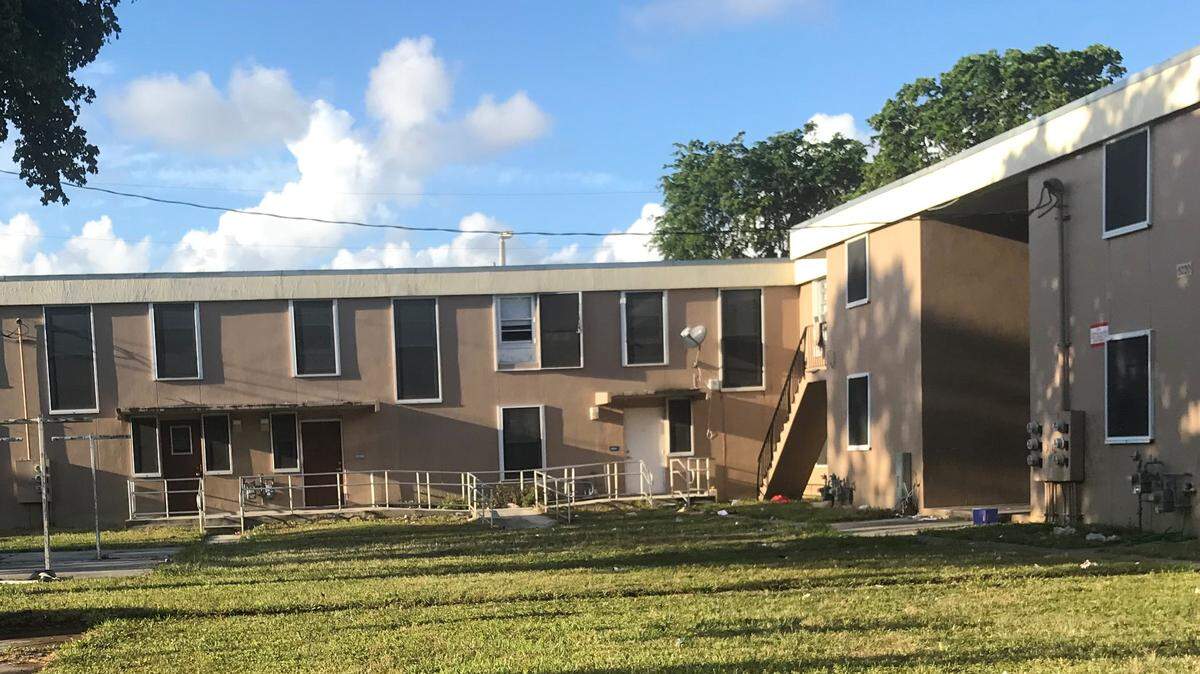
Residents in the Annie Coleman 14 public housing complex are being told they must move due to an emergency caused by both sub-standard building conditions and rampant crime in the area just outside Miami city limits in Brownsville.
Miami-Dade’s Housing Department began informing residents Sept. 19 of the required moves, telling residents from nearly 200 apartments they would be provided with Section 8 rental vouchers to find places to live in privately owned buildings. Miami-Dade is covering moving expenses, security deposits and utility hookups, along with housing counseling. The move-outs are being ordered under federal rules covering emergencies related to health and safety.
“People should not be living at Annie Coleman 14,” Michael Liu, the county’s housing director, said Friday. “It’s bad. It’s dangerous. We need to take responsibility.”
It’s the second time this month that Miami-Dade has taken the drastic action as it prepares for a significant reworking of how the county pursues redevelopment of its troubled, aging and underfunded portfolio of public housing. The day before the meetings at Annie Coleman, a county team met with residents at the Harry Cain senior-housing tower in downtown Miami to tell them their 1984 building was beyond repair and must be emptied because of leaks, mold, asbestos and lead paint.
Like other metropolitan areas, Miami-Dade relies on federal funding to maintain its public housing system, and yearly appropriations don’t match needs. The county’s 2020 budget lists $420 million in deferred maintenance needs for the 9,700 units reserved for low-income residents.
Miami-Dade has joined a federal program that allows for-profit developers more options in pursuing public housing projects. The Rental Assistance Demonstration program (commonly called RAD) grants developers a 20-year stream of federal rental assistance for upgraded or new public housing units, and the companies can essentially serve as managers of the complexes.
With a long-term revenue stream more attractive to lenders, the program is designed to make low-income housing development more profitable and attract upfront dollars for construction that Washington can’t provide. Critics call it a privatization effort, and activists, including 2020 mayoral candidate Monique Nicole Barley, are encouraging people to attend Thursday’s County Commission meeting to oppose legislation tied to the program.
Liu said declaring an emergency that forces tenants to move requires Miami-Dade to remove a public housing complex from the rental-assistance program, so the notices at Harry Cain and Annie Coleman aren’t helpful in getting the effort moving.
The Annie Coleman complex is a collection of two-story buildings off Northwest 22nd Avenue in the Brownsville neighborhood, just outside Miami. Three clusters of buildings, numbers 14, 15 and 16, are treated as separate complexes. Annie Coleman 14, at 2140 NW 53rd St., was built in 1967 and has 245 units. Of those, 197 are occupied, Liu said.
Rose Adams, who was elected head of an Annie Coleman 14 tenants group, said the county representatives did not explain why Miami-Dade had suddenly concluded crime was too dangerous for tenants to remain. “We’ve been living in these conditions for all this time,” said Adams, who has lived at the complex since 2013, sharing an apartment with her son, daughter and a grandson. “We’re not understanding the urgency and the emergency.”
Liu said the housing agency did not have a detailed analysis of crime trends around Annie Coleman 14. He provided a one-page crime summary and a letter from State Attorney Katherine Fernandez Rundle that described 90 incidents of gunfire in the area during one four-month period in 2018, with 36 people shot and two killed. She also said gangs were using vacant, abandoned apartments as “effective clubhouses.”
“It’s not only the crime,” Liu said. “It’s the condition of the property.” A report by Rodriguez Architects said Annie Coleman 14 requires about $57 million in repairs. All of the wiring, electric and plumbing must be replaced, and some apartments are “virtually un-repairable.”
Jorge Cibran, development director under Liu at Housing, said residents generally were happy to hear Miami-Dade wanted to help them move from Annie Coleman. “There were a lot of hugs.”
Along with help finding private apartments accepting Section 8 vouchers, Miami-Dade will give residents the chance to come back to Annie Coleman whenever it’s rebuilt. “When we redevelop Annie Coleman, which we plan to do, they will have a right to return, if they want to,” Liu said. Miami-Dade also has already pledged units at the planned Lincoln Gardens complex next door to about half of the Annie Coleman 14 residents.
Adams said she welcomed the county’s offer of Section 8 options for residents who wanted to move, but that she also doesn’t want Annie Coleman tenants pushed into new homes that might not be safer or come with as many renter protections. She said new surveillance cameras and stepped-up police patrols have helped ease some of the fear in that area. “I feel much safer than at any other time, personally,” she said.
Tamika Johnson, another Annie Coleman 14 resident, said she’s ready to go. “It’s a rough area,” she said. “I’ve only been here for one year, and there have been numerous shootings.”
This story was originally published September 28, 2019 at 6:00 AM.