
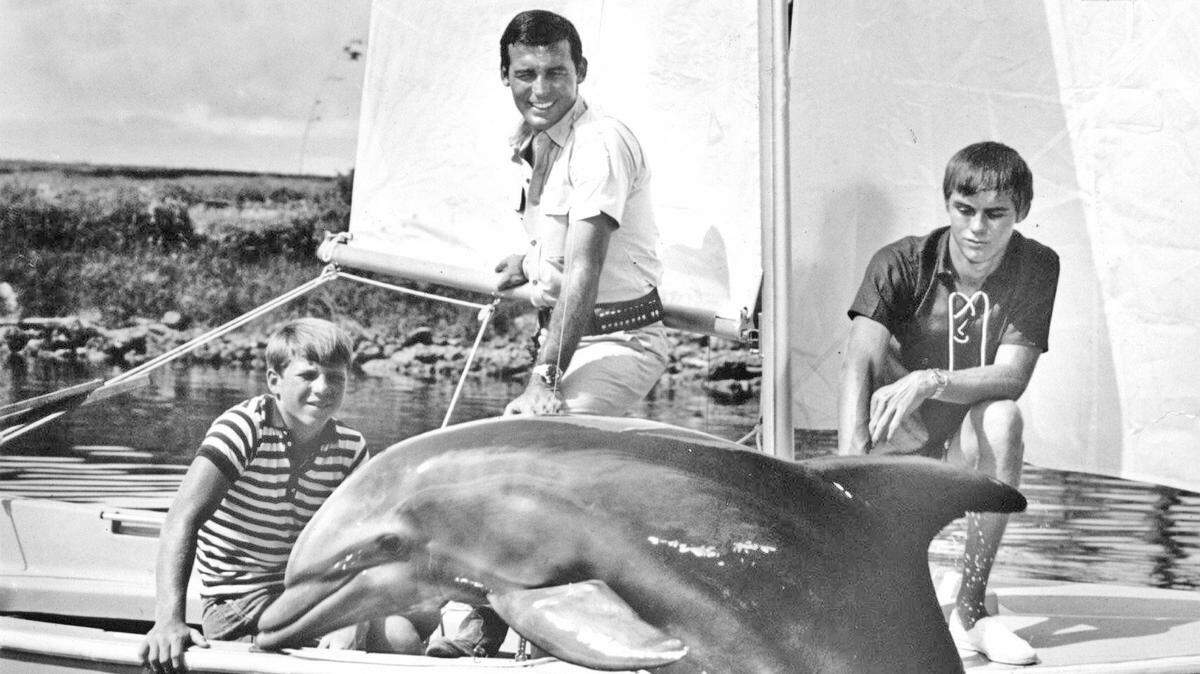
Before the football team, a Miami dolphin got its own TV show. The star was Flipper
Think about movies and shows filmed in Miami and what comes to mind?
“Miami Vice.” “Bad Boys.” “Fast and Furious.” “Burn Notice.”
What about a cute dolphin?
“Flipper” was a national TV show that aired from 1964 to 1967. The show, which made its debut on NBC in September 1964, was filmed at the Miami Seaquarium on the Rickenbacker Causeway and at the Ivan Tors Studios in North Miami.
Here is a look back at the TV show and the many Flippers who played Flipper.
THE LAST SURVIVOR
Published May 3, 1997
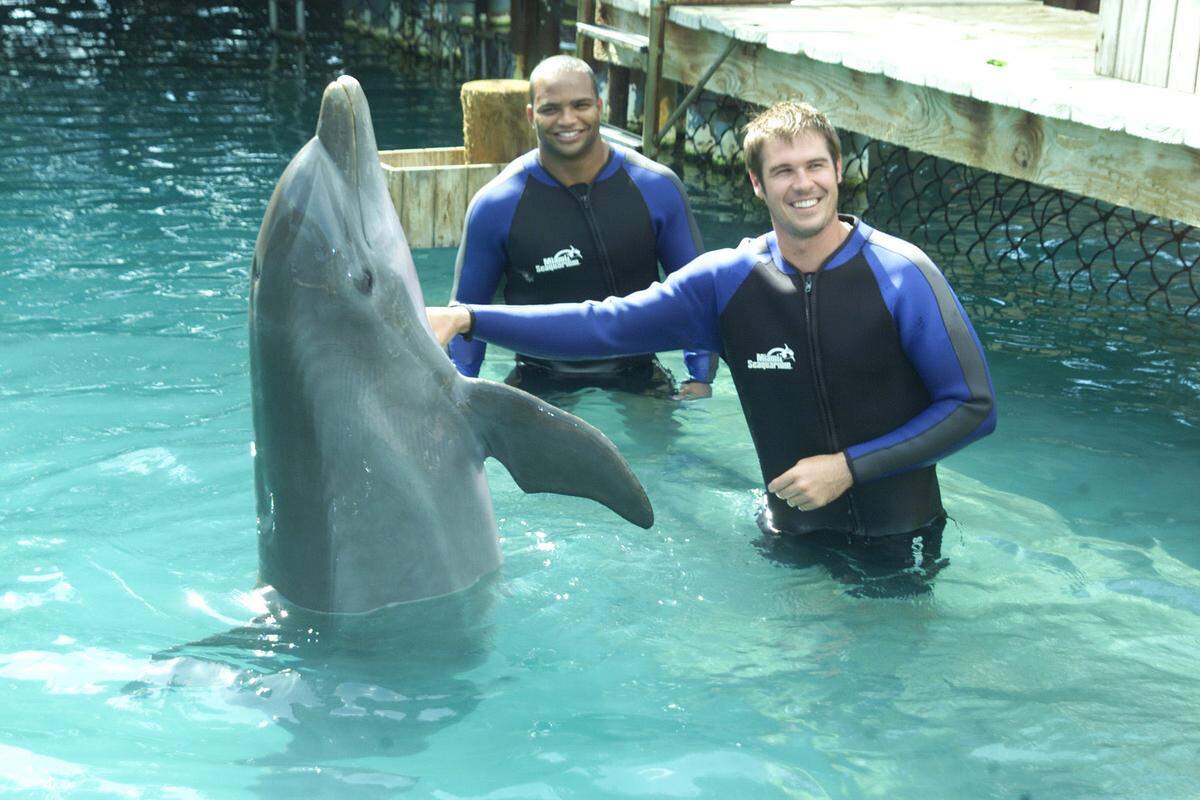
A very old but hard-working female named Bebe, last of the original Atlantic bottlenose dolphins that starred in the Miami-based Flipper television series, is dead.
Flipper, an MGM-TV series that aired on NBC from 1964 through 1967, was a spin-off from two successful movies. A crew of seven dolphins performed in the role of Flipper, starring along with actors Brian Kelly, Tommy Norden and Luke Halpin.
The last of the MGM seven was Bebe.
She was 40 when she died this week at her lifelong home, the Miami Seaquarium, where she was born in 1956, a year after the facility was built on Virginia Key.
Atlantic bottlenose dolphins typically live 25 to 35 years, so in addition to being a star performer and the mother of eight calves, Bebe was a hearty animal.
“Bebe was an outgoing, tough old lady,” said Russ Rector, president of the Dolphin Freedom Foundation.
“We are all saddened by Bebe’s passing,” said Robert Rose, director of training at the Seaquarium. “She’s been a wonderful animal, and we’ve all come to love her a great deal.”
After giving birth to Echo, her eighth calf, last year, mother and son lived in the Top Deck Stadium at Seaquarium. Echo is there now.
“He’s the cutest thing in the world,” said Marlene Oliver, spokeswoman for the marine park.
No one could say for certain how the dolphin got her name but speculation was that it came from Bebe Rebozo, the Key Biscayne banker who brought Richard Nixon to Miami. As president from 1968-1974, Nixon kept a home on Key Biscayne.
Pending results of a necropsy, the Seaquarium claims cause of Bebe’s death is old age. At one point, Bebe did contract mobilli virus, the animal equivalent of HIV, but she survived.
MANY FLIPPERS
Published Nov. 23, 1986
That Flipper, the extraordinary dolphin that starred in a television series in the 1960s, is not one dolphin but perhaps more than a dozen was revealed at a 25th anniversary party Saturday at the Miami Seaquarium.
Like Lassie, the TV wonder Collie that had several stand- ins, at least 13 dolphins have been used to portray Flipper, said Seaquarium’s marketing director Dennis Elster.
“When they filmed the Flipper series, seven dolphins were used,” Elster said while nearly 300 adoring fans ooohed and aaahed over the current Flipper’s cute aqua antics. “There are another five or six that perform in shows out here.”
The party, billed as the silver anniversary of the birth of an idea, reunited the series’ script writers, production staff and two actors, Luke Halpin and Tommy Norden, teen-agers when the series ran from 1961 to 1964.
It also brought to the Key Biscayne ocean attraction many former Flipper fans, some holding onto their own youngsters.
“I loved that show,” said Jose Huerta, 25, while 18-month- old Shawn squirmed in his lap. “I still watch the reruns every chance I get. It was a great show.”
As Flipper (no one knew which one) flipped and dipped and danced on his broad tail, Opa-locka resident Lonza Garland, 28, cheered and clapped -- difficult to do considering he held two silver balloons, two aqua inflatable toy dolphins, two lollipops and a program he had used as a napkin to clean up the sticky hands of his two children, Jammaal, 4, and Vicari, 2.
“I came because I especially wanted them to see Flipper,” Garland said, as his kids concentrated on the bobbing balloons.
“I’m still amazed over what that dolphin can do,” he said, trying to direct Vicari’s attention to the center of the pool where three dolphins leaped in unison. Instead, she reached for a lollipop.
“I wish they’d put that show back on the air,” Garland said. “Kids would love it.”
Halpin, who runs a marine equipment firm in Miami, and Norden, a New York businessman who breeds horses, agreed.
“Those shows were wonderful entertainment for the entire family,” Halpin said. “Those dolphins were great to work with.”
As though on cue, Flipper paddled to the raft where Halpin stood and nosed a big beach ball up to him.
“See what I mean?” Halpin said.
ALL ABOUT DOLPHINS
Published May 17, 1996
The movie Flipper opens today. Before you head to the theaters, we’ve got some dolphin facts and lore to make your trip more fun.
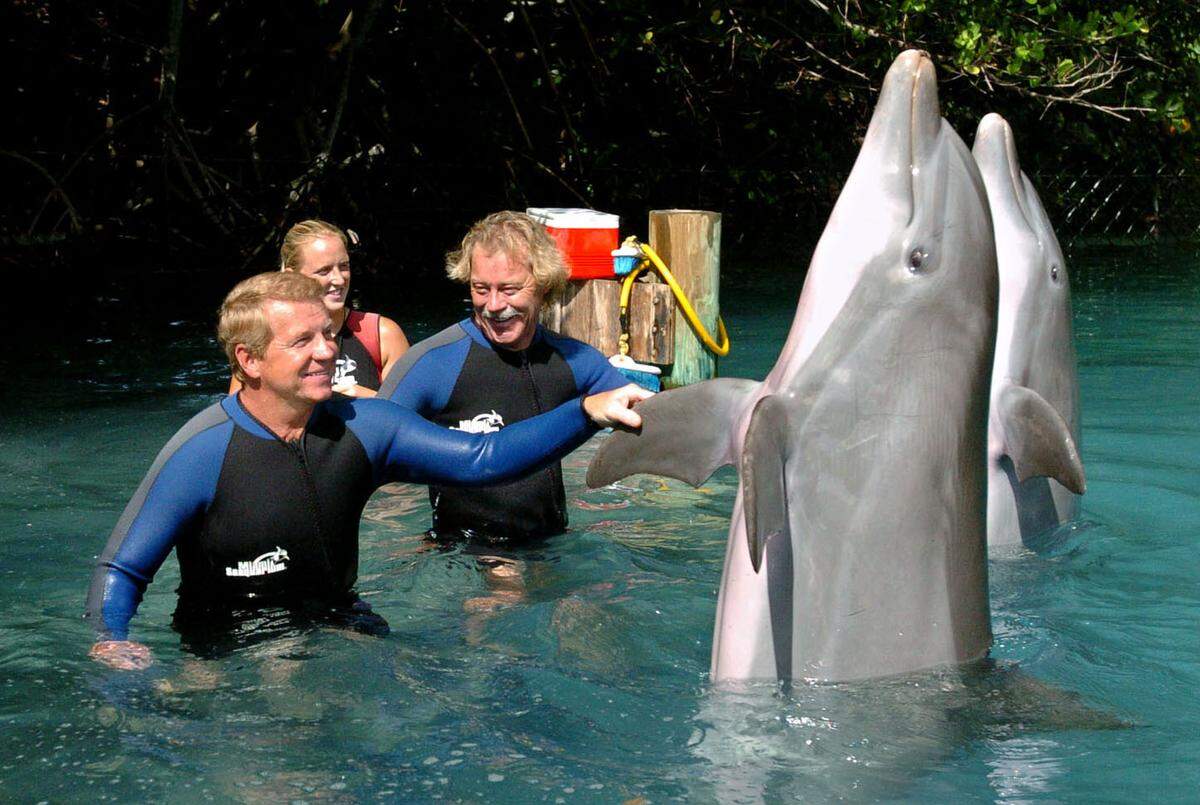
SMART CREATURES: Dolphins are sea mammals closely related to porpoises and whales. Lots of Atlantic Bottle-nosed dolphins — like Flipper — live off the shores of Florida. Many used to live in Biscayne Bay, and a number of them still do. They travel in pods -- groups of about 12 -- that play and hunt for food together. They rarely go farther than 100 miles offshore.
Dolphins, and their whale and porpoise cousins, are warm- blooded animals, not fish. They carry their babies inside their bodies for nine to 18 months -- the length of time depends on the species -- and nurse them for at least a year.
Many scientists think that dolphins rank with chimpanzees and dogs as the most intelligent animals in the world. They communicate with each other in a variety of complex ways -- through a series of whistles and by slapping the surface of the water with their tail fins, or flukes.
Dolphins in the wild can live longer than 50 years. The oldest dolphin in captivity is 43.
THE TV SHOW: Flipper, the TV show, was a huge hit during the 1960s and gave dolphins celebrity status. (These days, you can see it on Nickelodeon.)
The show was filmed at the Miami Seaquarium with five female dolphins -- Patty, Scotty, Susie, Squirt and Kathy -- playing Flipper. Mel Blanc, the voice of Bugs Bunny, did the dolphin squeaks and whistles.
Only one dolphin featured in the show is still alive at Seaquarium. She is Bebe, who’ll turn 40 next Halloween.
FISH FOOD: Dolphin on a restaurant menu?!? Don’t worry, it’s not a friend of Flipper but a local, saltwater game fish also known as dorado or mahi mahi. Dorados, which are found in tropical oceans, are shimmery bluish-green and silver. They can grow as long as six feet.
While we don’t eat dolphins, the mammals, in the United States, they are considered a delicacy in other countries, including Japan and Sri Lanka. But lest moral outrage get the better of you, in India eating cows is considered a sacrilege and in Peru guinea pigs are regular local fare!
ORCA,THE “KILLER” DOLPHIN: Species of dolphins come in many shapes and colors and are also called small-toothed whales. Great whales have baleen, or plates of fiber on the upper sides of their jaws, which act as sieves. They also have two blow holes instead of one.
Some species of dolphin are Orcas, also called killer whales, long-finned pilot whales and spotted dolphins, common in the Caribbean.
While most dolphins live in the salty ocean, some families of dolphins live in fresh or slightly salty river water. They include the Ganges dolphin, the pink, Amazon dolphin and the Chinese dolphin.
DOLPHIN HISTORY: People have been fascinated by dolphins for thousands of years.
Pictures of dolphins have been found etched in cave walls by ancient Scandinavian people.
Ancient Greek artists decorated walls, pottery and coins with images of dolphins.
And dolphins played an important role in Greek and Roman mythology. The Greeks considered the common dolphin sacred to the god Apollo.
Throughout the centuries, dolphins also have been important to sailors, who considered them a sign of a safe voyage.
FIVE QUICK FACTS:
1. Dolphins, porpoises and whales probably evolved from land mammals that spent so much time in the water that they eventually became amphibious and finally became water mammals.
2. Dolphins and porpoises use their lower jaws to feel and investigate an object -- a lot like we use our fingers. They also use their lower jaws for sonar.
3. Newborn dolphins may have dolphin “aunts” -- other dolphins that help the mother dolphin guide her newborn baby calf to the surface for its first breath, protect it from attack or support a sick baby dolphin at the water’s surface.
4. Orcas can raise more than half of their bodies straight up out of the water, which is called spy-hopping. This helps the orcas hunt for food.
5. Narwhals — which are first cousins of dolphins and members of the whale family — have one long tooth erupting from the lower jaw. This tooth can grow as long as 8 1/2 feet. For centuries, people thought narwhals were unicorns or close relatives and sold the narwhal tooth as a unicorn horn.
This story was originally published September 13, 2019 at 1:22 PM.