
Apartments planned for a bean field. Three words could stop them: Robert Is Here.
Developers have encroached into Miami-Dade farmland for decades, but none has yet gotten as close to the most iconic outpost of Miami agriculture as the Treo Group.
The Miami firm requested looser development rules that would allow up to a 497-unit apartment complex across the street from the Robert Is Here fruit market just outside Florida City. The family behind the popular home of exotic fruits and thick shakes is asking thousands of fans to help it defeat the plan.
“Throw some common sense out there instead of throwing dollars into it,” owner Robert Moehling said Wednesday during a break from loading mangoes at the property where he’s been working since he was 7 years old. “This has to stop. ... People have to have a place to live, but they’re building homes down here like crazy.”
Commissioners are set to take their first vote on the project during a 9:30 a.m. meeting at the Stephen P. Clark Center in downtown Miami. A vote against the project would reject the application, but a vote in favor would advance the application to a state review. A second, final vote before the commission would likely come later in the year or in 2020.
The Robert is Here vote offers a high-profile test of the commission’s eagerness for more development in the Redland, an agricultural region at the edge of the Everglades that’s home to most of the county’s farming industry.
There are other apartment complexes and housing developments to the east of the proposed project, but mostly farmland to the west. It’s currently leased farmland, with crops of okra, green beans and squash over the years, according to Heather Moehling, head of marketing at Robert is Here and Moehling’s daughter-in-law.
More than 15,000 people have signed Robert is Here petitions urging county commissioners to reject Treo’s request to lift a 2007 deed restriction limiting development on the farmland located at West Palm Drive and Southwest 192nd Avenue.
The restriction limits construction to a residential development to a project less than half that size. Treo points to nearby subdivisions and apartments, as well as a tight housing market, to justify the larger project as a natural step for farmland within the county’s urban-development zone. The developer has agreed to make 32 of the units on the property priced in the “workforce” range, which targets buyers or renters earning about $70,000 a year.
“As the population of Miami-Dade county grows, more and more individuals will be cut off from having the opportunity to acquire residential units,” Treo wrote in its request for expedited approval of looser development limits on the 20-acre undeveloped farm. The “lack of available housing inventory will only increase the housing affordability issues that plague the County.”
Miami-Dade’s planning staff recommended commissioners reject the proposal, as did the county’s Planning Advisory Board. County zoning staff suggested a compromise that would allow Treo to build 327 units, and the developer has agreed to the recommended cap.
That’s still 65 percent larger than the cap previous owners offered Miami-Dade commissioners in 2007 when the property secured a slightly looser land designation. Development plans stalled during the housing crash, and a property that sold for $5.1 million in 2006 ended up getting bought by Treo for $2.6 million in November.
Treo is a leading builder in Miami-Dade, with a city deal to develop the Regatta Harbor retail and marine complex in Miami and more than 40 buildings and projects across the county listed on its website. One of Treo’s partners in the project across from Robert is Here is developer Sergio Pino, according to the application.
Company executives and a Treo lobbyist weren’t available for interviews Wednesday. A Miami Herald database of campaign contributions shows the company is an active donor, with about $55,000 in donations to county incumbents since 2016.
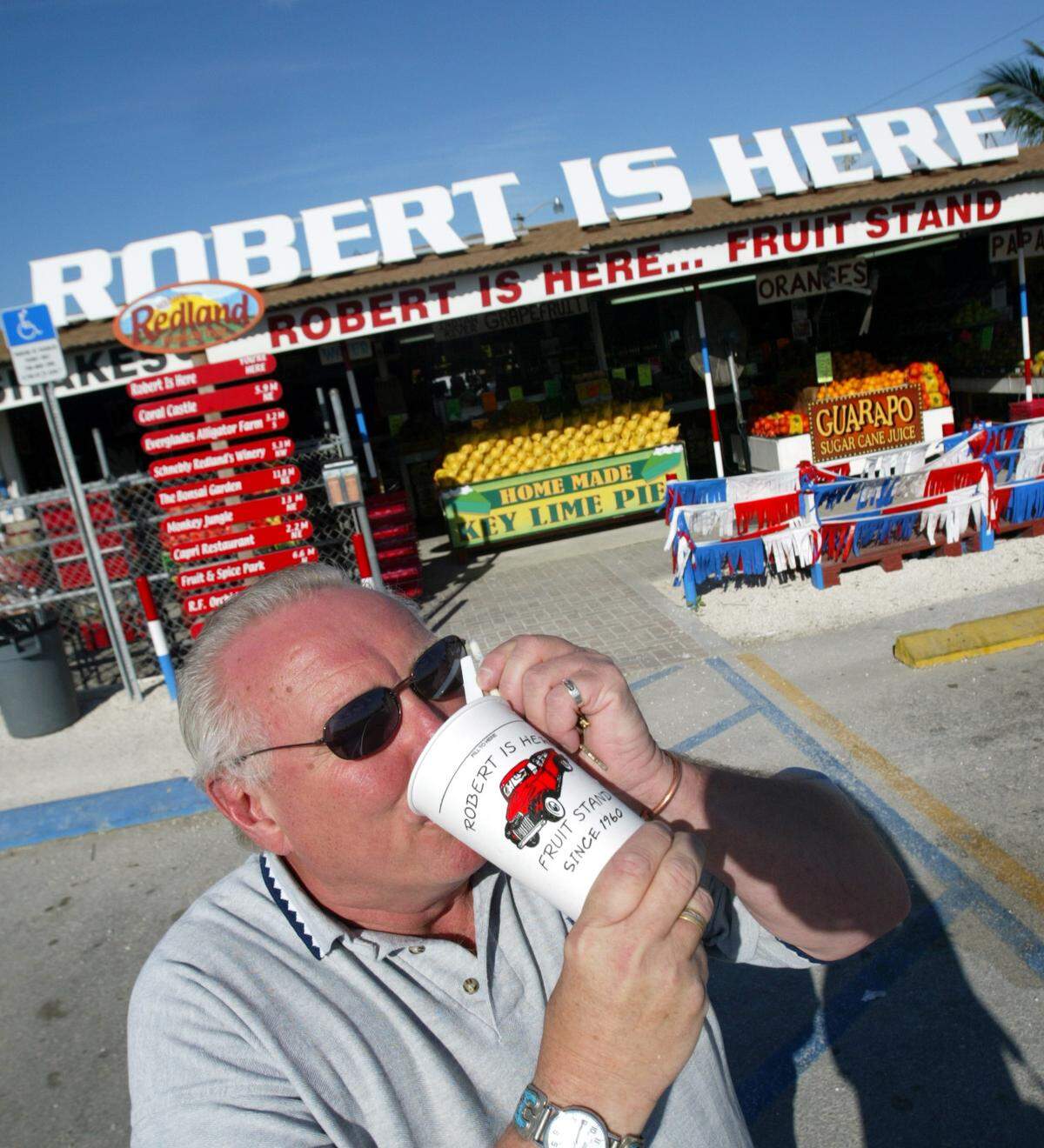
Robert is Here sits to the west of the proposed development. It gets its name from its owner. In the late 1950s, when young Robert was 7, his father had him selling cucumbers at a coffee table set up in the field. When the crops grew too high, a sign let neighbors know the stand was in business for the day. It read “Robert Is Here,” and the name stuck.
It’s since grown into one of the top destinations in South Dade, with emus joining tortoises, goats, and other livestock in a free petting zoo in the back, and the line for fresh-fruit shakes sometimes stretching past the guitar player who sets up by an antique truck on weekend afternoons. Heather Moehling said the top sellers are probably mangoes and the strawberry-key lime shakes.
Heather Moehling estimated visitors at about 1.5 million a year. Robert is Here hopes to tap customer loyalty to block the development plan. “We need your help,” reads the sign above the milkshake counter. “Visit one of our cashiers to stop a zoning change directly in front of our business.”
The Treo property sits about a mile and half away from U.S. 1 and the South Dade busway, a transit line slated for a new $300 million express system. Miami-Dade has designated land within a half-mile of the busway and other transit routes as the preferred destination for high-density residential projects, so that people can live within walking distance of the county’s fastest bus and rail options.
The county’s analysis of the proposed development said the project would add about a year’s worth of apartments in an area that already has enough to satisfy demand through 2024. The extra 108 students brought by the project would overwhelm the already crowded elementary schools in Florida City and Homestead, the county report said, but that’s an issue that doesn’t have to be resolved until later in the approval process.
The project is expected to add as many as 71 car trips an hour during peak commuting times, but that won’t be enough to cause significant problems with nearby roads, according to the county analysis.
Traffic that’s “bumper to bumper” is a top complaint cited in the petition Robert is Here posted on its website, along with knocking the idea of a large apartment complex on the way to Everglades National Park about seven miles away.
The zoning fight has Robert Is Here putting its popularity to the test, and it’s a fight the Moehlings aren’t confident they’ll win.
“There’s been a lot of pressure on us. As if we’re the only people who can stop this,” Heather Moehling said. “At the end of the day, we’re going to keep doing what we’re doing, and what we’re doing well. But the quality of life will change, for residents and tourists alike.”
This story was originally published July 25, 2019 at 6:00 AM.