
Facing a seaweed ‘crisis’ on the beach, Miami-Dade’s preparing to haul away sea grass
A cloudless sky greeted Shannon Waddell and friends in Miami Beach for their weekend getaway from Atlanta, and the day might have qualified as postcard perfect if not for the rotting blanket of sargassum blocking their barefoot path to the ocean.
“It’s so pretty and blue out there,” Waddell, 21, said from her perch on a day bed on the beach outside the Edition Hotel off 26th Street. “And ugly and brown right here. ... It’s kind of gross.”
Vacation memories like that have Miami-Dade leaders scrambling to tackle an unprecedented inundation of sargassum this summer. After weeks of using tractors to churn the seaweed back into the surf, the county this week plans to deploy bulldozers, front-end loaders and dump trucks to actually scoop up the unwanted substance and haul it away.
The daily seaweed influx is broad enough that Miami-Dade doesn’t have much hope to clear all of the 15 miles of coast cleaned by the county’s Parks Department, including the tourist haven of Miami Beach.
A June presentation by Parks to county and city administrators estimated daily removal of seaweed from the entire beach would cost about $45 million a year, and require 880 truck trips hauling enough material to fill a football field 10 feet high.
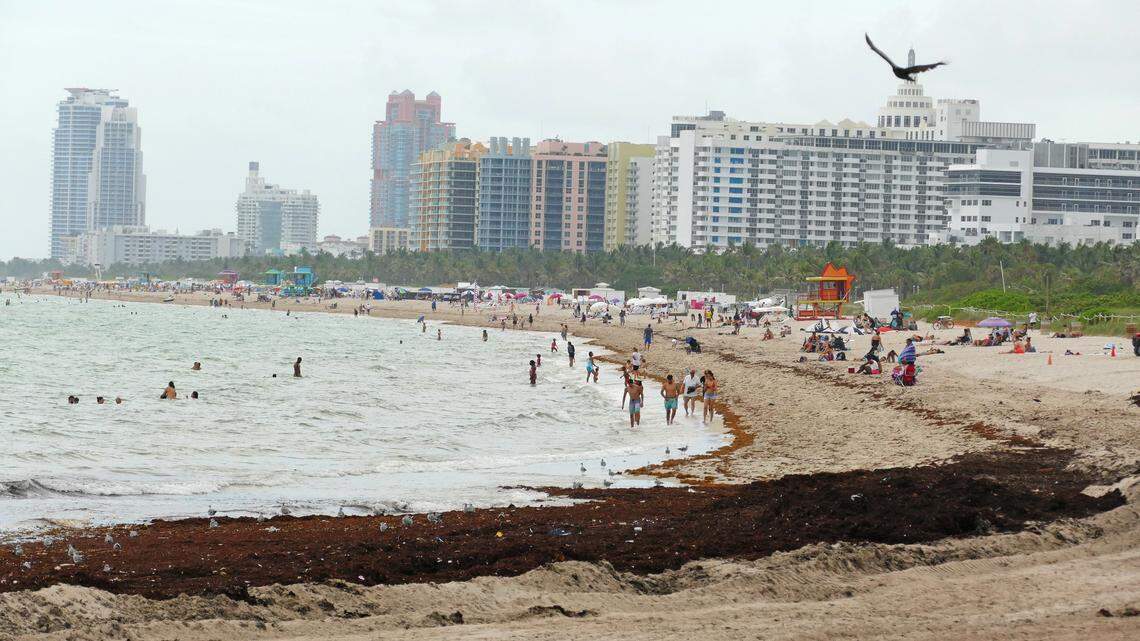
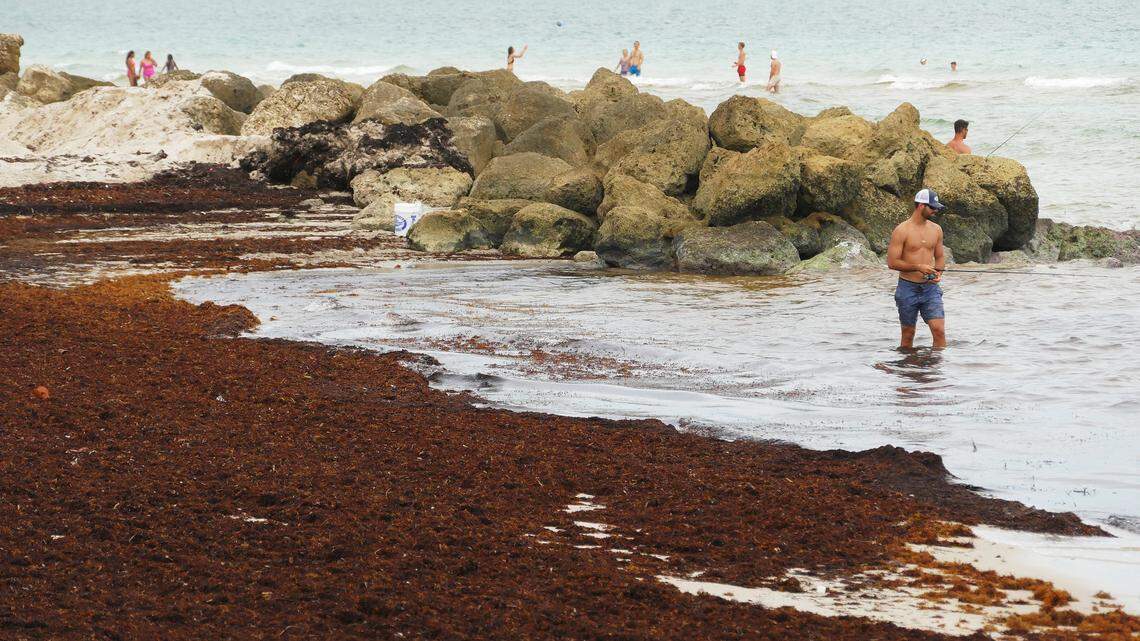
Starting Friday, Miami-Dade plans to target stretches of beach with the most accumulation. Those areas, like Waddell’s vacation spot off 26th Street, sit next to jetties and breakwaters, which tend to steer passing sargassum into shore.
Listen to the Top 5 stories from the Miami Herald:
The “hot spots” set for seaweed removal are: beaches near jetties in Haulover and Bal Harbour; the sand between breakwaters in Miami Beach, between 26th Street and 31st Street; and the beach abutting the South Pointe jetty.
“This is going to be a very difficult task to keep this under control, but we’re going to do the best that we can,” Mayor Carlos Gimenez told county commissioners last week in announcing an emergency plan to tackle what he called a “crisis” that could hurt Miami tourism.
He said Parks planned an emergency procurement to get crews hauling seaweed as quickly as possible, and that commissioners would be asked to approve the funding in September. “We’re going to do what we have to do now. And I will ask for your forgiveness later.”
The cost for removing seaweed from the designated “hot spots,” according to a July 17 Parks estimate, is about $350,000 a month. But that will depend on how intensive the cleanup needs to be. Tom Morgan, chief of operations for Parks, said offshore breezes can push sargassum out to sea and temporarily leave his crews not needing to intervene.
“We love west winds,” he said. “It amazing how quickly it can clean itself.”
With southeasterly winds far more typical for a summer day in Miami, the county isn’t expecting much relief from nature on the sargassum front.
While sargassum flows have increased in recent years, 2019 brought record amounts here and in Broward and Palm Beach. Caribbean resorts dealt with their own sargassum crisis last year as blankets of the substance smothered beaches, with Barbados declaring a national emergency. Mexico called out its Navy this summer to help with cleanup efforts.
Researchers from the University of South Florida wrote in a recent paper that seaweed mats that once were isolated now are more likely to be part of a 5,500-mile “great Atlantic sargassum belt” that stretches from West Africa to the Gulf of Mexico. Scientists blame increased fertilizer runoff into ocean waters, particularly off Brazil, where deforestation along the Amazon has led to more farming in that basin.
“It was more clumpy last year. This year, it’s gotten a lot worse,” said Steve Leatherman, the Florida International University professor of environmental studies who is best known as “Dr. Beach” for his yearly ranking of the nation’s best stretches of sand. “We got hit very hard this summer.”
Sargassum spreads in warmer waters, so scientists see climate change as making the current inundation worse. Even so, Leatherman does expect South Florida’s seaweed problems to recede as winter approaches.
Unlike the red-tide outbreak that prompted swim warnings and closures at Florida beaches last year, sargassum isn’t considered a health problem. But it is a blight on beaches. The sargassum makes walking into the surf feel like wading through an underwater hay bale. Seaweed that gets stranded ashore by the tide often dries out and rots, causing a rancid odor and attracting flies.
“It makes it tough to get out into the ocean,” said Jorge Gonzalez, village manager of Bal Harbour.
The upscale seaside enclave of 3,000 residents has already been paying crews to haul away seaweed, but only ahead of Fourth of July and other large-draw weekends. The seaweed keeps coming, and Gonzalez said the small local government can only afford to do so much.
“You can have someone out there picking up seaweed every day. It’s like the garbage,” said Gonzalez, a former city manager of Miami Beach. “We’ve done what we can. But it’s beyond our capacity.”
Morgan, the county parks operations chief, said Miami-Dade hopes to launch removal operations Friday on Miami Beach, between 26th Street and 31st Street.
The operations are complicated by state rules protecting sea turtle nests. The county must submit plans ahead of time on how to protect nests during sargassum operations, then typically receives a state permit good for two weeks. Gimenez called on Gov. Ron DeSantis to grant Miami-Dade a seasonal permit through October.
Along with regulatory hurdles, Parks contractors face complications from the logistics of leaving even parts of the beach free of sargassum, Morgan said. With heavy equipment needed to lift and transport the material, crews have to arrive early in the morning and be done by 10:30 a.m. or so as beachgoers start arriving in large numbers. “It will almost turn that area of the beach into a small construction zone,” he said. Miami-Dade plans to send the first loads of seaweed to landfills, but Parks is working on an alternative destination, Morgan said.
The planned operation would arrive one week too late for Waddell and her four hometown friends, who felt somewhere between disappointed and creeped out by the sargassum before them on Miami Beach.
“I just really don’t like walking in seaweed,” said Alexis Gopfert, also 21 and from Atlanta. “And you can’t see the bottom. That’s what I don’t like.”
“It’s kind of gross under your feet,” Waddell said. “It’s not ideal.”
This story was originally published July 30, 2019 at 6:00 AM.