
Mayor’s budget has more cash for tutors, libraries and seaweed cleanup on beaches
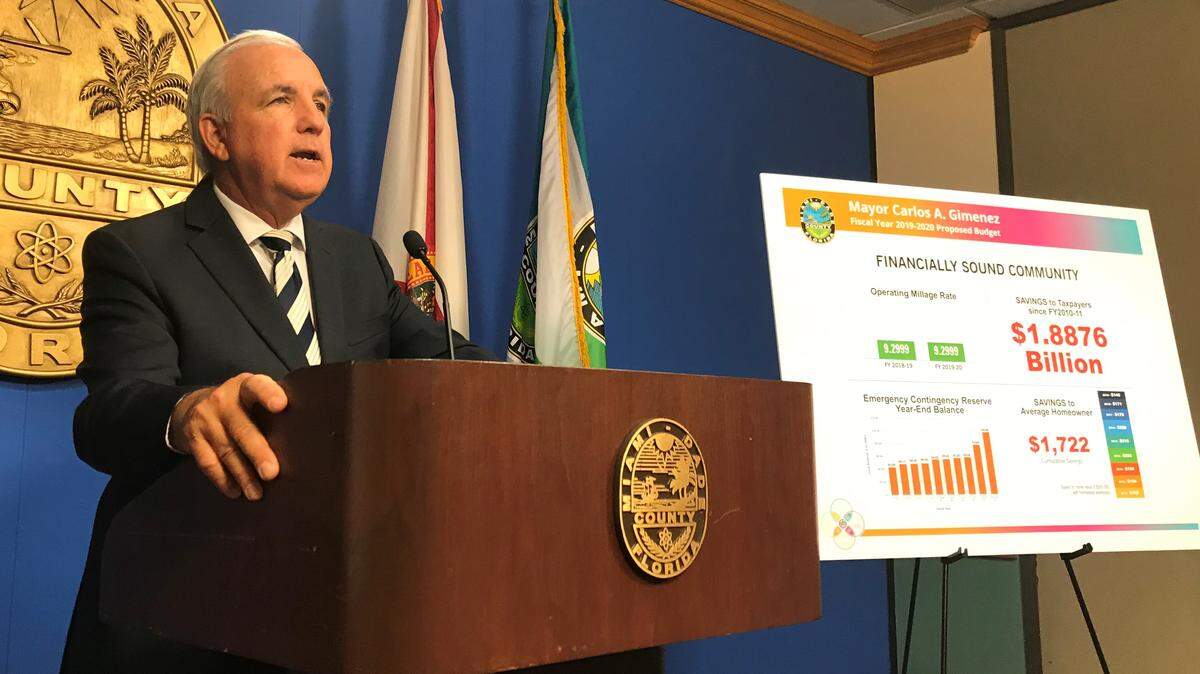
Miami-Dade’s preliminary 2020 budget plans on longer library hours, beefed-up homework tutoring and a new beach debris crew to tackle a deluge of seaweed on the county’s coastlines.
Mayor Carlos Gimenez unveiled the proposed $8.9 billion spending plan Tuesday, touting a budget that keeps most property-tax rates flat but projects a wave of revenue shortfalls in the coming years. It will be the final full budget under Gimenez’s tenure as mayor, since the term-limited incumbent is set to leave office in November 2020.
“Since I took office, we have spent within our means,” said Gimenez, whose first budget rolled back an increase in property-tax rates that helped oust his predecessor, Carlos Alvarez, in a 2011 countywide recall. “We are being good stewards of taxpayer dollars.”
Trash and water fees are set to go up under the budget proposal, but Gimenez retracted one price hike for bus and train riders. After starting his press conference 30 minutes late while huddling with staff over last-minute budget changes, Gimenez announced he would no longer recommend the 25-cent hike in transit fares published in his three-volume spending plan.
Miami-Dade commissioners must approve the final budget ahead of the 2020 fiscal year starting Oct. 1, so the mayor’s plan isn’t final. Commissioners traditionally approve property-tax rates in July and the final spending plan in September.
Among the highlights of the mayor’s proposed budget:
▪ A $500,000 boost to the county’s beach cleanup budget to fund two teams to focus on debris and trash at night and on the weekend. That’s aimed at this year’s increase in seaweed piled up on the coast. In his remarks, Gimenez called the issue “a side effect of warming oceans on our coast” and said Miami-Dade was exploring long-term options with other oceanfront jurisdictions in Florida.
▪ The county’s 50-branch library system is funded by its own property tax, and higher real estate values are projected to boost revenues by about $4.5 million in 2020. The extra money will allow the county to increase total operating hours to record numbers, with one additional day of service at branches in Concord, Fairlawn, Hialeah Gardens, North Central, Palmetto Bay, South Miami, and Tamiami. Libraries also are increasing their “Homework Help” program, which has a budget of $1 million and about 100 part-time tutors.
▪ Miami-Dade’s half-percent sales tax for transportation will no longer be paying for everyday operations at the agency — a longstanding demand from transit advocates. This has been a sticking point since 2009, when the county lifted rules preventing the money from being spent on operations in place before the 2002 referendum that approved the tax. Debt tied to the tax has gotten high enough, thanks to replacement Metrorail cars and new buses, that Miami-Dade doesn’t have the spare “half-penny” money for operations. Next year property taxes will begin subsidizing some costs tied to projects approved in the referendum, and the Gimenez budget calls for an injection of $53 million from property taxes and other general funds in 2021 to close revenue gaps.
▪ After years of the Parks Department complaining about having to keep managers on part-time schedules, the agency is converting dozens of positions to full-time work. The Gimenez parks budget has a 17 percent increase in the countywide and municipal property-tax dollars that are the county’s main source of parks revenue.
▪ County commissioners already approved a 4 percent increase in Miami-Dade trash fees for 2020, and Gimenez’s proposed budget would raise water rates, too. The budget does not specify the amount of the increase for the average user, citing changes in various tiers of billing that are designed to spare low-income residents from higher fees. The higher fees are expected to cost bill payers about $35 million a year countywide.
▪ Of the five property taxes charged in Miami-Dade, four (countywide, fire, library and municipal services) remain flat. The tax that pays for voter-authorized debt is set to increase from $40 for every $100,000 of taxable value to about $48 per $100,000. The debt tax is small enough that it would boost the overall tax rate for a property in the fire, library and municipal taxing districts by less than 1 percent — to $978 for every $100,000 of taxable value.
While Gimenez’s spending proposal last year assumed surpluses through 2024 for the countywide budget, his 2020 forecast turned that optimism on its head. His budget office predicts a $30 million shortfall in 2021, and a $134 million revenue gap by 2024.
Jennifer Moon, the deputy mayor who oversees the budget process, said two culprits are behind the grimmer outlook.
The first is the sunsetting of a utility tax Florida Power & Light charges customers outside city limits on behalf of Miami-Dade. The county and the for-profit utility couldn’t reach a deal on seeking voter approval to renew the tax known as a “franchise fee,” and 2020 will be the first year without about $27 million in FPL revenue.
The other culprit is the planned construction of a new civil courthouse in downtown Miami. Miami-Dade is pursuing a private developer to finance, build and operate the facility in exchange for yearly payments from the county. The Gimenez administration estimates those payments will start at $38 million, and the forecasts show Miami-Dade does not currently have the money for the project without service cuts.
Gimenez pointed out his administration has closed revenue gaps in the past, and that forecasted deficits don’t always emerge. “That’s a planning document,” he said. “Things change.”
This story was originally published July 9, 2019 at 8:17 PM.