
In sequins, flags and fringe, electronic dance music fans follow Ultra to Virginia Key
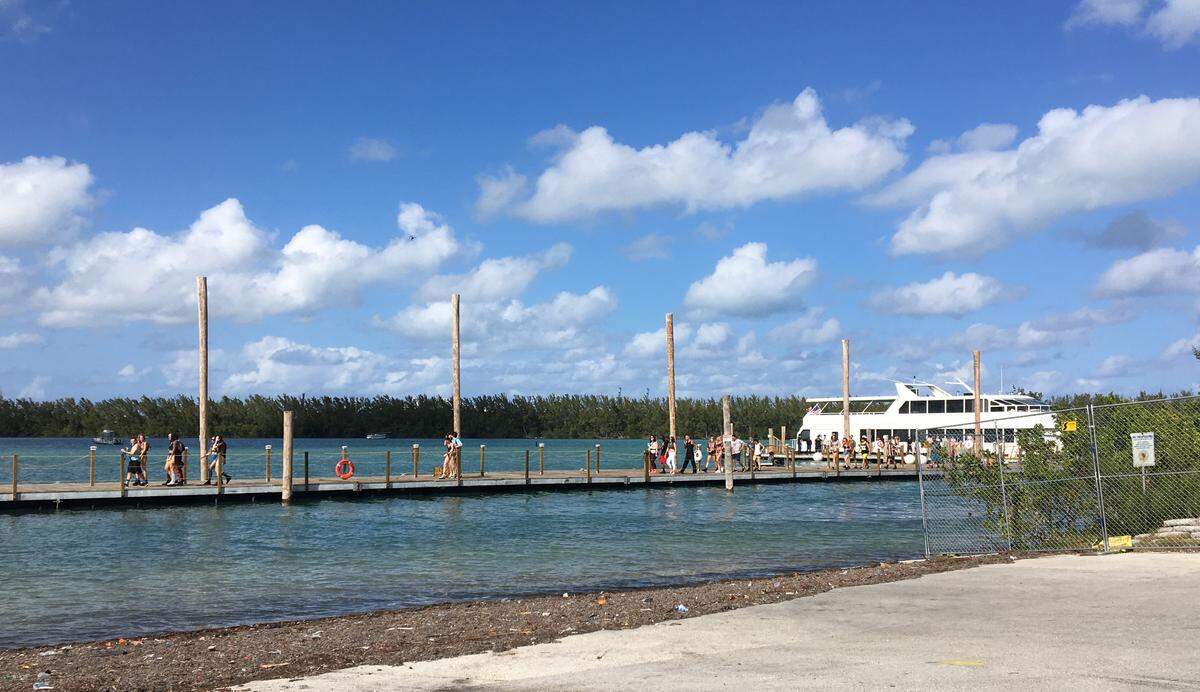
Early morning showers made way for sunshine early Friday afternoon as electronic dance music fans from across the country — some dressed in equally bright sequin-covered get-ups that left little to the imagination — huddled in vibrant snaking lines and hopped onto one of the 230 air-conditioned buses headed to Virginia Key Beach.
As the Ultra Music Festival moved for the first time in seven years from the skyscraper-surrounded Bayfront Park to a more intimate spot just across the Rickenbacker Causeway, fans were directed to three pickup locations across the metro area: lots near the Omni, the AmericanAirlines Arena and Vizcaya Gardens. A ferry also took people from Bayfront Park to the Key.
Luis Vera, 29, wore a teal-and-red watermelon pattern on his T-shirt and shorts.
He said the separated stages at Ultra — main stage and Resistance Island — served as a buffer between mainstream fans and those with a more nuanced taste in electronic music.
Moving away from the concrete jungle to an idyllic setting, and sharing the new experience with strangers aboard the same bus, excited him.
“I think it’s a lot better,” he said. “At festivals, you want to be a little more secluded.”
The roughly mile-long trek between the glitzy, radio-ready Main Stage and the more desolate, hypnotic Resistance Island caused some complaints among Ultra visitors, although techno fans said sequestering Resistance Island assured that those who made the walk were more invested in the throbbing, hard-core techno music played there.
“It has its pros and cons,” said Brittany Perez, a 29-year-old New York resident at her second Ultra.
Beto DiCaro, a 23-year-old Miami resident who attended earlier Ultra festivals, said the long distance would potentially discourage first-time fans to experience techno music.
“It’s just too far,” he said. “To walk over here was forever.”
At both venues, the music was blasting loud enough to feel the bass in your chest — and it was audible at nearby Miami Seaquarium. Police and fire rescue patrolling the venue wore ear plugs.
Into the night, busloads of revelers continued to arrive. Numerous police boats could be seen from the Rickenbacker Causeway, which was congested around the venue. With a flood of police directing traffic, cars moved along slowly as buses ran their loops between pickup areas on the mainland and Virginia Key.
For 31-year-old Jon Smithgall, getting to the festival wasn’t the issue. He traveled from Salt Lake City to attend his first Ultra this year.
“Getting here was easy,” he said as he waited for a shuttle bus back around 10:30 p.m. “I can’t imagine what it will be like when this place empties out.”
Chris O’Neal, who flew to Ultra from Texas, wore an American-themed sombrero and attended the festival with friends. He said the new transportation methods made the festival seem like more of an adventure than before.
“It makes it more intimate,” he said.
There was no parking for private cars at the festival, and although people could use Uber and Lyft to get there, ride-sharing services would not be picking people up at the end of the concert.
By mid-afternoon, traffic hit a snag on the Rickenbacker Causeway, the only road linking Miami to Virginia Key and Key Biscayne, as Ultra shuttles merged with traffic from the Seaquarium.
The new transportation plan, which Ultra said “reduces the local impact of carbon emissions and traffic by offering coordinated mass transit and increased public transit options,” had been running smoothly on Friday, said Cherie Watson, a transportation coordinator with the music festival.
Buses to the alternate venue, Resistance Island, were markedly less popular than those heading to the main venue at Miami Marine Stadium. The locations stand just a 20-minute walk apart on Historic Virginia Key Beach Park.
“The buses are running and loading fast,” Watson said.
With recycling bins greeting attendees every few dozen paces and festival staff sweeping the floor while monitoring littering, the venue appeared to be fairly clean Friday. Security guards and barriers kept particularly insolent festival goers from getting onto the beach or into the water.
“Virginia Key is a responsibility that we take seriously,” Ultra said on its website. “We are committed to the preservation of natural and cultural resources for the enjoyment of future generations by increasing sustainable initiatives.”
Monica Arbesu, 21, volunteered with the festival to monitor the pollution there. Trash bins asked festival goers to separate waste into “compost” and “landfill” categories. Ultra offered compostable food packaging and cutlery to cut down on pollution.
“It’s pretty hard to litter when there are volunteers monitoring the area,” she said. “People, especially nowadays, are being more aware. They’re making more of an effort to protect [the environment].”
Mosquitoes were a constant nag on the Resistance Island, forcing Ultra to provide bug repellent.
Stephanie Andersen, a 21-year-old from Michigan, flew to Miami to attend Ultra. She was excited to see artists Odesza and Marshmello. Wearing butterfly wings and sequins on her forehead, she said Ultra’s variety of artists and sense of community drew her in.
“If you’re bored with one thing, you can move to another stage,” she said.
This story was originally published March 29, 2019 at 4:57 PM.