Miami honors former mayor Maurice Ferré by naming waterfront park after him
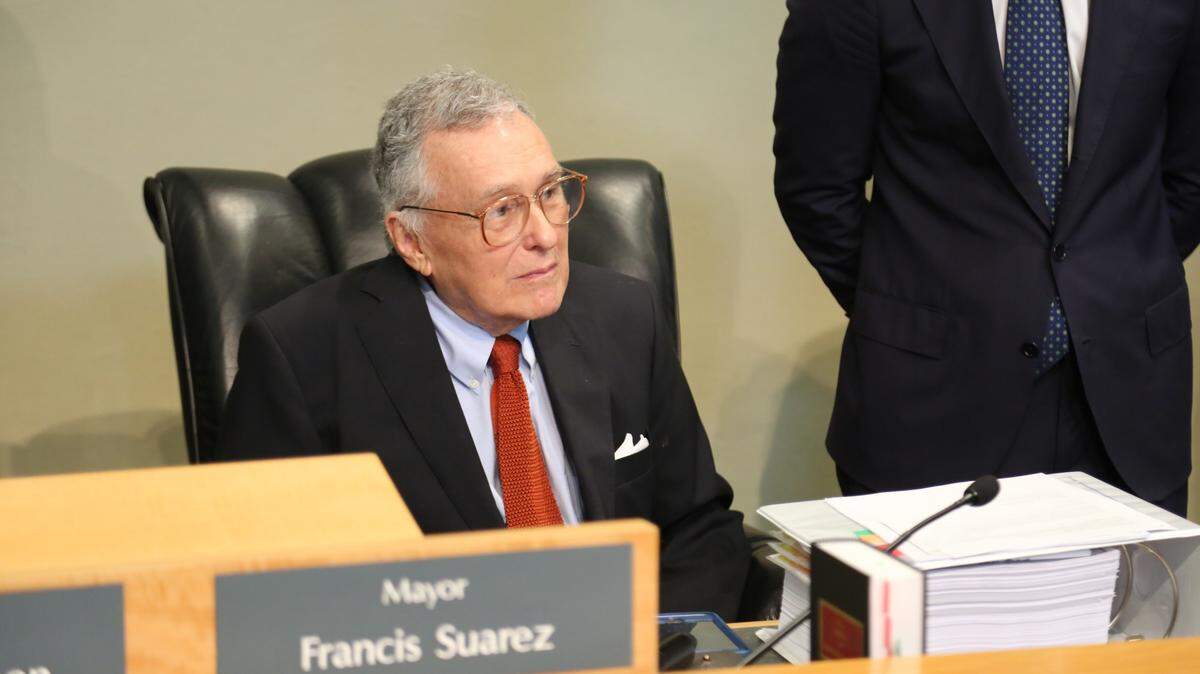
The mayor stood up from his seat in City Hall to tell the audience gathered to honor him that he wanted to avoid this moment
Maurice Ferré, the six-term mayor of Miami who has been referred to as the “father of modern Miami,” was honored by Miami’s City Commission Thursday when it unanimously voted to rename Museum Park to “Maurice A. Ferré Park.” To accept the recognition, he took the mayor’s seat on the dais. After being showered with accolades from current and former elected officials, he opened his remarks by making the attendees laugh.
“I swore I would not let this happen. I said I would wait outside until after the vote and then walk in .... because I’m not dead yet,” he said. Ferré is 83 and fighting what he says is an aggressive cancer.
Museum Park, which for years was called Bicentennial Park, is anchored by Pérez Art Museum Miami and the Frost Museum of Science. The commission gave final approval to a resolution placing Ferré’s name on the waterfront park, which lies in the shadow of a downtown Ferré envisioned long before the skyline sprung up. He sought to define Miami as the “gateway to the Americas,” a phrase many echoed back to him Thursday as they congratulated him for seeing his vision come true.
“He is the first Miami visionary,” said Mayor Francis Suarez. “The label ‘visionary’ and the way he embodied that label is the one that all future mayors will be judged against.”
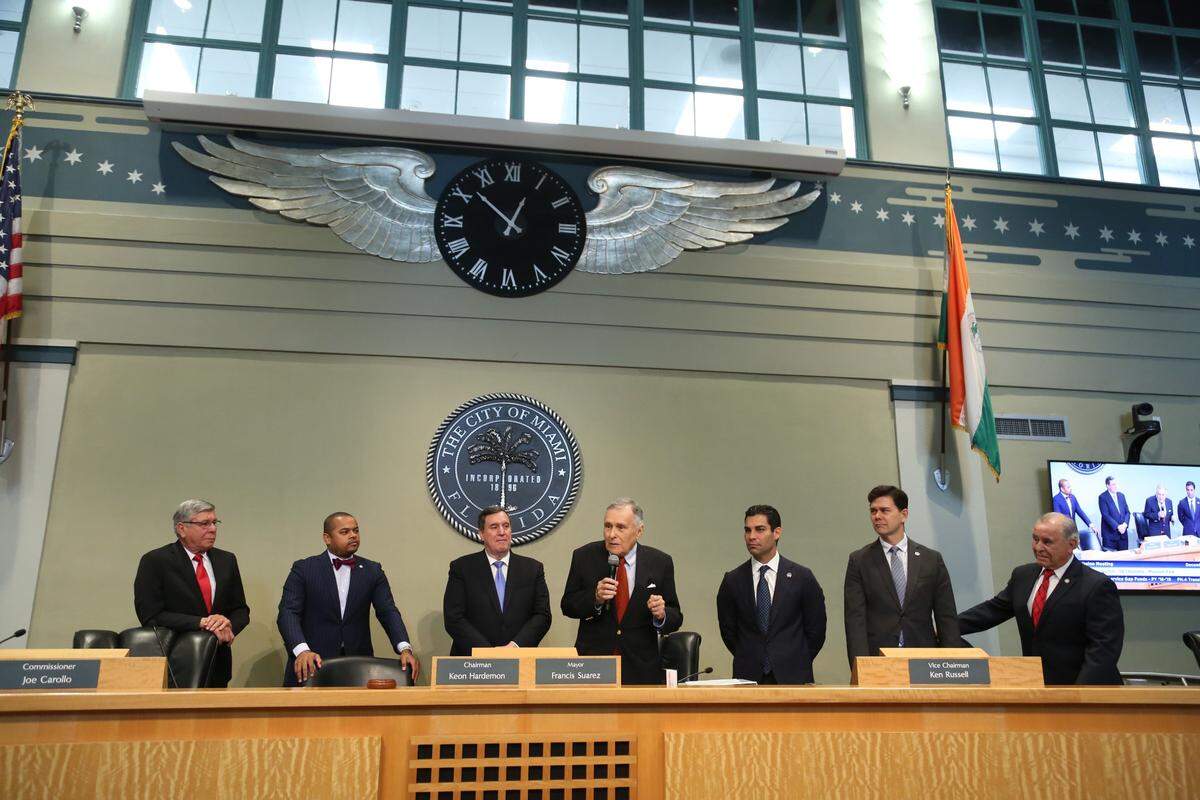
Commissioner and former mayor Joe Carollo, a one-time political foe of Ferré, offered high praise for the former mayor.
“He had to pull me by the ear more than once,” Carollo said. “But I can honestly say that I learned tremendously from him.”
Commissioners welcomed Ferré by bringing him onto the dais and seating him in the mayor’s chair. After he thanked everyone present, including his wife Mercedes, he delivered a speech as if he still held the gavel in City Hall.
He declared his love for Miami, describing a vibrant city and speaking of embracing Miami’s diversity as one of its greatest strengths. He said that despite moments of social upheaval and turbulent times, Miami has grown and shown grit in surviving difficult moments such as the McDuffie riots, the Mariel boatlift and the violent drug trade of the Cocaine Cowboys era.
He acknowledged the tough times but rebuffed the idea that Miami was a “paradise lost,” a moniker bestowed upon the Magic City on the cover of Time Magazine in 1981.
“No! Not Paradise Lost. This is still the best city in America,” he said, as the crowd punctuated his remarks with rousing applause.
This story was originally published December 13, 2018 at 5:52 PM.