
South Florida LGBTQ community rallies to help those impacted by COVID-19
Kendra Hayes, a trans woman of color, had just started to get her life together. Recently homeless, she finally found a job as a prep cook at a Fort Lauderdale restaurant, along with a place to live.
Three weeks later, the coronavirus came.
The restaurant closed, leaving Hayes with nothing. “My landlord put a three-day notice on my door that I had to pay rent or they would start the eviction process,” she said.
Hayes, 42, reached out to Transinclusive Group, a Broward County organization for transgender and gender-nonconforming people.
“They had fliers up on the internet that if anybody needed help, contact them, fill out the application and someone would contact them shortly,” Hayes said. “Less than 24 hours later, I was contacted. They came and brought me funds — cash — so that I could pay my rent, which I was greatly appreciative.”
With $100 from Transinclusive and $25 from Arianna’s Center, another South Florida trans group, Hayes cobbled together enough money to pay her rent for one month. “Every dollar helps. Every cent helps,” she said.
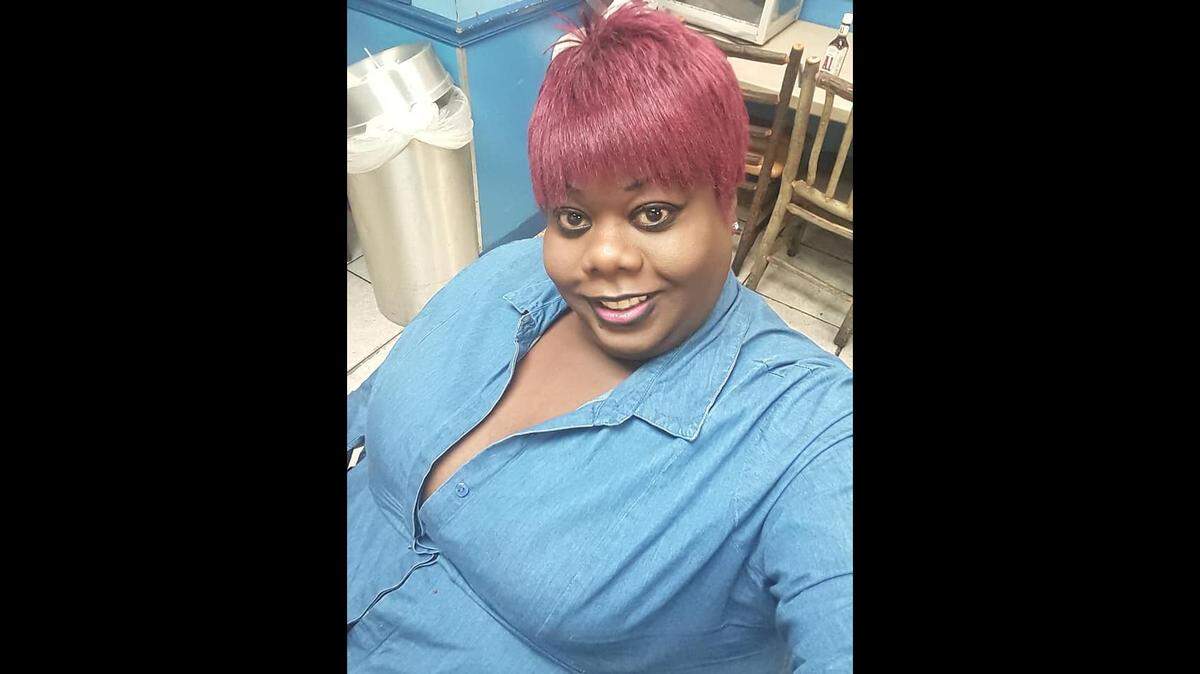
The COVID-19 crisis has devastated many in South Florida’s large LGBTQ community. Among the first reported deaths in Miami-Dade County, on March 27, was Israel Carrera, a gay 40-year-old North Miami man. The first law enforcement officer to succumb in Florida, on April 3, was Broward Sheriff’s Deputy Shannon Bennett, who was gay.
LGBTQ groups helping others amid COVID-19
But through years of working together and shared life experiences — many rooted in an earlier health crisis, HIV/AIDS — South Florida’s network of LGBTQ groups and activists have begun helping each other to help a community once again in need.
“This pandemic is affecting not just young people, but LGBTQ folks across the board. Particularly those who are the most vulnerable,” North Miami social worker Landon (LJ) Woolston said. “Young people. The aging, our elders. People living with HIV. People in our community who are experiencing or at risk of homelessness. And trans and nonbinary people. And people of color. Undocumented people. There are lots of groups. And then we talk about intersections: People who have more than one oppressed identity.”
Woolston, who identifies as “both queer and trans,” said many established LGBTQ groups have been slow to react to the sudden health crisis.
Free of red tape, Woolston and other social justice organizers on March 15 launched the COVID-19 South Florida Mutual Aid group on Facebook. Already, there are 840 members.
“The coalition is primarily queer and trans led, but serving anyone in the group who is in need,” Woolston said. People can donate through Cash App at $SouthFLMutualAid. “In the past three days alone, we have purchased over a $1,000 worth of groceries for people. Young people, undocumented folks and people who have tested positive for COVID.”
Being a community-based Facebook group, members busily post what they need and what they can do to help. Among the offers: meditation services; used books “sprayed with Lysol, aired out and in Ziploc bags”; free meals for public school students; and “a cheap place to live” in a North Miami “hippie commune.”
Woolston has long been involved in South Florida’s LGBTQ community. Four years ago, he met Tatiana Williams, now Transinclusive’s co-founder and executive director.
Transinclusive was incorporated in 2017. Originally known as Trans Women in Need of Services, it began as a weekly support group at the Pride Center at Equality Park in Wilton Manors, according to Williams.
“When you speak about the trans community — our community is marginalized and disproportionately impacted. We’ve been dealing with this in our community even before COVID happened,” said Williams, a trans woman.
Last year, the national AIDS Healthcare Foundation (AHF) gave Transinclusive money for an emergency fund that would help members pay for medical appointments, prescriptions and emergency hotel stays. The organization has also recently received funding from Destination Tomorrow, the Bronx LGBTQ Community Center in New York City, and Our Fund, a Broward-based LGBTQ philanthropy foundation.
Since the pandemic began, emergency requests have jumped from three to 15 a week, Williams said.
Now, many members are newly unemployed, facing homelessness and need help paying for food, rent and utility bills, she said.
“That put the organization into the position either to scale back or seek additional funding to meet the community needs,” Williams said. “AHF has been supporting the fund prior and asked whether we need additional assistance. And I was overwhelmed when Our Fund stepped up to the plate.”
Our Fund creates resilience fund
As COVID-19 struck, Our Fund quickly created a “resilience fund.”
“Community foundations are great and they’re essential, but I wouldn’t associate the word ‘nimble’ with them in any circumstance,” said David Jobin, CEO/president of Our Fund, the nation’s third-largest LGBT community foundation after San Francisco and Seattle. It has an annual budget of $600,000 and assets based on market conditions of $16 million to $17 million.
Our Fund contacted its 27 recipient agencies and asked what they needed most. All 27 replied in a single day and one week later, Our Fund board members met via Zoom and reassigned $150,000 in restricted funds to be used for a matching community grant.
“We released those funds with a one-to-one match: Every dollar we got, our board-restricted fund matched. We needed to raise $300,000,” Jobin said.
So far, Our Fund has raised $310,000 including the board match. “And we’re still collecting,” Jobin said. “There will be more gifting in the future.”
Food Giveaways
Not all LGBTQ philanthropy is in the hundreds of thousands of dollars. Twice a week, Dawn Cohen Holloway of Pink Catering and Pink Subs in Oakland Park gives away more than 50 meals to hungry people on nearby Wilton Drive in Wilton Manors.
“The one thing everyone needs to do, is they need to eat,” said Holloway, who distributes the food with friends Howard Andrew and Victor Lords.
“People are lining up to sponsor” the food giveaways, Holloway said, including Emmy-winning writer and comedian Bruce Vilanch, who last week donated dozens of meals.
“We don’t make any money from this. We make nothing,” said Holloway, a bisexual woman who lives with and helps cares for her elderly mother, adult daughter and 4-year-old grandson.
“It’s a lot of work. The shopping, the preparation, the distribution. But I’ll tell you what, it’s worth it. We see the same people and they’re very thankful. It’s two meals a week they don’t have to worry about. They’re mostly bartenders and servers, cooks. Anyone who is in the service industry, we’re giving back to,” she said. “These people have put up with so much of our s---, the least we can do is give back to them.”
Milancita Rodriguez of Kendall is a well-known LGBTQ events promoter in South Florida.
“We are survivors. We invented new things in this world to survive,” said Rodriguez, 67, a transgender woman who moved to South Florida nearly 30 years ago.
%20and%20friend%20Willie%20Martinez.jpg "Milancita Rodriguez (in blue) and friend Willie Martinez.jpg")
This month, she survived COVID-19.
Four days after attending the March 8 Winter Party in South Beach, Rodriguez thought she was having an asthma attack. “But then I started feeling weak. That’s not asthma. I could not even walk. That was my first sign that something else was happening to me.”
On March 22, her good friend Robert Lamas, a nurse, took Rodriguez to South Miami Hospital, where she was treated for pneumonia. Within a week, she was in the hospital’s intensive care unit, on a ventilator after being diagnosed with COVID-19.
“They quarantined me. Nobody could visit me,” Rodriguez said. “It was horrible. I have had so many experiences in my life, bad and good. This one was the most horrible experience I could mention to you.”
She later posted to friends on Facebook that March 31, “I felt that my body couldn’t take it anymore. I couldn’t stand another injection, pill or fluids entering my vein anymore. I asked the doctor to stop treatment and send me home to die in peace. They immediately called Robert to let him know of my decision.
“Robert called me back and began to read me all the messages that you had left me. I started crying and I realized there was more than one reason to keep living, to keep fighting for my life. It was your messages, full of love and good wishes that encouraged me to continue fighting.”
Rodriguez remembers little during the time she was sedated on the ventilator. “When I woke, I looked at the ceiling and I said, ‘Where am I? This is not my house.’” She returned from ICU to a regular room on April 3 and was discharged three days later.
Many of her friends are now either sick or out of work. Said Rodriguez: “This is the moment to open our hearts to other people.”
The Miami-based Hispanic LGBTQ group Unity Coalition|Coalicion Unida is doing just that, she said.
“People have emergency needs right now,” said Herb Sosa, Unity Coalition’s president/CEO. “People in our community who live paycheck to paycheck, especially in the hospitality industry. We’re talking bartenders, waiters, drag performers. They for all practical purposes found themselves unemployed overnight. Add to that, a big part of their income on a good day was based on tips.”
Sosa said Unity Coalition has launched a “Micro Giving Emergency Tips Fund for South Florida LGBT Hospitality Workers.”
“The most important thing for people to know is that 100 percent of every penny that comes in we put right back into the community. There’s no administration fees; we’re not keeping anything,” Sosa said.
“To date, we’ve raised several thousand dollars and given from $100 to $300 to a few dozen individuals,” he said. “There’s an application process. We have an independent review panel that evaluates each application on its merits. Each day, based on funding availability, we give money out. As fast as the money comes in, we put it back into the community.”
Sosa credits two community partners, Gay Vista Social Club (a Miami-based nonprofit group of young aspiring philanthropists) and Lambda Living, a Jewish Community Services program targeting LGBTQ people 55 and up.
Gay Vista Social Club, according to executive director David Quiñones, has raised about $5,000 in two years, “to provide scholarships for LGBT millennials and individuals through Unity Coalition,” as well as to support “sustainable housing and social programming geared to LGBT seniors through Lambda Living.”
Lambda Living in January introduced an online program to meet the challenge of providing services to seniors throughout Miami-Dade County. “It’s so big, that to get folks to any one location could require some to drive as much as an hour,” program manager Cindy Brown said.
That online program, which includes a calendar of events, is perfect for helping the hundred or so Lambda Living participants stay in touch during the COVID crisis.
“There are exercise classes, weekly men’s and women’s groups, financial seminars, virtual hugs (a weekly group that allows attendees to talk about how they’re doing during this time and whether they need support in some way),” Brown said. “We also have special programs, such as a presentation about Miami Beach scandals.”
Something else North Miami-based Jewish Community Services operates, not just for LGBTQ people: Miami-Dade County’s 24-hour, seven-day-a-week Switchboard 211 crisis helpline in English, Spanish and Creole. Dial 211 from landlines, 305-631-4211 from cellphones.
“With the call, you don’t need to do this alone,” Brown said. “JCS is accustomed to handling people in crisis because we do it every day.”
Journalist Steve Rothaus covered LGBTQ issues for 22 years at the Miami Herald.
Our Fund Resilience Fund
The Broward-based fund, the nation’s third-largest LGBT community foundation, is providing $5,000 to $25,000 in emergency aid to 27 South Florida community agencies:
▪ The Poverello Center
▪ Broward House
▪ Pride Center at Equality Park
▪ SunServe
▪ Latinos Salud
▪ Legal Aid
▪ Sunshine Cathedral
▪ Compass Community Center
▪ Equality Florida
▪ Freedom Fund
▪ Gay Men’s Chorus of South Florida
▪ Island City Stage
▪ Lambda Living
▪ OUTShine Film Festival
▪ Pet Project for Pets
▪ SAVE
▪ SmartRide
▪ South Florida Pride Wind Ensemble
▪ Stonewall National Museum & Archives
▪ World AIDS Museum
▪ YES Institute
▪ Church of the Holy Spirit Song
▪ Humanity Project
▪ Red Hispana
▪ Thinking Cap Theatre
▪ Thou Art Woman
▪ Transinclusive Group