Photos show migrant wave impacts on Florida Keys national park. It’s ready to reopen
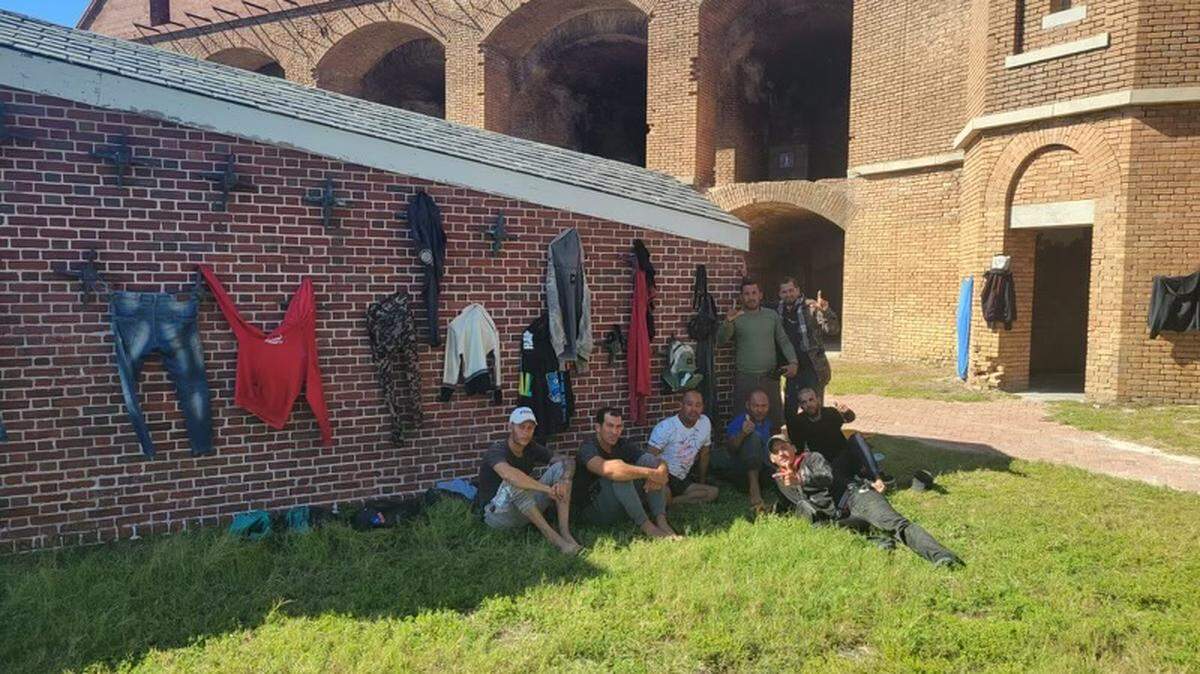
Photos obtained by the Miami Herald showed more than a dozen makeshift migrant boats and Cuban fishing boats lining the beach of Fort Jefferson in Dry Tortugas National Park — and also underlined why federal officials were forced to close the park to the public last Sunday.
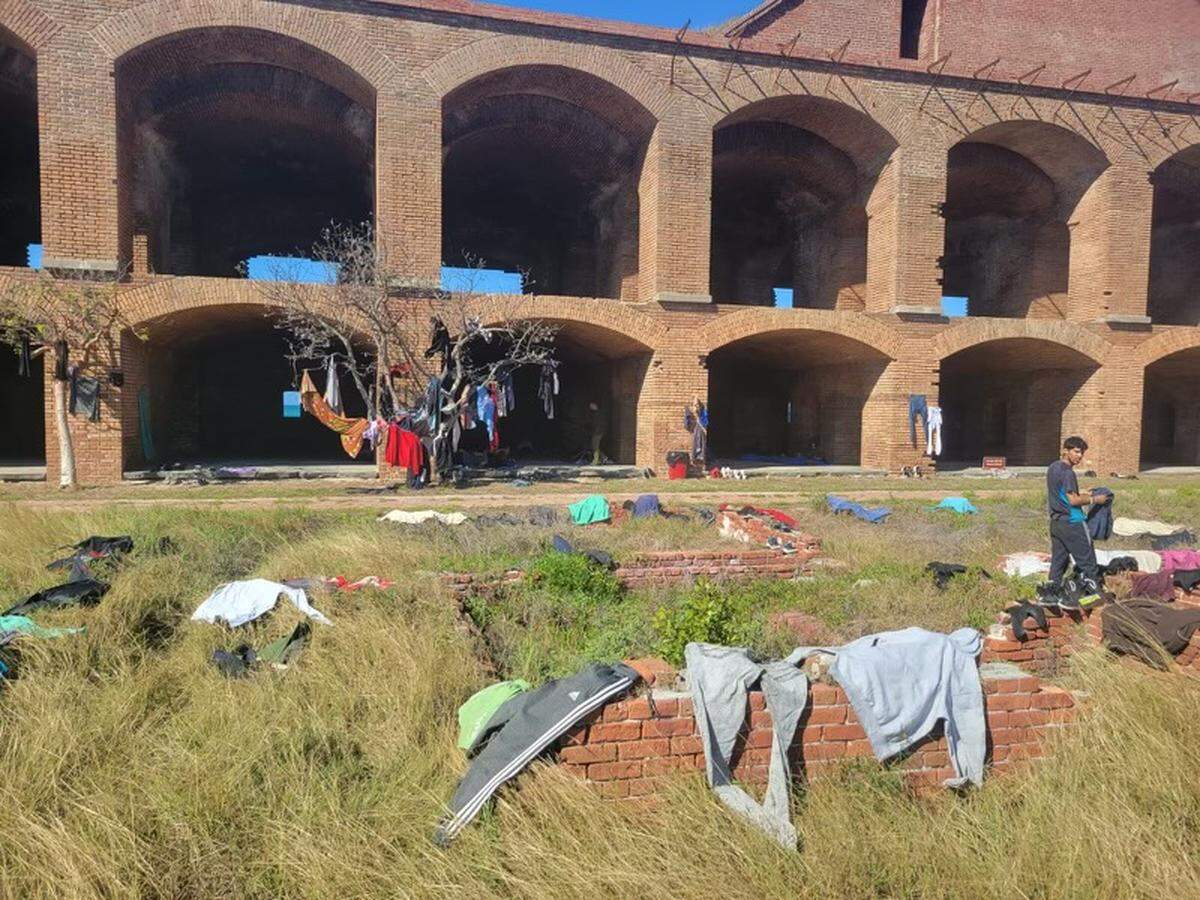
The grounds inside the massive fortress were filled with tired hungry people, the photos show, and festooned with clothes left to dry in the sun.
The Coast Guard removed the last of the total of 427 Cuban migrants Thursday in seven charter vans that took them to U.S. Border Patrol processing facilities in both West Palm Beach and Dania Beach. The National Park Service announced Friday that the park is scheduled to reopen on Sunday.
Fort Jefferson, on Garden Key some 70 miles west of Key West, has been the site of many migrant landings in this past — but the numbers last week appear unprecedented, as was the closure. Park managers typically only close the isolated park when tropical storms or hurricanes threaten.
The flotilla of migrant vessels brought a surge of people who took up temporary residence inside Fort Jefferson, a mote-surrounded masonry military installation abandoned by the U.S. Army in 1874. The park typically allows a small number of camping outside the walls but the many desperate migrants set up inside the walls and across the sprawling courtyard.
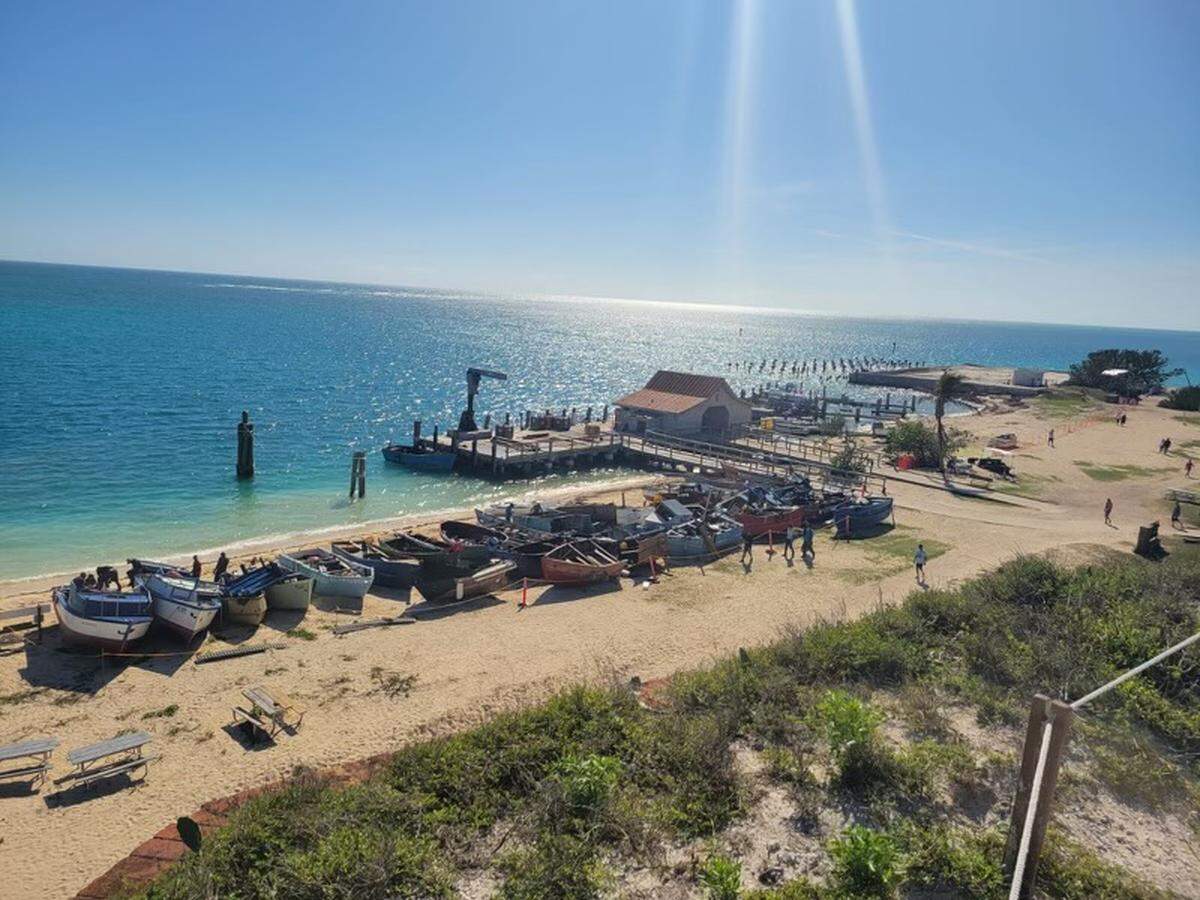
Though the ramshackle boats lined up on the beach at Garden Key look like a flotilla, they did not arrive in single wave, said Lt. Cmdr. John William Beal of the U.S. Coast Guard who was the main spokesman for the operation to bring migrants to the mainland.
“It happened over several days in multiple boats and rafts,” Beal said.
The mass landing coincided with near-constant landings of Cubans on small migrant vessels up and down the Florida Keys that increased rampantly between Christmas and New Year’s weekend. On Thursday, as the Tortugas migrants were being bused out of the Keys, others arrived in smaller landings, including one group on the mangrove shores of a small Upper Keys park, and another group of 26 men, women and children who came to shore at Naval Air Station Key West.
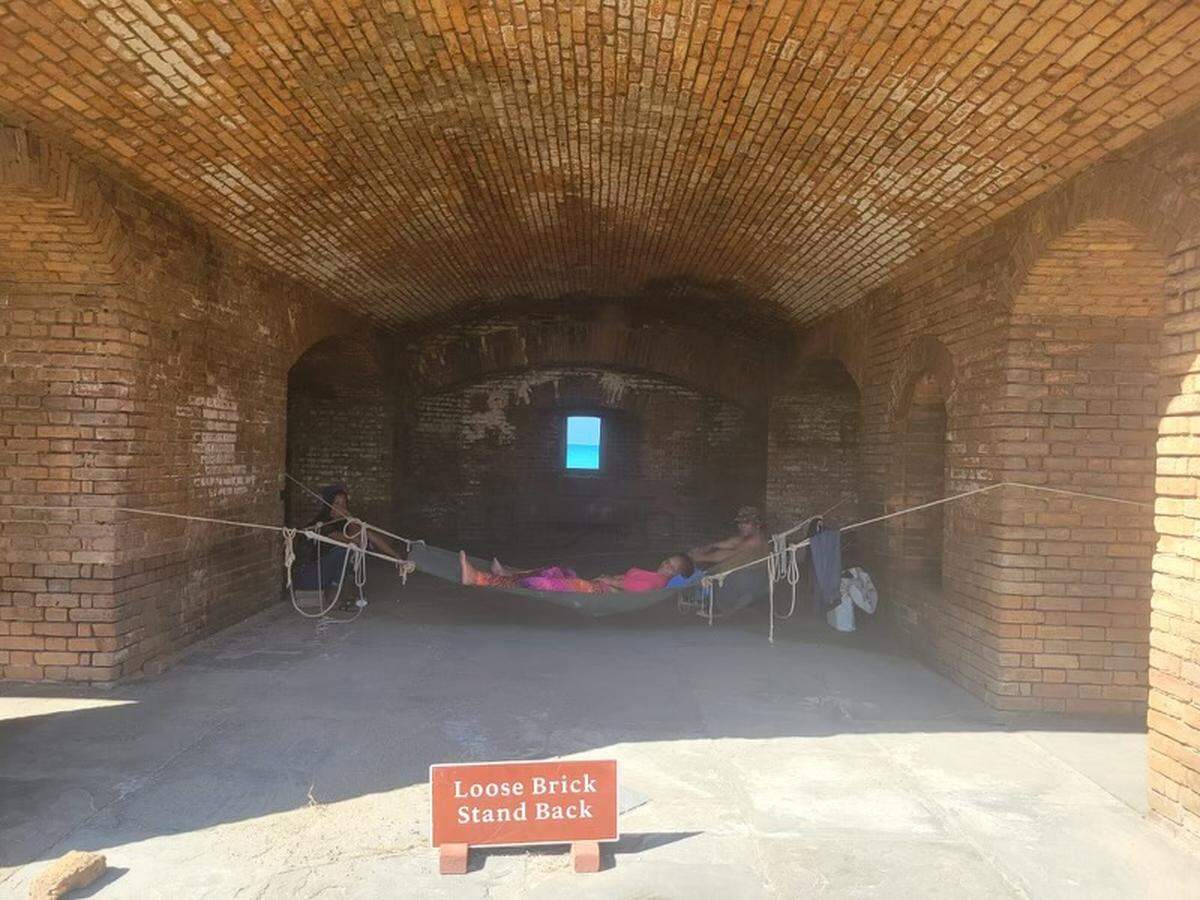
Another common sight on the island over the course of the week — laundry. The photos show massive amounts of clothing hanging from trees, from the fort’s brick walls and laid out in the grass to dry. One photograph shows a woman lying on a hammock strung underneath an overhang at the fort.
The Dry Tortugas and Marquesas Keys have become a more frequent landing for Florida Keys-bound migrants ever since the latest increase picked up momentum about two years ago. But, federal officials caution those thinking about taking to the sea that the dangerous journey can become even more perilous for those who land in the area, located about 70 miles west of Key West.
“Dry Tortugas National Park and the Marquesas are uninhabited, remote islands west of the Florida Keys without the infrastructure or means to sustain occupancy long term and accessible only by boat or seaplane,” Beal said. “It can take hours or days for emergency services to reach the islands depending on weather and other logistical factors, including migrant interdictions or landings elsewhere.”
The Park Service announced Friday that the Dry Tortugas are expected to reopen on Sunday at 8 a.m. for overnight camping, and concession-operated ferry and seaplane service will resume at that time. The announcement, however, advised people to check concession websites or call businesses directly for trip availability.
This story was originally published January 6, 2023 at 5:16 PM.