Boat stopped in the Keys because it was overloaded with fuel is turned over to the feds

Florida fish and wildlife police in the Florida Keys arrested two men Thursday on a boat overloaded with fuel that authorities said could be linked to migrant smuggling.
The 32-foot twin-engine Glasstream was hauling about 210 gallons of fuel in 14 separate 15-gallon containers when Florida Fish and Wildlife Conservation Commission police conducted a routine vessel stop in Boot Key Harbor in the Middle Keys City of Marathon, an agency spokesman said.
Officer Jason Rafter said officers also found two console GPS units on board as well as a hand-held GPS, a satellite phone, a fuel transfer pump and a large quantity of water and electrolyte drinks.
The officers arrested Rafael Gonzalez Diaz, 47, from Hialeah Gardens, and Orestes Alonso, 56, from Hialeah, each on a charge of transportation of fuel in a compartment without proper ventilation. They were also cited for littering, Rafter said.
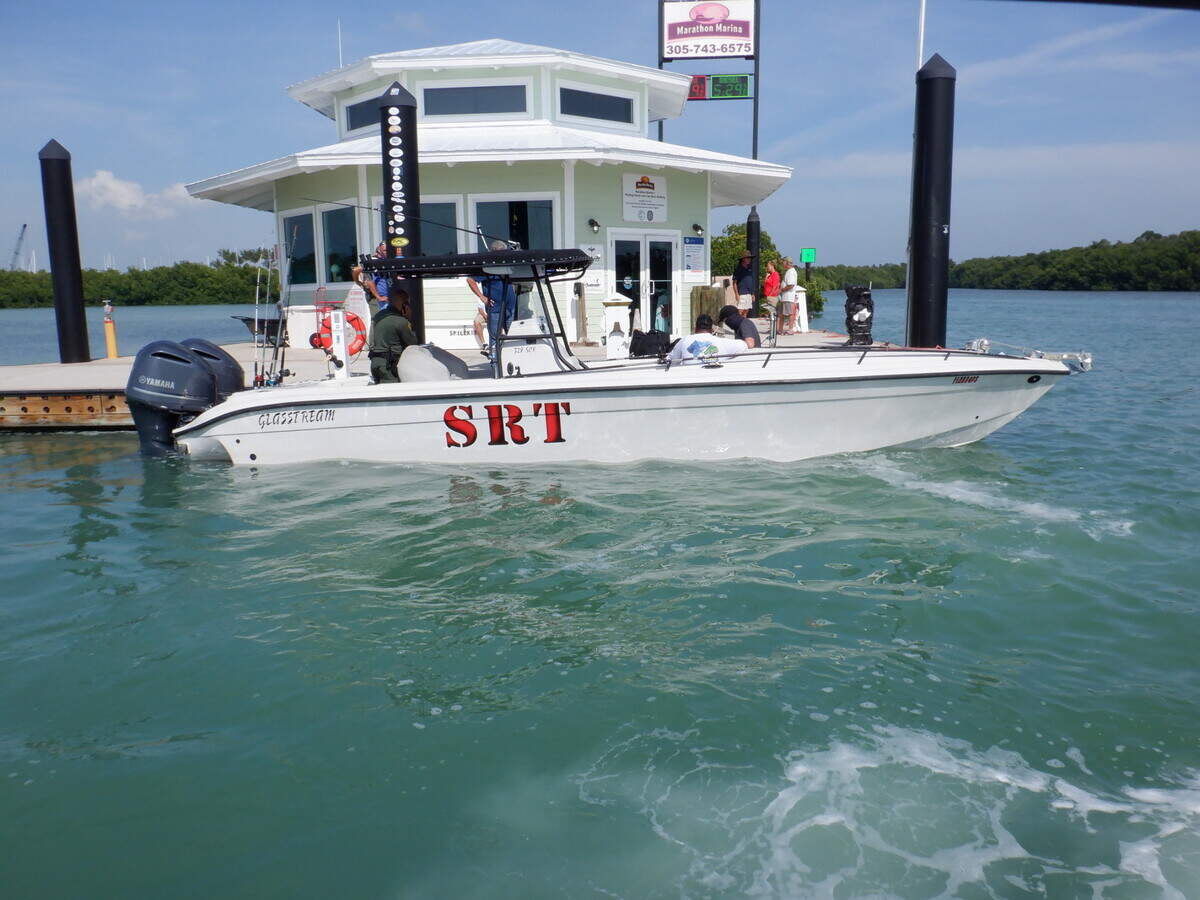
The FWC officers notified U.S. Customs and Border Protection, the Coast Guard and Homeland Security Investigations about the arrest. The latter agency is investigating the case and “more possible charges are pending,” Rafter said.
Alonso was released Friday on a $5,000 bond according to Monroe County Sheriff’s Office records, but could not be reached for comment. Gonzalez Diaz was still in county jail as of Friday evening.
The incident comes as federal officials in South Florida and the Keys are dealing with the largest surge in maritime migration from Cuba and Haiti they have seen in several years.
While most of the boats ferrying the migrants have been makeshift vessels for Cubans and overloaded sailboats for Haitians, others are paying human smugglers to bring them to the United States.

On Friday, the Coast Guard reported it had returned 70 people to Cuba. They had been stopped at sea in eight separate incidents over the past seven days.
Since Oct. 1, the Coast Guard has stopped 1,257 people from Cuba migrating between the island nation and South Florida. That is the highest number the agency has encountered since fiscal year 2017 — the period running from Oct. 1 to Sept. 30.
This story was originally published April 8, 2022 at 5:52 PM.