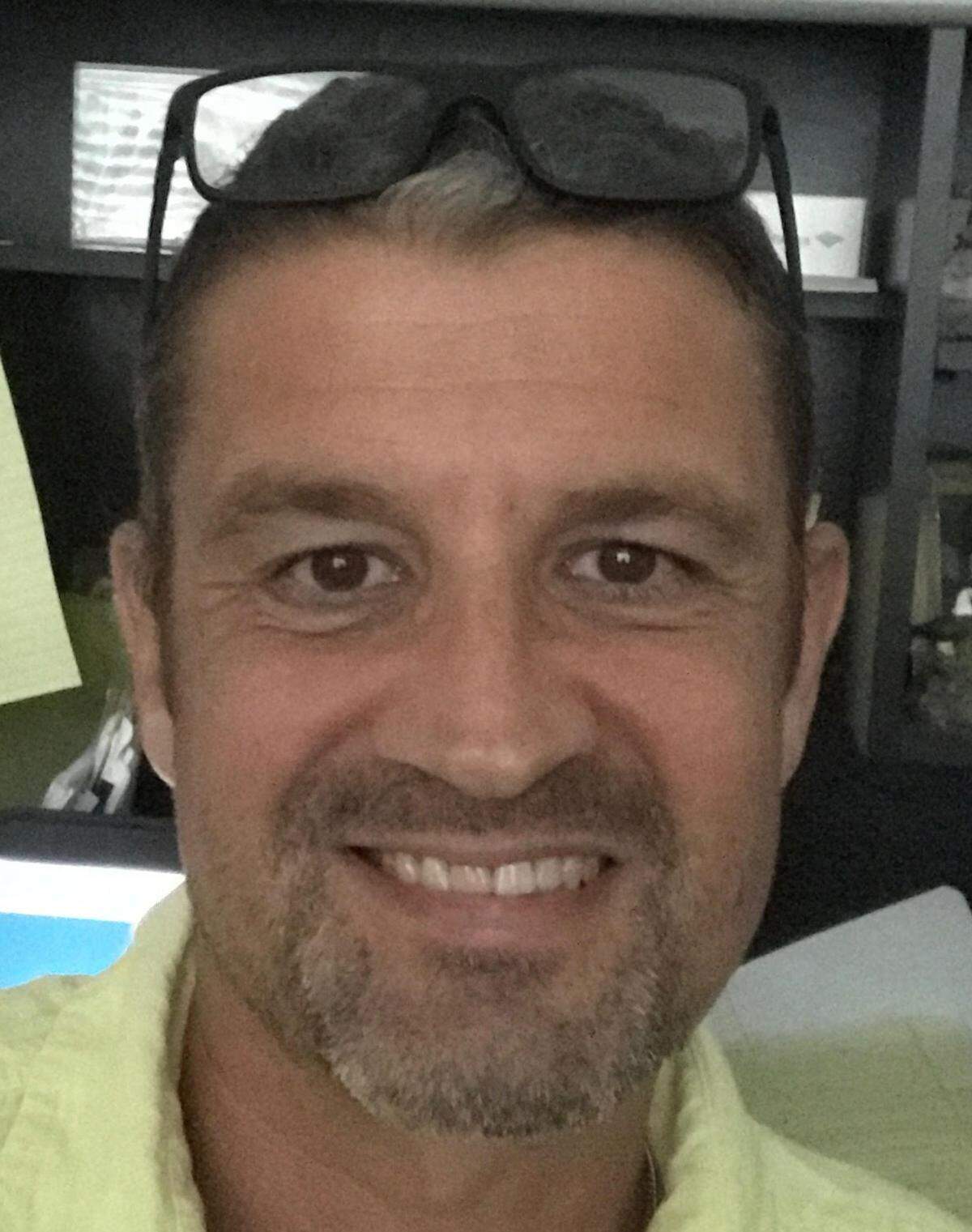
Sunrise scuba gear dealer sentenced to almost five years in Libyan export scheme
A judge sentenced a Sunrise scuba gear dealer and instructor to almost five years in prison this week for what prosecutors say was his role in conspiring to sell advanced dive gear to a buyer in Libya after being warned by a federal agent in 2016 not to proceed with the sale.
The gear, underwater rebreathers, have both civilian and military uses — and prosecutors say they are among a list of items needing a special license in order to be exported to Libya and other countries the federal government deems to have national security concerns.
At the time the more than $100,000 transaction was being negotiated, Libya was subject to an embargo by the Obama administration because of ongoing violence and lack of central leadership in the wake of the overthrow and killing of Moammar Gadhafi in October 2011.
Judge Patricia A. Seitz imposed the sentence Wednesday against Peter Sotis following his one-week trial in October in which a jury convicted the 57-year-old and his shipping manager, Emilie Voissem, of conspiracy to violate the International Emergency Economic Powers Act, attempting to violate the act and smuggling.
Sietz sentenced Voissem, 45, Thursday to five months in prison, followed by three years of supervised release.
Bruce Udolf, Sotis’ attorney, said Thursday that he would be appealing the sentence.
“Although the judge imposed a sentence less than half of what the government was seeking, we still believe that the sentence recommended by the guidelines is grossly disproportionate to the conduct in this case, and Mr. Sotis intends to appeal,” Udolf said.
Voissem’s attorney, Tony Moss, said the sentence was acceptable.
“I have no complaints with Judge Seitz’s sentence at all. She reinforced that the offenses were not trivial, while also recognizing that Emilie’s overall good character far outweighs the bad decisions she made at Add Helium,” Moss said. “I’m confident that she’s seen the last of the courthouse after yesterday.”
The deal
The case started with a $40,000 wire transfer that Sotis’ company, Add Helium, received in April 2016 from a Virginia-based company called Ramas, LLC, according to his 2019 grand jury indictment.
Ramas was a liaison between Add Helium and a man named Osama Bensadik, the intended buyer who lived in both Libya and Virginia, according to emails obtained by the Miami Herald in April 2017.
The Herald interviewed Sotis in October 2017, and he said the deal was “in excess of $100,000.” He noted that Add Helium both sells rebreathers and trains people how to use the complicated equipment. Rebreathers recirculate a diver’s air, producing no bubbles in the process, unlike traditional scuba gear.
This makes them popular with filmmakers who don’t want bubbles to show up in their shots or scare fish away. Even more concerning to federal officials, they are popular with divers who want to stay underwater without being detected, giving them possible military applications.
Over the next month after Add Helium and Ramas, as well as other people not identified in the indictment, were introduced, they discussed shipping the gear, and Add Helium received several more wire transfers.
But in late June of that year, the shipping company that Add Helium hired backed out of the deal after saying in an email to Voissem that it potentially violated federal law due to the embargo against Libya, which was expanded months earlier.
Additionally, one of Sotis’ business partners warned him that the rebreathers likely violated the embargo, according to the emails the Herald obtained.
Yet, instead of scrapping the deal, Voissem contacted “individuals” to come pick up the gear instead of relying on the shipping company, per the indictment.
Warned by the feds
Then in August, an agent with the Department of Commerce told both Sotis and Voissem not to send the equipment, prosecutors say.
The indictment states that Sotis then told his staff to stop communicating with him by email regarding the deal.
On Aug. 17, 2016, a federal agent called Sotis and Voissem about the equipment. Unknown to the agent at the time of the conversation, the gear had already been picked up — which Sotis and Voissem did not divulge, according to prosecutors.
Sotis told the Herald in 2017 that the Libyans planned to use the dive gear for shipwreck hunting in the Mediterranean.
“If someone wants to pick something up from us and ship it overseas, it’s none of our business,” Sotis said at the time. “How do I stop a shipment from a company I didn’t hire?”
The U.S. Attorney’s Office detailed in an October press release that Sotis and Voissem “lied and misled” Ramas, LLC about what the Commerce agent “had told them and about whether the rebreathers had a military use.”
Bensadik was a U.S. businessman of Libyan descent and served as an ambulance driver for the resistance during the 2011 Libyan civil war that overthrew Gadhafi, according to press reports.
His 21-year-old son and another relative were in Benghazi, Libya, setting up a business when the civil war started in 2011. Multiple press accounts say his son took up arms against the government and was killed. The family’s story was told as part of a 2014 documentary on the 2011 Arab Spring called “We Are the Giant.”
Rob Stewart incident
Sotis’ name was often in the press at the time because of his relationship to Rob Stewart, a famous Canadian filmmaker and conservationist who died in a diving accident off the Florida Keys while making a documentary in early 2017.
Sotis was hired by Stewart to help train him on rebreathers for the documentary that focused on sharks.
On Jan. 31, 2017, both men came to the surface after a 225-foot dive on the Queen of Nassau shipwreck off the coast of Islamorada. It was their third dive of the day, and both men were using rebreathers — which, without the required expertise, can be deadly to the user.
Sotis boarded the dive boat first. Seconds later, however, he began convulsing. The boat’s crew, Sotis’ wife and Stewart’s business partner tended to him, and he quickly recovered.
While this was going on, Stewart disappeared below the waves. A massive, three-day air and sea search followed, covering 6,000 square miles. Stewart’s name is well-known in Canada and the international dive and environmental communities, and the search gained worldwide press coverage.
The search ultimately ended in tragedy for Stewart’s family and friends. On Feb. 3, 2017, a man operating a remote-controlled submarine spotted the 37-year-old’s body in his dive suit on the ocean floor. He was found almost straight down from where he was swallowed by the ocean’s surface.
In the aftermath, Sotis was among several people named in a lawsuit filed by Stewart’s estate over his death.
This story was originally published January 13, 2022 at 9:41 PM.