Major phase of Florida Keys GMO mosquito release complete, company says

A British biotechnology company and the Florida Keys Mosquito Control District on Tuesday announced they have “successfully concluded” a major phase in a controversial trial project aimed at wiping out an invasive species of mosquito known to spread dangerous diseases like dengue fever, Zika and chikungunya.
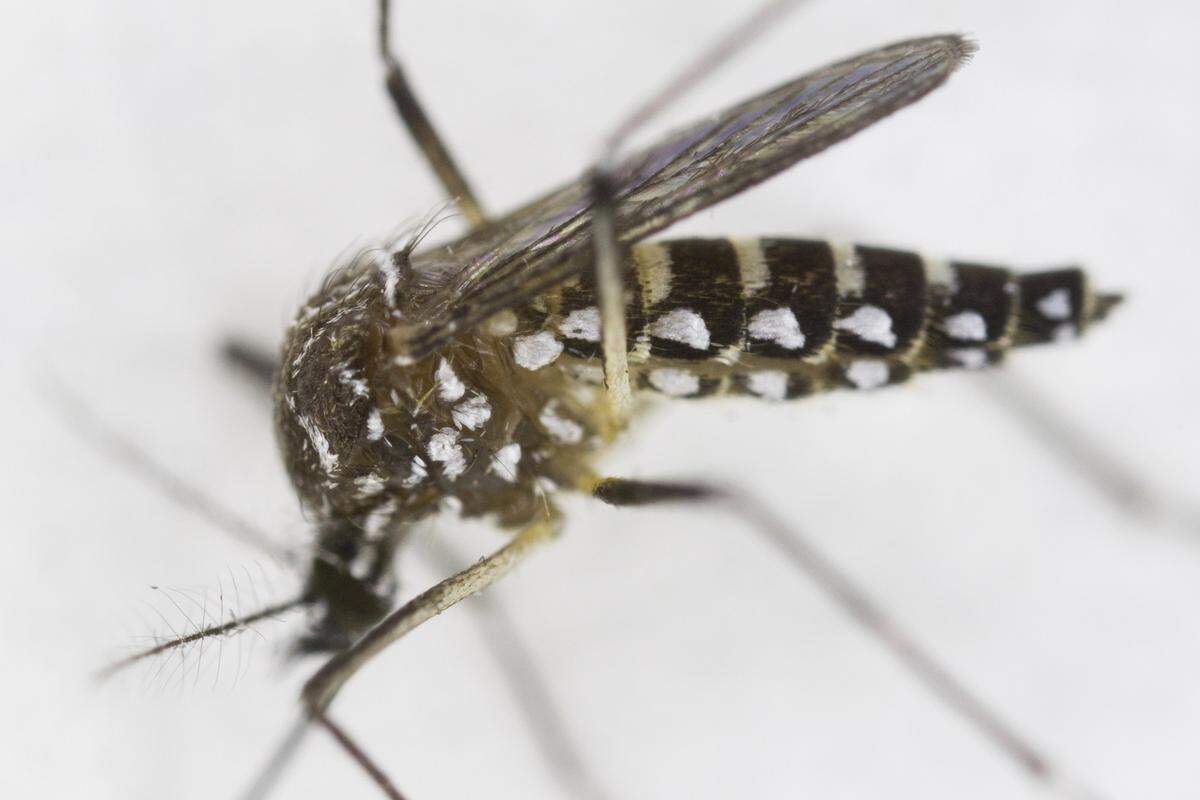
In April, the company, Oxitec, placed up to 130 boxes, each filled with millions of genetically altered male Aedes aegypti mosquito larvae, in several locations in the Middle and Lower Keys — hoping they would fly away after hatching and breeding with the naturally occurring local females in the area.
Scientists designed a “death mechanism” in the males meant to ensure no viable female offspring would result from the mating. The male offspring, according to Oxitec, will pass on a “self-limiting gene” to half of their young, with the goal of Aedes aegypti breeding themselves out of existence in the Keys, according to the company.
Oxitec and the Mosquito Control District, a Monroe County agency that operates a fleet of trucks and aircraft to keep mosquitoes to an acceptable level on the island chain, announced Tuesday that the active release stage of the project is complete and boxes will be collected from the sites — located on Vaca Key, Big Coppitt Key, Little Torch Key and Ramrod Key.
The progress of the project will be monitored, likely until February, Oxitec said in Tuesday’s announcement.
“Throughout the project, only Oxitec’s non-biting male mosquitoes emerged from the boxes and dispersed as expected, mating successfully with invasive pest females,” the company said.
Detailed information about the project “will be shared in the coming months as data is evaluated by the project steering committee,” the company added.
Although the press release also stated that public support “in project areas, including the volunteer residents who hosted boxes, remains high,” stiff opposition continues throughout the Keys to the release of the bugs.
“If it’s a success, how are they still evaluating it,” said Meagan Hull, a Key Largo resident who’s been a vocal critic of the project since Oxitec began trying to convince local officials to allow them to operate in the Keys about a decade ago.
The five-member elected board of the Mosquito Control District approved the trial in August.
The U.S. Environmental Protection Agency gave its approval in 2020 for the trial to continue through next year, with the Florida Department of Agriculture and Consumer Services green-lighting it in June 2020.
Meredith Fensom, an Oxitec spokeswoman, said the company has submitted an application amendment to the EPA for the project to continue beyond 2022. And, if approved, “the amendment would also allow Oxitec to pilot our technology in California,” Fensom said Tuesday.
“We’re not happy this is going on,” Hull said.
Barry Wray, executive director of a local environmental group called the Florida Keys Environmental Coalition, criticized Oxitec’s announcement, saying the company has been dishonest about similar pilot projects it’s conducted in places like the Cayman Islands and Brazil.
The results of those trials are debatable, according to critics. The company notes its Brazilian efforts were a success and added in a May press release that the Brazilian government approved Oxitec’s mosquito technology within the nation following “a rigorous scientific review process.”
In the Caymans, Oxitec concluded four trials with an older technology that it says achieved a reduction rate of the targeted Aedes aegypti mosquitoes of between 62 and 96%.
Those figures are disputed, however. Emails obtained by a British activist group revealed that the bulk of a Cayman government paper that boasted a 62% reduction was written by Oxitec itself.
“Many of us who have been at the forefront of the opposition are aware that the only story that will be told from the highly filtered data, will translate into an Oxitec chorus of success and perfection,”Wray said in a statement Tuesday. “Oxitec’s pattern of behavior is as reprehensible as their hiring of a politically connected lobbyist that compelled the EPA’s approval and was subsequently met with scientific objections from many respected genetic engineering leaders in the U.S.”
This story was originally published November 23, 2021 at 6:05 PM.