Scuba diving in the Florida Keys helps veterans ‘start living again’ and tame PTSD
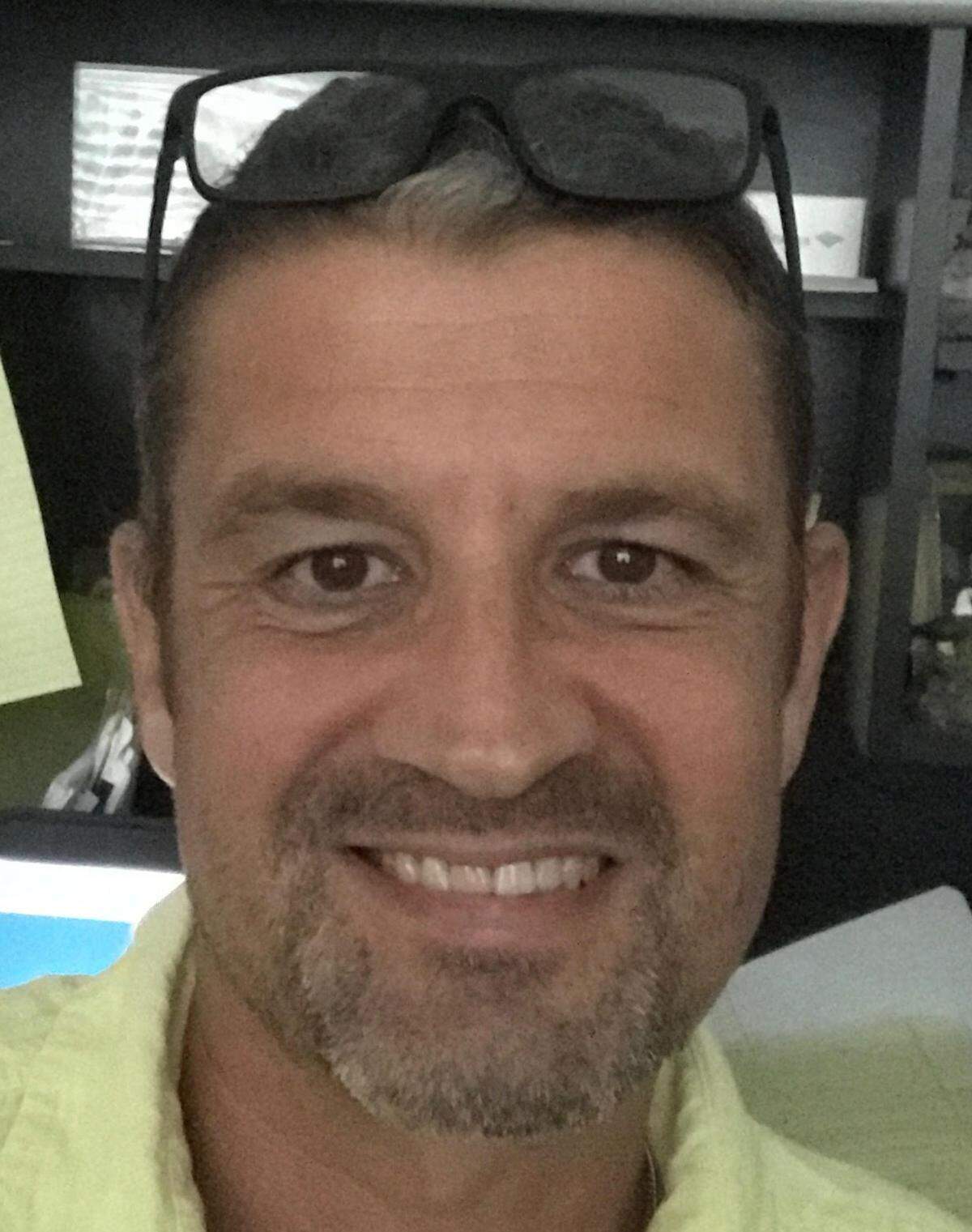
During his four years in the Marines, Philipp Proschko served two tours of duty in Iraq as an infantry machine gunner and another aboard a Navy ship.
Physically healthy, his combat experience took its toll on him psychologically.
“I have PTS pretty bad,” Proschko, 35, said, referring to post-traumatic stress disorder, the anxiety disorder that can affect from 11 to 30 percent of veterans, according to the U.S. Department of Veterans Affairs.
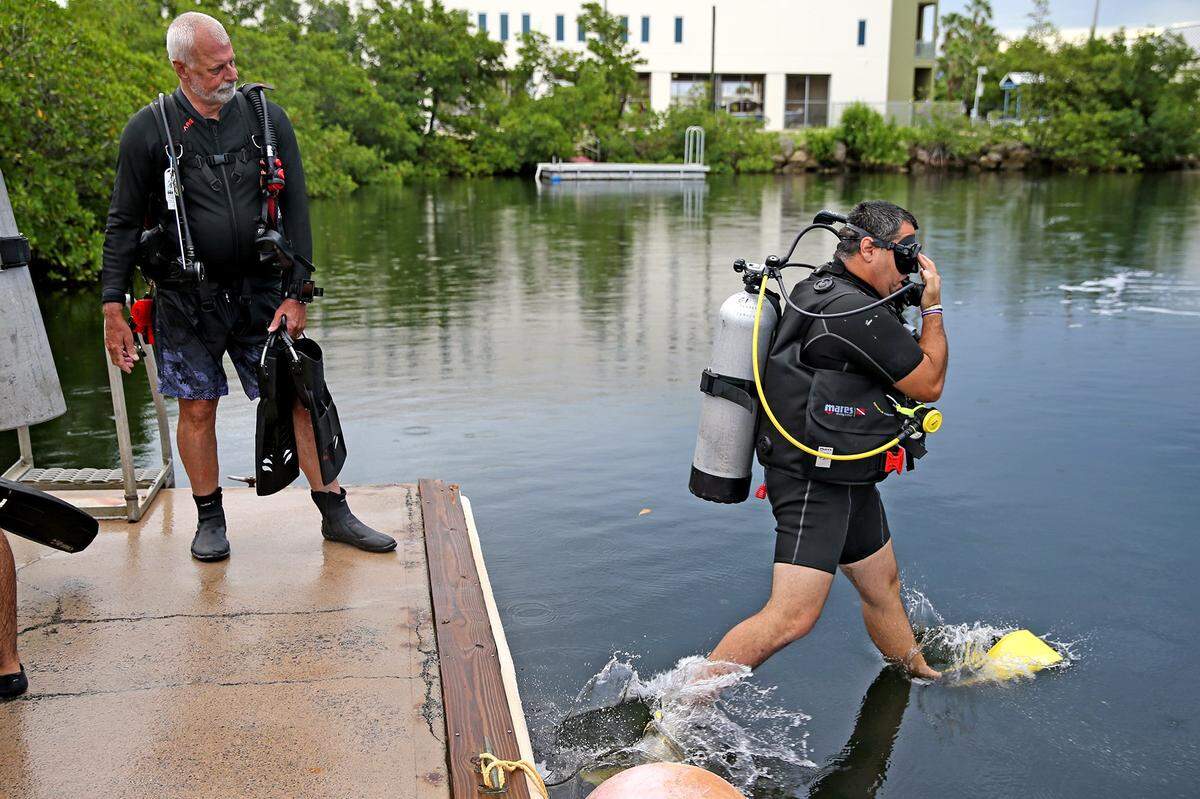
The Homestead resident was one of 12 veterans participating in a scuba diving certification course last month in Key West aimed at helping those who served with their physical and emotional injuries.
After a few days in the water, Proschko said he already noticed a difference.
“Things like this help you to quit isolating and come out of your shell and start living again,” he said. “It’s just the camaraderie, the people that you meet. It gets you out of your comfort zone. And gets you living again, as opposed to just being alive.”
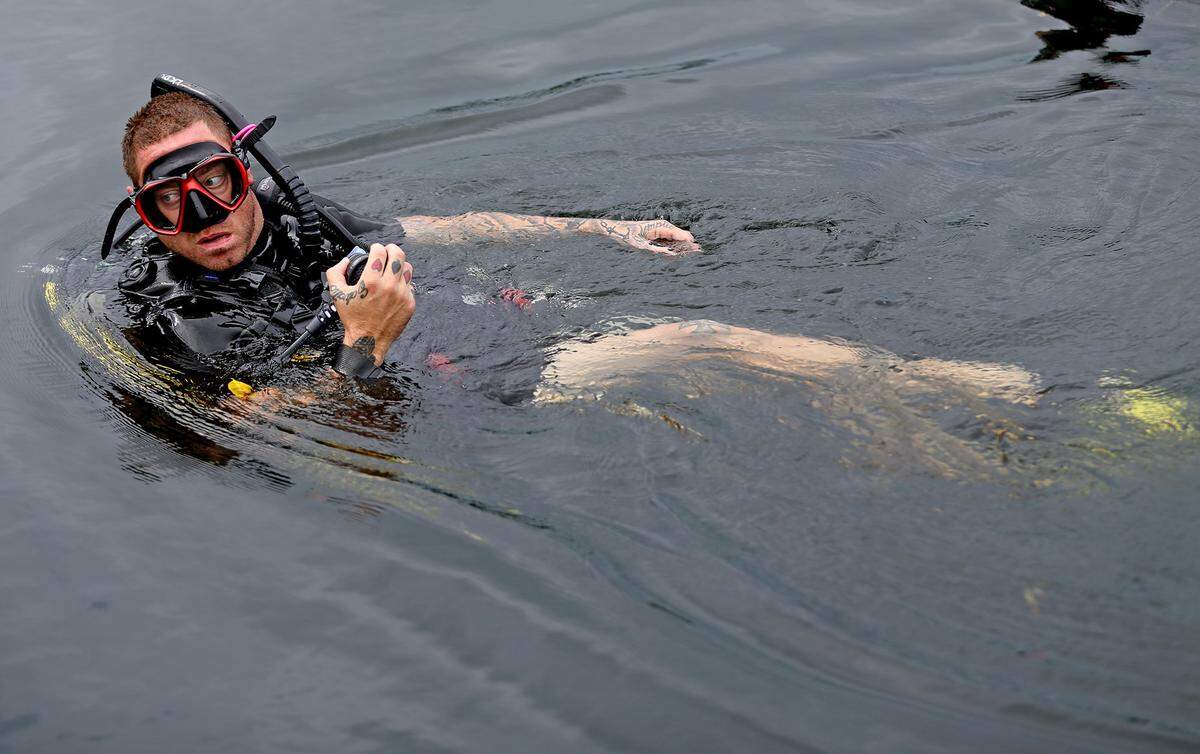
The program is run by a nonprofit out of Temecula, California, called WAVES, or Wounded American Veterans Experience Scuba.
Certified scuba instructor Steve Rubin started WAVES in 2012 after he heard about a friend of his son-in-law’s who was a Marine who lost both legs and injured a hand in combat in Afghanistan.
The man, John Schumacher, then 29, told Rubin he wanted to become certified to dive. Rubin agreed to teach him after obtaining additional certifications to instruct people with disabilities.
“We told John, ‘If you’re ready, we’re ready, you’re our guinea pig.’ He got in the water and liked it so much, he started talking to other people. Organically, it started to grow,” Rubin said.
In a two-year period, WAVES, one of several groups who train veterans as divers, had certified so many veterans for diving that Rubin and his wife, Barbara, filed paperwork to become a nonprofit in 2013.
“At the time, we were funding it out of our own pockets, but we were getting so many people applying, we realized we can’t support this. So, we started a nonprofit,” Barbara Rubin said.
Not only did most of the participants say learning to dive helped them live with their injuries, but diving is a buddy sport, so many brought along a spouse, friend or family member to learn with them.
“One of the things we learned from our first participant was his wife said there are a lot of activities for the wounded veterans, but the family stays at home,” she said. “So, we thought it was important to include families or a friend, service buddy, child or spouse.”
During one class this year, WAVES had a mother and son, a married couple and another couple engaged to be married.
“It’s a real good bonding experience, and it really helps them rely on each other,” Barbara said.
In the most recent group in the Keys, Vietnam veteran Richard Perez, 65, brought with him a young man from his Fort Lauderdale church.
“It’s an honor to hear their stories, what they’ve been through,” said Samuel Betancourt, 20. “It’s moving. We had a lot of fun together.”
Connecting with other veterans
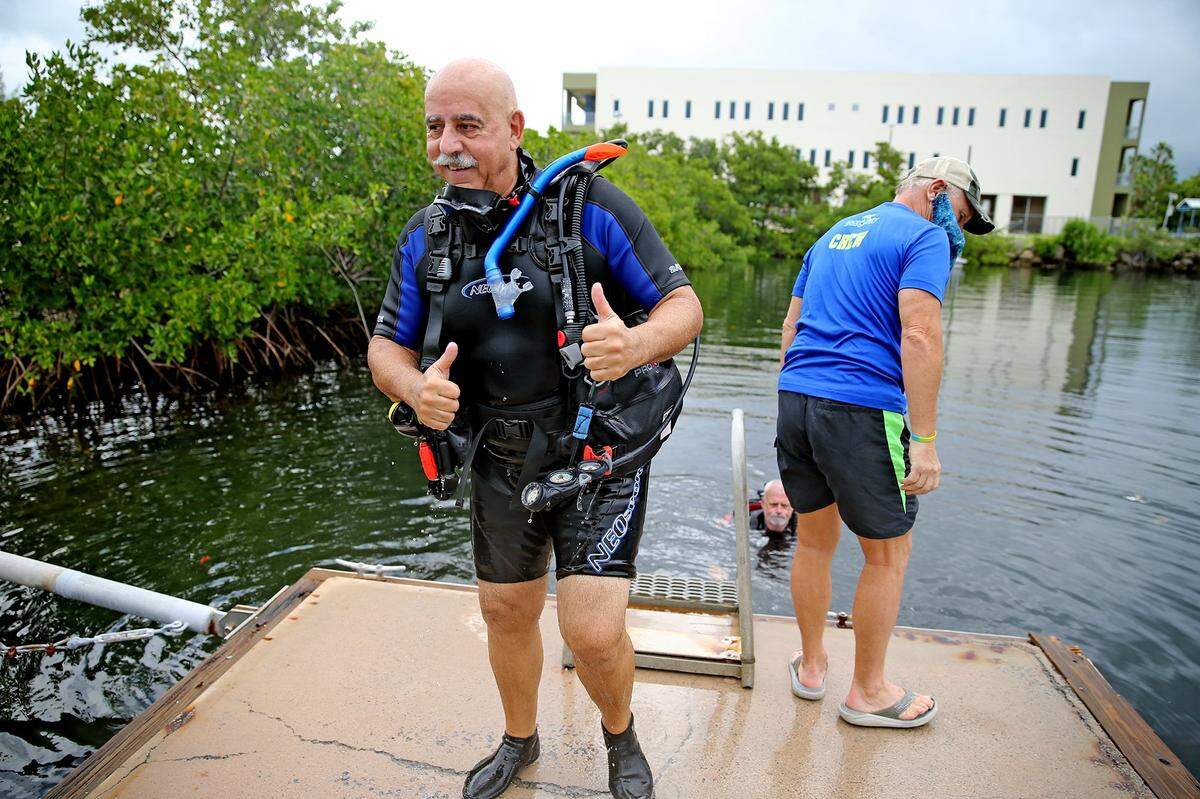
Perez left the Army in 1981 and said scuba diving has been the most meaningful time he’s had bonding with other veterans since becoming a civilian.
“It gives you the opportunity to reconnect with veterans,” Perez said. “I haven’t been able to do that. The camaraderie is awesome.”
The group traveled to the Keys in late October, but rainy and windy weather made it impossible to take them by boat to dive on the island chain’s coral reef, some of the most sought-after underwater scenery in the world.
But the College of the Florida Keys has a scuba program, and the Key West campus has a sheltered natural lagoon on site where the veterans could learn to dive.
The 40-foot deep lagoon has plenty of sights on the bottom to keep divers occupied, including a sunken boat, a sunken van and timbers from the wreck of the “Nuestra Senora de Atocha,” a Spanish galleon that sank off the Keys during a hurricane in 1622.
Keys dive instructor Kim Glessner said visibility in the lagoon can be limited, but that’s helpful for beginners.
“It is a good opportunity for them, because you’re not always going to have good visibility on the reef,” Glessner said.
Serving in the military is a dangerous occupation, even for those who’ve never been shot at.
According to a July report published by the Congressional Research Service, of the 17,645 active-duty service members who died between 2006 and 2020, only 26% were killed serving in combat operations. The rest died from accidents during training, suicides, illness or homicides in non-combat zones.
The report highlights that training for war is perilous for the body and mind.
Relaxation on the water
Travis Stout, 39, can tell you all about it.
He was an airborne infantry soldier, which means he spent his days making hard landings on the ground after parachuting from a plane. Although he never deployed overseas, Stout suffers physically from his time serving the country.
“I did a lot of jumps out of the bird,” he said. “A lot of impacts on the ground caused a lot of injuries. ... I have arthritis in my neck.”
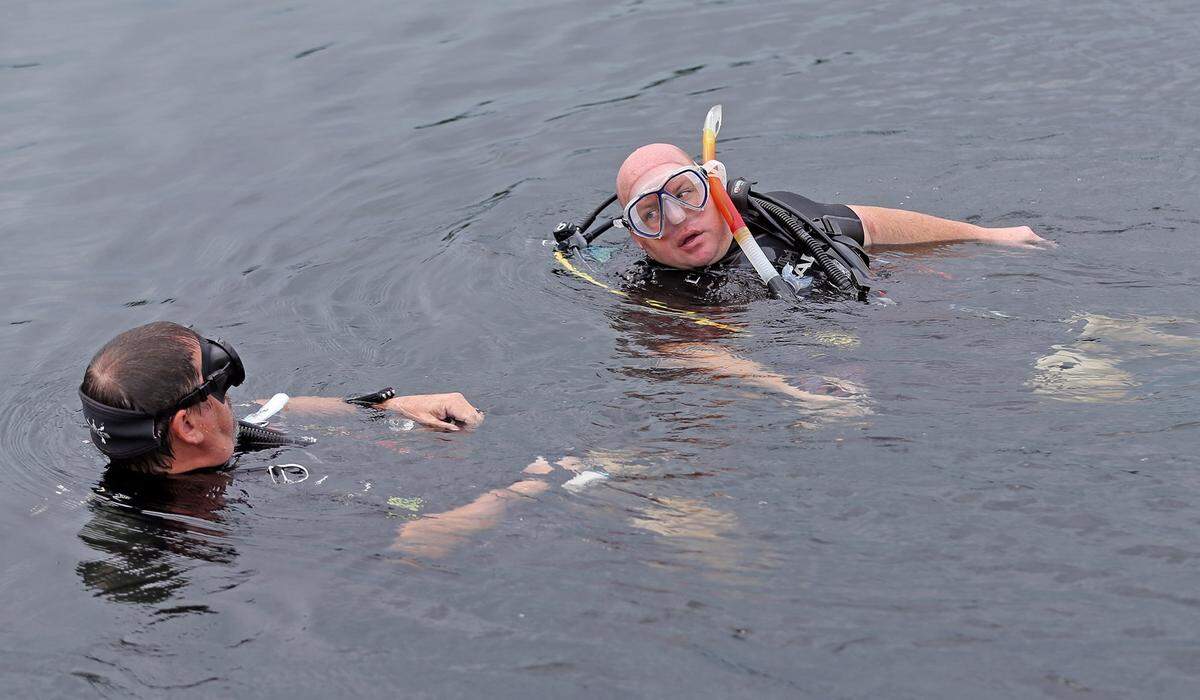
The pain from his injuries can be stressful, and he said diving with the group has made a difference.
“Getting out in the water is great for calming the mind. It’s relaxing,” Stout said. “It’s a great time to be with these guys too.”
Like Proschko, however, others in the group are contending with combat-related emotional and physical injuries.
Mauricio Valcarcel, 49, served in both the Army and the Air Force and was deployed multiple times, including one tour in the Iraqi city of Tikrit in 2004. The Coral Springs resident has post-traumatic stress and chronic pain. This was his first time scuba diving.
“I’ve never done it in my life, and I love it,” Valcarcel said. “I believe it will help me. Hopefully, it will help me.”
While the October session was in the Keys, WAVES trains new divers mostly off Southern California. The Rubins and Todd Thompson, a WAVES staff instructor, came to the Keys because so many veterans from Florida wrote to them about their interest in taking part.
Veterans who stick with diving also take part in projects WAVES conducts at national parks in coordination with the National Parks Service. Those have been put on hold this year because of COVID-19, Barbara said.
Certified more than 1,000 veterans in diving
WAVES will accept any veteran into the program who is approved by his or her physician for diving.
Since its inception, WAVES has certified more than 1,000 men and women in scuba. Barbara said they initially focused on those wounded in war, but began to realize the need was stronger in those suffering emotionally from what they experience in combat and in training incidents.
“When we first started, it was combat wounded, and we realized the biggest need was non-visible injuries, PTSD and anxiety and traumatic brain injuries,” Barbara said. “The majority, if they have any physical injury, they also have post-traumatic stress and anxiety disorder.”
Although the majority find the program helpful, diving can also cause added anxiety, especially among those who are prone to claustrophobia. But, for others, learning to breathe underwater has similar therapeutic effects to meditative conscious breathing.
“We had a veteran last week, who the diving intensified his anxiety and he quit,” Barbara said. “Normally, we start them in a pool, and they learn breathing underwater. The lack of sensory input and all they can hear underwater is their breathing, and it’s very calming.”
Thompson, 54, the instructor, has been with WAVES from the beginning and has witnessed the changes that diving has brought in the veterans.
“The very first class I taught, there was a young man who was really suffering from PTSD, and I saw the changes in him throughout the course. In the beginning, he wouldn’t even talk,” Thompson said.
“By the end, you couldn’t shut him up. He wanted to dive more and more and become a dive master. I saw it change his life, and I thought this is what I want to do forever.”
MORE on WAVES
For more information about the WAVES Project, go to www.wavesproject.org, or call 951-308-0049. Mailing address is 42225 Remington Ave., Suite 1-18, Temecula, CA 92590.