Cruising is on the ballot in Key West this year. Will voters reject big ships?
Cruising is on the ballot this year in Key West, where voters have a say in how the island city does business with the industry that brought 1 million visitors in 2019.
If the three cruise-related referendums are passed and enacted, they would dramatically cut the number of cruise ships allowed to dock, impacting business of cruise companies already battered by the COVID-19 pandemic.
The questions up for vote:
▪ Should the city cap the number of daily cruise ship visitors at 1,500?
▪ Should the city prohibit ships with a capacity of more than 1,300 people from docking?
▪ And should the city give priority to ships with “the best environmental and health records”?
Other destinations have sought to limit cruise ship capacity. Italy banned cruise ships from Venice’s historic center last year after the MSC Opera crashed into a wharf and tourist boat there. The mayor of Dubrovnik, Croatia, capped the number of cruise ships to two per day in 2018.
On one side is a group of local activists who want the city to turn away mega ships they say are responsible for spreading COVID-19 and damage to a fragile environment.
On the other side is the industry itself and local business owners who sell goods to cruise passengers during the few hours they spend on land, in an economy largely dependent on tourism.
The referendums already have survived legal challenges from local harbor pilots and also the Walsh family of Delray Beach, who owns Pier B, the only private cruise pier in Florida, one of three cruise piers in Key West.

Costs and benefits
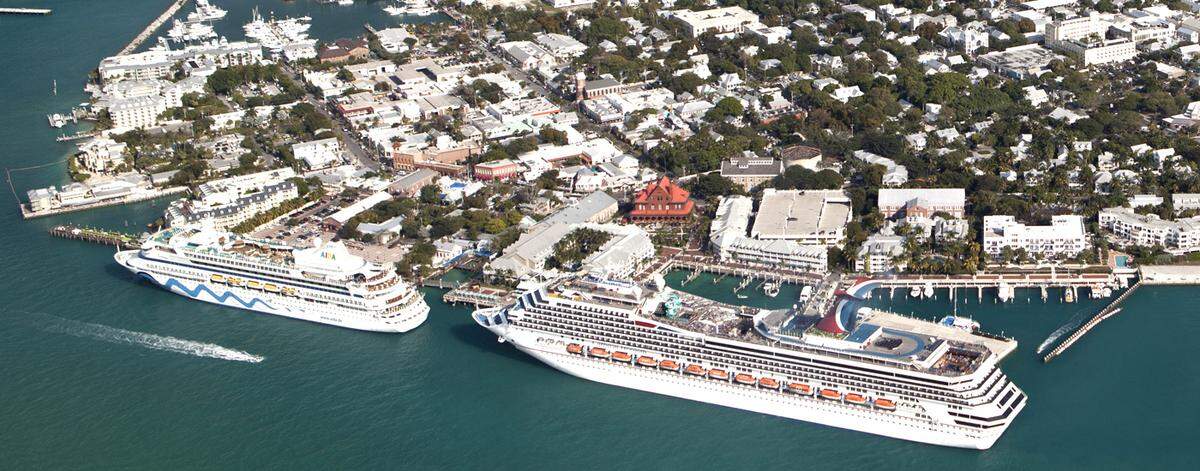
Cruise ships brought nearly a million passengers to Key West in 2019, accounting for about half of all tourists to visit the island.
Opponents of the referendums say the city will lose out on an important revenue stream if the number of cruise passengers plunges. Greg Sullivan, president of the Key West Chamber of Commerce, told a local weekly newspaper that if the referendums pass, Key West will lose “tens of millions of dollars in cruise ship revenues” and is already making plans to eliminate police and fire positions.
But nearly all of the money the city earns from cruise passenger fees — $10 from those who arrive at the public piers, Mallory Square and Outer Mole, and $2.50 from those who arrive at the private cruise pier, Pier B — goes back into supporting the industry through infrastructure expenses.
The fees from passengers amounted to $5.9 million in 2019, according to the city’s finance department. The largest line items for the city were $1.4 million to transport passengers from the Outer Mole pier to downtown and paid the Navy $1.1 million for the use of the pier, on top of $1.4 million in personnel services and construction costs. City manager Greg Veliz said as much as $2 million more comes in indirect expenditures — including part of his salary, the finance department, and others.
A 2018 study by Raftelis Financial Consultants determined that the city made $91,000 from the fees after expenses.
“We are at a break even point,” said Port and Marine Services Director Doug Bradshaw in an email.
“Every dollar goes back into supporting the industry,” said Key West Mayor Teri Johnston, who supported the referendums during her recent campaign. “Docks, security, all those types of things. Not one dollar goes into the general fund.”
But city revenues aren’t the whole story. Proponents of capping the number of passengers say spending at local stores and restaurants is minimal, citing a 2005 study commissioned by the city of Key West and the U.S. Navy that found the average cruise passengers spends around $32 — $43 today with inflation. That would result in $43 million for local merchants; $645,000 of that goes to county sales tax.
In 2018, the two million visitors to Key West spent $1.1 billion, according to a study for Monroe County’s Tourist Development Council — with more than $1 billion coming from land-based visitors.
Cruise ship passengers may not sink as much cash into the island as overnight hotel guests, but they sometimes come back for longer stays, opponents of the referendums say.
“It’s going to remove what’s been a free advertisement for this city that has undoubtedly resulted in follow-up business from overnight travelers,” said Scott Atwell, the vice president and CEO of the Key West Chamber of Commerce. “It would hurt Key West economically, the city of Key West and the working people.”
Some small business owners say they depend on the cruise ship foot traffic and will vote no on the two questions seeking to cut the number of passenger arrivals.
“The folks that petitioned for this kind of took advantage of a crisis and fear and as a result, it’s going to hurt a lot of people,” said John Smotryski, who owns a Duval Street ice cream shop called Wicked Lick.
Smotryski has been able to keep his business afloat but worries he won’t get back to where he was before the pandemic unless cruisers return. He believes the cruise ship limits will pass Nov. 3. In preparation, he’s working out a plan to run his business with fewer employees. Including Smotryski, the shop employs five.
“It’s a big part of my business,” Smotryski said of the cruise ship passengers.
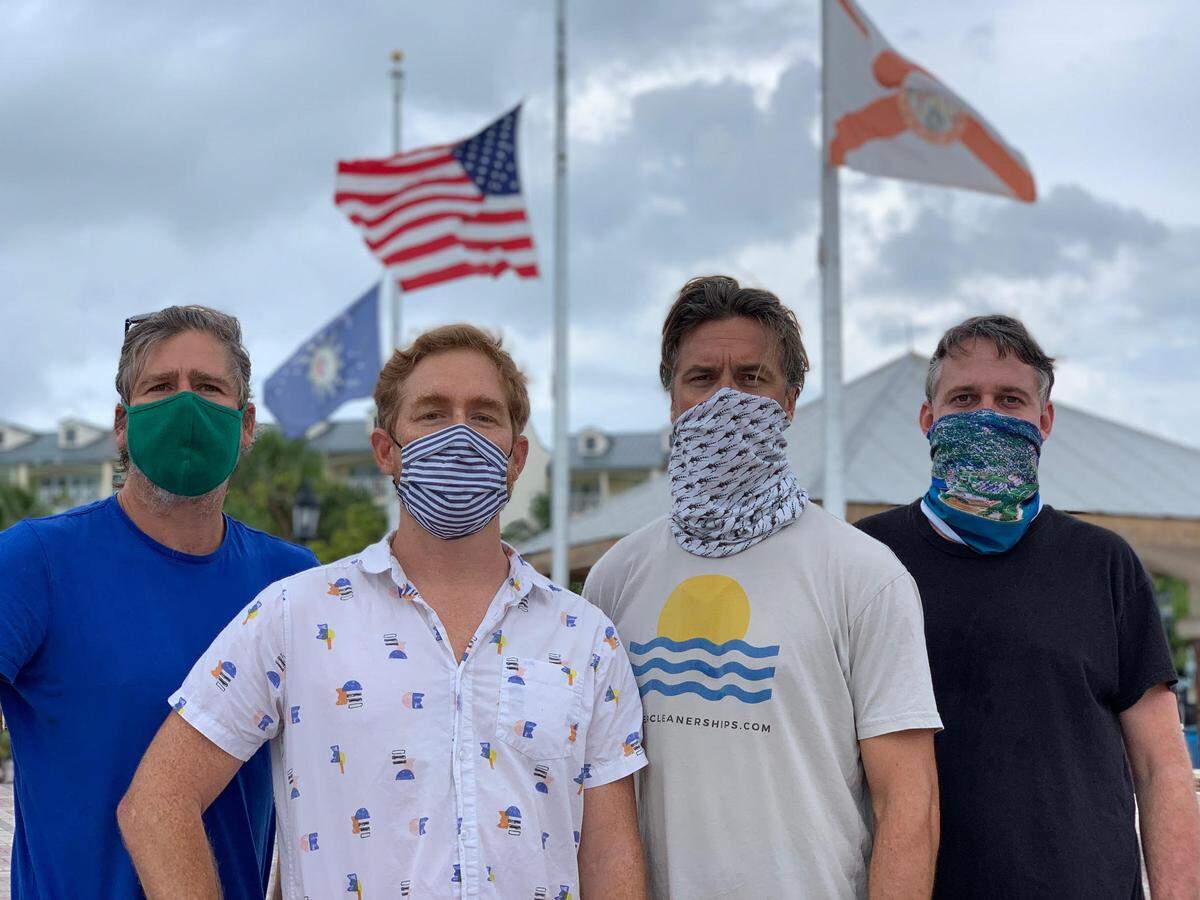
Cruise ship traffic from big ships also comes at a health and environmental cost that outweighs any economic benefits, according to the group behind the referendums, Key West Committee for Safer, Cleaner Ships. Top concerns for the group are the spread of COVID-19, which has affected at least 87 cruise ships, 34% of the global cruise fleet, according to a Miami Herald investigation, and damage to water quality and marine environments by silt plumes and discarded waste from ships.
Key West has not had any cruise traffic since the COVID-19 pandemic paralyzed the industry in mid-March. The current ban on U.S. cruises put in place by the CDC is set to expire Oct. 31.
The group prefers smaller ships from luxury brands Regent Seven Seas (owned by Norwegian Cruise Line Holdings), Silversea and Azamara (owned by Royal Caribbean Group), and Seabourn (owned by Carnival Corporation) to call in Key West instead of their larger counterparts. But those decisions are up to the individual lines. In fiscal year 2019, these lines visited Key West and were planning on calling there in 2021, according to court documents.
“This is a positive economic step to replace these large cruise ships with a smaller class of ships that fit in better with our tourism,” said Arlo Haskell, a member of the group.
Not the first cruise vote
The cruise ship showdown isn’t new to Key West.
In 2013, voters overwhelmingly shot down a proposal to ask the U.S. Army Corps of Engineers to study possibly dredging the harbor to make way for larger cruise ships. The vote was 74 percent against the idea.
But this time, the vote is about greatly reducing the number of cruise ship passengers and influencing which ships are allowed to dock.
Of the 50 ships that came to Key West in fiscal year 2019, only 10 would have met the size criteria of the referendums, according to an analysis of port data.
“That’s drastic,” said Bill Lay, who owns two Italian restaurants in Key West and has become a spokesperson for those who want voters to reject the referendums.
“It’s almost a ban,” Lay said. “We’re already in a position where people are losing jobs. Why are you going to add salt to a wound?”
The third referendum, about prioritizing ships with the best health and environmental records, may prove elusive in practice. The U.S. Centers for Disease Control and Prevention is tracking COVID-19 infections on cruise ships in U.S. waters and providing public scores for ships based on their infection level. But there is no such oversight and public tracking of environmental violations.
If passed, the city is sure to face lawsuits from the Walsh family, which owns Pier B at the Margaritaville Resort downtown. Mark Walsh, owner of Pier B Development Corp., and his lawyer did not respond to requests for comment.
Pier B Development has already sued Keys officials, trying to have the cruise ship referendums removed from the ballot. They started, with the Key West Bar Pilots Association, in federal court in July and then went to state court.
U.S. District Court Judge James Lawrence King in August dismissed the federal suit, ruling the plaintiffs couldn’t demonstrate they were suffering harm from the questions being on the ballot.
“I’m trying not to address the merits of the claims,” King said on Aug. 12 after a lengthy hearing on the ballot issue. “They don’t necessarily fail; they just fail today.”
So far, all attempts have failed, but one is looming at the Monroe County Courthouse.
Circuit Judge Bonnie Helms denied Pier B’s motion to stop the referendums. But last week, she paved the way for a trial to happen should cruise ships resume sailing and the referendums pass.
Cruises could resume as soon as Nov. 1 after a hiatus of 7 1/2 months when the CDC’s no-sail order expires. The CDC planned to ban cruising in U.S. waters through February 2021, but was overruled by the White House.
Carnival Corporation, Royal Caribbean Group, and Norwegian Cruise Line Holdings — the three largest cruise companies in the world — all visited Key West in 2019. The newest cruise company to the market, Virgin Voyages, which had to scrap the Miami launch of its first ship this year due to COVID-19, is selling Miami cruises with calls in Key West for as early as Dec. 2. A spokesperson for Virgin didn’t respond to a request for comment about how the referendums would affect business.
A newly formed group of around two dozen port city activists from around the world will be closely watching the election results from Key West to see if this kind of referendum can be used as a model to curb cruise traffic elsewhere.
“We support Safer Cleaner Ships’ ballot initiative 100% and see it as a test of democracy,” said Karla Hart, a member of the Global Cruise Activist Network, based in Alaska. “Port communities have an inalienable right to determine the size and number of cruise ships that visit their town.”
This article has been updated to clarify costs associated with cruise ship arrivals.
This story was originally published October 5, 2020 at 1:14 PM.
%20Cropped%20(1).jpg)