
The Florida Keys are reopening to tourists. Will the island chain be ready for business?
In two weeks, the two Florida Keys checkpoints that keep out tourists are expected to come down.
Will the open road lead to a rush of visitors antsy to leave their homes after months in quarantine? Will any crowd be mostly day-trippers? Or long-term, overnight guests? Do tourists even have the cash they had before the COVID-19 pandemic for a stay in an expensive paradise?
Those answers won’t come until June 1.
But Keys hospitality leaders don’t envision hordes of tourists arriving then, with many in Florida out of work or just not ready for a trip quite yet.
“We’re not expecting huge crowds of people,” said Jodi Weinhofer, president of the Lodging Association of the Florida Keys and Key West. “And it will be limited to 50 percent. Anywhere you look where they’ve reopened, they’re not inundated with people.”
Safety and cleanliness are now the new buzzwords in travel, Weinhofer said. Hotels and inns once cleaned while guests were out of their rooms. Now, hotels will be cleaning all the time, no matter who’s watching.
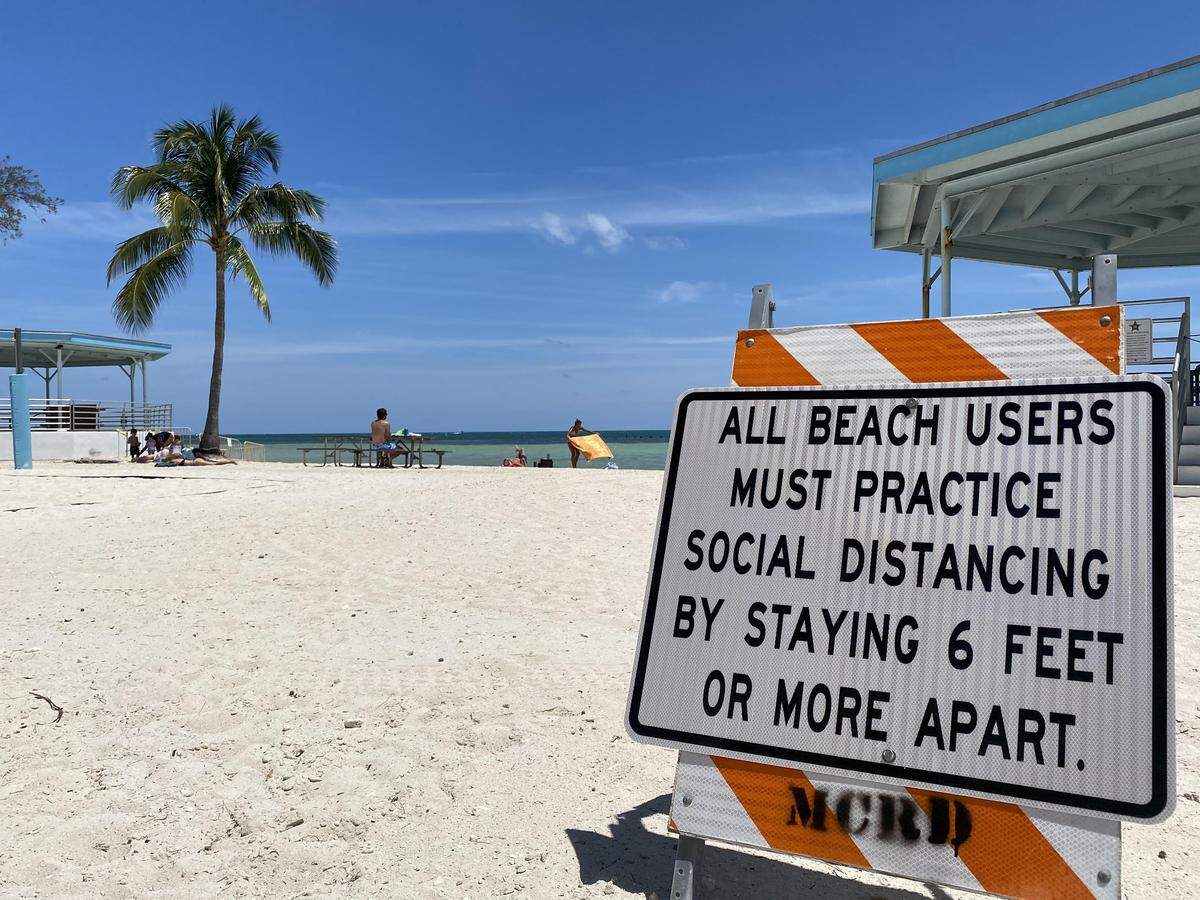
“People are going to have to feel safe and then they will want to travel,” Weinhofer said. “Hygiene is going to be the new service and luxury. We’re now going to clean in front of people and communicate just how sanitized we’re making properties.”
Others see June 1 as the Keys’ big moment to at least start making some money again.
Key West will be ready, said City Manager Greg Veliz, who wasn’t surprised by Monroe County’s Sunday night announcement that hotels and other lodgings have the go-ahead to reopen to tourists at 50 percent capacity in two weeks.
“I knew those roadblocks weren’t long for this world,” Veliz said.
Even ripped-up streets will be ready to roll. The repaving and reconstruction of an empty and tourist-less Duval Street is set for completion by the end of this week, said city spokeswoman Alyson Crean. All that’s needed is new striping.
“The asphalt has to cure for a couple weeks before the striping can be applied,” Crean said.
Key West will do as well as can be expected come June 1, business leaders say.
“There is pent-up demand and I think we will have a moderately successful start, but we won’t be overrun,” said Scott Atwell, executive vice president and CEO of the Key West Chamber of Commerce. “Whatever success we have at the beginning of June, there is still much concern about the tourism industry both short and long term.”
Retail stores and restaurants, operating with under-capacity rules, reopened this month for locals only.
The two roadblocks in the Upper Keys were a major part of Monroe County’s strategy to stop the spread of the novel coronavirus into the Keys, and they appeared to have worked. While Keys cases of COVID-19 continue to rise, almost all who proved ill over the past two weeks live or work in the same nursing home in Plantation Key.
According to the latest numbers from the Florida Department of Health, about 100 people in the county have tested positive, three have died since March and no one is currently hospitalized.
That represents a fraction of the positive cases and deaths seen in neighboring counties like Miami-Dade and Broward.
Monroe’s two major hospitals have taken down their coronavirus intake tents, and Bob Eadie, administrator for the Department of Health in Monroe County, said the virus appears to be under control in the Keys.
“We don’t see very much active infections within Monroe County,” Eadie said Monday morning.
County leaders said when the checkpoints come down, lodging establishments, including hotels, vacation rentals and campgrounds, can open up at 50 percent of their capacity.
The reopening announcement came on the eve of when Gov. Ron DeSantis’ order allowing restaurants and gyms at 50 percent capacity went into effect.
While there haven’t been tourists in the Keys since March, business leaders say they have been busier than ever preparing for their return.
The Upper Keys business community is looking forward to welcoming them back and is “moving methodically toward the June 1 opening,” said Elizabeth Moscynski, president of the Key Largo Chamber of Commerce.
She said a big part of that is building confidence among visitors that Monroe is a safe destination and owners have taken the proper steps to keep their customers healthy.
“We must protect the health and safety of our community, the employees as well as our visitors,” Moscynski said. “You get there by ensuring the protocols for hygiene, cleanliness, social distancing and personal hygiene protection are the No. 1 priority.”
Judy Hull, director of the Islamorada Chamber of Commerce agreed, noting health experts caution that while Keys cases have not spiked like other places in the rest of the state, including next-door neighbor Miami-Dade County, the virus is not over.
“We are opening, but the virus is not gone,” Hull said. “We have to make sure we have the right protective measures in place so we can live safely with it among us.”
It’s an important concern. Kristen Livengood, Monroe County’s spokeswoman, said the duration of the reopening is subject to change and reversal based on the results of a planned increase in testing and contact tracing, as well as efforts of neighboring counties to control the transmission of the virus in their respective areas.
“Should the Florida Keys experience an increase in cases and under the advisement of the Florida Department of Health, restrictions may be heightened and/or amenities may again be closed,” Livengood said in a statement.
With hotels and other lodging establishments only able to open at 50 percent capacity, community leaders don’t expect a flood of tourists looking to stay overnight.
Similar to hurricane aftermaths, the Keys likely lost a significant portion of its workforce to serve tourists when hotels, vacation rentals and bars and restaurants fully reopen, although experts say predicting the precise number of people who left is premature.
The University of Florida’s Bureau of Economic and Business Research conducted a study in September 2018 that concluded nearly 4 percent of the Keys population left and never returned after the Category 4 Hurricane Irma ravaged the archipelago a year earlier.
The population went from about 77,000 people to just under 74,000, according to the study.
Stefan Rayer, population program director for the UF study group, said this week that the impact of the pandemic on the Keys’ workforce is a long way off from being determined.
“We just started working on our state and local population estimates for April 1, 2020,” Rayer said in an email. “Most of the population change over the past year happened before COVID-19; consequently, the pandemic should have a very limited impact on those estimates.”
He doesn’t anticipate the effects of the pandemic on the Keys population will be noticable for about another year.
“Our next series of population projections for counties won’t come out before spring 2021,” Rayer said. “By then, we should have a better picture of the impacts on growth.”
This story was originally published May 19, 2020 at 8:38 AM.

%20Cropped%20(1).jpg)