
He's serving time for a murder-for-hire plot. He may have only been the middleman.
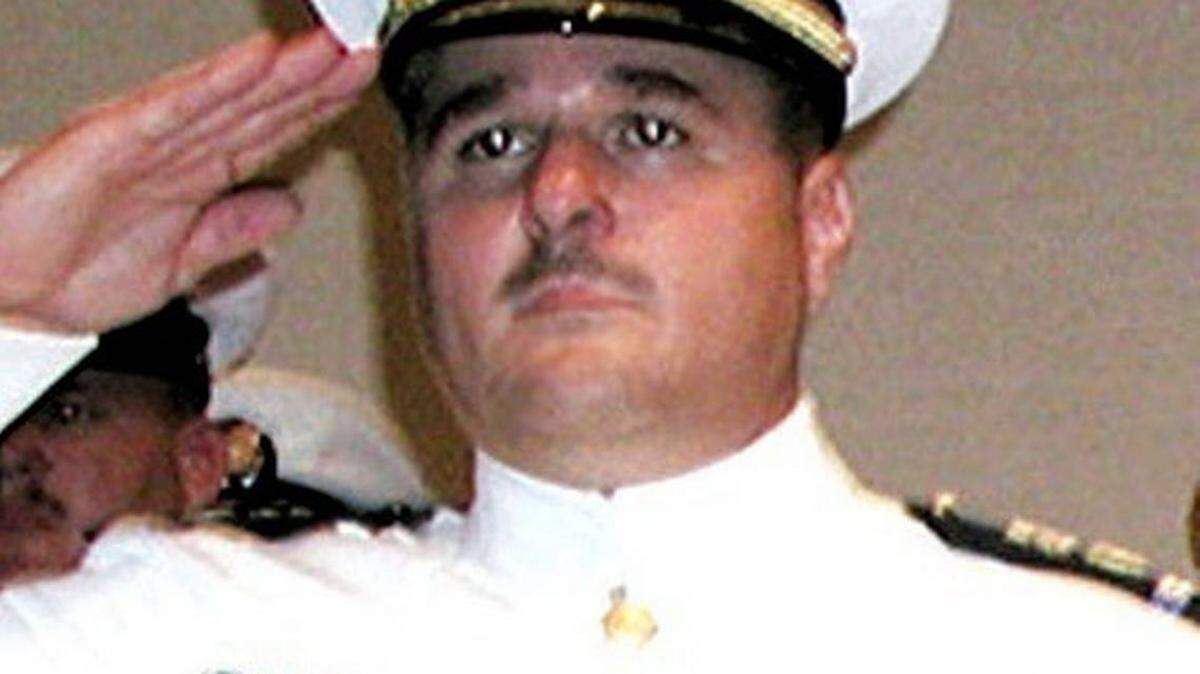
In 2014, a decorated retired U.S. Coast Guard warrant officer who once commanded Coast Guard Station Islamorada pleaded guilty to a murder-for-hire plot to kill a Marathon businessman.
The FBI this week released portions of previously redacted transcripts of recorded conversations between Dennis Zecca and the man he hired to pull the trigger, who has never been named by law enforcement officials.
The transcripts were released as part of an ongoing civil suit related to the case. These conversations, however, mention the name of a well-known Marathon businessman and strengthen the suspicion held by some in law enforcement that Zecca was a middleman in the attempted hit, and not the one who ordered it.
Zecca, 57, who retired from the Coast Guard as a chief warrant officer in 2006, paid a man in December 2012 to kill Bruce Schmitt, a real estate representative.
But the man Zecca hired, who worked for him at the Marathon Marina and Boat Yard, which Zecca managed and partly owned, was an informant with the Drug Enforcement Administration.
The agency was working on a multi-kilogram cocaine smuggling sting against Zecca.
The informant told his DEA handlers that Zecca commissioned him to assassinate Schmitt. The DEA alerted the FBI, and the FBI told Schmitt, which arranged a bogus hit in which Schmitt was photographed in a pool of fake blood. After staging the scene, the FBI told Schmitt to leave the country for his own safety. He spent almost a year in Costa Rica.
The informant showed Zecca the photo of the "dead" Schmitt on Dec. 21, 2012. In a recorded conversation that happened that day, Zecca made clear he wasn't the one funding the hit, and he had to get the money from the ones who did. The transcript of that conversation was released this week.
"I gotta go get it," Zecca said, according to the transcript.
The informant was offered his choice of either $20,000 in cash or a kilo of cocaine.
"I haven't even talked to these people yet that it's done. I haven't even said nothing to nobody," Zecca told the informant.
The informant asked, "Who, Ralph?"
Zecca replied, "It ain't Ralph. I gotta go to Ralph's people."
Ralph, Schmitt's attorneys say, is Ralph Lucignano, the politically connected owner of Marathon Liquor and Deli, who lobbied the Marathon City Council to vote against both Publix and Walgreens liquor stores.
Schmitt and his brother, Brian Schmitt, had clients like Publix and Walgreens, looking to sell beer, wine and liquor in Marathon.
Lucignano backed a 2006 ordinance prohibiting two establishments that sell booze from operating within 1,500 feet of each other.
That ordinance, known as the "1,500 foot rule," was repealed in 2014.
"Lucignano repeatedly told the Schmitts that his own liquor store could not compete if a chain like Publix or Walgreens moved to Marathon, explaining that a chain could sell liquor cheaper than Lucignano could buy it from his distributor," Laurence Kellogg, Schmitt's attorney, wrote in an amended complaint this week against Lucignano.
The original complaint was filed in Monroe County Circuit Court in November 2016 against Zecca and "John Doe1" and "John Doe2."
The amended complaint now states Lucignano is John Doe1, and the filing added a John Doe3. Schmitt, who declined to comment on the specifics of the lawsuit, is hoping to find the identities of the remaining John Does.
Lucignano did not return two calls seeking comment left at his business and a message left on his cellphone voicemail.
In 2010, when Walgreens submitted a beer, wine and liquor application, Lucignano recruited local people of influence to oppose it, according to the complaint. Lucignano also sent a then-county commissioner to "shake down" the Schmitt brothers, saying he'd withdraw his opposition to the application in exchange for a large sum of money, Kellogg wrote in the complaint.
The former commissioner, Mario DiGennaro, who also served as Monroe County mayor, denies the narrative.
"That's not correct. They came to me," he said of the Schmitts. "I tried to get these guys to work together."
As far as the plot against Schmitt, DiGennaro said, "I know nothing about it. These guys were always fighting for years. They always had disagreements."
The transcripts released this week also reveal that while Schmitt was targeted by Zecca and his co-conspirators, they were not prepared for the swiftness with which the crime was committed or where it took place.
Zecca wanted Schmitt dead but, according to the transcripts, he preferred the murder did not happen in Marathon.
"Listen, you got my word," Zecca told the informant when he asked about being paid for the job. "But this thing here, I didn't want it to happen in this town, 'cause it's gonna put a lot of heat on us."
When Zecca left the meeting to get the money to pay the informant, FBI agents arrested him before he met with the money men. The men Schmitt says are behind the plot were never charged. The United States Attorney's Office, which prosecutes federal cases, has never commented on why, to them, the case started and ended with Zecca, despite transcripts that more than suggest otherwise.
In 2014, Zecca agreed to plead guilty to attempted murder-for-hire and federal prosecutors dropped cocaine smuggling charges that could have landed him in federal prison for life. Now he's already almost halfway through a 10-year sentence in a low security federal prison.
In agreeing to the plea, federal prosecutors closed the book on a criminal case into possible co-conspirators, who some in law enforcement — and the victim of the attempted murder — believe were not only involved in the crime, but behind it.
The U.S. Attorney's Office did not immediately respond to questions about why it never charged anyone else in the plot.
Schmitt's attorneys deposed Zecca in May 2017, asking him who put him up to hire the hit man. He took refuge in the Fifth Amendment's protection against self incrimination 50 times.
Even if the State Attorney's Office were to open its own investigation into the case, the statute of limitations for attempted murder in Florida is four years, said Monroe County State Attorney Dennis Ward, whose office last year began looking into bringing state charges in the case.
"It's too bad the statute of limitations is up," Ward said this week after learning about the unredacted transcripts.
Follow David Goodhue on Twitter @DavidGoodhue
This story was originally published July 5, 2018 at 3:20 PM.