
Keys mammal trainers try to help save California sea lions
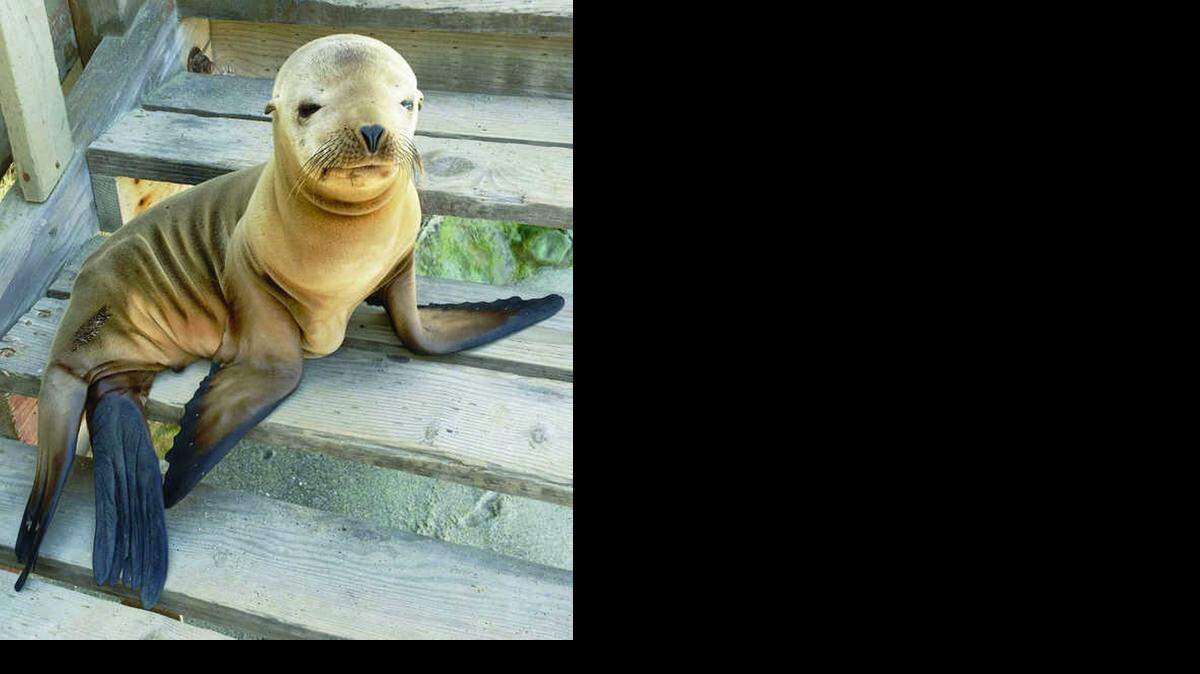
Theater of the Sea, an Upper Keys marine mammal park, is donating its talent and money to help deal with an ecological crisis in California where thousands of baby sea lions are stranding and dying in their quest for food.
Theories abound as to why, but the pups' moms are traveling farther and days longer than normal to hunt for fish in unprecedented numbers.
“It's prey-related, but the reasons for this are speculative for now," said Amy Wise, a sea lion trainer at Islamorada's Theater of the Sea. Wise, 28, recently returned from Laguna Beach, Calif., where she helped staff at the Pacific Marine Mammal Center rehabilitate young sea lions and return them to the wild.
In January and February, California sea lion strandings are almost 20 times more than the average rate, according to the National Marine Fisheries Service. Scientists and volunteers are trying to save as many as they can, but many are in such bad shape when they're found that they can't be helped.
Since December, more than 2,000 sea lions, mostly pups, have stranded on California beaches. By contrast, during the same time frame in 2004, about 36 sea lions were found stranded.
The animals found this year are starving, dehydrated, emaciated and diseased. The pups are in the first few months of their lives and completely dependent on mom to feed them. When the typical one-to-two-day hunting trips turn into eight or nine days, the hungry pups wander off looking for something to eat.
"They shouldn't be away from their moms this long at this point in their lives," said Andi Kimbrel, Wise's colleague at Theater of the Sea. "For one reason or another, the moms are not coming back."
Kimbrel, 31, worked with staff and volunteers at the Marine Mammal Center in Sausalito, Calif. Theater of the Sea, at mile marker 83 in the Keys, is sending two more trainers — Allison Collins and Katia Kovacic — in the coming months to help overwhelmed staff and volunteers in California. Curator Beverly Osborne suggested the park send its trainers, and owner P.F. "Kenny" McKenney Jr. paid for Kimbrel's and Wise's airfare, lodgings, transportation and meals while they were in California.
Another odd aspect of this situation, which federal scientists are labeling an "unusual mortality event," is some of the places the young sea lions are being found. Kimbrel said one pup was found 100 miles inshore.
"They have no idea how he got there," she said.
One of the pups Wise worked to rehabilitate was found on a playground sliding board.
"They're just trying to get warm, basically," she said.
Sea lions give birth in the summer in large rookeries on offshore islands along California and Baja Mexico. So most of the pups being found now were probably about 5 months old when they went out on their own, or about six months earlier than they would normally stop nursing.
"They would be at the weaning stage at this point," Kimbrel said.
When the sea lions are brought into the facilities, they are usually so dehydrated that the first thing they need is electrolytes. Then, facilities staff and volunteers feed them a fish mash before moving on to whole fish.
Before the animals can be released back into the ocean, Wise said they must be able to compete with the other sea lions for fish. A key component is to get them to stop associating the people caring for them with food, and to stop relying on them.
Wise said this is ultimately accomplished by the people feeding the animals standing behind wooden boards so the pups don't see them.
One theory federal scientists are looking into about what is causing sea lion mothers to go farther out to sea in search of food is a warmer-than-usual offshore current this year. In early March, the National Oceanic and Atmospheric Administration, the National Marine Fisheries Service's parent agency, declared the onset of an El Nino, which causes even warmer ocean water temperatures.
According to a NMFS fact sheet on the strandings, "Historically, El Nino years have resulted in high numbers of marine mammal strandings, likely die to changes in prey availability and increased physiologic stress on the animals."
How to help
Anyone who wants to donate time, money or supplies can contact:
▪ National Marine Mammal Foundation (www.nmmf.org).
▪ Marine Mammal Care Center, San Pedro. (www.marinemammalcare.org).
▪ Pacific Marine Mammal Center, Laguna Beach (www.pacificmmc.org).
▪ Channel Islands Marine & Wildlife Institute
▪ Santa Barbara (www.cimwi.org).
▪ The Marine Mammal Center, Sausalito (www.marinemammalcenter.org).
This story was originally published April 10, 2015 at 9:54 PM with the headline "Keys mammal trainers try to help save California sea lions."