
It’s time to remember MLK’s words on judging people by the content of their character

Growing up as a child in the Jim Crow era, there were a lot of things I didn’t understand — like why eating fried chicken, and really, really liking watermelon, was a Negro thing. When I was told this, I remember thinking: “White people don’t know what they are missing.”
As I grew up, I realized that those were simply stereotypes. When I was a child, we ate fried chicken because it was a great Sunday dinner dish, and it was cheap. Fried chicken was always on the Sunday menu, especially when the preacher came to dinner after church. And watermelon was a great summertime treat. As a child, I couldn’t get enough of either.
Recently Mae Whitman, my friend of 71 years, and I were talking about how customs have changed. We agreed that some foods we grew up on were often considered throwaways to the white people our mothers worked for. We never heard of a white family eating oxtails or chitlins or chicken wings. And we thought only Negro children craved watermelon.
“Growing up, I learned to love chicken wings,” Whitman said. “That’s because when the preacher came to dinner, he got the choice pieces of the bird. Back then, nobody wanted the wing, not even most blacks. But we learned how to take the lowly wing and make it delicious. Now, chicken wings are a delicacy.”
“We used to take the cheapest cut of meat and build a feast around it, because that was all we had,” Whitman said.
“And don’t mention watermelon. They took our summertime favorite and made smoothies, or chopped them up in fruit salads and put them on the produce shelves in the grocery store, so that you can’t afford to buy. We [blacks] ain’t got nothing left,” she said, laughing.
As we laughed and talked, I told Whitman about the time when my younger son Shawn went grocery shopping with me. He was about 5 at the time, and spotted another little boy about his age, who was white.
They struck up a playful friendship, running down the aisles playing tag, while I, and the other little boy’s mom, shopped. They were having innocent fun until we got to the produce department and the little white boy stopped in front of the watermelon display and shouted to Shawn, “Hey! Why don’t you get one of these… You people eat them, don’t you?
His mom heard him, and with a flash grabbed his arm and literally dragged him out of the produce department.
I will never forget the puzzled look on the child’s face, nor the look of bewilderment on Shawn’s face. It was a hard job to try to explain to a small child what had just happened. The little boy didn’t know he had made a racist remark. He only spoke what he had heard his parents say — perhaps in a “Negro Joke.” I have often wondered how that mother explained her action to her child.
I wondered if she had ever tasted a slice of good, old cold watermelon on a hot summer’s day. If she had, she’d know that Negros weren’t the only people who knew the value of the great, satisfying fruit.
Today, though, lots of people eat chicken wings and oxtails and watermelon, regardless of their ethnicity. And it’s a good thing, too. People shouldn’t be judged by the food they eat, or the type of clothes they wear. They shouldn’t be judged by the color of their skin or the texture of their hair.
In the words of Dr. Martin Luther King Jr, people should be judged only by the content of their character.
Belen graduate ordained as priest
A warm Neighbors in Religion salute to Julio Minsal-Ruiz, a native Miamian and an alumnus of Belen Jesuit Preparatory School, who was ordained to the priesthood on Jan. 11 at Gesu Catholic Church in downtown Miami.
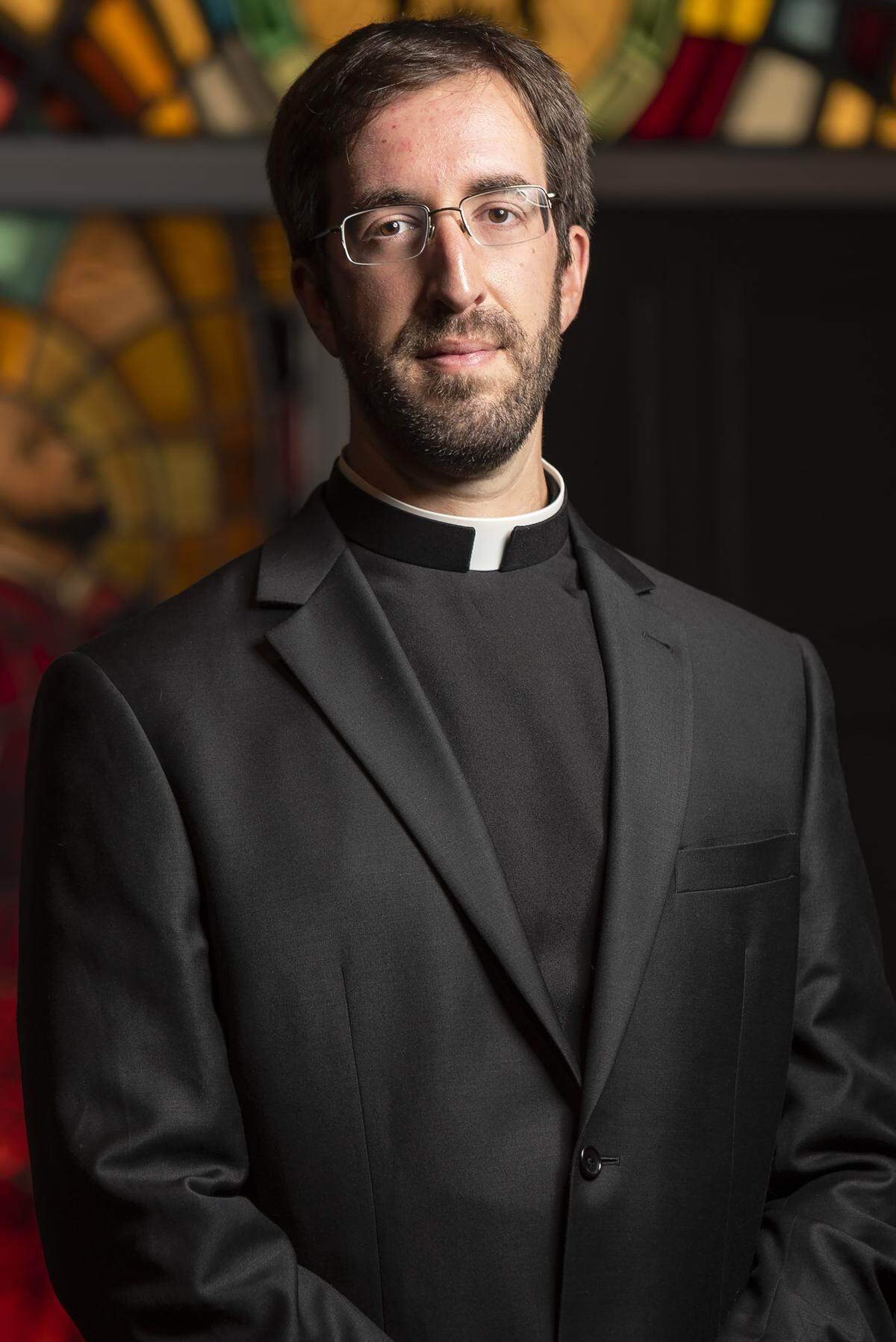
Minsal-Ruiz, 32, is a 2009 graduate of Xavier University, where he earned a bachelor’s degree in psychology and a bachelor’s in philosophy. He earned a master’s in philosophical resources at Fordham University. He entered the Society of Jesus in 2009, and began his formation as a Jesuit in the novitiate in Santiago, Dominican Republic.
“The call to serve others as a priest comes because of schools like this one [Belen Jesuit Preparatory], which unites people across different subjects in a desire to live from this law of the gift,’’ said Minsal-Ruiz. “Community service, good sportsmanship, excellence in education, rootedness in faith are all virtues taught at Belen... All these virtues I learned from the teachers, coaches, counselors and priests, who taught with their lives the mysterious power of this profound truth.”
Minsal-Ruiz was ordained by Archbishop Thomas Wenski. The concelebrate was the Rev. Javier Vidal, SJ, Provincial of the Antilles.
The newly ordained priest will continue to work as a teacher of theology at Belen.
He celebrated his first Mass on Jan. 12 at St. John Neumann Catholic Church.
Flamenco mixed with Jewish traditions
If you would like to experience the intense passion of pure Flamenco fused with the Jewish Ladino tradition of Spain, you should attend “Flamenco Sephardit” to be performed at 7 p.m. Jan. 26 at Temple Emanu-El, 1701 Washington Ave. in Miami Beach.
Tickets are $25 each in advance, and $30 on the day of the show. VIP tickets are $65 each and includes seating in the first five rows, hors d’ oeuvres, cocktails and a meet-and-greet with the cast.
For tickets and information call 800-515-1831 or go to www.flamencosephardit.com.
Art Deco lecture
The community is invited to a free lecture by Sylvia Gurinsky at 7 p.m. Tuesday, Jan 21, at 500 Deer Run in Miami Springs.
Gurinsky, a history educator, will speak on “Building South Florida: Art Deco Architecture,” which tells the story of how Florida’s recovery from the Great Depression was aided by a new form of architecture, known at the time as Moderne, and now as Art Deco.
Call 305-869-5180 for information.
Jewish Film Festival film focuses on early Jewish families of Tampa
The Jewish Film Festival continues this week with the showing of “Seders and Cigars” at 7 p.m. Tuesday, Jan. 21, at the Jewish Museum of Florida-FIU, 301 Washington Ave. in Miami Beach.
The film tells the story of founding Jewish families of Tampa, through interviews with their descendants. The film explores the impact Jews made on the Tampa community and beyond. Director Barbara Rosenthal will be in attendance.
Tickets are $11 for Film Festival members and JMOF-FIU members, and $15 each for non-members.
Go to https://miamijewishfilmfestival.org/ for tickets