This Florida hotel fell to decay, then the bulldozer. But it just rose from the rubble
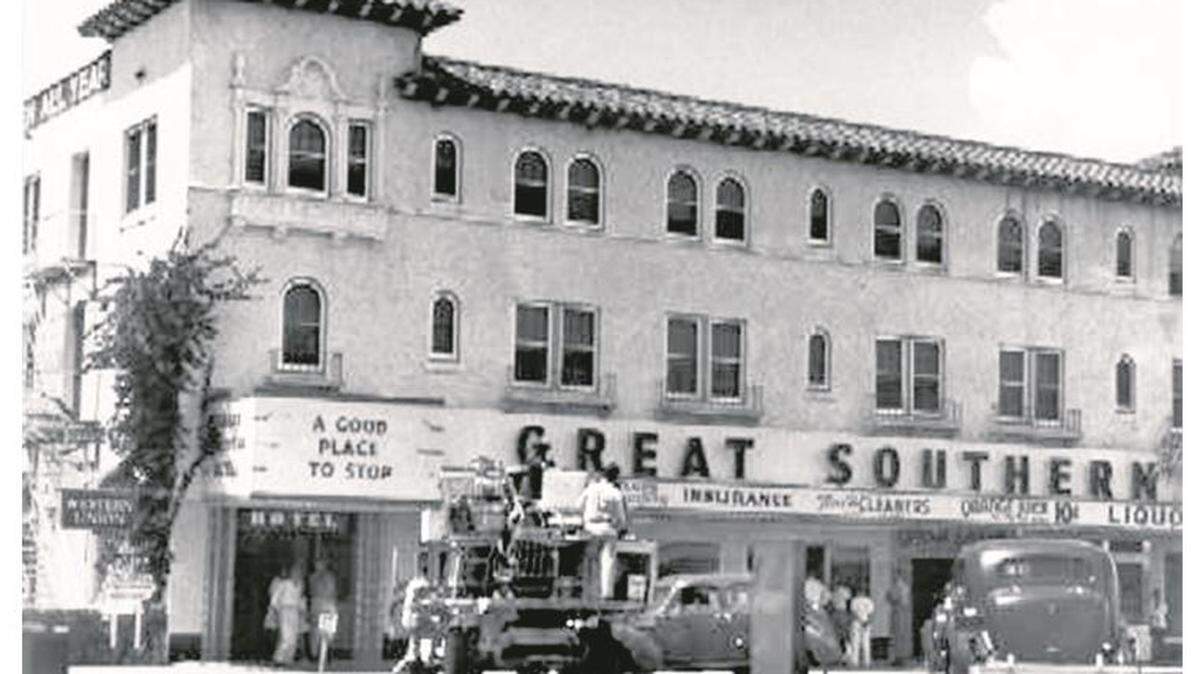
Old hotels sometimes die in South Florida, buried under a heap of rubble that’s cleared away for the next big flashy building We have seen it happen with the Americana, the Dupont Plaza, the Everglades, the Roney, now the Deauville.
But one just rose from the dust. Sort of.
The Great Southern Hotel, best known for its cameo in the 1969 movie “Midnight Cowbody” and for housing workers who built the city of Hollywood, has had a moment.
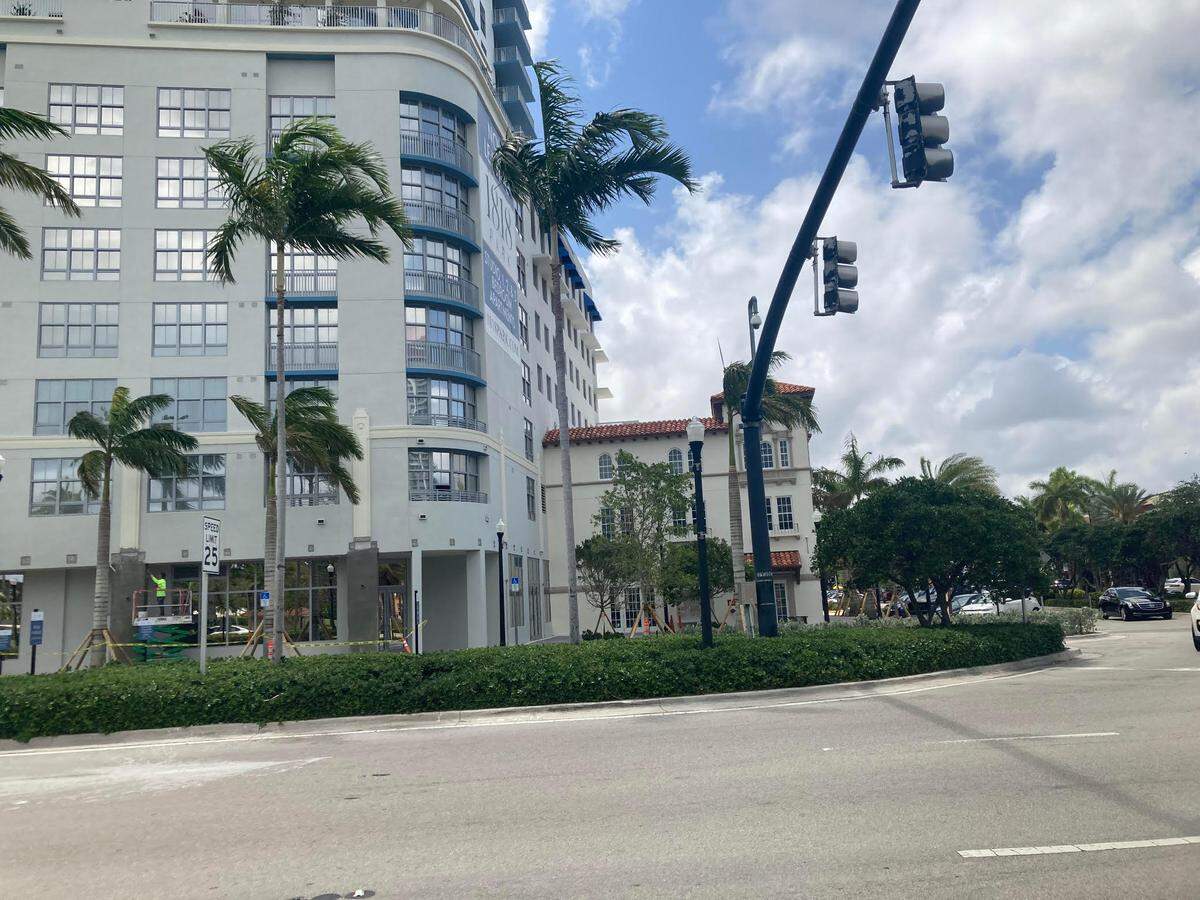
Vacant and decaying since 1991, the hotel is now incorporated into a new retail and rental complex called 1818 Park in downtown Hollywood, a few miles north of the Miami-Dade County border.
The plan was to keep the original facade after knocking down just a portion of the building to make way for the new residential towers. But the developer ended up bulldozing the decaying Mediterranean-style structure and rebuilding the facade with the original design.
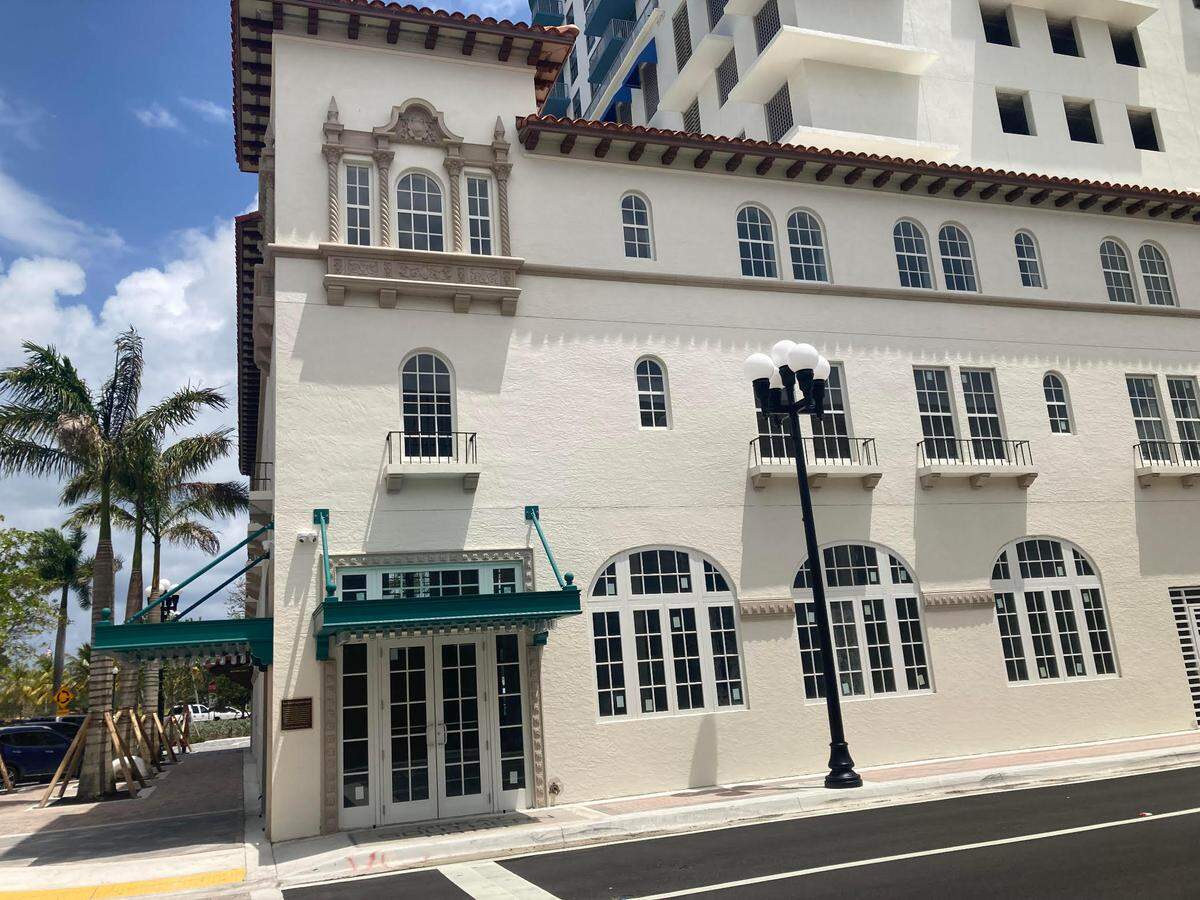
And so the spirit of the Great Southern Hotel lives, if not the original building.
We dug into the Miami Herald archives for more on the hotel’s history. And it has quite the past.
Here are the stories:
Part of history
Published July 16, 2005
Hollywood’s Great Southern Hotel was officially declared historic early Friday, but the move is unlikely to prevent its partial demolition to make way for a high-rise condo tower.
Ultimately, city commissioners will rule on the demolition permit requested by developer Chip Abele, who already has won their general development approval and their agreement to force the sale of a nearby building needed for his project.
Bleary-eyed members of Hollywood’s Development Review Board and Historic Preservation Board voted after midnight that the 1920s-era Young Circle structure was historic, after an hours-long parade of mostly preservation-minded residents took their turns at the microphone.
“If St. Augustine were to tear down all their historic structures and build condos, how many of us would be interested in going and seeing St. Augustine?” asked Richard Vest, who owns the former home of Hollywood founder Joseph W. Young.
“It would be just like every other place in South Florida.”
The hotel is located in the historic Hollywood business district, which is listed on the National Register of Historic Places. The unanimous committee vote triggers a City Commission vote, likely this fall.
By a vote of 8-2, board members also recommended approval of the partial demolition request for the hotel at 1858 Hollywood Blvd.
Abele’s plan would preserve and restore two of the hotel’s facades and part of a third.
His firm, Southern Facilities Development, plans a 19-story tower called Young Circle Commons, with retail and 231 condominiums.
The Hollywood Historical Society would own the restored facades and control any future changes. Abele donated about $200,000 to the society in exchange for its support, during a complex and arduous approval process involving some 20 hearings before various boards and officials.
A related controversy is the city’s decision to take the nearby Mach building using eminent domain.

Saving the hotel
Published June 2, 2005
Some Hollywood residents are again banding together to save the historic Great Southern Hotel, a building built by Hollywood founder Joseph W. Young.
On Wednesday, about a dozen members of Friends of the Great Southern protested a measure that will help a developer build a high-rise condominium tower above the site at 1858 Hollywood Blvd., on Young Circle’s western edge.
In an initial 4-3 vote Wednesday, commissioners agreed to allow the developer to use an alley between South 19th Avenue and U.S. 1/Young Circle in his project. A final vote will follow.
Developer Chip Abele, a managing member of Southern Facilities Development, is slated to build Young Circle Commons, a 19-story building with about 200 condominiums and 25,000 square feet of commercial space.
Abele plans to restore portions of the structure, but that isn’t good enough for the protesters who came to City Hall decked out in white T-shirts with an image of the Great Southern Hotel on the front and the words “Hollywood It Could Be History” on the back.
According to them, it’s not too late to save the building, even though the city approved an agreement with the developer last July.
“It is giving away our history,” said Barry Sacharow, a member of the Friends of the Great Southern.
The group found an ally in Commissioner Beam Furr, who said Wednesday’s vote was premature, since all the adjacent property owners still hadn’t agreed to sell their land.
Commissioner Fran Russo and several residents suggested delaying the vote, but that idea failed.
Alan Koslow, the project’s attorney, said the developer agreed to a compromise with the Hollywood Historical Society and is preserving two of the building’s facades.
Mayor Mara Giulianti said she believes the project is the best way to save the Great Southern.
The city could not afford the $5 to $10 million cost, she said.
“We need to rely on the private sector to do this,” Giulianti said. “It’s just a fact of life.”
Richard Vest, who owns Joseph Young’s former home and is one of the group’s leaders, said there are alternatives, such as obtaining national grants and fundraising.
“It’s an investment in history,” Vest said.
Furr said the city could allow the developer to build more residential units on an opposing block, then use tax revenue from that development to restore the historic Great Southern.
Abele would own the Great Southern, and could rent spots to artists and civic groups.
“I wouldn’t want to give up on this,” Furr said.
David Mach, the building’s owner, attended the meeting decked out in a navy blue T-shirt that read “End Eminent Domain Abuse!” - the same slogan on posters in several windows of his building.
The advocacy group Friends of the Great Southern believe the entire building should be saved.
They came to the meeting with their trademark white T-shirts with an image of the Great Southern Hotel on the front and the words “Hollywood It Could Be History” on the back.
Painting it yellow
Published Jan. 9, 1997
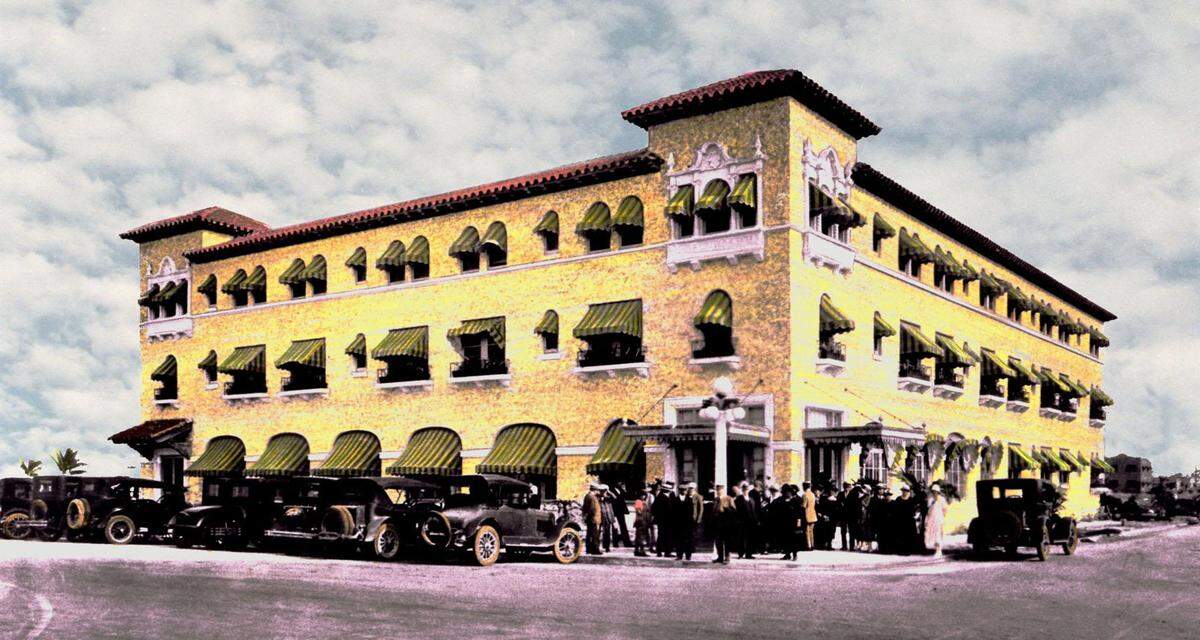
Is the new coat of lemon yellow paint on the Great Southern Hotel a sign of sunnier days to come for the historic Hollywood landmark?
Only time will tell.
The recently completed paint job is the first visible step in what owner Benjamin Wohl says is his plan to revive the boarded-up, run-down hotel.
Wohl, president of Great Southern Plaza, took over ownership and management of the hotel in March. He is the fourth generation of his family to own the hotel. His great-grandfather bought the hotel in 1935 after city founder Joseph Young hit financial hard times.
Boarded up since September 1991, the hotel at Hollywood Boulevard and Young Circle has stood as a deteriorating reminder of the city’s past and a sign of the untapped potential for the future.
“It’s hard when you have a building that doesn’t look good to convince a tenant it’s a good building,” Wohl said.
That’s why he has started on a gradual improvement plan that includes everything from painting to installing more uniform signs for the stores on the hotel’s first floor.
“What he’s doing is bringing it up to our standards of what a building should look like even if it’s not occupied,” said Kim Jackson, executive director of Hollywood’s Community Redevelopment Agency.
Now, Wohl says, he’s ready to move into the next phase of soliciting a tenant to rent space in the hotel. Wohl is considering a variety of possibilities including a bed-and-breakfast, offices or an artists center.
“I’m trying to figure out what the best use for the structure is,” he said. “If I wait and make sure I choose the right direction, then this will be a success. I would like to do it first class and the right way the first time.”
Although city officials want the hotel to join downtown’s redevelopment efforts, the site hasn’t been a top priority. But that’s likely to change during the next year when the city plans to invest public money in street improvements around Young Circle and will expect private owners to follow.
“It’s mandatory that the hotel doesn’t stay vacant for too long,” Jackson said. “Otherwise we’re going to reach a point where it can’t be renovated.”
Called a ‘death trap’
Published Dec. 24, 1995
If the walls of the Great Southern Hotel could talk, they would tell the story of Hollywood’s history.
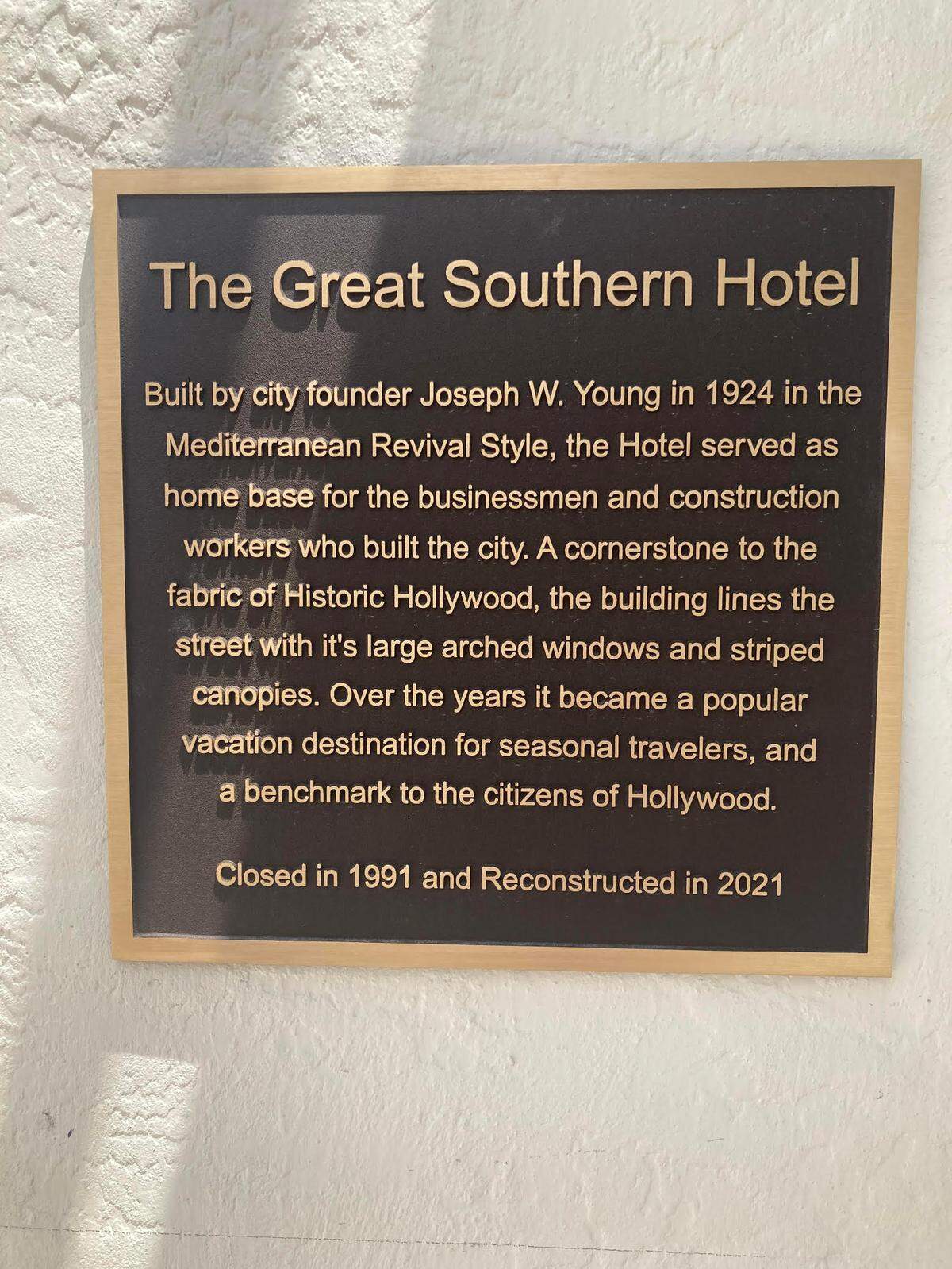
Built in 1924 by the city’s founder, Joseph W. Young, the Great Southern is one of the city’s historical landmarks.
The three-story, 100-room hotel cost Young more than half a million dollars and was one of a string of hotels he built along Hollywood Boulevard.
Not as luxurious as some of the neighboring hotels, the Great Southern was a modest hotel built for commercial use. Guests included Young’s workers, travelers and prospective land purchasers.
“It was a nice little place, but it wasn’t fancy,” said Myrtle Anderson Gray, Young’s bookkeeper from 1923 to 1928.
After the 1926 hurricane destroyed much of the city, the hotel became an emergency hospital for those with minor injuries and illnesses.
About the same time, the Florida land boom came to an abrupt end and Young began to struggle financially. Many of his properties were foreclosed on by the bank. Martin and Harry Wohl purchased the Great Southern Hotel in 1935 for $85,000 from First Federal Savings and Loan.
During the 1930s, the hotel underwent a major remodeling. A row of shops was created on the first floor along Hollywood Boulevard and a large dining room was built on the Young Circle side.
Calamity struck on July 21, 1940, when the hotel was the scene of one of the city’s first major fires. The fire, caused by defective wiring, left about $40,000 in damages and killed one firefighter.
For a short time in 1944, the Great Southern Hotel dining room became a youth center that teenagers named “The Rec.”
Over the years, the glory days of the Great Southern faded. The building, which was featured in the closing scenes of the Academy Award-winning film Midnight Cowboy, became a roach- and flee-ridden home for down-on-their-luck transients.
The hotel was deemed a “death trap” by the city fire chief in September 1991 and was cited for dozens of code violations for holes in the walls, ceilings and floors, rotted window frames, broken windows, exposed wiring and light fixtures dangling from the ceiling.
Days after the city’s inspection, trustee Matthew Wohl, Harry Wohl’s son, closed the hotel’s doors because he couldn’t afford to pay $1,100 a day for a 24-hour fire-watch required by then Fire Chief Jim Ward.
Since then, the hotel has sat boarded up while Wohl sued Ward and the city in federal court for forcing him out of business and depriving him of his property rights. The suit was thrown out of court earlier this month.
A standoff
Published April 15, 1992
Seven months after Hollywood’s historic Great Southern Hotel was deemed a “death trap” and closed down, the city and the hotel’s trustee are at a standoff over $16,445 in unpaid water, sewer and fire-protection bills.
Great Southern trustee Matthew Wohl refuses to pay, arguing that the city unnecessarily forced the hotel out of business in September.
Wohl did not return Herald phone calls to his office Tuesday. But in a letter to City Commissioner Kenneth Gottlieb, Wohl asked the commission to intervene on his behalf.
“We believe strongly that the fines and invoices could have been avoided,” Wohl wrote Gottlieb on March 31. Wohl suggested that the bills be waived or payment be delayed so he and city officials could discuss “the ultimate use and disposition of the Great Southern Hotel.”
Gottlieb turned the letter over to City Attorney Alan Koslow, who told Wohl to pay first and talk later. Koslow said the case would be turned over to the city’s Code Enforcement Board, which has the authority to levy additional fines and place a lien on the hotel’s owner, which is a trust.
The unpaid bills include $1,604 for water and sewer service to the hotel, and $1,774 for water and sewer service for several businesses that operate out of storefronts on the ground floor of the building.
But the bulk of the fines -- $13,067 -- is for fire protection services. Fire Chief Jim Ward ordered two firefighters posted at the hotel around the clock in September after a routine inspection revealed three pages of fire-code violations. Ward billed Wohl for the firefighters’ time.
At the time, Ward called the hotel a “death trap” and the “worst life-safety situation I’ve seen in my 29 years in this profession.” In mid-September, Ward ordered the hotel to correct the violations by Oct. 14 or close.
The hotel began evicting its mostly transient, low-income tenants Sept. 19, saying the city’s orders would be impossible to meet.
Eviction
Opinion column published Sept. 24, 1991
The mirror above the sink is missing in Room 335. So is the wall behind it.
In Room 325, the window pane sits on the sill, connected to nothing, leaning precariously against the empty sash.
The gap between the door and the frame of Room 212 -- where the lock is supposed to connect -- is wide enough to shove a hand through.
In nearly every room, ancient coats of drab beige paint are peeling. Great cracks run across entire walls. Worn carpets, no longer tacked securely to the floor, show only a faint hint of original color.
The physical condition of Hollywood’s Great Southern Hotel is deplorable. But to several dozen of those who live on life’s margin, where failure to earn a day’s wage can have a direct impact on whether one eats that evening, Great Southern was home.
It is no longer. Nearly all of the 70-odd individuals and families who lived in what is left of the historic hotel were forced to leave over the weekend. It was only a matter of time: Nothing short of gutting the building could restore it to any semblance of livability. Hollywood’s fire chief called the hotel’s collection of code violations the “worst life safety situation I’ve seen in my 29 years in my profession.”
But value judgments depend heavily on one’s vantage point. Where one person is offended by a leaky roof, another is grateful for a roof. Where one person sees dripping faucets, another sees running water. Where one person sees a seedy flophouse for transients, another sees a community of friends and acquaintances.
Some had lived at the hotel for a decade. Fellow residents were the only family some tenants had.
If one came up short of money one month, another would lend money. They felt safe. They called each other by first names when they met in the lobby. There was a sense of neighborliness most suburban enclaves can only envy.
They liked the old hotel.
“We never felt any loss of dignity living here because there was no trouble here,” said Cathy Mooney, one of the last residents still in the building Monday. Mooney and her husband Don, who have lived in the Great Southern for five years, can’t find a place to move to because nobody wants to rent to a couple with seven children.
Maybe the real abomination is that there are many Great Southerns in our midst. We tolerate them as a necessary byproduct of our affluent society.
Our municipal code books are filled with safety, fire, health and other regulations, though sometimes it seems all those regulations protect is our consciences. Thousands upon thousands of people live in conditions that would savage any notion of American prosperity.
Some are elderly, living alone on Social Security or disability payments. Many work, society cheerfully accepting their labor washing dishes or hawking newspapers at subsistence wages. Some do little more than loaf and drink.
If these people were truly considerate of society’s sensibilities, they’d just disappear when they got off work, or after they got too old or too eccentric to contribute.
But they don’t. They go to places like the Great Southern. They get in our way. Their presence frustrates the all-powerful god Development. They remind us of an aspect of our society we’d rather not think about.
Every once in a while, they bubble to the surface and become subjects of news stories. But then, inevitably, they sink back into oblivion.
“They didn’t get rid of these people,” said one resident who declined to give his name. “They just changed their location.”
Through the glassless, screenless window frame of Room 335, one can see the clipped lawn of Young Circle.
Poking just above the palm trees is a tall, proud American flag.
It was easy enough to tell the residents of the Great Southern Hotel to move on. It is much harder to evict the sad reality that still hangs in the air and settles like the dust on the old hotel’s faded carpets.
Failing the test of time
Published Sept. 20, 1991
It was the 1926 hurricane that baptized the Great Southern Hotel with an aura of permanence that lasted through its closing today.
he hurricane ravaged everything in the downtown area except the Great Southern, securing for the 62-room hotel on Young Circle a place in city history. The Red Cross set up a hospital within its thick concrete walls.
“Everything else in downtown was destroyed,” recalled Monty Montayne, an 88-year-old retired public relations executive who worked for city founder Joseph Young. “But the Great Southern just stood out there, just as strong and proud as it ever was. It gave us the strength to go on. It was rather magnificent.”
Young built the Great Southern in 1924, one of four hotels that he would build in Hollywood. The Great Southern is the third to close. The Hollywood Beach Hotel, now a mall and hotel, is the lone survivor.
The Great Southern was popular with travelers, particularly with businessmen.
“The Great Southern was never a glamour hotel,” said Myrtle Gray, 92, who worked as a bookkeeper for Young in the ‘20s. “There was no glamorous opening like we had at Hollywood Beach Hotel.”
Instead, Gray said, Young used the hotel to put up the hordes of Northerners to whom he hoped to sell land. The prospective buyers would arrive by train, travel by double- decker bus to the hotel, and then visit properties, accompanied by salesmen dressed in knickers, white shirts and straw hats.
“The funny part of it was that I never saw anyone come down here who didn’t buy a lot,” Gray said.
Like other Florida hotels of the time, the Great Southern hosted its share of gamblers, but most recalled the early days as benign. The hotel owners sought only tourists for the gaming rooms. The Great Southern created a fund for locals after a local working man lost his paycheck near Christmas, Montayne said.
The hotel survived a 1940 fire and was featured in the movie Midnight Cowboy, which starred Dustin Hoffman.
Locals regret its passing.
“It’s just that the building has been there my entire life,” said Patricia Smith, a Hollywood native born in 1928 and a member of the county Historical Commission. “In high school they had the crowning of the football queen there. We danced through the lobby in a tango line.”
Though the hotel has become a run-down haven for transients, offering efficiencies for $80 a week, the sense of loss among its residents was even more palpable.
Ray Linton, 69, a retired security guard, has lived there for 11 years.
“I don’t like to move,” he said Thursday. “Every time I move, I lose something.”
A welcome wears out
Published Sept. 20, 1991
The manager of the once-grand Great Southern Hotel walked its sweltering hallways Thursday afternoon, delivering an ominous message door to door: Pack your bags and get out.
The 70 mostly transient residents of the downtown hotel were left searching desperately for shelter and worrying about their future.
“They came and knocked on my door and told me to get out,” said Todd Harbin, who is unemployed and lived in the hotel with his wife and two infant children.
“We’re going to be on the street. Just some more homeless people on the street.”
Great Southern’s manager, who would identify himself only as Kenny, said the hotel’s owner, Matthew Wohl, had ordered him to close it immediately. Later, he told tenants they had until 9 a.m. today to leave.
“Yeah, I feel bad, very much so. I’ve known some of these people eight or nine years,” Kenny said. “We just couldn’t meet the city’s requirements.”
Wohl declined to comment.
On a routine inspection last week, the Hollywood Fire Department listed three pages of fire code violations. Chief Jim Ward concluded the situation was an “immediate danger to life” and the “worst life safety situation I’ve seen in my 29 years in this profession.”
Ward said he could have ordered the hotel closed immediately, but he decided to give the hotel until Oct. 14 to fix the violations. Ward said he was concerned that closing the hotel immediately would put many of the low-income tenants on the street.
So why was it closed so unexpectedly?
“There’s no future; it was going to close anyway,” Kenny said.
On Thursday, tenants milled around the hotel’s lobby, trying to make housing arrangements, demanding answers and lamenting the closing of the hotel.
Bobby Hunt, who says he is “between jobs” and living off a $530-a-month unemployment check, said he’s probably going to be homeless for a while.
“Me and some of the others were talking, and we’re probably going to pitch a tent right here and make the police come move us,” he said as he walked through Young Circle Park, just east of the hotel. “The city keeps talking so much about the homeless. But where are they now? Where’s the mayor?”
The dilapidated rooms of the roach- and flea-ridden flophouse were filled with down-on-their-luck families with children and laborers living off disability and unemployment checks.
Many tenants who work do so by hawking newspapers on the street. Some paid the rent from the earnings of another street trade -- prostitution.
Hunt said he couldn’t understand why the hotel was forcing the tenants out immediately.
“What’s the hurry?” he asked. “If the city says they have until Oct. 14, what are they doing kicking everybody out today? I don’t understand.”
Darlene Barber said the Great Southern was not just a hotel. It was a way of life.
“Oh, yeah, it’s a flea-trap. But we party and stick together,” said Barber, 43, sipping a can of beer. She said she has a brain tumor and has been living off disability checks at the hotel for about a year.
“We all know each other. But we don’t get too out of control.”
Tenant Ann “Sunshine” Page said it was the fleas that were out of control. But at least she had a place to stay that she could afford.
“I’ve got some friends I can stay with for a few days,” she said. “But after that, I have nowhere to go.”
Art Ellick, executive director of the county’s Community Service Council, said he was coordinating “quite a mobilization” of agencies to take in the evicted tenants.
Well into the evening, Gary and Cheryl Stroup searched for a place for them and their two young children.
“All these places want $30 a night,” said Cheryl Stroup, whose husband supports the family by working on a city labor pool.
“I don’t know. I guess we’ll be out in the street.”
This story was originally published April 25, 2022 at 11:58 AM.