When Pitbull met Miami Subs: a marriage made in sandwich heaven
Miami Subs was founded by Greek-born businessman Gus Boulis in 1980 with a single rundown restaurant in Key West that he renovated with the help of his then girlfriend, Margaret Hren. That venue would expand into a wildly popular chain. By the 1990s, the franchise had spread throughout Florida and to 16 other states.
In 1999, roughly two years before his murder, Boulis sold Miami Subs to New York-based hot dog chain Nathan’s Famous. But when Boulis died in 2001, the Miami Subs brand he had birthed began to die as well, a source close to the Boulis family told the Herald. The chain struggled, in part due to constant infighting within the chain’s management ranks, the source — who asked to remain anonymous due to ongoing legal disputes involving a confidentiality agreement — added.
Miami Subs locations around the country slowly but surely began to close, and profits dwindled. In 2007, Nathan’s sold Miami Subs to private investment group Miami Subs Capital Partner 1 Inc.
The company continued to struggle financially under its new ownership. For a few years, it seemed in danger of shutting down.
That is, until July 2012, when Miami Subs Capital announced that a majority equity stake in the chain had been purchased by Armando Christian Pérez. Pérez received a seat on the board, and became the de facto company spokesperson.
To most, Pérez is known simply by the moniker Pitbull.
The Miami-raised singer, songwriter and brand ambassador, now 40, considered trips to Miami Subs a big treat while growing up in South Florida in the ‘80s and ‘90s. He says he spent much of the early days of his career writing music in the restaurant, which he said had virtually become his second office. He said he once joked with a Miami Subs manager that one day he would own the company.
Miami Subs’ makeover didn’t stop at Pitbull. In 2014, the company changed its name to Miami Subs Grill. Then, to accommodate the dwindling number of people dining in at the restaurant — particularly during the global pandemic — management announced plans in April 2020 to shorten the menu, eliminate dining rooms and install a mobile-order pickup area, walk-up order window and two drive-through lanes in every location.
Today, Miami Grill has roughly 30 locations. It is headquartered in Boca Raton and the majority of its outlets can be found in Miami-Dade, Broward and Palm Beach counties.
The sandwich franchise has certainly changed to adapt to the times, shrinking in size and in the number of its locations, as well as changing its official name, bringing on Pitbull as the company spokesman and adding new plant-based options to their menu in 2019.
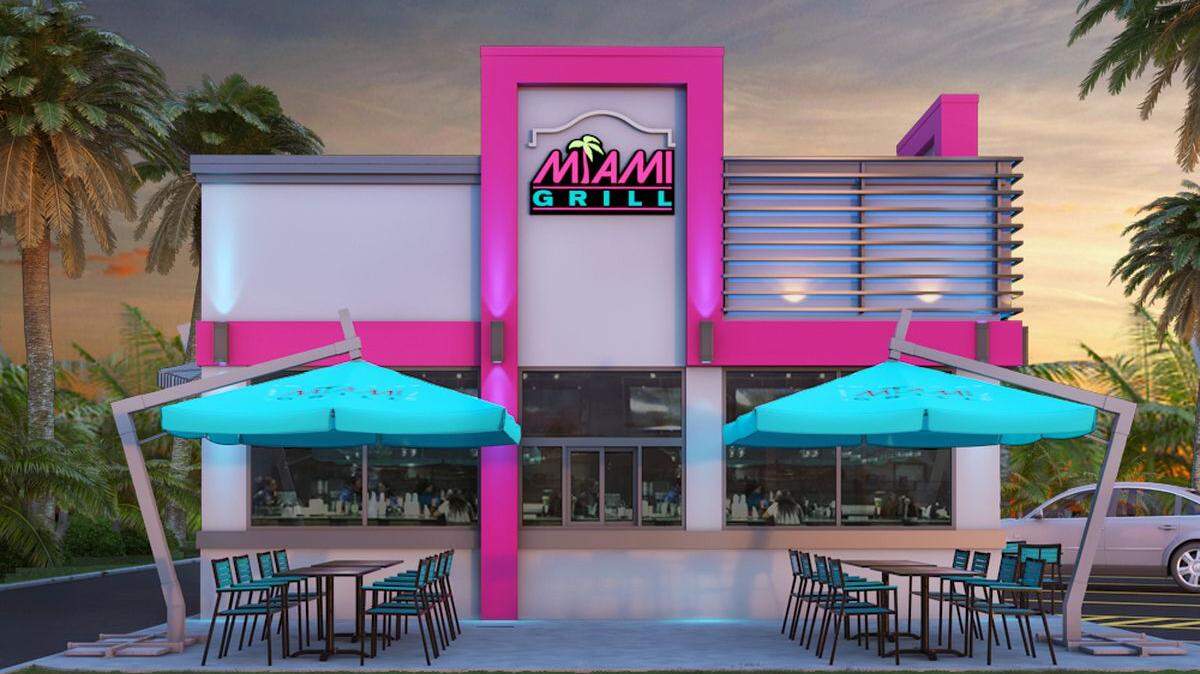
While a lot has changed, one thing remains constant: the neon pink and blue colors of the signage, the beacon that once beckoned a young Pitbull.