
Elon Musk is talking up a new Miami tunnel. Here’s an exclusive look at the two we have
There’s a lot of talk about tunnels in Miami these days. Elon Musk and Miami Mayor Francis Suarez are talking. Will Musk build a tunnel for electric cars under the Miami River? We’ll see.
But it wouldn’t be a first for South Florida. The region has two underwater tunnels.
The first, the Henry E. Kinney Tunnel in Fort Lauderdale, opened in 1960 under the New River. it replaced a drawbridge. The second, under Biscayne Bay and linking the MacArthur Causeway with PortMiami on Watson Island, opened in 2014.
Here is a look back at the making of those tunnels as we talk about a new one. The original coverage is from the Miami Herald archives.
.jpg "dot0154 (3).jpg")
How the Fort Lauderdale tunnel happened
By Howard Kleinberg, Special Contributor
Published March 7, 1995
Certainly in Dade County the name of Henry E. Kinney would draw a blank stare from most. And with the continuing influx of people into Broward County, the name is likely lost on many there as well.
Yet anytime you approach Fort Lauderdale’s tunnel under the New River, the name fills the windshield: The Henry E. Kinney Tunnel. OK, snowbirds and refugees, who was Henry E. Kinney?
Confession: I didn’t know either, until a reader wrote and told me. I should have, but I didn’t.
Kinney was the founding editor of the Broward Edition of The Miami Herald, hardly the expected credentials for having Florida’s one and only highway tunnel named in your honor. Old newspaper clips, however, attest: If it wasn’t for Henry’s prodding in the pages of the Broward edition of The Herald, U.S. 1 motorists would be waiting still for a creaky drawbridge to come down in order to cross the New River.
Kinney came to South Florida after World War II to work for The Miami News and in the public relations department of the Orange Bowl Committee. He later joined The Fort Lauderdale Daily News and, in 1951, The Herald.
In the mid-’50s, Broward faced the same dilemma that Dade still faces: Bridges go up too often, and almost as often get stuck and do not come down.
That was the case of the span over the New River at Federal Highway. It was recognized that something had to be done about it. Build a tunnel in its place, continually wrote Kinney in The Herald. Are you crazy? asked the rival Fort Lauderdale Daily News.
In 1986, Carol Weber, then The Herald’s associate publisher for Broward and now executive assistant to the chairman and chief executive officer of Knight Ridder, Inc., wrote of some hand-to-hand combat involving Kinney and The Fort Lauderdale News. “The Gores (the family that owned The News, located on the river) obviously thought a tunnel would hurt their property values, and they fought against it vigorously,” wrote Weber. “One time they brought in a so-called tunnel expert who spoke against it. Henry sent out reporter John Senning to find the guy, and it turned out he had been a manual laborer on some tunnel and now was working at a gas station. We took a picture of him leaning on his gas pump and ran it to show everyone The News’s ‘expert.’ “
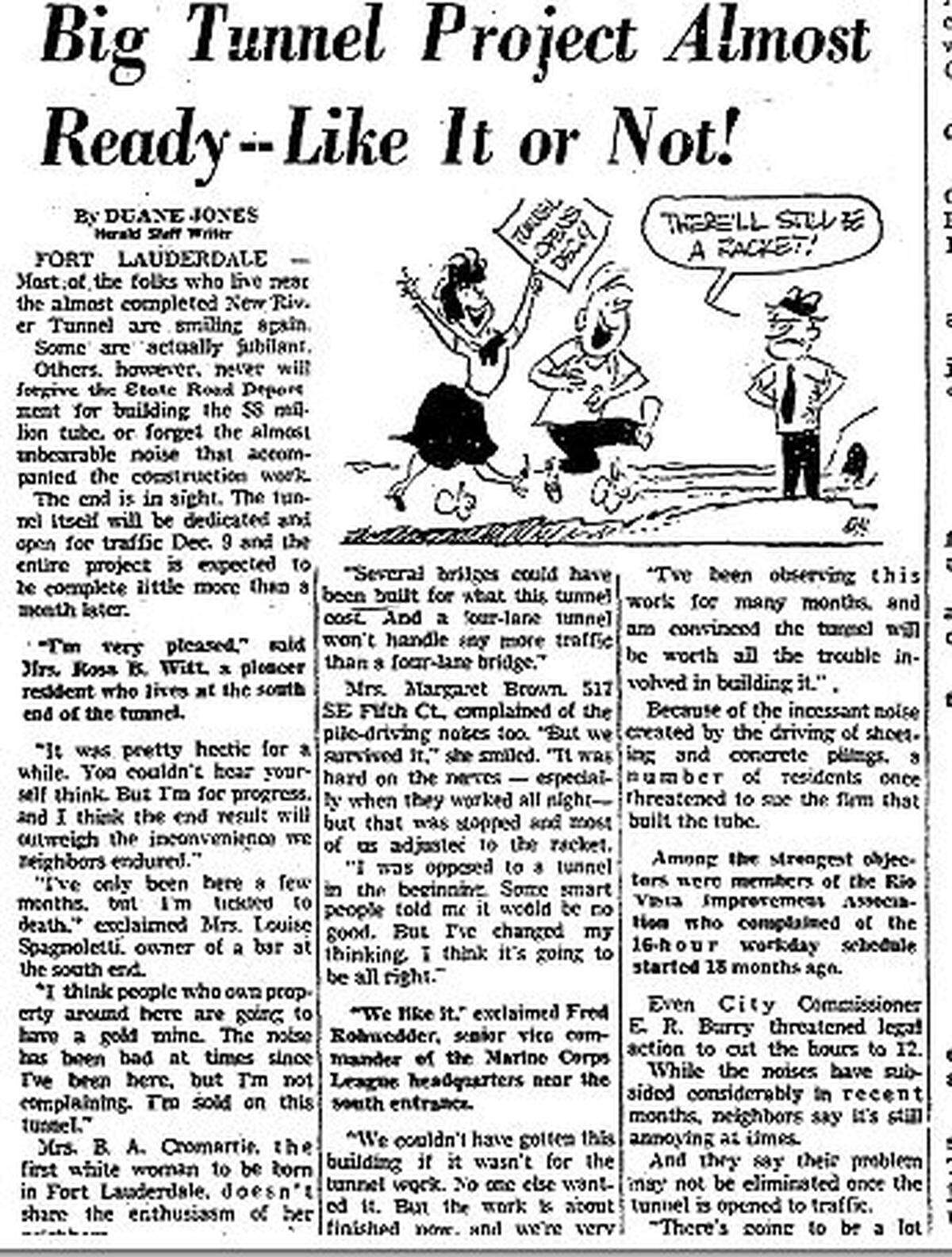
The tunnel issue was playing at about the same time the people of Dade were going through similar vexations about the Miami River crossing to Brickell Avenue. Miamians snubbed a tunnel, said they would prefer waiting for bridges to go up. They are waiting still.
The Broward battle was so close that Kinney’s crusading must have made the difference. When they counted ballots on Oct. 2, 1956, the tunnel proposition passed by 607 votes: 7,008 to 6,401.
It took two years for construction to begin. The last vehicles over the timeworn bridge were a symbolic 1921 Franklin roadster, one 1957 bicycle, and two signal-maintenance company cars that crossed near noon on Oct. 13, 1958.
Six months later, his chosen newspaper mission accomplished, Kinney took leave of The Herald to go into public relations and freelance writing.
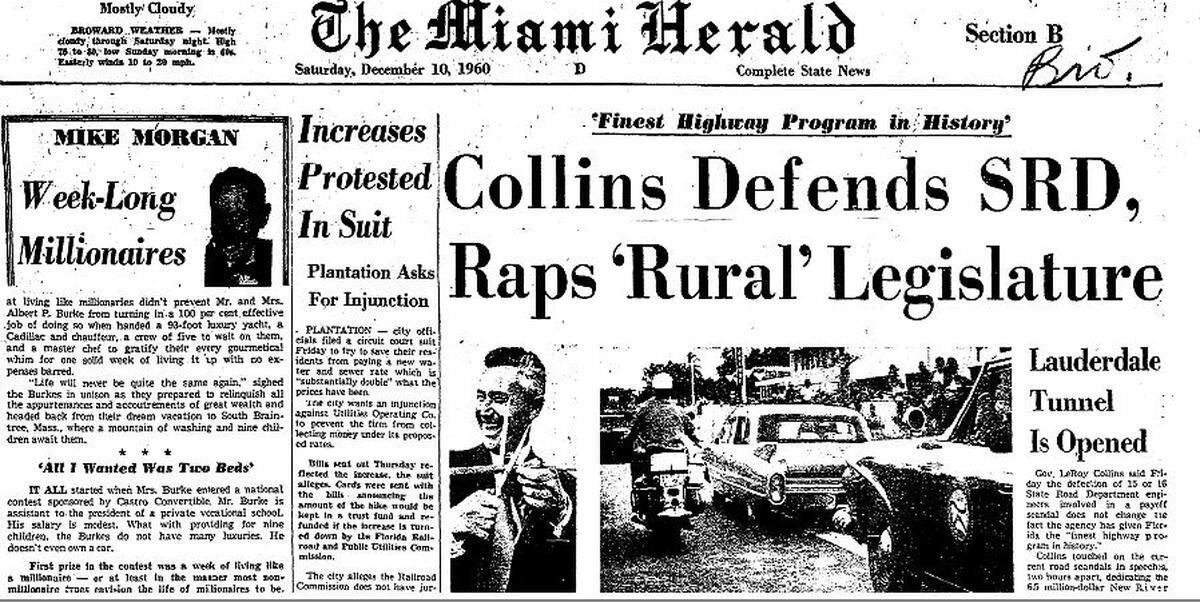
Two years and $6.5 million later, what was then called the New River Tunnel opened. At the opening ceremony on Dec. 9, 1960, Gov. LeRoy Collins got to snip the ribbon and take the first drive under the river. Paul Epstein, chairman of the Tunnel Pioneers, recognized the main man at the ceremony. “Without Henry,” said Epstein, “there would have been no tunnel. His efforts were of inestimable value.”
Kinney got to drive his car through the New River Tunnel for almost a quarter-century thereafter, never having to stop again in front of a raised drawbridge on Federal Highway. Henry died July 21, 1985, at age 69.
Nine months later, the Legislature voted to rename the tunnel for Kinney. At the dedication on Oct. 30, 1986, Fort Lauderdale Commissioner Robert Cox observed: “Some people criticize government for moving too slow. Well, here we are 26 years later, giving the tunnel its proper name.”
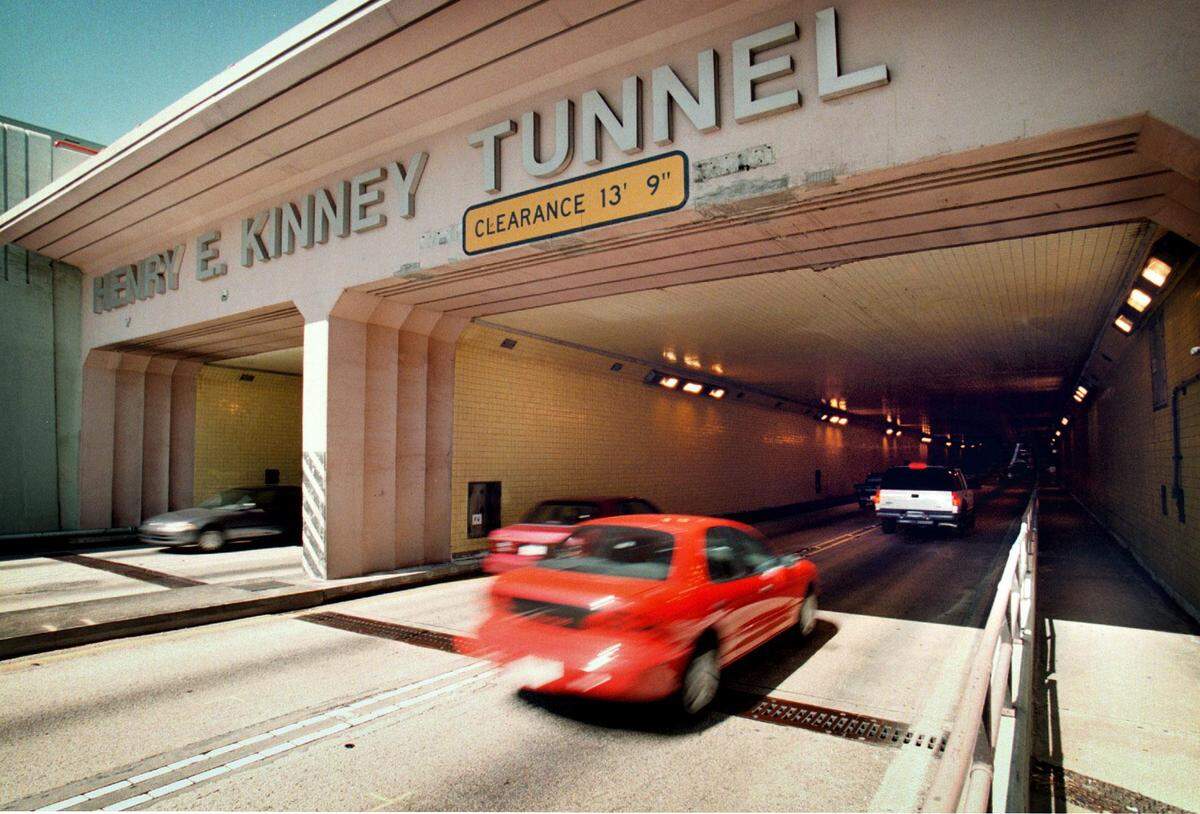
The tunnel’s new name
Published Nov. 25, 1985
Those of you who have known Florida’s only tunnel as the New River Tunnel for the past 20 years may have some adjusting to do, if the Florida Legislature goes along with a Fort Lauderdale senator’s efforts to rename it after the former Miami Herald editor, who died last July.
“There are a lot of people who knew him for a long time and thought he had done a great deal to make the tunnel a reality,” said State Rep. Anne Mackenzie.
Mackenzie, a Fort Lauderdale Democrat, is sponsoring the bill in the House.
Senator Tom McPherson, also of Fort Lauderdale, filed the original bill in the Senate last week.
The tunnel “was not the most popular idea at the time, and yet when we look back, we think we should have done more of them,” Mackenzie said. “If we had, we wouldn’t be sitting in traffic waiting for boats to go through bridges.”
The bill already promises some local controversy.
“I am not overly fond of naming anything after anybody, even my friends,” said Fort Lauderdale Commissioner Robert Cox, who knew Kinney well. “The New River name is descriptive enough. I’d rather find something else to name after him.”
Before the tunnel was built, the only way to cross the river on Federal Highway was a crumbling bridge that created endless traffic jams.
One of the local newspapers opposed the bridge in several editorials because of the price tag, but Kinney, the founding editor of the Broward edition of The Miami Herald saw the four- lane tunnel 35 feet under ground as the wave of the future for the city.
He wrote tirelessly in favor of the tunnel, and was later credited with turning around public sentiment.
When the city and the state held a referendum, the tunnel beat out a bridge by 600 votes.
Construction began Oct. 13, 1958.
The tunnel - which cost $8 million - opened Dec. 9, 1960.
Winnifred Kinney, his widow, said naming the tunnel after her late husband would be a tribute to every journalist working in the city he loved so much.
“They will realize that their constructive efforts have not been in vain,” she said.
“It would be a very loving gesture because the tunnel helped not only the city but the county.”
Tunnel trauma: getting out alive
By Ron Ishoy
Published Oct. 10, 1994
In the 16 years or so that I’ve lived in Fort Lauderdale, I’ve probably driven through the Henry Kinney Tunnel underneath the New River close to 20,000 times.
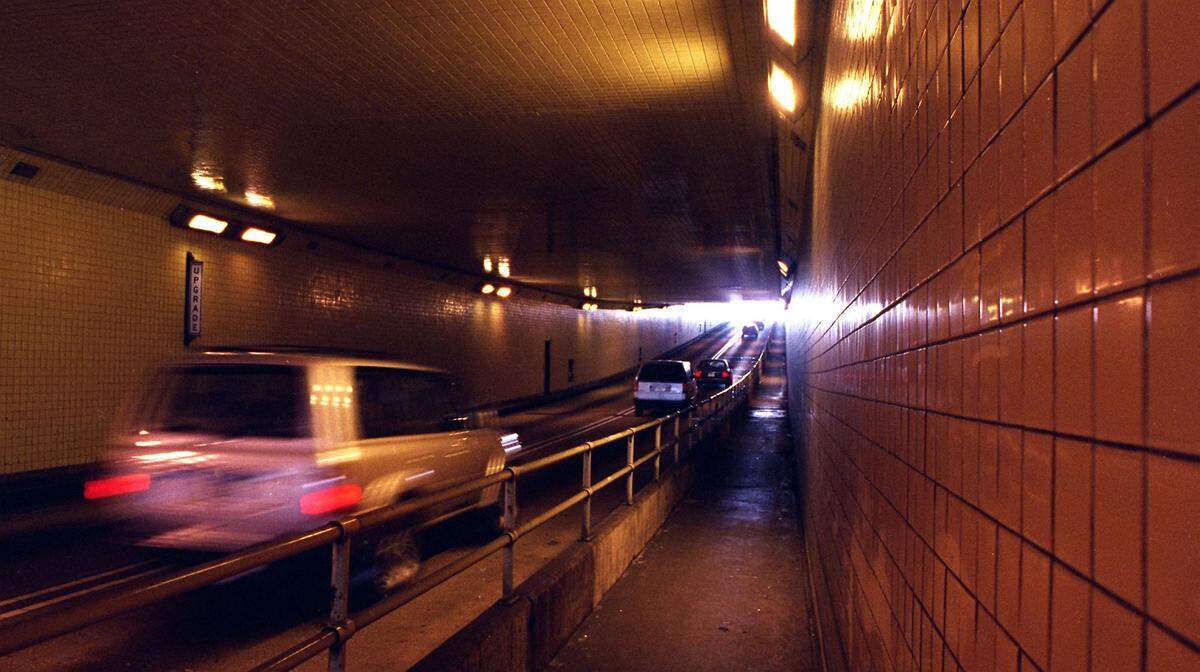
It’s usually not much of a drive because, frankly, it’s not much of a tunnel.
A tenth of a mile down to the bottom, a tenth of a mile up the other side, and you’re through. Whiz, whoosh, whee -- it’s a 15- or 20-second trip at most.
We all zip through there, usually much too fast, as if we were in some kind of impenetrable space shield oblivious to outside danger or the elements.
The only concern I have ever had: possible leakage from the river above. If a) there’s a big puddle of water in the bottom of the tunnel; and b) it’s not raining outside; then, c) where did that water come from?
That’s a hypothetical situation. A week or so ago on my way home from the gym, I had a real problem: My van’s engine stopped just as I started into the tunnel’s southbound entrance.
As the engine sputtered, I quickly put on my emergency blinkers. My second inclination was to stop. But by that time, I was already over the rise and heading down the slope.
Seeing nothing behind me in my rearview mirror except the pavement I had just come down, I knew that the cars flying over that peak on the rain-slick road would not be able to see me immediately. I knew that I needed to get some pavement between me and that peak.
So I rolled down, down, down into the tunnel, trying to restart the van as I did. Cars came flying over the hill and instantly filled my rearview mirror like some sort of Top Gun fighter plane. Instead of firing missiles, however, they fired long blasts from their horns and nasty looks as they swerved to miss me.
Only slightly concerned up to this point, now I was genuinely scared.
As I rolled into the lowest part of the tunnel, the engine fired for a moment. Incredible relief.
I accelerated up the other side, but the engine stalled again. I looked in my rearview mirror. I was just far enough up the hill that, again, I couldn’t see any cars approaching -- which, even worse, meant that they couldn’t see me.
Suddenly, a huge Cadillac appeared out of nowhere right behind me. He laid on his horn.
Right, pal, I’m sitting here counting the tiles on the tunnel wall. Don’t you think I’d be moving if I could?
He got around me - barely.
Unable to get the van started again, I decided to roll back down to the bottom of the tunnel. At least there, I figured, people coming into the tunnel could see me.
This works -- sort of. They can see me, but they don’t necessarily slow down. Seeing a car ahead of you and realizing that it’s broken down are two different things.
There’s a lot of last-second lane-changing, people discovering all too late that there’s a large red roadblock in their way.
I continue cranking the van. The engine kicks in again, and I manage to move up 30 yards, but the van won’t make it all the way up the hill. It dies again, and I let it roll back to the bottom again. Cars continue to zoom past.
I keep cranking the engine, but it doesn’t seem to be pumping gas through the carburetor. The only thing pumping is my heart, which I seem to be able to hear. At this point, it sounds every bit like a boom box playing a Snoop Doggy Dogg rap song at warp speed. We’re talking big-time scared here.
look in the rearview mirror. One of those huge lawn- maintenance trucks is bearing down on me. He swerves at the last second and just misses my rear bumper. Had he hit me, I either would have been knocked like a croquet ball up and out of the tunnel, or I would have been crushed to death.
Remember, this is all happening in a matter of seconds. As the huge truck swerves, the car that is trailing him too closely hasn’t seen me at all. He goes into a sideways skid and almost hits my bumper.
Stunned and angry, he raises his fist and starts honking as he straightens course and pulls away.
This went on for about 10 minutes. I prayed, first to myself and then out loud, making the proverbial deal with God that if I got out of this, I promised etc., etc.
At that point, I looked in the mirror and spotted a Fort Lauderdale police officer driving his cruiser into the tunnel. Fast work, God. Thanks! Finally, I’m saved!
But the officer - no lights, no siren - zipped past just as fast as everyone else. I cursed, which I’m sure didn’t play well on the heels of the prayer. I thought I got his cruiser number, but when I later called the department to complain, there was no such number. Still, I will never, ever forget the huge error in judgment that officer made leaving me there. Never.
A couple more harrowing near-misses, as the air-traffic controllers say, and I finally managed to get the van going just enough so I could creep up and out of the tunnel at about 3 miles an hour.
Since the incident, I’ve thought a lot about what I should have done in the tunnel that morning.
Should I have gotten out and left my car? In the southbound tunnel, there’s no sidewalk, so that’s not a good answer.
I’ve since bought a couple of orange safety cones and flares that I will put out in case - oh, please, no - this should happen again. But your average motorist doesn’t carry cones and flares. Perhaps, if you drive through the tunnel 25 times a week, you should.
This being the only tunnel in Florida, there weren’t a lot of tunnel safety experts I could call for advice. And, frankly, I didn’t feel much like asking the Fort Lauderdale police for their thoughts.
So the other day, I called a guy named George Bambrick, a duty supervisor in the Holland Tunnel between New York City and New Jersey.
Now the Holland - almost two miles long with almost 90,000 cars a day - is not quite the same as the little Henry Kinney. For one thing, you can see the car ahead of you. Plus, electronic signals in the road alert safety workers to areas of the tunnel where traffic has stopped, and they immediately tune in video cameras to see what is wrong. If a vehicle is broken down, they immediately dispatch a wrecker.
“No one is out there in that tunnel very long,” Bambrick said.
The opening of the PortMiami tunnel
Published Aug. 4, 2014
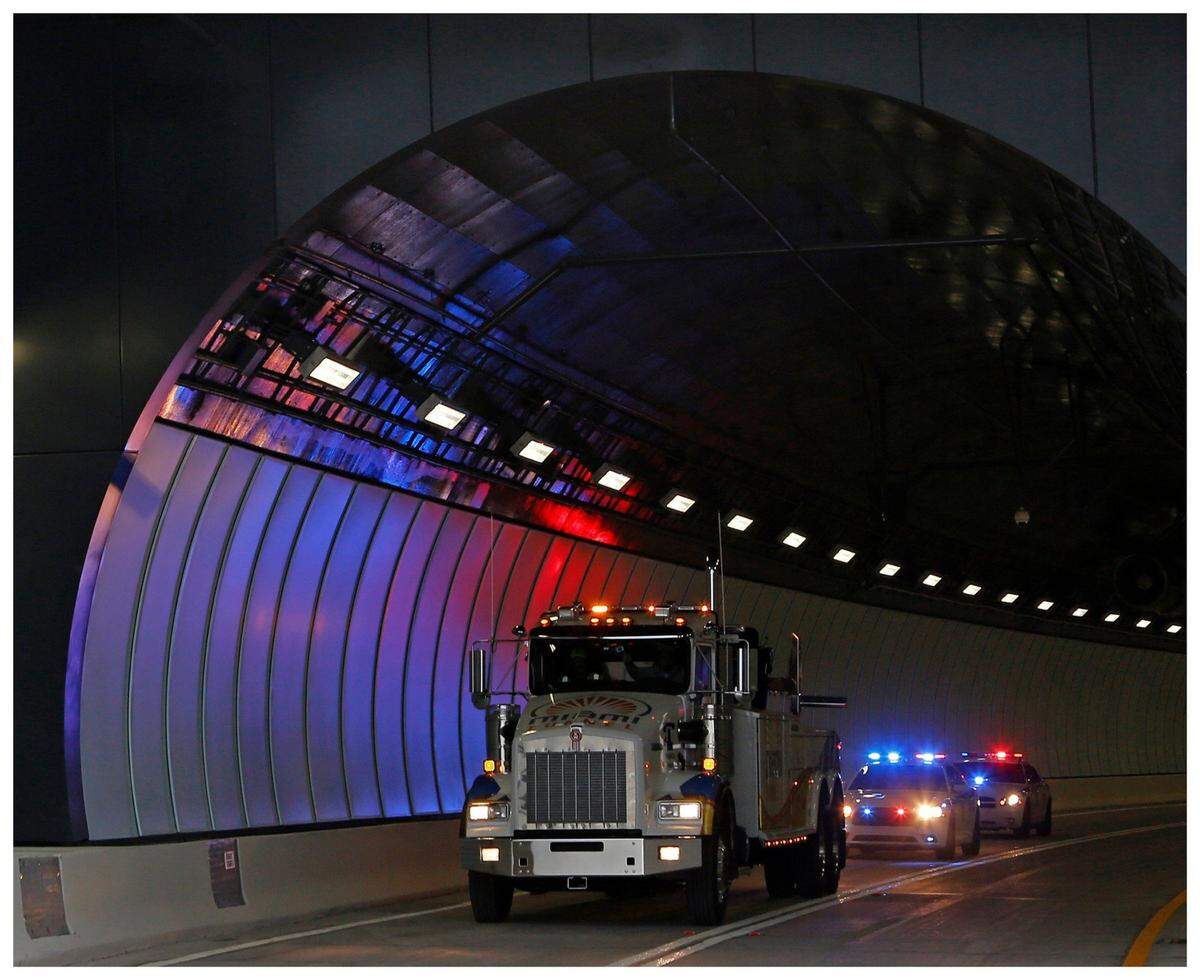
Trucks, cars, SUVs and motorcycles flowed through the long-awaited PortMiami tunnel on Sunday, finally open to traffic after a two-month construction delay.
Regular traffic, including tractor trailers, began driving through shortly after a motorcade of officials and VIPs took the first pass through at Watson Island on the MacArthur Causeway.
Four police cruisers, sirens wailing and emergency lights flashing, led the ceremonial opening caravan. Miami Archbishop Thomas Wenski, a Harley enthusiast, and Miami-Dade Commissioner José “Pepe” Díaz rode through on motorcycles.
The opening marks the end of repeated delays for the $1 billion under-the-bay tunnel. Engineers had to deal with last-minute flaws including rattling exhaust jet fans and a leaky drainage pipe.
“It’s a great day,” said Miami-Dade Mayor Carlos Giménez shortly after the motorcade emerged from the eastbound lanes of the tunnel.
“It was a little bit delayed, but, you know, they had to do things right,” he said. “We had to make sure that the ventilation system was working. There was a leak in the tunnel, but I’m very happy that this tunnel is now open.”
Although the tunnel is open to all traffic, the main goal is to encourage as many cargo truck drivers as possible to go under the bay to relieve traffic on the surface streets downtown, the mayor said.
Cargo trucks contribute to congestion as they meander through downtown to get to the seaport from area expressways. Now that the tunnel is open, trucks can avoid downtown and drive directly to the port from Interstate 95 and State Road 836.
“This is great for downtown,” said Alyce Robertson, executive director of the Miami Downtown Development Authority. “All the trucks will be off the street, and it’ll be safer for our pedestrians.”
The tunnel will be operated and maintained for three decades by Miami Access Tunnel, the concessionaire that also built the facility through a contractor, the French firm Bouygues.
The contractor had to pay MAT a fine of $115,000 for every day the tunnel remained closed. By the time the tunnel opened Sunday, the payments had reached nearly $9 million.
The port tunnel was scheduled to open shortly after Gov. Rick Scott ceremonially dedicated it May 19. But then the malfunctioning equipment put everything on hold.
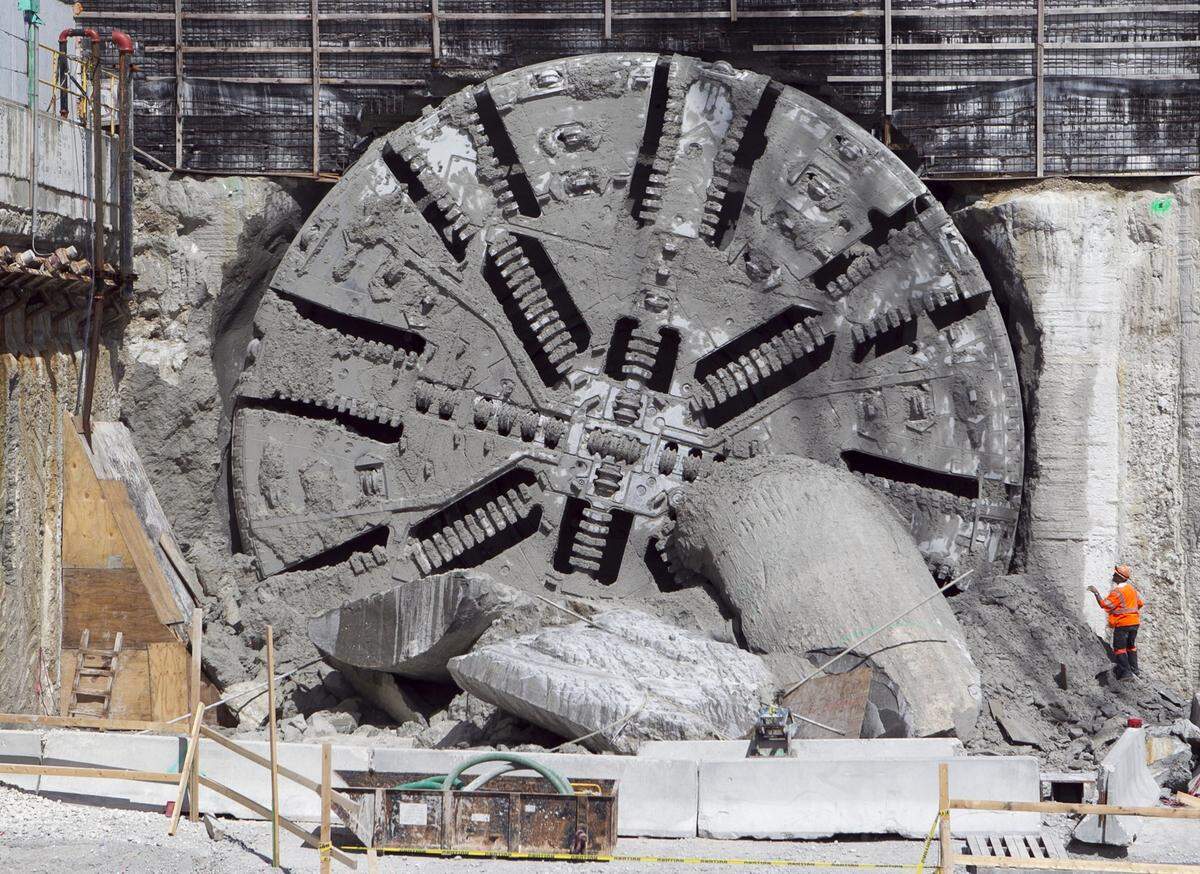
A German-built tunnel boring machine excavated the tunnel between November 2011 and May 2013.
South Florida Girl Scouts named the tunnel boring machine Harriet after 19th century African-American abolitionist Harriet Tubman. Those Girl Scouts were given a private tour of the tunnel Saturday afternoon.
“The tunnel is massive, so big my house would fit in it,” said Katherine Kaiser, 14. “I still don’t know how they built something so giant under water, but it’s awesome.”
The final run-through in Miami
Published May 18, 2014
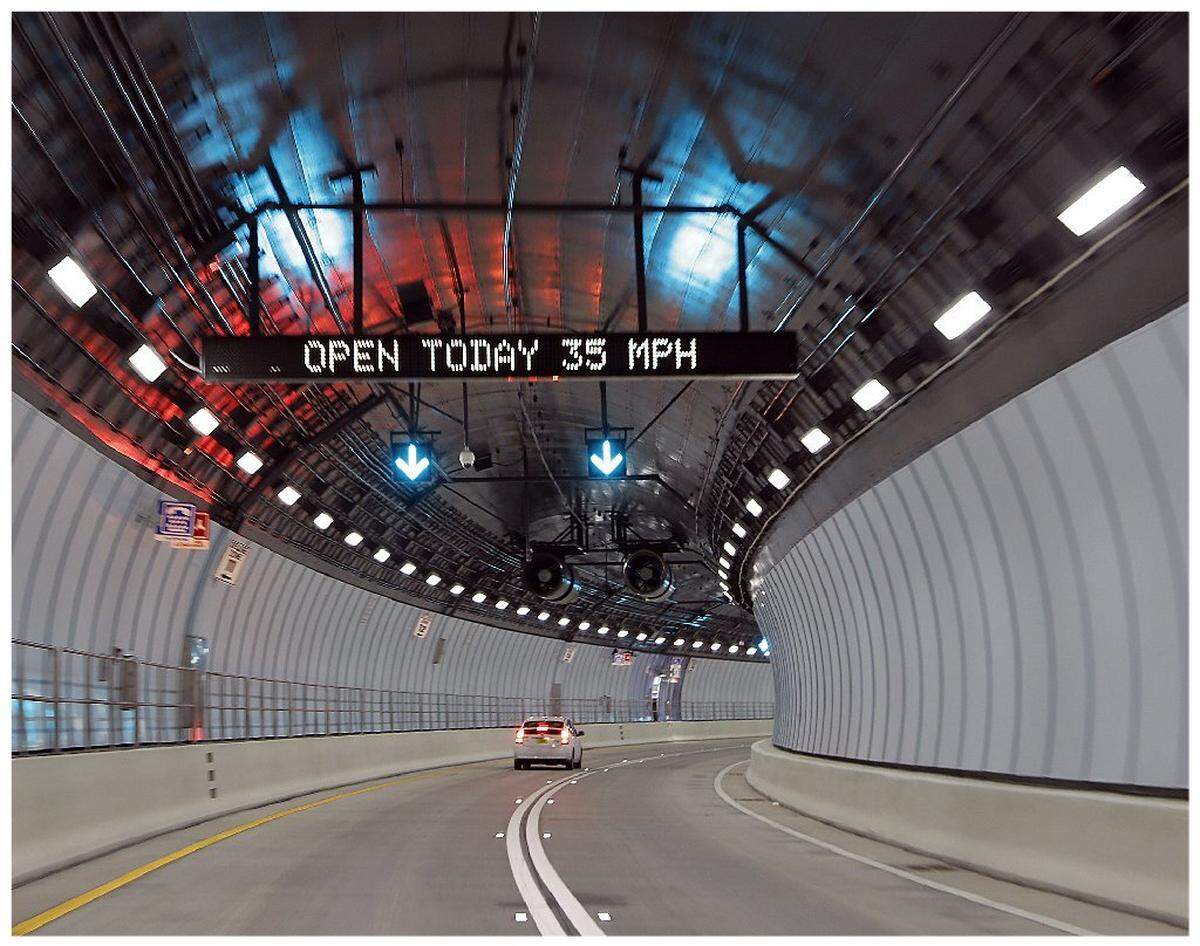
Directional arrows over the westbound lanes of the PortMiami tunnel shone bright green Friday morning as hundreds of workers put the finishing touches on the $1 billion, under-the-bay facility.
The arrows served as symbolic indicators that the tunnel, more than 30 years in the making, is almost ready to open.
Gov. Rick Scott plans to dedicate the tunnel at 10 a.m. Monday, although regular traffic will not be allowed for several more days while workers perform final tests.
“Everything looks go,” said Chris Hodgkins, vice president of Miami Access Tunnel, the multinational consortium that built the tunnel and will manage and maintain it for the next three decades.
The tunnel’s dedication and subsequent opening to traffic mark the completion of one of the most expensive and elaborate transportation projects in South Florida history.
Those involved from the beginning point to then-Miami Mayor Maurice Ferré as the first to propose the idea of a port tunnel. Ferré credits the late congressman Claude Pepper for funding initial studies. Ferré has proposed that the tunnel be named after Pepper, saying he was the only lawmaker in Florida’s congressional delegation at the time to enthusiastically embrace the idea.
“He immediately saw the wisdom of the project,” Ferré recalled. “Within a month Miami-Dade County had $2.5 million to do a [tunnel] study.”
A report prepared for the Downtown Development Authority in April 1983 points to the tunnel as the solution to improve access to the port from area expressways. Many of the cargo trucks headed to the port use the expressways to get to freight warehouses at Miami International Airport and Doral or to head north to other cities.
Federal transportation authorities liked the idea, but it wasn’t until 2000 that they actually issued a statement indicating that the tunnel was feasible. That led ultimately to the formation of a partnership involving the Florida Department of Transportation, Miami-Dade County and the city of Miami to fund the tunnel.
The final public-private partnership that emerged included the Luxembourg-based financial firm Meridiam Infrastructure Finance and the French construction firm Bouygues Travaux Publics. Miami Access Tunnel was named concessionaire in charge of the project.The official project go-ahead came on Oct. 15, 2009.

A $45 million, 6,000-ton tunnel boring machine arrived at PortMiami in pieces aboard a cargo vessel on June 23, 2011. Local Girl Scouts later named the machine Harriet Tubman, in honor of an African-American abolitionist who helped slaves escape through the Underground Railroad.
Boring began in November 2011 at the MacArthur Causeway median at Watson Island. Harriet popped out at the port on July 31, 2012. Then Harriet was turned around and bored the westbound lanes back to Watson Island, where it arrived on May 6, 2013.
Since then, workers have been outfitting the tunnel with the roadway as well as electronic control and safety systems, work that continued last week.
The tunnel provides the first direct access to the port from area expressways. Currently, cargo trucks meander through downtown streets to get to the port. Their preferred route, after exiting Interstate 395, is Northeast Second Avenue south to Northeast Fifth Street, where they turn east toward Port Boulevard.
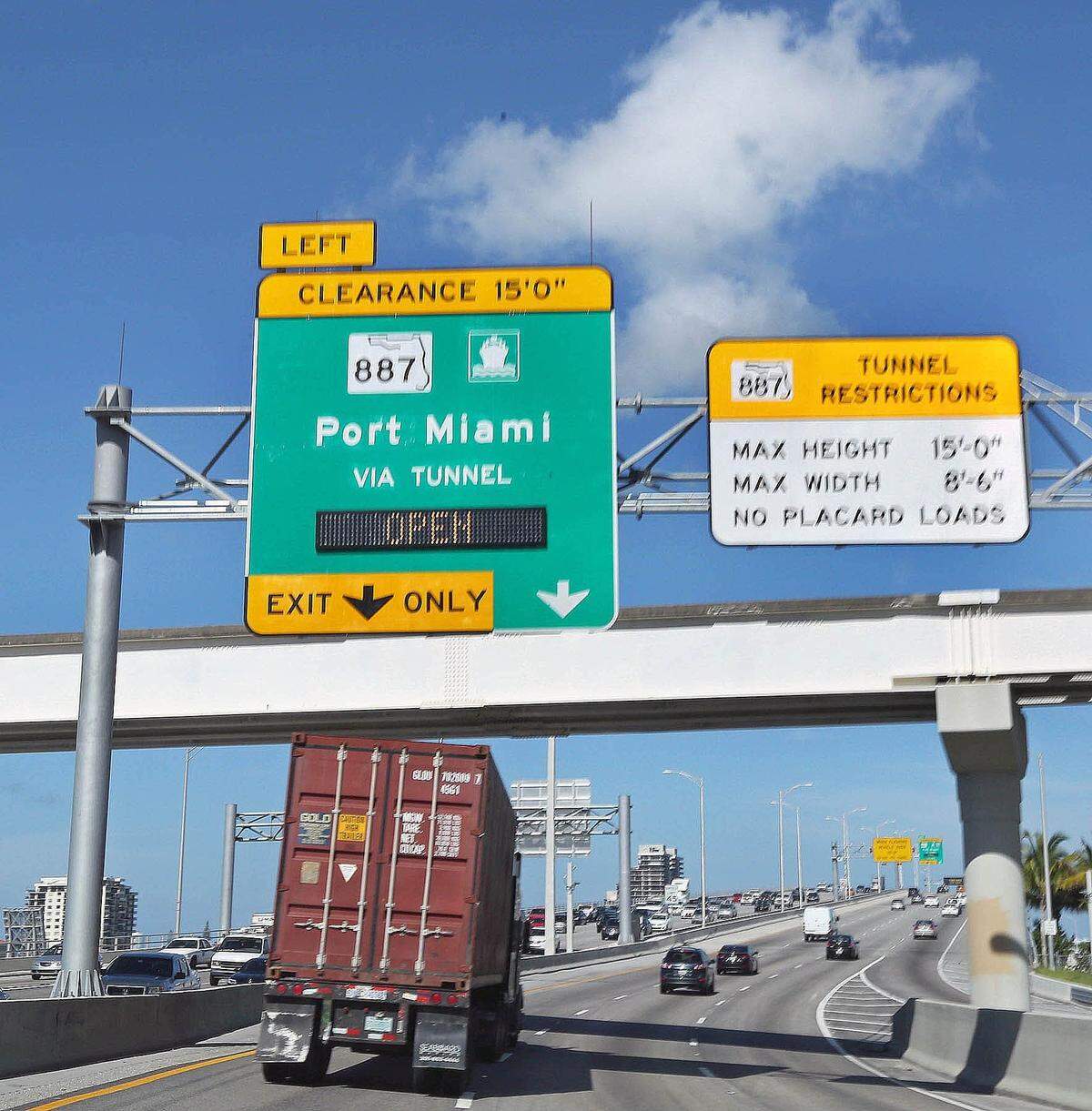
Trucks carrying hazardous materials will be barred from the tunnel. These trucks, fewer than 2 percent of the 1.5 million trucks that annually go to the port, will continue to use the downtown route.
Over-height trucks also will be prohibited. Tunnel entrances have been equipped with infrared sensors that will be triggered when an over-height truck approaches. Even if the driver ignores early warnings, chains - called tickle bars - will drop from the tunnel ceiling and hit the top of the truck as a further warning. If the truck keeps advancing a loud horn will sound, electronic messaging boards will flash orders to stop and directional arrows over the lanes will change from green to red and a gate will close the road.
Operations will be monitored from a command-and-control center through 91 cameras lining the tunnel.
Tunnel managers have also worked out accident protocols to deal with mishaps large and small. Tunnel workers will have 12 minutes to remove minor accidents or pay a penalty.
Rescue personnel will be able to get from one side of the tunnel to the other through five emergency cross-passages built every 700 feet along the twin-tube facility. Emergency phones, 42 in total, will be located every 300 feet. Emergency vehicles and tow trucks will be stationed at both ends of the tunnel at all times.
Larger incidents may require closure of the tunnel and possible evacuation. People on one side of the tunnel can escape to the other through the cross-passages. Major fires will be put out by cascades of water that will pour from so-called deluge zones.
The tunnel will be open to private vehicles, but cargo trucks are expected to be the heaviest users, along with buses carrying passengers to cruise ships. There will be no tolls.
Twin tubes inside the tunnel carry a two-lane road in each direction, with a 35-mph speed limit and a 5-degree grade. The deepest point on the almost mile-long tunnel is 120 feet under sea level.
Once traffic is allowed into the tunnel, the tunnel entrance will be on the left lane of the MacArthur Causeway at Watson Island. The bridge linking the MacArthur Causeway to I-395 has been widened to accommodate the new lanes leading to the tunnel.
The portals at the tunnel entrances and exits house massive 50-ton floodgates that will drop to seal the tunnel watertight in case a Category 3 or stronger hurricane approaches. The portals were designed by Bernardo Fort-Brescia, head of the Miami firm Arquitectonica, to resemble Egyptian monuments.
Hodgkins, the MAT vice president, said the tunnel is deemed among the safest in the world because it has redundant safety features that prior tunnels did not have.
“This tunnel is a culmination of fixing what went wrong in any other tunnel,” he said.
The making of the Miami tunnel
Published June 5, 2012
Behind the massive excavation of the tunnel to Port Miami, there is a complex operation that involves transporting tons of rocks and dirt to a site in Virginia Key next to Key Biscayne.
Every night, 25 trucks make 242 trips between Watson Island on the MacArthur Causeway and Virginia Key.
At dawn one day two weeks ago, an executive of Miami Access Tunnel (MAT), the multinational in charge of the project, allowed a reporter and two photographers from El Nuevo Herald to get a close look at the process. Environmentalists have objected to depositing the material in Virginia Key because they view it ecologically sensitive, and some Key Biscayne and Coconut Grove residents have complained that trucks transporting the material carelessly drop debris on the roads.
Chris Hodgkins, a MAT vice president, said the company has assigned teams to make sure trucks do not drop material on the roads.
“For each truck that goes out with material, we have a group of four people who wash down the vehicle’s tires and everything around where the load is carried to make sure that it doesn’t fall on the road,” Hodgkins said.
After the dirt and rocks are extracted, they come out in the consistency of toothpaste. A conveyor belt carries the material to a storage tank located near the Children’s Museum on Watson island. The material accumulates during the day and starting around 1 a.m., a mechanical shovel starts loading the 25 trucks.
After the trucks go through a gate where they are washed with jets of water, they head to Virginia Key over the Rickenbacker Causeway, a road used by hundreds of cyclists every day. Some residents have complained some of the material falls onto the bridge.
Harry Emilio Gottlieb of Coconut Grove sent an email in May to Hodgkins and the media.
“I was cycling from Key Biscayne back to Coconut Grove at 7 a.m. and was amazed to see all the little and big rocks,” he wrote.
Hodgkins told El Nuevo Herald that what Gottlieb saw likely was not material from the tunnel boring site.
“That material, we believe, came from another operation that has nothing to do with the tunnel,” he added. Nevertheless, Hodgkins promised to do a better job.
Last week, Gottlieb wrote a new email, acknowledging things have improved on the Rickenbacker.
“I cycled there this past weekend and did see an improvement of less debris,” he said.
Hodgkins said that MAT inspectors follow the trucks regularly to make sure they do not drop material. Besides the trucks being washed before leaving Watson Island and again in Virginia Key, MAT sends sweepers and water trucks to clean lanes.
For now the extracted material is deposited in an open field at Virginia Key, but it will be used in the future to cover a contaminated landfill nearby.
Hodgkins said the tunnel boring machine is getting close to the port, after completing 57 percent of the drilling of the project’s first segment. This phase is likely to conclude in July when the tunnel boring machine is expected to break out at the port. Boring of the second segment, another tunnel tube in the opposite direction, will begin in September, he said.
This story was originally published February 13, 2021 at 6:00 AM.