
What do Woodstock rockers and a dragon killer have in common? This South Florida landmark
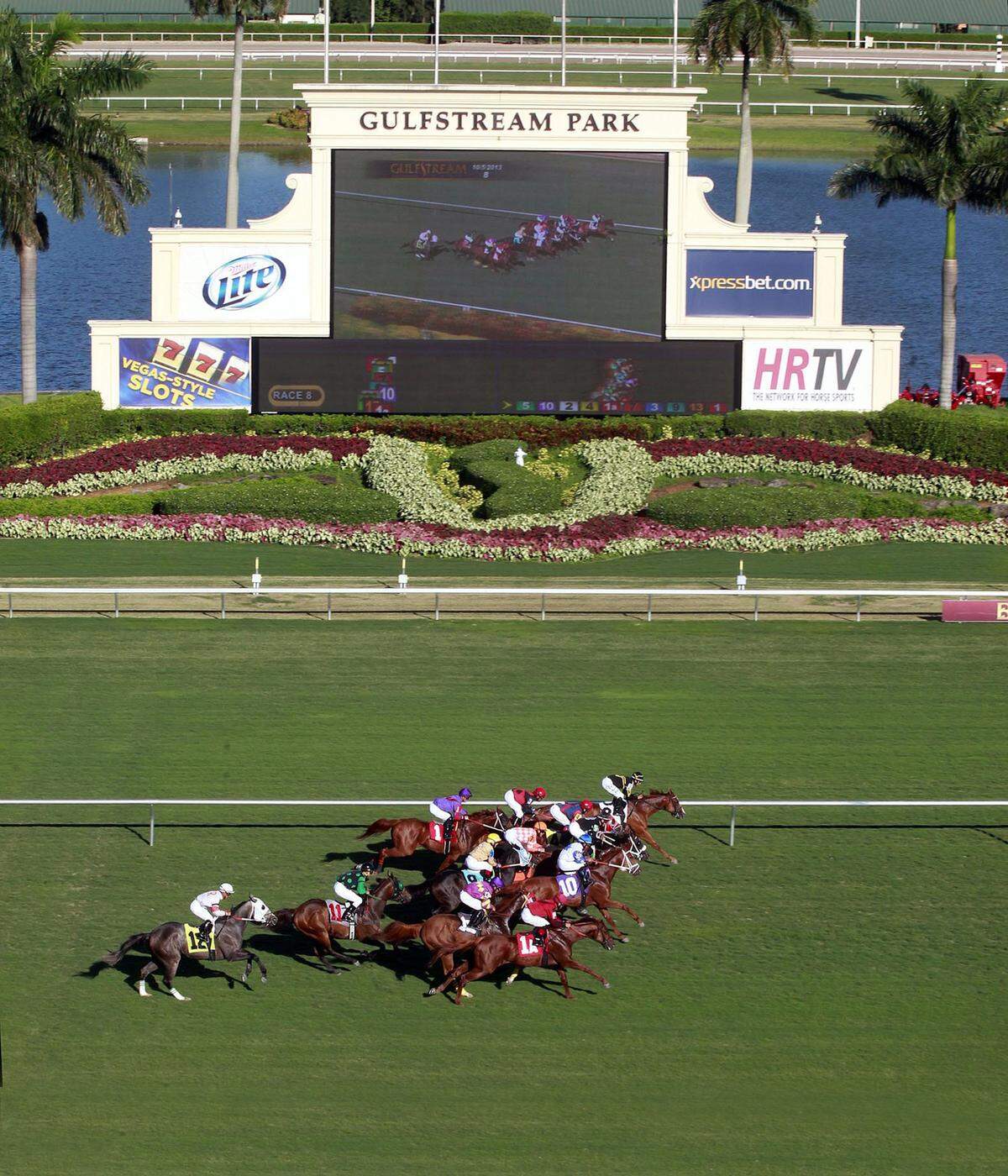
Gulfstream opened on Feb. 1, 1939 as a horse track.
More than 80 years later, the thoroughbreds still race. But you may know the Hallandale Beach complex as much for its casino, concerts, shops and restaurants these days.
Through the years, Gulfstream has tried to branch out from its horse-racing roots. In the 1990s, the track hosted family days with kiddie rides and free oldies concerts with Kool and the Gang, America and Christopher Cross.
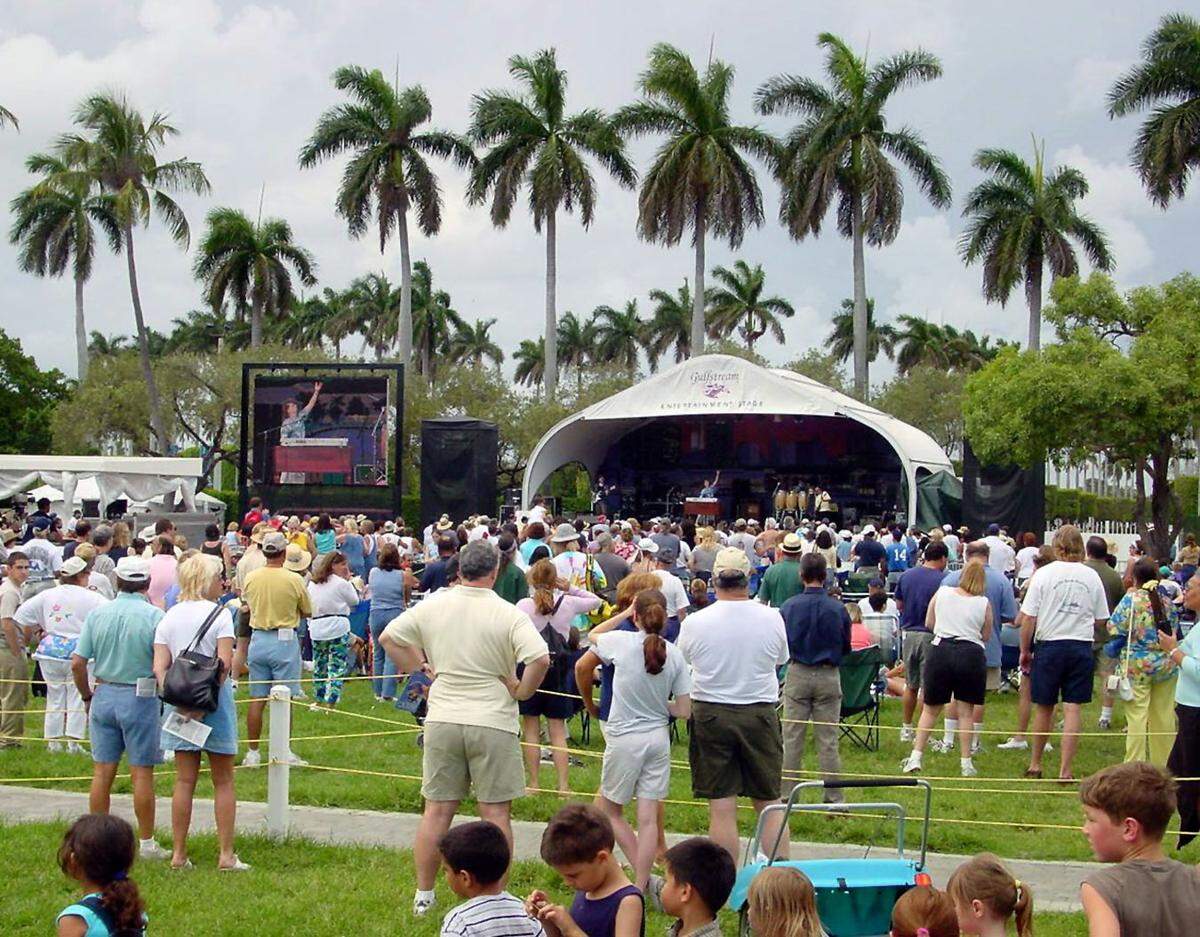
About 10 years ago, a casino opened, with slot machines and card rooms. Then came a village of shops and cafes.
As the home of the Florida Derby celebrates another birthday, here is a look back from the Miami Herald archives at some of the milestones, including an aquarium flood, a giant winged horse, and the forgotten rock music festival that was a precursor to Woodstock.
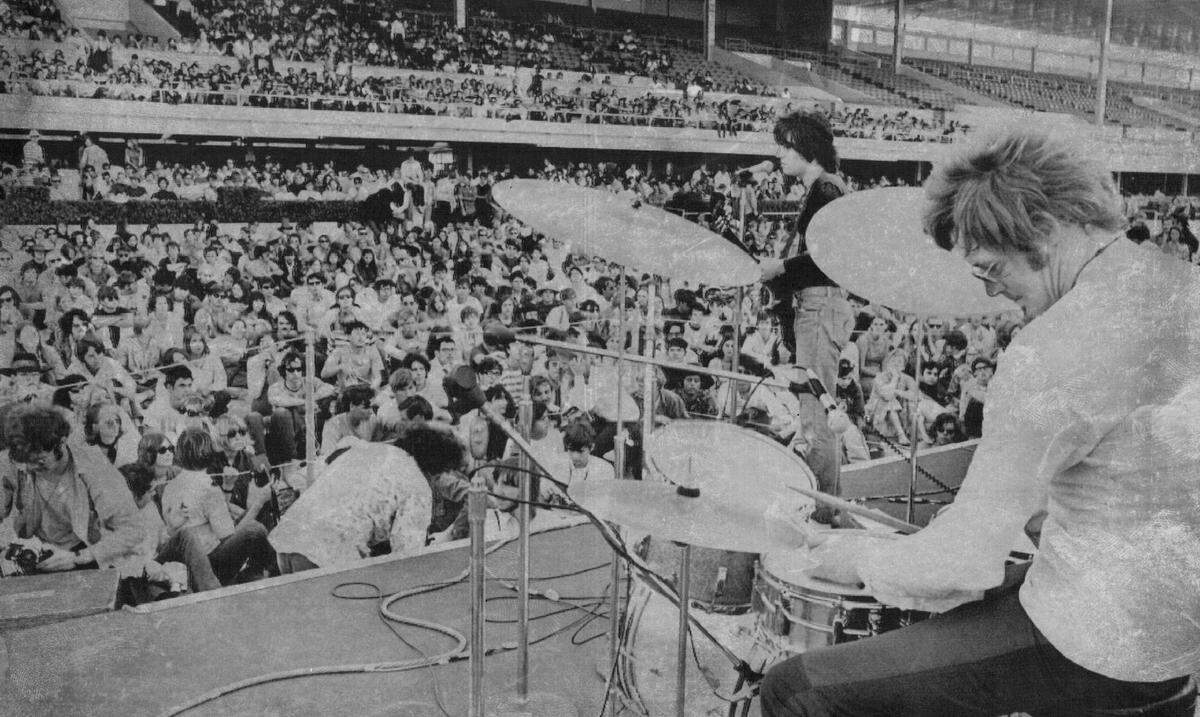
A LOCAL WOODSTOCK
Published Aug. 9, 2009
Michael Lang was frantic. His first big production, the Miami Pop Festival, was about to go down in flames on opening day. As Frank Zappa’s Mothers of Invention tore into their set at Gulfstream Race Track in Hallandale, Lang realized that members of the Jimi Hendrix Experience, scheduled to go on next, were missing.
“We tracked them down through the airline and got a hold of Gerry Stickells, who was Jimi’s road manager,” Lang recalls from his home in upstate New York. “Apparently they had missed the pick-up cars. So we arranged for a helicopter to come and get them.”
“That was a surprise to everybody,” says photographer Ken Davidoff, then 19. Armed with a press pass from the Palm Beach Sheriff’s Department, Davidoff snapped pictures of the dapper Hendrix, bassist Noel Redding and drummer Mitch Mitchell as they scooted under the rotor blades of a chopper and made their way toward the stage set up on a flatbed truck.
“It was a precursor to our hiring every helicopter in New York state next time around,” Lang says. Next time would occur 15 months later when almost half a million music lovers converged on a farm in Bethel, N.Y., for the cultural and generational milestone known as Woodstock. When the roads to the festival site became clogged with traffic, Lang, one of four organizers, once again called out the choppers to deliver his headliners. The “Aquarian Exposition,” which celebrates its 40th anniversary Saturday, made Lang a counter-culture icon.
With defining performances by Hendrix, Janis Joplin and Santana chronicled on film and vinyl, Woodstock still enjoys mythic status in the history of American music. Less well known: Had there been no Miami Pop Festival, which drew more than 40,000, there might have been no Woodstock. Also less well known: The seeds for both events were planted at a head shop in Coconut Grove.
Lang, now 64, grew up in New York, but as a kid he often traveled to Miami Beach with his family. He later became enamored of the Grove and would drive down frequently with buddies while he attended the University of Tampa. As Lang reports in his recently published memoir The Road to Woodstock (Ecco, $29.99), he managed to convince the Army that he wasn’t cut out for the military when his draft number was called, and he was hardly suited for academia.
“I thought the Grove would be the perfect place to go,” Lang says. “It was a very laid-back arts community. A dog could sleep in the middle of the road for half a day and not get run over..... There was kind of an interesting folk-music scene. I thought it was just one of the best places I’d ever been and decided to move there.”
This was in 1966. Lang wanted to open a head shop to cater to the burgeoning counterculture, but his first location on Sunset Drive near the University of Miami was shut down almost immediately for operating without a license.
Then property in the center of the Grove became available.
“It was just a stand-alone building, a typical wooden, Florida house,” Lang remembers. “There was a woodworker named Adam Turtle who was our direct neighbor, and, across the alleyway, Lester Sperling and his sculpture studio. And a guy named Michelangelo [Michael Alocca] had his sculpture studio, and Ludicio had his leather shop.”
“You had more like-mindedness [in the Grove],” says Jack Connell, who runs the website www.themiamipopfestival.com and is working on a Miami Pop Festival documentary with his business partner, Davidoff.
“The Grove wasn’t Haight-Ashbury, but it was maybe 10 percent of it, and that’s as much as you could hope to have in Florida in those days,” Connell says.
Selling drug paraphernalia was legal, but Lang says he and his customers were constantly harassed by police, slapped with tickets for infractions such as jaywalking. A 1967 television expose, Marijuana in Miami, prominently featured Lang’s shop.
“It was good advertising,” says Lang, who recalls that a motorcycle squad was assigned to monitor the shop on Friday and Saturday nights. Drug busts were a constant threat. A Miami Herald story from October 1967, reports the arrest of four Head Shop “hippie types” -- one for possession of marijuana; one for possession of amphetamines, one for interfering with a police officer, and Lang, who was hauled in for doing business two days after his occupational license had expired.
“They used to arrest me every weekend for something,” Lang says. “But the interesting thing was, these [police officers] were guys who were pretty much our age, in their early 20s, and they were pretty good guys; this was just the job they had. And after a while, they started to become much friendlier.”
While Lang was supplying Grove-ites with rolling papers and blacklight posters, he was also becoming active on the concert-promotion scene. With Ric O’Barry (whose new documentary The Cove records the gruesome slaughter of tens of thousands of dolphins by Japanese fishermen) he produced shows with local musicians in the Grove and on a floating stage at Dinner Key. Then, in 1968, inspired by the previous year’s Monterey Pop Festival, Lang and O’Barry decided to do something on a larger scale.
In April, with backing from Marshall Brevitz, a Miami rock-club owner, they began scouting locations. Brevitz could only come across with the money if the event were to be held within three weeks. The partners first talked with Seminole leaders about holding the festival on the reservation, where it was legal to smoke marijuana, but Gulfstream Race Track had the infrastructure in place, and the weekend of May 18 and 19 clicked.

Booking the festival so quickly was nothing short of miraculous. Hendrix, whose star had gone supernova in 1967, was just ending a tour and agreed to an add-on date. The bill was rounded out by an eclectic lineup: Zappa’s experimental Mothers of Invention, rock and roll pioneer Chuck Berry, blues icon John Lee Hooker, extremely bizarre art-rockers The Crazy World of Arthur Brown and Florida-based rock bands Blues Image and Blue Cheer. General admission was $5 a day, tax included.
The Charles Austin Quartet, a jazz group from Miami, was among the local bands invited to play.
“We were between Jimi Hendrix and the Mothers of Invention,” Joe Gallivan, the group’s vibraphonist and percussionist, says from Los Angeles. “We were very avant-garde for the times. People saw us up there with acoustic instruments, and I think half of them went to the restroom.”
Still living in Miami, saxophonist Austin has played with everyone from Lionel Hampton and Dizzy Gillespie to B.B. King and The Temptations. By the mid-’60s, he had become intrigued with experimental jazz and wasn’t about to tailor his sensibilities to suit the rock crowd.
“We played the way we played,” he says, laughing. “They came to hear rock, you know, and we did our regular thing. We were gonna get paid anyhow.”
However, Gallivan grumbles, he and his bandmates are still waiting for a check from Lang.
“Michael never paid us,” he says. Nor was Austin’s band the only party not to collect. The festival ended early on the second day because of torrential rain, and Lang and his partners were forced to declare bankruptcy. Among the unpaid creditors was Miami’s Criteria Studio, which had provided backline equipment for the event.
Even Hendrix’s Sunday show was rained out. Soundman Eddie Kramer corroborates that the psychedelic bluesman wrote his classic Rainy Day, Dream Away in the back of the car that drove the band from Gulfstream back to the Castaways in Sunny Isles where a monumental jam session took place in the hotel’s famous Wreck Bar.
By all accounts, Hendrix’s Miami Pop Fest performance on Saturday was among his fiery best. Recordings, previously available only as bootlegs, can be found online. Hendrix, Redding and Mitchell (who admits in Lang’s memoir that they were soaring on STP) rip into Foxy Lady, Purple Haze and Hear My Train a-Comin’ with bluesy ferocity. Photographer Davidoff, awestruck, snapped photos from just a few feet away using an enormous flash powered by 510-volt batteries that must have gone off like napalm.
“Jimi decided he wasn’t going to have any more of that,” Davidoff remembers. “He walked up to the microphone, and he looked at me, and he goes” — imitating Hendrix’s laid-back drawl — “ ‘There’ll be no more flash photography.’ “
Davidoff says he wanted to crawl under the stage. “There was one of my heroes of rock and roll, scolding me in front of thousands and thousands of people.”
While Davidoff learned the importance of using available light for his concert photos, Lang absorbed even more crucial lessons that would prove invaluable the next summer.
The Miami Pop Festival “absolutely informed a lot of the plans that I made for Woodstock,” Lang says. “Particularly the way the booking was done. Also, I realized that it could rain.”
Although Woodstock’s crowds would frolic in the mud at Max Yasgur’s farm, the rain that fell during the Miami Pop’s second day turned the crowd restive. Savvy blues vet Hooker managed to cool things down with his signature solo-guitar boogie, but Gulfstream’s grounds dissolved under the downpour. The Miami Pop stages were mired at the track for almost a month before they could be removed.
From such experiences, Lang, who is played in the new Ang Lee movie Taking Woodstock by a winsome Jonathan Groff, concluded that fixed venues were out, and open fields were in.
“I felt that the Saturday [Miami Pop] show was magical,” he says. “And if you look at the pictures of the kids in the crowd, they were really having an amazing experience. I realized that it would be even more ideal to have it out in the country and not in a fixed facility. And the other thing was, to have more than three weeks to promote it.”
.JPG "IMG_acuario_2_1_OQ5RI5E0 (1).JPG")
THE BURST AQUARIUM
Published Sept. 3, 2012
The giant saltwater aquarium stood 13 feet tall at Gulfstream Park Racing and Casino in Hallandale Beach, an unmistakable visual treat for visitors to its second-floor casino. Until it sprang a leak Sunday, a little after midnight.
Water damage closed the first- and second-floor casinos. Work continued Sunday night to clean up everything.
Director of gaming Mike Couch said he could not guess when the casinos would reopen or how much the clean-up might cost.
“We’re just working through things, like the games, one by one and making sure things are OK,” he said.
A seam in the 13,000 gallon saltwater aquarium in the second-floor casino cracked open, and about 10,000 gallons of water gushed onto the floor, Couch said.
“It just kind of gave out,” Couch said, “and the water came spilling on out.” The cylindrical aquarium, 13 feet in diameter and 13 feet high, held more than a dozen fish, Couch said, including sharks, a lion fish, a puffer and various tropical fish.
After it burst, casino employees raced into action. They grabbed towels and other supplies from the bar area, Couch said, and used them to plug the leak.
When it stopped, about 3,000 gallons remained in the aquarium. It was enough to keep the fish safe and swimming until employees of the company that cleaned the tank came, gathered the fish and took them back to its headquarters to hold them, Couch said.
The casino was evacuated, and employees got to work soaking up the water.
The water affected two casinos — the second-floor gaming area as well as the one of the first floor. No other parts of Gulfstream were affected.
The buffet, simulcast area, dining rooms and shops went on as normal. The aquarium’s future had not been decided Sunday.
“We haven’t gotten to that point yet,” Couch said. “Right now, our focus is in getting everything cleaned up.”
REINVENTION
Published Nov. 4, 2013
Gulfstream Park has seen its share of financial adversity, so perhaps it’s no surprise that the racetrack and retail center’s latest bid for reinvention looks so epic.
Next year, the owners plan to install a giant Pegasus statue 11 stories tall, with the bronze-and-steel winged horse trampling an equally massive dragon at its feet. Stretching 220 feet long and shipped in 60 packing containers from China, the $30 million statue represents Gulfstream’s boldest venture yet: the centerpiece of a planned destination called Pegasus Park, which eventually could bring in Ferris wheels and water slides to beef up the current draws of dining, shopping, slot machines and horse racing.
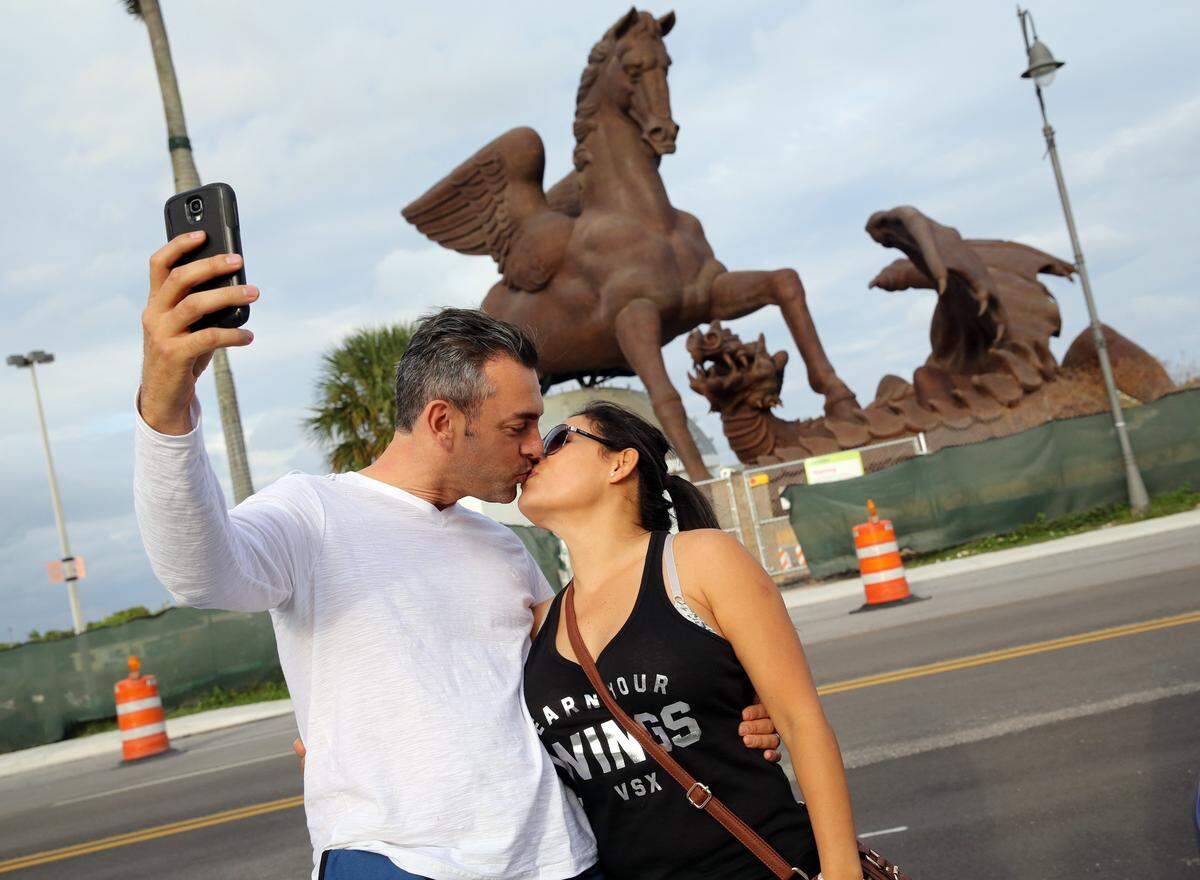
“This will be the biggest attraction south of Orlando,” said Gulfstream general manager Tim Ritvo. Renderings of the 110-foot-tall statue — where automobiles look like Matchbox cars below the horse’s feet — capture Gulfstream’s ambition in creating a landmark that Ritvo says will be striking even for airline passengers above.
The statue also represents a sharp turnaround from Gulfstream’s recent plans to be the region’s next great shopping center.
Now, Gulfstream wants to emphasize fun more than fashion and beef up its entertainment options. The summer of 2013 was the first to have weekend races, ending Gulfstream’s seasonal schedule in hopes of creating more traffic for the property. The park plans to expand its spectator grandstand with the goal of winning back the prestigious Breeder’s Cup.
“There is a lot more to come,” Ritvo said.
The past several years may be some of the toughest ever for the nearly 75-year-old racetrack, which got its start during World War II and still hasn’t fully found its footing after horse racing lost its allure with many gamblers. Gulfstream’s slot machines pull in the least amount of revenue among its competitors, according to state records, and the racetrack filed for bankruptcy protection during the recession.
A long-delayed launch of a new mall and office complex in 2010, the Village at Gulfstream Park, brought disappointing sales and an abrupt departure of a national operator that warned before it left that the center might not be sustainable.
And while retail sales have been growing by double digits, revenue remains soft, according to financial reports, and the shopping center still has about 20 percent of its space to rent.
Original plans called for Gulfstream by now to have added a 250-room hotel and 500 condominium units on its way to becoming a mixed-used destination with the added attraction of gambling. Instead, the delays and management turmoil have left Gulfstream somewhat on the sidelines of South Florida’s rebound in retail properties.
“I think the perception now is it’s going through changes. The owner is trying to bring that area up to the level where it should be. I think a lot of tenants are taking a wait-and-see attitude,” said Mickey Finkle, a retail broker at Koniver Stern, a Miami Beach firm that represented many of the home retailers that were Gulfstream’s first retail tenants in 2010.
Finkle said that clients generally tell him they feel comfortable in malls targeting the high-end of the market, the low-end and the middle, but “what we don’t like to do is go into a market that’s in a state of flux.”
But Gulfstream executives describe a solid pace that will have their property out front in due time. They blame past weak sales on poor management by the Village at Gulfstream’s former manager and co-owner, Forest City. With both the casino and the shopping center now under the same management, Gulfstream owner Frank Stronach is rolling out a strategy that leverages its unique offering — horse racing — into a family destination, with enough entertainment options to satisfy all tastes. In 2010, Stronach’s company bought out Forest City’s 50 percent share of the Village for $14 million, according to securities filings.
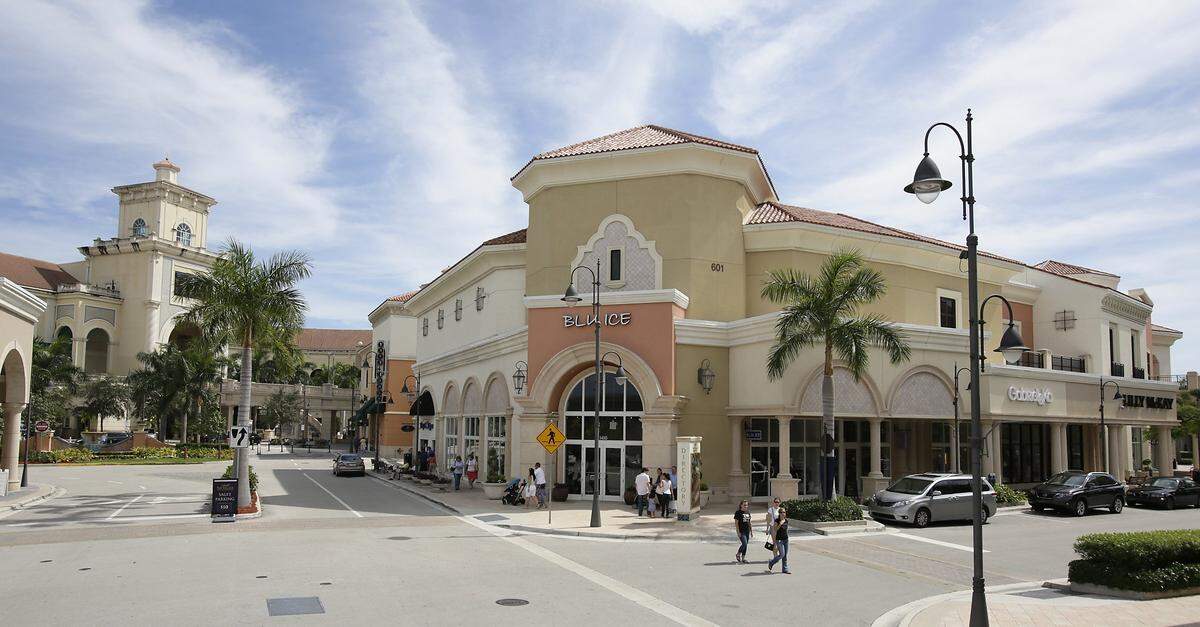
At the time, Stronach’s deputies acknowledged the mall’s retailers were struggling and said they wanted to shift the property into more of an entertainment focus with added night-life offerings and kid-friendly entertainment options.
Stronach’s team sees the Pegasus statue as an apt symbol for the park’s aim to become an entertainment destination for South Florida. Executives recently revealed the coming arrival of the Strike 10 bowling alley and said a movie-theater announcement will be made in the coming days or weeks. (An earlier deal for a high-end cinema, announced in early 2012, apparently fell through.)
The family-friendly atmosphere is what draws Heather Anderson and her family to Gulfstream almost every weekend. On a recent afternoon, she and her husband, brother and sister-in-law sat at a table near the fountain.
“There are so many thing for the kids to do,” she said, saying the open atmosphere helps. “It’s just very comfortable.” Added her brother, Keith Penziner: “They have done a very good job of keeping the gambling and adult world separate from family time.”
Shoppers with kids in tow now can dine at Cool-de-Sac, a full-service restaurant that also features building-block stations, play beauty salons, and a jungle gym for children to enjoy while their parents have a nice meal.
“We think Gulfstream is a perfect fit for us,” said Francisco D’Arcy, manager of Cool-de-Sac. “We see a lot of potential here.”
With nearly 300 acres of land well situated east of I-95 and nearly midway between Miami and Fort Lauderdale, Gulfstream boasts an enviable location in one of the country’s most sought-after markets. Its open-air design offers a more affordable and roomier alternative for retailers to the nearby Aventura Mall, and Gulfstream actually snagged one of its anchor tenants from that popular shopping destination for the Village’s 2010 opening.
“It’s a gorgeous product,” said Arthur Milston, a managing director at Savills, a real estate services firm. “It is in a dynamic location. It’s phenomenal real estate.”
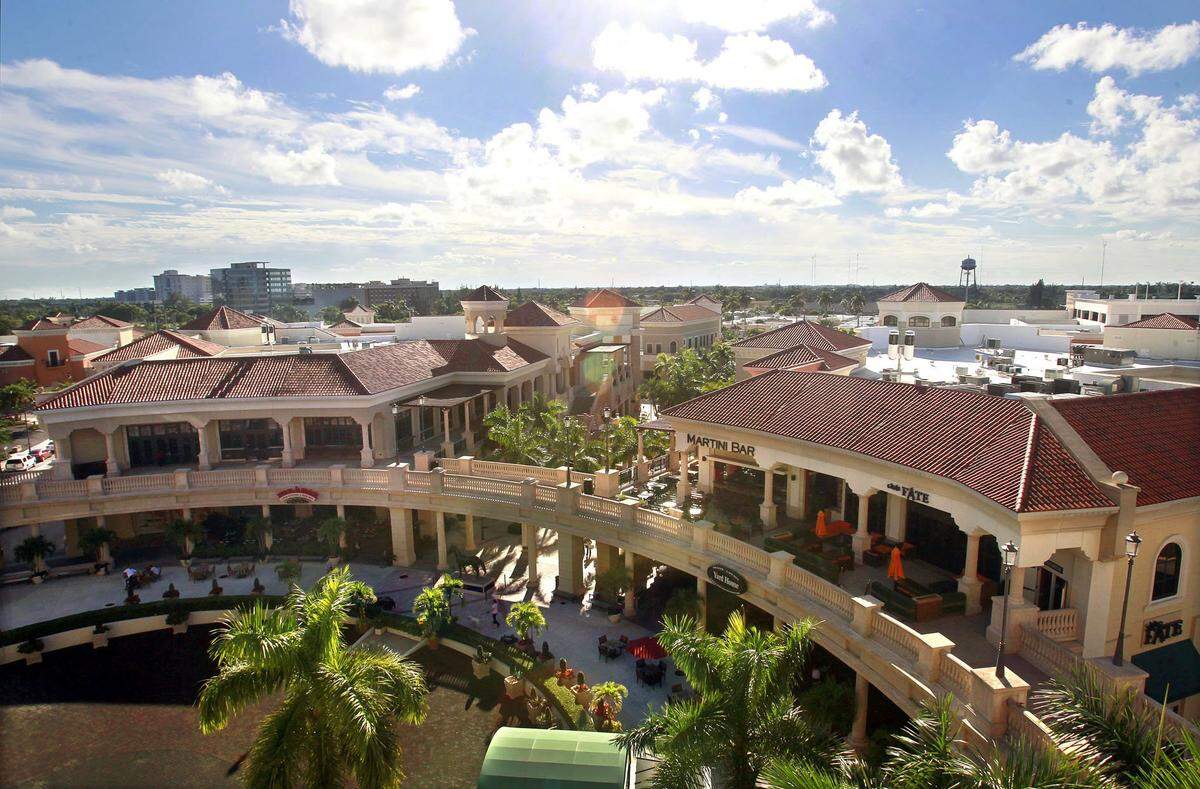
Technically termed a “lifestyle center” for its village-style layout (shoppers walk in the open air from store to store, rather than in an enclosed complex), Gulfstream wants to fill its land with enough uses to sustain each other.
The $245 million Village project included a 125,000-square- foot office complex, whose high-profile tenants include the headquarters of the Zumba fitness empire. The original plans also call for an additional 300,000 square feet of retail to add to the nearly 400,000 square feet already open.
While the original plan called for a 1,500-unit residential complex, Gulfstream executives say they’re close to launching a 200-unit condominium project on the property.
“Gulfstream is in its infancy,” Ritvo said during a recent tour of the property. Ritvo said that the owner’s plan for Gulfstream is to reinvent racing so “it’s no longer your grandfather’s sport.”
While racing will remain the focus, he said the idea is to make Gulfstream a mini-city where people come to live, work and play.
“There is a lot more to come,” he said. Should Florida agree to allow Las Vegas-style casinos outside of Indian lands, Gulfstream could enjoy a major windfall.
After Malaysia-based Genting Group upended the gambling industry in 2011 buy purchasing large chunks of land in downtown Miami, including what was then the waterfront headquarters of the Miami Herald, Caesar’s Palace reportedly linked up with Gulfstream as a partner for a future casino resort if the law ever allowed it.
For now, Gulfstream enjoys its status as a slots casino. With 900 slot machines, Gulfstream generated about $49 million in slot revenue last year, according to state records. That’s down 6 percent from the prior year but still about 16 percent higher than receipts from the year before the shopping center’s 2010 opening.
South Florida’s other slot casinos at race tracks and jai-alai frontons bring in more money: the nearby Mardis Gras casino, at the former Hollywood Greyhound Track, recorded $51 million in slots revenue last year. The Isle of Capri slots casino, at a harness racing track in Pompano Beach, brought in more than both combined, with slots generating $126 million.
Gulfstream has its slots on two floors but hopes to eventually build a stand-alone spot for the gambling facility. The casino and racetrack filed for Chapter 11 bankruptcy protection in 2009 as part of a wider filing by Stronach’s Magna Entertainment, which owned tracks across the country.
A 2010 court filing for the Gulfstream track and casino showed it recording about $2 million a month at the time. This was during construction of the Village, and executives pointed out their gambling traffic was disrupted. Stronach eventually reorganized the company and exited bankruptcy protection still in control of Gulfstream.
But he faced a new shopping center saddled with a rough economy and a strategy that Gulfstream executives now see as too reliant on shopping. The 410,000-square-foot shopping center opened in early 2010, a time when spending was just beginning to rebound from a sharp downturn in South Florida. Premier tenants Crate & Barrel, the Container Store and Pottery Barn thrived, but Forest said its soft-goods retailers — such as clothing stores and boutiques — struggled.
One problem: the heat as shoppers walked open-air sidewalks from one location to the other. Restaurants came and went in the opening months, as well.
Securities filings by publicly traded Forest City told a grim story: when the center opened in early 2010, Forest City valued its 50 percent share of the venture at $102 million. Within a year, it had dropped that value by almost 70 percent, knocking $70 million off its balance sheet as it dealt with what it described as “a longer lease up period than originally anticipated and increased rent concession to the existing tenant base.”
By the spring of 2012, Forest City wrote down the value to zero, warned investors the shopping center was not generating enough cash to make debt payments and that foreclosure was a possibility.
In July 2012, Stronach’s group bought out Forest City’s 50-percent share of the shopping center, paying the company $15 million, according to Forest City filings. Stronach recently negotiated an extension on their debt, and has reported no overdue payments in quarterly disclosure statements to investors.
Gulfstream does not disclose sales figures, but publicly available financial reports suggest revenue figures far below industry norms. Hallandale Beach allowed Gulfstream to create its own taxing district to build the shopping center.
Along with retaining some property taxes, the district charges customers a .05 percent tax on all shopping-center sales to fund the center’s parking garage, roads, landscaping and sewage system. Gulfstream borrowed $106 million for the effort, and special property tax and sales tax go toward the project’s yearly $4 million debt service payments.
In the 12 months that ended Oct. 1, 2012, the Gulfstream Park Community Development District reported about $365,000 from the sales tax - meaning it would have recorded $71 million in sales. That’s 12 percent higher than the prior year’s $64 million tally. But even with the growth, the sales figure falls below industry averages.
In its most recent report, Forest City reported average sales of $480 a foot for its portfolio of 44 retail centers and the International Council on Shopping Center reports average sales-per-foot of $460 in a recent report. In a 2012 analysis, the Bal Harbour Shops ranked No. 1 in that category, generating $2,555 in sales per square foot. Gulfstream’s nearby competitor, Aventura Mall, was listed at $1,100 per foot.
Gulfstream executives would not confirm or deny the sales figure imputed by the fee revenue. But Lesllie Vasquez, assistant general manager at Village of Gulfstream Park, noted that the mall was under Forest City’s control during the time of the report. “There was very poor management in the past,’‘ she said. A Forest City spokesman declined to comment.
The next steps for Gulfstream aren’t firm. While the Pegasus statue components are set to make their journey from China early next year, it’s unclear whether a full amusement park will follow.
Gulfstream’s owners temporarily dropped plans for an amusement park from their zoning application when they hit resistance from the city’s planning department, and the retail complex has notified lenders it will stretch its final construction plan five years into 2022.
But with an addition of about 250 horse stalls, the track’s larger stables have allowed it this year to expand its racing offerings. Already, weekend races are on the schedule — bringing in more foot traffic that Gulfstream executives hope will boost sales at shops and restaurants.
While the racing season typically ends in April, 2014 will be the first with a summer schedule, too. The added activity means an optimistic outlook for Herb Barker. He owns the Barker Animation Art Gallery in the Village, where a life-sized statue from The Simpsons out on the sidewalk helps draw customers into his store.
He called signing his Gulfstream lease “a smart decision” that is looking smarter.
“I have a lot of faith,” he said, “that it is only going to get better.”
THE CASINO
Published Nov. 15, 2006
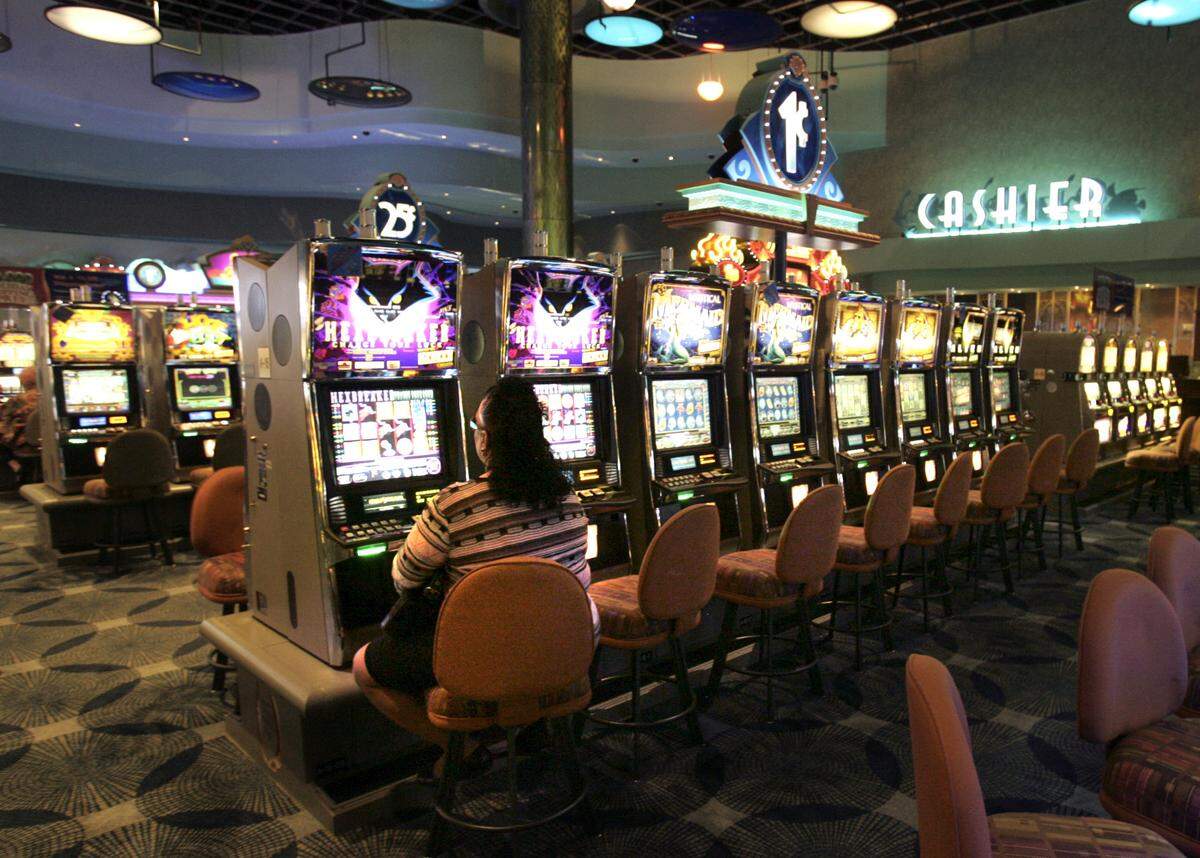
Gamblers today will be the first in Florida to try their luck at Vegas-style one-armed bandits when Gulfstream Park Racing & Casino opens.
It is the first Broward County parimutuel to open with the Class III slot machines - just like the ones in Las Vegas.
“After months of anticipation it’s come to an end. People get the chance to play the first real slots in Florida,” Paul Micucci, the park’s president said Tuesday night.
The casino will be open today from noon to midnight in what it calls a “soft opening.” “Once everyone hears about us they’ll come back many, many times,” Micucci said.
The state conducted onsite tests Monday and approved Gulfstream Park’s opening at noon today, said Kristen Ploska, press secretary for the Florida Department of Business and Professional Regulation. The track hosts an invitation-only gala Thursday night and the advertising kicks off Friday, Micucci said.
Gulfstream has 516 slot machines and eventually will have 1,500, the maximum number allowed by state law. Broward voters agreed more than a year ago to allow slot machines at parimutuel venues.
This story was originally published January 27, 2019 at 11:41 AM.