These Girl Scouts are golden: High-achieving teens create a lasting impact
By Rory Clarke
Former Girl Scout and Miami-Dade County Mayor Daniella Levine Cava, in black dress, with some of the Girl Scout Gold and Silver award honorees and Girl Scout of Tropical Florida staff and board members at FIU’s Wertheim Performing Arts Center on June 5.
Madison Fernandez, 18, had long taken the 65-acre A.D. Barnes Park for granted. She had grown up across from it in Coral Terrace and had visited often, she said, but she’d never taken full advantage of the county park’s offerings.
But as the COVID pandemic deepened in the past couple of years, so did her appreciation for the Miami-Dade County park’s Nature Center, where she and her family would take their socially distanced breaks. “It was kind of our way to relax, to get out of the house during quarantine,” she says.
So when the St. Brendan High School graduate was searching for a project to cap off her Girl Scout career, she took a harder look at the park, and saw a golden opportunity. As her Girl Scout Gold Award project, she began a months-long project to redo the park’s community garden and create an educational station for its young campers and other visitors.
Madison was one of 28 teens in Miami-Dade and Monroe counties who are part of the 2022 class of Gold Award Girl Scouts of Tropical Florida.
The Gold Award is the highest achievement a Girl Scout can earn — the culmination, often, of a years-long membership in the organization. And before they reached this opportunity, most of them had achieved earlier steps — a Bronze Award and a Silver Award — that prepared them to tackle their most difficult projects yet. In many cases, the COVID crisis complicated their Gold Award journeys.
Surrounded by community leaders, alumni and family, the honorees were recognized at the Scouts’ 2022 Highest Awards Ceremony, held June 5 at the Florida International University Wertheim Performing Arts Center.
In the words of the organization’s leaders, “This year’s winners created change by tackling issues from digital literacy to redefining beauty to helping kids in the hospital heal with story time, mental health and the environment. They addressed the root cause of a problem and then designed, implemented innovative solutions to drive change and led a team of people to success.”
“We couldn’t be prouder of our Girl Scouts who have taken on many societal and environmental concerns with innovation and energy. These are the problem solvers. The go-getters. The world changers. That’s what it means to be a Gold Award Girl Scout,” said Chelsea Wilkerson, CEO of Girl Scouts of Tropical Florida in a press release.
All the winners presented strong projects. Here’s a small sampling, with a look at what it takes to receive a Gold Award.
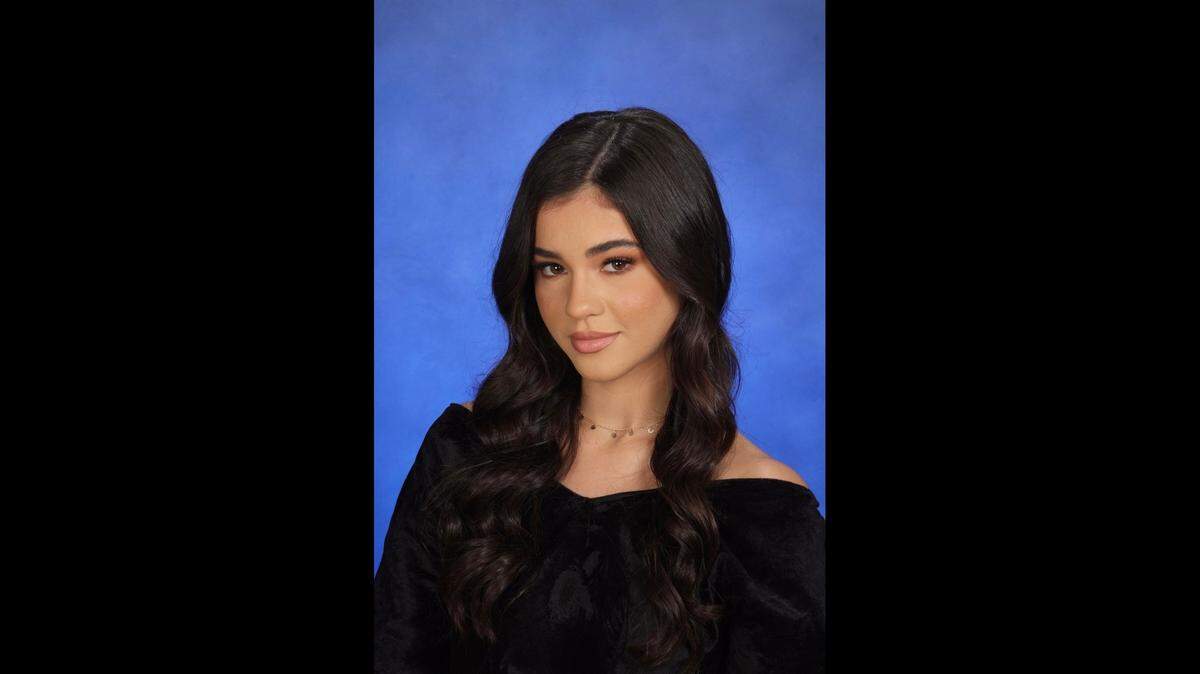
Madison Fernandez.
1. Madison Fernandez
Born and raised in Miami, Madison had been a Girl Scout for over a decade, since the second grade at David Fairchild Elementary School. During summers at Camp Mahachee, the venerable Scout camp adjacent to Miami-Dade County’s Matheson Hammock Park, she developed her love for nature. It’s unsurprising that she’d choose to boost a county park’s environmental offerings when she could.
Like many of this year’s Scout highest achievers, Madison was a standout at her school, St. Brendan High. She played soccer, was a member of several honor societies, and was one of her school’s Miami Herald Silver Knight nominees. She also worked part time at Le Petite Youth Spa for kids, in Coral Gables.
Her schedule became more crowded when she took on the makeover of A.D. Barnes Park’s Nature Center — which included a heap of paperwork, planning, scheduling, coordinating and communicating.
Madison’s goals were to revamp the nature center’s indoor garden by re-planting, re-mulching and “re-soiling” it. To design and paint a mural above the garden “to bring a new aura to the space.” And to create a garden maintenance plan for the park volunteers to follow long after she went to Florida State University in Tallahassee, where she’s now a student.
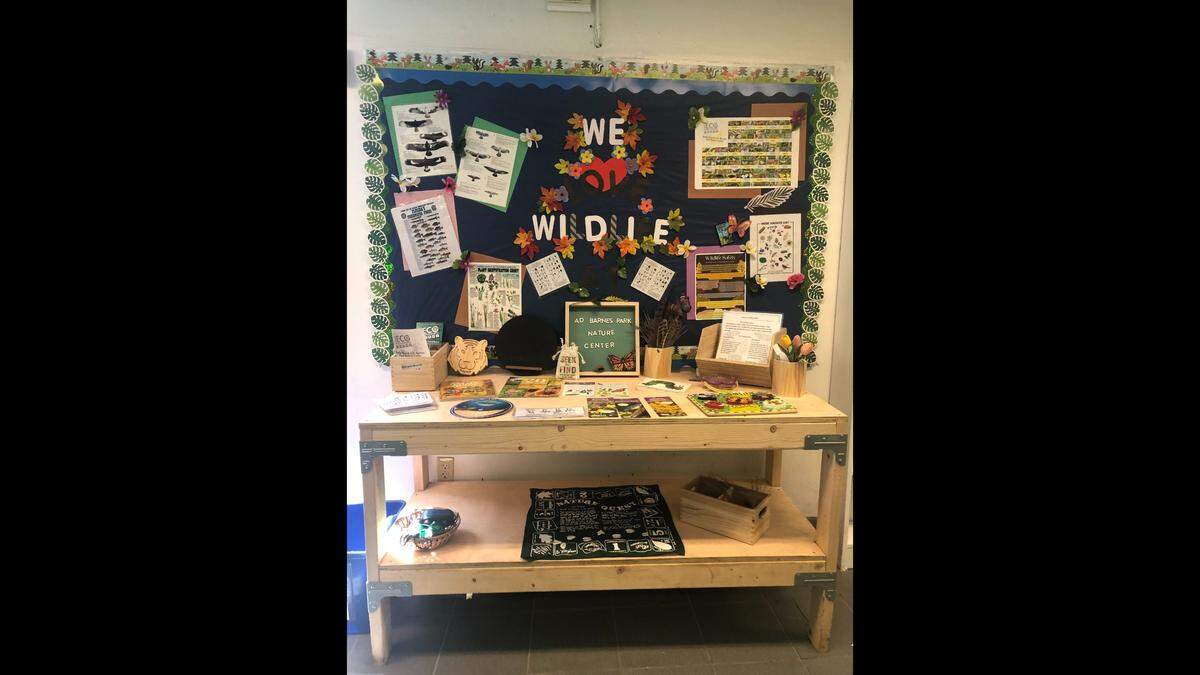
“For the educational aspect of this project, I hand-crafted wooden benches for the space and a wooden table where I displayed my personal research of nature plants and animals of the park. I also included many interactive learning games for children to engage with and learn from at this station,” she said in a summary of her Gold Award undertaking. “My project helps promote educating the youth about their environment in a fun and engaging manner. Both campers and visitors of the park have the opportunity to immerse themselves in what their local nature has to offer with my service project promoting the knowledge of nature even further.”
Madison consulted first with her troop leader, Jen Joseph. She also reached out to her on-site contact — Candida “Candi” Medrano, the interpretative programs supervisor/site manager at A.D. Barnes Park Nature Center. Medrano guided much of her work. “She knew what the park needs, what would be the best,” Madison said.
Then she enlisted help along the way from other busy teen Scouts — Landyn Dewhurst, Sofia Lardizabal, Kylie Louchard and Ella Romero.
The work/display center at A.D. Barnes Park Nature Center. A.D. Barnes Park
When it was time to get her hands dirty, Madison bought around four bags for mulch for 10 plants that had to be native to Florida or “Florida-friendly,” as Medrano puts it. Madison used pineland croton and milkweed. And the eye-catching Callicarpa americana (American beautyberry), a versatile shrub upon which birds and small mammals feed. You can also make jam from its berries and use the leaves as insect repellent. (The Beautyberry and milkweed withered in the heat this summer, but Medrano said they’ll eventually be replaced.)
To build the three benches facing the nature center’s garden, Madison had to learn some woodworking. The benches are 3 feet long and 1 foot wide, with the top surfaces well buffed so they won’t scrape sitters. Her parents, Mia and Wilson Fernandez, helped her to measure and cut the wood, and drill the screws, with precision.
Madison also made a work/display table at the garden. She designed and painted a whimsical mural with a nature theme. She purchased items that would help kids interpret what they saw around them in the park — little animal puzzles, a nature guide and nature books, and a contraption that catches bugs and lets you look at them up close before you let them go.
She paid for many of the project’s supplies with about $400 she had earned at her job.
Doing all this required small but constant, careful steps for 107 hours between March and September 2021.
Madison, who was then a rising senior, found that balancing all that she had to do was tough. At school, she was also working on her college essay and preparing for her SATs while pushing to keep her grades high. “I found it hard to make time for this project,” she said. She finally settled on using a hard-bound, old-school planner as the way to control her own schedule. “And that worked really well for me.”
At FSU, Madison is majoring in business and finance; she might want to open a business someday. But she looks back on her Gold Award work with pride, satisfied.
“It’s something for people to enjoy for years to come,” she said of her work to revamp the nature-center garden, which is at the back of A.D. Barnes Park, 3401 SW 72nd. Ave. The nature center is a part of the Miami-Dade Parks, Recreation and Open Spaces Department.
Medrano, effusive about Madison, said the teen really “nailed” the makeover: “You could see the passion she had for the project. I loved working with her and her project.”
And the park is grateful, Medrano says. Madison’s work strengthens the park’s efforts in environmental education, especially for kids; the nature center hosts nature classes for home-schooled children, for instance.
“We’re teaching these kids about environmental education, and her project really brings everything together,” Medrano said.
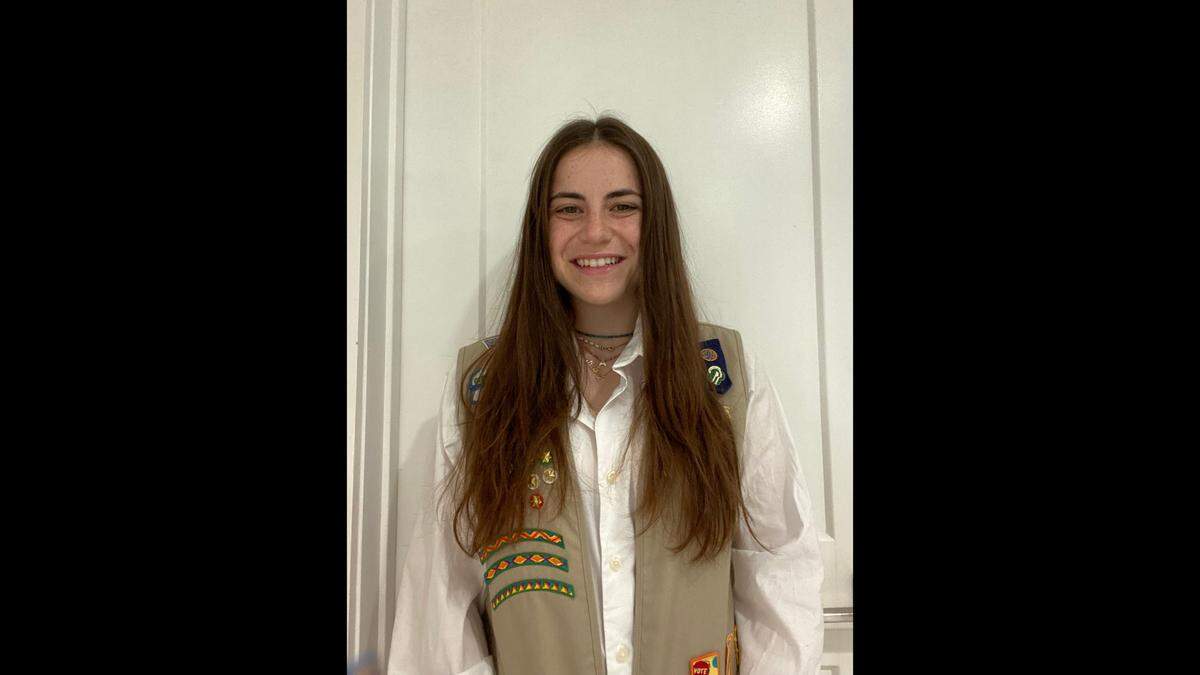
Jauntre’ Gray.
2. Jauntre’ Gray
Jauntre’, 18, is a star student, like other Gold Award winners.
At American Senior High, she had a 4.9 GPA and was in the National Honor Society. She was in the Cambridge Academy, a program for advanced high school students that lets them receive college credit. She also was in many clubs and activities such as Women of Tomorrow, the school’s Academy of Biomedical Careers, and varsity cheerleading. She’s now beginning her career at the University of Florida in Gainesville.
A Girl Scout since she was 5, Jauntre’ has reached high-profile levels of responsibility in the Scouts. She has been a delegate for Tropical Florida at the national Girl Scouts Convention, which bills itself as the world’s largest girl-led event for girls and young women; a Girl Representative to the Board of Directors of Tropical Florida; and a member of the Girl Advisory Board for Girl Scouts USA.
In short, Jauntre’ is a super-organized superachiever. And she’d like to see others become more like that.
That’s what provided the inspiration for her Gold Award project — an organization called Students Thinking Ahead (studentsthinkingahead.com), which she started working on in her sophomore year and continued through her senior year.
“In my sophomore year of high school, I was having a discussion with my classmates. They felt I was always prepared,” Jauntre’ recalled. Her friends, she said, told her, “You know so much about scholarships, college applications, resumés” — a background she acquired through her many club memberships and activities.
That set her to thinking about how others might attain the same sort of skills and opportunities that had helped her along the way.
So she created Students Thinking Ahead, which provides some college-prep tools for younger high school students.
Sounds easy, but it wasn’t.
Most similar programs, she found, focus on juniors and seniors, when the process is already in motion, butting up against stiff deadlines and frayed nerves. Her ambition was to instead focus on helping younger high school students learn what’s needed to succeed at preparing for college — skills like learning how to create and code resumés, how to apply for admission, how to apply for scholarships.
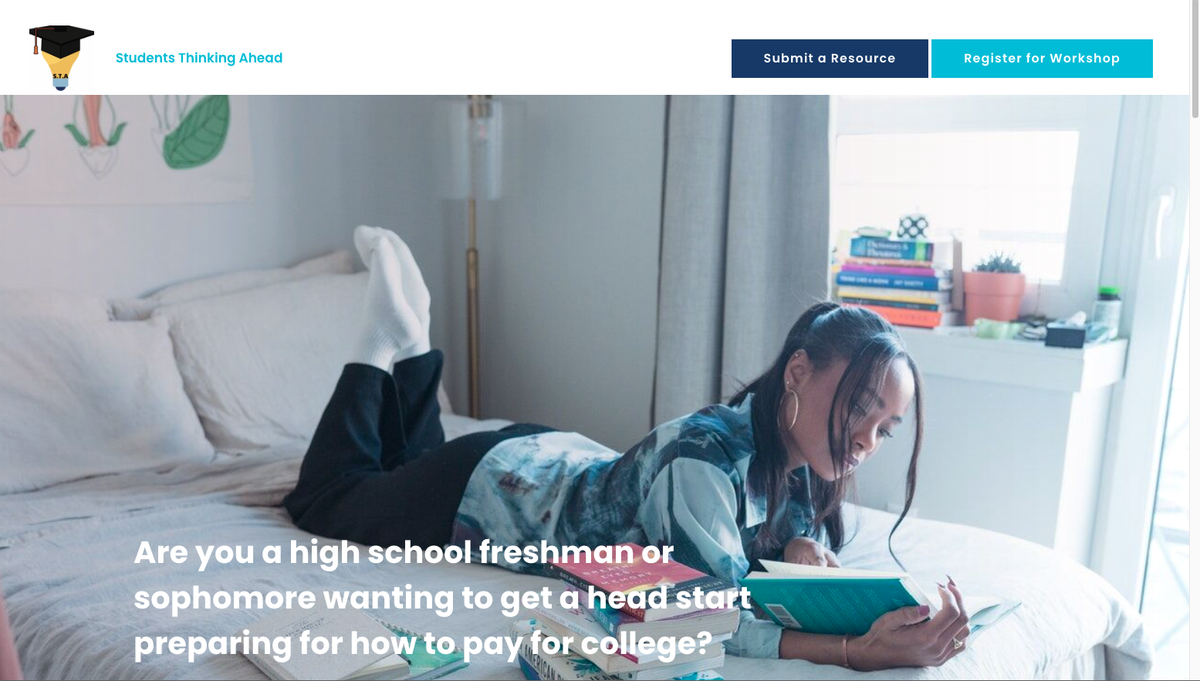
The studentsthinkingahead.com site provides important resources that help educate parents as well as students. Live or online workshops are also an important part of Students Thinking Ahead.
The studentsthinkingahead.com site that is at the heart of Jauntre’ Gray’s Gold Award project.
To create this, and after her project satisfied the Girl Scouts’ Gold Award requirements, she partnered with her school’s College Assistance Program (CAP) advisor Martha Subias-Porro “to make exposure to this program a part of the curriculum,” as she wrote in her summary of the project. “In the same fashion that an upperclassman typically has workshops or other opportunities on an ongoing basis, so will the underclassmen.”
And with an eye toward making the project sustainable, she also committed to maintaining and updating the program as it continued, and for planning how it would be maintained after she graduated.
Jauntre’ credits several who helped her, including her mother, Trenyse Cowert; her godmother, Shedaria Deleveaux; and troop leaders Janice Coakley and Kanika Coakley, with help from Dana Placide. Shonna Smith in Virginia, an entrepreneur well-known for creating coderighter.com, a Web and information-tech consultancy, advised Jauntre’ about how to create the website.
Setbacks? There were a few.
The COVID pandemic seemed to muffle communication as Jauntre’ tried to explain her goals to others and develop her audience: “It was hard raising awareness.”
Also, her first Girl Scout Gold Award advisor withdrew, and Jauntre’ wasn’t allowed to proceed until she got a new one. Momentum paused as she searched for a new advisor, with the help of her troop leaders and her mom.
She pushed on, though, crafting the lessons that help makes her site interesting and useful. Such as, instructions on how to create a resumé. How to fill out applications for admission and scholarships. Identifying resources and explaining them in-depth.
Perhaps hardest of all was that Jauntre’ had to learn what was do-able.
Originally, she envisioned her program reaching as many schools and outlets as possible. So she approached the Miami-Dade County Public Schools office about the possibility of making Students Thinking Ahead available district-wide. Employees there applauded her idea, but told Jauntre’ that she was thinking too big. Start small, they advised. Allow the program to gain traction and grow on its own.
“At the beginning, I was trying to get my project outside of my school,” Jauntre’ said of her initial search for a wide audience.
When that didn’t go as she hoped, she decided instead to focus on small groups, like her own Girl Scout Troop 347, which is based in Miami Gardens and which includes Scouts in grades six through 12. She held workshops for this group in early January. And she held workshops at the New Jerusalem Primitive Baptist Church in February.
Students Thinking Ahead at American Senior High is shepherded this school year by Subias-Porro, the CAP advisor. Although Jauntre’ is no longer a Girl Scout and is in Gainesville, she still plans to do what she can to ensure the program is sustained.
Mostly, she’s busy these days working toward her own professional goals, with persistence honed in the Scouts.
Jauntre’ is majoring in nutritional science and planning to take tough STEM courses such as microbiology. Then she’s looking at dental school and a career path that will take her eight to 10 more years of study. She wants to be an orthodontist. It’s a profession, she says, that appeals to her science-nerd side while letting her help people.
She hasn’t abandoned Scouting, though. Already she’s considering starting a UF chapter of Campus Girl Scouts. That’s the Girl Scouts USA organization for college-age adults who want to volunteer to support their local Girl Scout troops.
It would be a way, Jauntre’ says, to help guide future generations of Scouts. To give back.
Abbie Lambert.
3. Abbie Lambert
Abigail “Abbie” Lambert, 17, is still in high school, now starting her senior year at Palmetto Senior High. But she has achieved the Scouts’ Gold Award, with a sophisticated project that was born in the pandemic: Project DIGIT addresses access to basic digital learning skills and mental health for high school students.
She began her Scouts career as a “Daisy,” the youngest is student council president and yearbook editor-in-chief. She’s president of Tutoring for Tomorrow, a college-prep club that she’s belonged to since sophomore year. (“I love everything, science and math too.”) She also belongs to the social sciences honor society, and she plays for Palmetto in the National History Bee & Bowl, a series of history quiz tournaments for students and teams nationwide. (“Ransom is our biggest competition.”)
When Abbie’s AP history teacher, Julianne Farkas, was looking for a liaison with a program that taught digital literacy to elementary school children from diverse backgrounds, she turned to the star Palmetto student to to help forge the program.
In the summer of 2020, as the COVID pandemic was bearing down, Palmetto worked with Achieve Miami, an education nonprofit based in Coral Gables, to help prepare young kids for the coming school year. Abbie spent two weeks creating the Chromatics program, as it was called, designed to help kids for a year of Zoom classes and online learning. The lessons, which were taught in four session in the month before school started, were basic — “here’s how to turn it on, this is what happens when it shuts off, very simple functional stuff,” as she puts it.
Abbie Lambert gives a presentation on Day 4 of Project DIGIT at Palmetto Senior High. Courtesy Abbie Lambert
The program ended just as Abbie decided she wanted to build upon it. So she and the Chromatics team pivoted: They knew the skills were useful and could be applied to a different audience. “My teacher was very adamant that her students needed this just as badly but in a different way,” Abbie said.
What followed also developed into her Girl Scout Gold Award project.
Abbie began by exploring the research, literature and other resources about online learning for a few hours each day. “My entire sophomore year was basically research.”
Then she sent surveys to students at all grade levels — over 500, “as many as we could — to find out what they knew about digital literacy. She asked how much they knew about their computers; how much they knew about using technology effectively, efficiently and safely, in a productive way to accomplish tasks.
Digital natives — tech-savvy people who grew up with the technology — are not necessarily digitally literate, she found.
For example, consider how students correspond with teachers in online learning situation. A digitally literate student will have the correct style of typing, correct salutations and etiquette, and the correct subject lines. One who’s only a digital native might send emails in an informal or even inappropriate way, inadvertently conveying disrespect.
She also asked how students felt as they used technology, wondering if there was a connection between overuse of it and mental health issues.
“I know that [mental health] is something that a lot of high school kids struggle with and have to manage as high school became harder and harder,” Abbie says. “One of the big things that I found in my research was a strong correlation between screen time and mental health.”
After evaluating the survey results, Abbie decided to target ninth-grade students: “They knew a great deal about tech but lacked the digital skills that I was best at teaching.”
In April 2021, Abbie started figuring out how to present all that she had learned, and decided on an interactive presentation that involved student feedback. She modeled her program after the Health Information Projects (HIP) that has been used in Miami-Dade’s public schools since 2009. That program relies on high school juniors and seniors, who’ve undergone extensive training, to teach teach health education to their peers.
“Because the most effective way to communicate with students is through students,” Abbie says.
She recruited three other sophomores — Jack Proulx, Ziyah McGriff, Clayton Detant — and then outlined each session of Project DIGIT, as she named it. She did this even before she presented her proposal to her school principal in the summer because “I wanted to have all of my facts planned out.”
She piloted the program in an AP classroom in November. And then she proposed the project to the Girl Scouts early this year for her Gold Award.
DIGIT has four sessions of about an hour each. Each begins with a survey or a conversation before and afterward to assess what learning has taken place. Each also includes a component that speaks to maintaining mental health.
In Day One, after introductions (“Who we are, what we’re gonna do”), there was a lesson about digital footprints: “Everything you put online stays online forever,” Abbie notes.
Then the class talked about creating strong passwords and password security. “We went over the qualities of a good password... We had [students] create passwords that they could used, and create a locked note on the notes app [on computers and cellphones] to keep them safe.”
And then, “we practiced typing,” to tamp down sloppy habits. “So we created a typing.com account.” Students also took a typing test “to see where they were,” and typing was also practiced in DIGIT’s other sessions.
She used an interactive presentation software called Mentimeter, which provides interactive slides, using QR codes. Students used their phones to access the QR codes to fill in answers and responses.
DIGIT’s Day 2 lesson explored email practices: personal vs. school or professional; appropriate email addresses. “And stressing going into your [email] “in” box and always reading your emails.” Teens tend to use texts, chats and other faster platforms, rather than email, to communicate. So they often let their emails pile up so quickly that they tend to ignore it, Abbie observes.
The class ended with kids writing down their feelings and emotions, then shredding the paper: “The act of writing “helps release stuff from your brain.”
Day 3 stressed digital organization: creating folders in Google Drive, “keeping things together that belong together, and naming documents, in a way so that you know where to find them.”
Then, a lesson on digital time management, calendars and reminder systems. Next up was teaching the Pomodoro Technique of time management, which is designed to improve mental focus. Twenty-five minute intervals of work are punctuated by short breaks — rather than working through a long stretch nonstop. Abbie says it has strong benefits for digital literacy because it helps manages distractions: “It’s a better way to study for exams, get your homework done, and do anything, really.” This session ended with a fun exercise: Coloring, which has “repetitive movement; colors make the brain happy.”
Day 4 included a session on phishing and digital scams, including how to avoid and recognize fake emails, fake websites. And then the class moved on to research safety and “lateral reading,” in which sources for material are checked while material is being read. “It’s away to verify what you’re reading and not rely on single authority or source,” Abbie says.
The class practiced with exercises provided by Civic Online Reasoning, a program produced by Stanford University. The session’s mental health component: making “fidgit” toys out of ice-pop sticks, marbles, foam cubes and rubber bands. Fidgiting, Abbie says, has many benefits, including helping to increase alertness, and combating anxiety by giving the mind something else to focus on.
Last year, the fledgling program reached about a few dozen students or so. She has received overwhelmingly favorable feedback, as seen in surveys and comments from students and teachers.
“The results were crazy inspiring,” she said. “But if I changed even one kid’s life, it was successful for me.”
Whether DIGIT continues depends how interested people are in running it, she says. “I would love to hand it off. ... I have to see when I graduate” what will happen.
As for her own future, “I honestly have no idea about what college I’ll go to. I loved this whole process of problem-solving... I’m still figuring it out.”
===
Girl Scouts Awards 2022
Special guest speaker Miami-Dade County Mayor Daniella Levine Cava, a Girl Scout alum, addressed the award-winning Scouts during the awards ceremony on June 5 at the FIU Wertheim Performing Arts Center, celebrating the girls for their achievements and urging them to “return to Miami and invest their talents in their community.”
Philanthropist Ana Veiga Milton, a Girl Scout alum, presented scholarships to two Gold Award Girl Scouts on behalf of UHealth Jackson (Sofia Tapanes) and the José Milton Foundation (Alexis Blackwell).
The outstanding Gold Award Girl Scouts in Miami-Dade include six prestigious Miami-Dade County Silver Knight Award nominees, presented by The Miami Herald, with one Silver Knight Winner in the Digital and Interactive Media category, Sofia Tapanes. Tapanes is a graduate of the 2022 class of Our Lady of Lourdes Academy.
The Gold Award winners who were honored are: Calista Ayala; Aanzia Baid; Samantha Berlan; Alexis Blackwell; Savannah Cain; Danielle Calejo; Isabella Diaz-Genova; Harper Elmslie; Madison Fernandez; Olivia Gonya; Jauntre’ Gray; Thea Hartley; Abigail Lambert; Caitlin LaPierre; Madison Monroe; Brianna Page; Natalia Reed; Ellie Reyna; Grace Rodriguez; Megan Sabates; Emma Sanchez; Savannah Sarofoglu; Sofia Tapanes; Jessica Vandergriff; and Mia Wells.
This story was originally published August 26, 2022 at 12:46 PM.

.jpg "Former Girl Scout and Miami-Dade County Mayor Daniella Levine Cava, in black dress, with some of the Girl Scout Gold and Silver award honorees and Girl Scout of Tropical Florida staff and board members at FIU’s Wertheim Performing Arts Center on June 5.")
_fitted.png "students-thinking-ahead-founder-jauntre-gray-photo-877x1024 (1)_fitted.png")
.jpg "day 4 presentation (1).jpg")