
A leafy Gables garden full of history will be felled as a new condo rises. Look at what we’ll lose | Opinion
Recently I got a call from Bonnie Bolton, who like her late mom Roxcy Bolton, is a community activist.
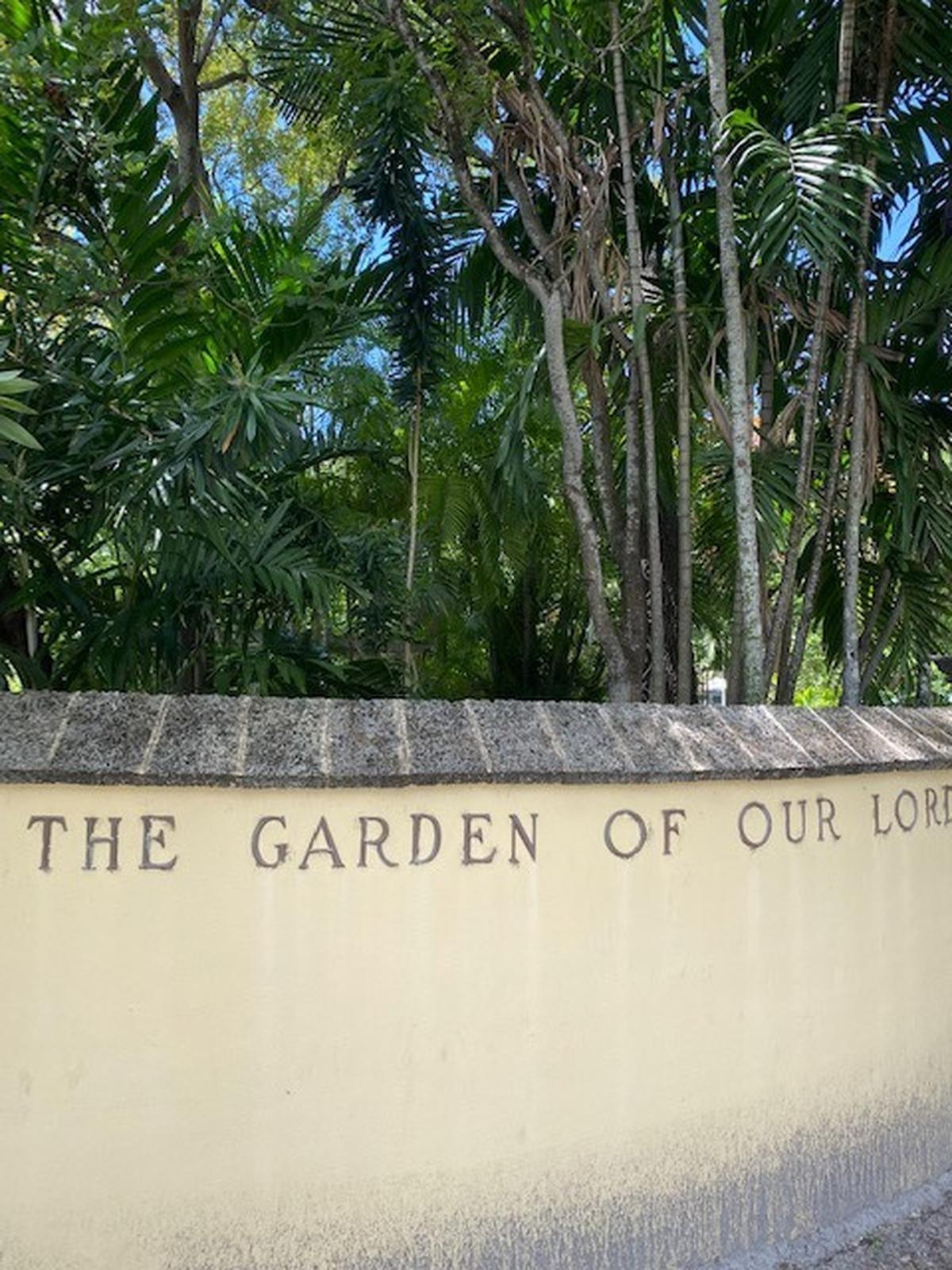
Bonnie wanted me to know that one of the historical sites in Coral Gables — an entire block that includes St. James Evangelical Lutheran Church, the adjacent Garden of Our Lord, and the Chrystal Academy School at 110 Phoenetia Ave., has been purchased by Century Home Builders and is scheduled to be demolished soon to make way for luxury housing and a new school.
I am one who is open to changes and progress. However, I am not for tearing down our traditions and historical sites. I believe some things are worthy of preserving.
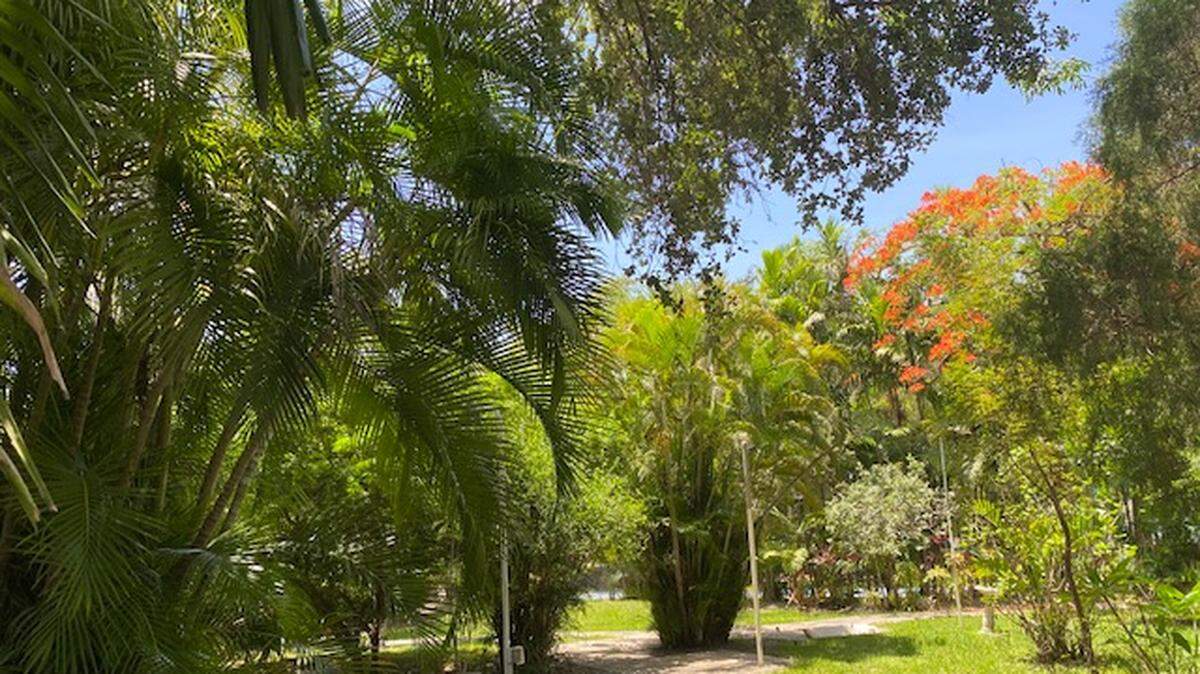
I met Bonnie recently for a tour of the Garden of our Lord. It was a peaceful, sunny day. with butterflies fluttering from bush to bush, and birds singing in nearby treetops. We took a stroll past a pool that was once a flowing fountain overlooked by a marble statue of Jesus. Since the property has been sold, the garden is now nearly overgrown, and the pool is filled with brown, stagnant water.
Walking the garden path, I imagined what it must have looked like back in the day. We walked past a dilapidated arch, where on any given weekend in its heyday, the garden would have been filled with wedding guests as a bride and groom spoke their vows of love to each other beneath the arch.
As we strolled, Bonnie pointed out bronze plaques on the ground in several spots. “The garden also served as a cemetery,” she said. “The remains of several pioneer Coral Gables residents are resting in this garden. What are they going to do with their remains when they demolish the garden?”
When I spoke to Sergio Pino, the owner of Century Home Builders, the company that bought the 1.47-acre property for $9.8 million in November 2021, he said, “Actually, there are only two urns in the garden containing cremated remains. I have spoken with the families of the deceased and we are working with them to find suitable places to relocate the remains.”
A Miami Herald story in June 1951 told of the groundbreaking ceremony for the Garden of Our Lord. The story stated that garden would “… contain trees, plants and shrubs of the Bible and other flowers and trees of religious significance. A memorial wall to enclose the garden, is to be constructed immediately.”
According to the garden’s history, many of its trees and shrubs were grown from seeds brought back from the Garden of Gethsemane in Jerusalem in the early 1950’s by Hazel Westby, who at the time, was a professor at the University of Miami and a Coral Gables resident. Westby is said to have been on leave from the University of Miami to teach at the American University in Beirut when she acquired the seeds.
Today, because of the seeds brought back by Westby, many trees in the garden date back over 2,000 years, to the time of Jesus’ crucifixion.
The garden once was home to a myrrh tree, and palm and almond trees. Near the pool, there are remnant of bulrush, the bush that was used to make the basket to hide the baby Moses.
“Which means that it is a biblical garden, “Bonnie said, “because many of the trees in the garden were grown from those seeds, and they can be traced back to the time when Jesus prayed in the Garden of Gethsemane.”
In addition to a being a biblical garden, the site was also known as a war memorial garden. William Carbeau, one of the founders of the garden, was the first to place a plaque on the garden’s interior wall in memory of his son Captain William Carbeau, Jr. who was killed in World War II in 1944, when he was 23. Other war memorial plaques soon followed, including one dedicated to a Coral Gables resident who survived the Bataan Death March.
There is a plaque dedicated to the Rev. George L. Fox, Rabbi Dr. Alexander Goode, the Rev. Clark V. Poling, and the Rev. John P. Washington, the four World War II chaplains, all of different denominations and faiths, who as the story goes, gave their life vests to four enlisted men when their ship, the ill-fated troop transporter The Dorchester was torpedoed off the coast of Greenland. The story says the chaplains went down with the ship, praying as it sank.
The garden also served to honor many other citizens, including Clara Maass, an army nurse who served during the Spanish American War. After she was discharged, Maass is said to have devoted her life to the development of vaccines. There is a plaque dedicated to her on the garden wall.
There is a plaque in memory of George E. Merrick, born June 3, 1886 and died March 26, 1942, which reads: “For Bringing the best in Spanish Art, Architecture and Culture to the New World, especially Florida. He was decorated by the King of Spain. For his view of the future, his love of the artistic and his development of Coral Gables, the City Beautiful, he will always be acclaimed by an appreciative citizenry.”
As I walked through the garden, it was hard to understand how anyone would not want to continue to preserve this block of land that holds so much of the city’s history, as well as the nation’s.
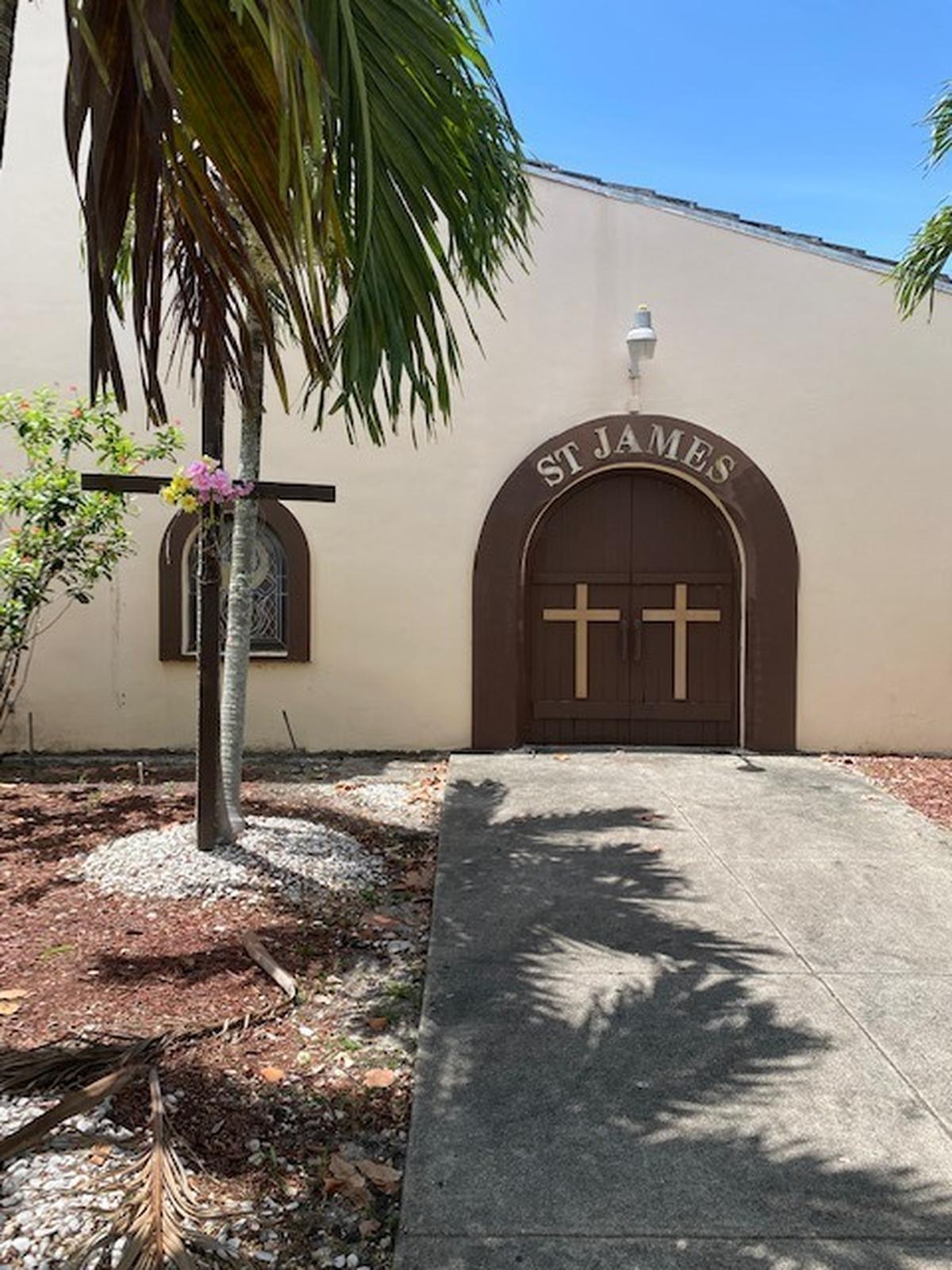
Pino said, “The property was for sale. And when I purchased it, there were only about 20 people attending the church. My plan is to build luxury condos on the property as well as a new school. It’s going to be beautiful.”
Construction is tentatively planned for 2023.
And while some in the community would like to see the church and garden remain, Pino said that won’t happen. He said he understands that the garden and church have a lot of sentimental value to the community, but he said, “We are also going to find a place for the plaques and other memories in the garden and the church.
“We are not going in there and move anything improperly. Everything we move will be done with the utmost respect. We will do this in cooperation with the church leaders and the community. We want to make sure that whatever the history of the property is will be handled with the utmost respect.”
Bea L. Hines can be reached at Bea.Hines@gmail.com
This story was originally published June 17, 2022 at 8:00 AM.