
We grew up amid the trials of segregation — but our families and hope sustained us
Whenever some people talk about how great the “good old days” were, I have a habit of going back to the days of my youth, when I lived in a segregated world. And I think, “Those days weren’t so good to people who look like me. And my mind usually would have flashbacks of some shameful times — like when Momma had to measure my foot with a piece of string for my new shoes because Negroes weren’t allowed to try on shoes or clothing in the Downtown department stores. Or when we children were told before leaving home, not to drink a lot of water because there was no clean public toilets for Negroes back then.
Oh, I could think of a thousand or more reasons why “the good old days” to some people were not very good for me and people who look like me. Growing in the land of the free, that was not so free to some of us. So, whenever I heard someone talk about the “good old days,” I always thought of something that reminded me of the bad, in the “good old days.” In doing so, I often let the bad days overshadow the good days.
Then, as my mom used to say, I “came to myself.” I thought about my life, and the genius of a race of people — my people — who had the unmitigated audacity to make an otherwise unbearable life beautiful for their children. I thought of how they taught us to live with dignity, even when we had to ride in the back of the bus on public transportation, or when we had to go to the back door of a Royal Castle Restaurant to buy food if we got hungry while away from home.
I thought about how we, a race of people, had to live with putdowns about our Blackness and thick facial features and nappy hair. And I thought about how our parents taught us to take pride in the way we looked; that we were indeed beautiful. I thought of the hope we hung on to, even when it seemed that all hope had died. And how we were taught to persevere through the hardest of times, and to walk with uplifted heads and squared shoulders.
Talking about the good old days? Those times — growing up in a segregated world and yet having the hope that life would one day be better, that all Americans would, indeed, be free to pursue our own place in this country — turned out to be some of the best days of our lives. Those days and times challenged us to be the best that we could be. And while it is not a good thing to oppress others, even so, a lot of good things came out of the era of Jim Crow.
‘No crystal stair’
For example, growing up in Miami’s Overtown and Liberty City, we young Blacks were happy. We lived in a colorful world, where our parents and schoolteachers and the neighbors who often served as our surrogate parents, loved us, and sheltered us from any harm that might come our way in the absence of our natural parents. That was a good thing.
We knew, because our parents told us, that in the words of Langston Hughes’ poem, “Mother to Son,” life for them hadn’t “… been no crystal stair.” And we knew it wouldn’t be for us, either. But with the hope that was instilled in us, we learned to make best out of a dismal situation.
Like our parents and fore-parents, we learned to keep on keeping on. We didn’t have to look far to see that things were different for Blacks than they were for our white counterparts. But we were determined to live a joyful life. As youngsters, we looked to our parents to provide for us and to help us along the way. To them (our parents/surrogates, etc.) we were the hope of the future. These work-worn, dedicated men and women, many of whom never had a shot of an education, insisted that we put education high on our priority list. They told us to reach for the stars, when they knew that there was a good chance that we would slip, and perhaps land on the moon, instead. But the moon was good, too. When we went to school, many of our dedicated Black teachers told us the same thing. And many of us believed.
Looking back to the neighborhoods I grew up in, there was always someone to encourage me, to tell me that things would get better for the Negro, as we called ourselves back then. Somehow, even with all the ugliness around us, we youngsters believed the hype. Never mind that all our public facilities were separate and not equal. We had to believe times would get better. To not believe meant that we were already defeated.
So, when I think about my own good old days, I can look back on a happy childhood. We knew the world outside our circle was often cold and hateful. But for us, there was always Sunday school, and Christmas and Easter programs to participate in at my church. And there was the Junior Choir. What music-loving child would not want to sing in the Junior Choir?
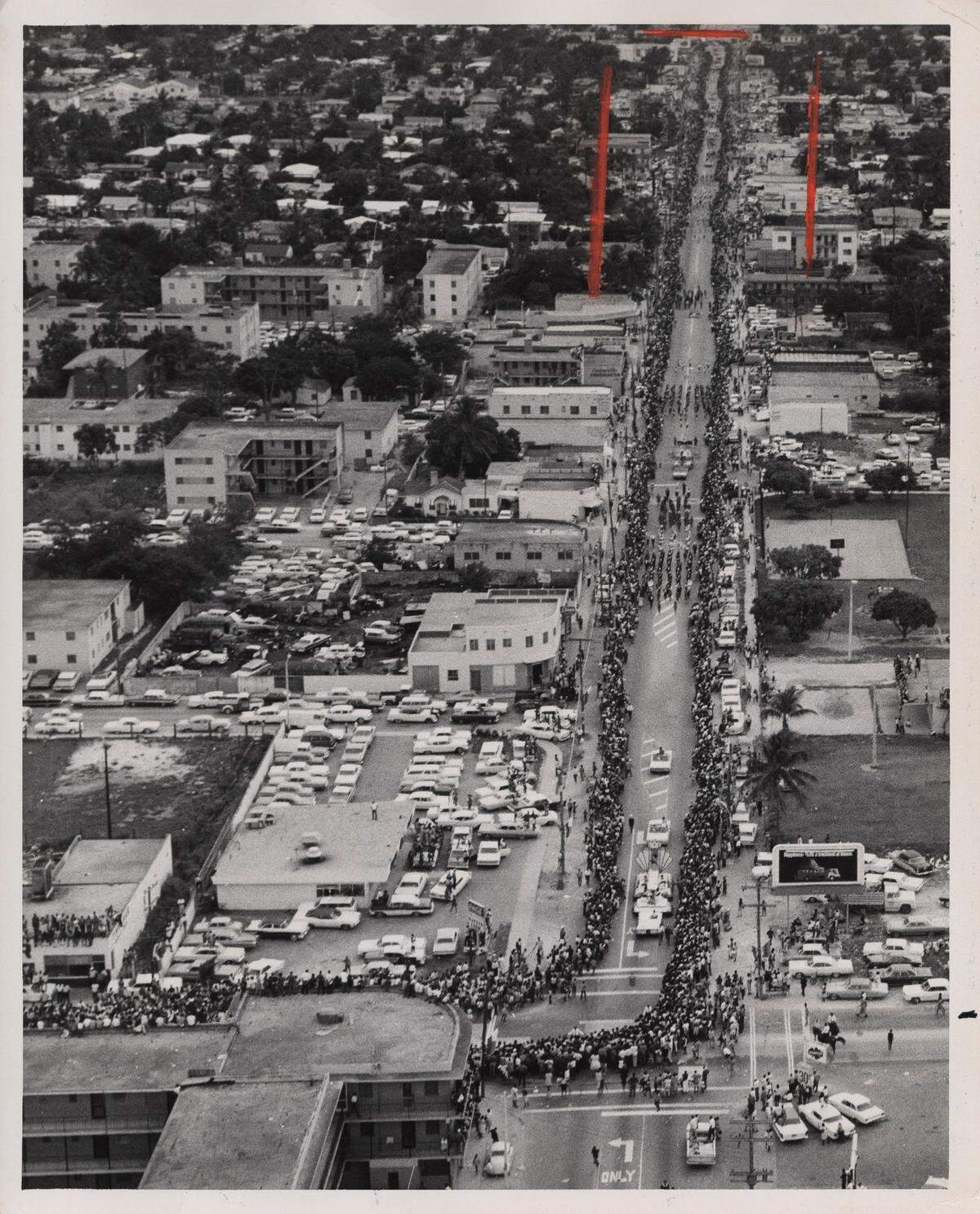
Memories of being baptized, watching Orange Blossom Classic
My childhood happy memories included a cold February Sunday morning in 1951, when I was 13 and Rev. James Brown and Mother Huey took me to an Opa-locka rock pit to be baptized. I can still hear Mother Huey singing in her deep contralto voice, “Ta-a-a k-e me to the wa-a-a-a-tar…”, and me coming up out of the icy water into her loving arms as she wrapped me in a warm blanket.
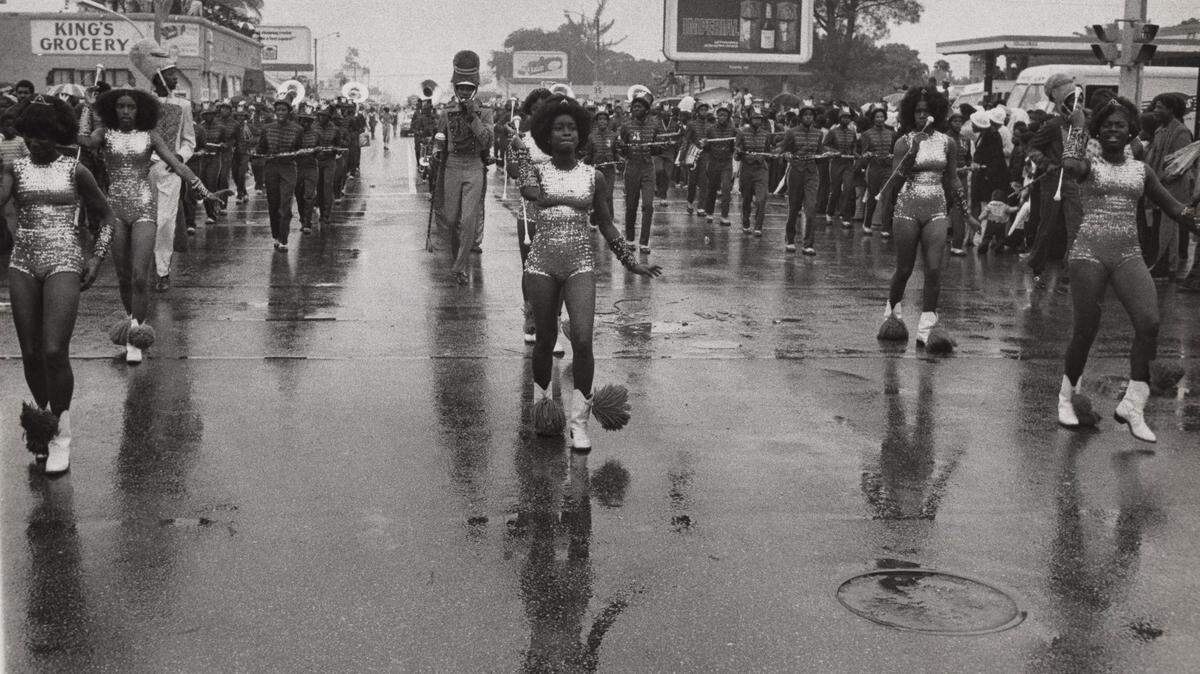
How could I not remember the jubilance of the Orange Blossom Classic weekend, when the then-Florida A&M College football team was allowed to play in the old Orange Bowl Stadium. Back, then, it was the only time Negroes were allowed in the stadium. And the Negro community made that weekend into a full-fledged carnival time. We dressed up in our finest to go the Orange Bowl Stadium to watch the football game and to cheer loudly when the famous Marching 100 FAMC Band took the field at halftime. What a show!
Don’t get me wrong. Life for the Negro wasn’t easy. We had to protest and pray to get the right to vote. Some (whites, too) even died so that we could exercise our right. We had to sit-in and wade-in, to get the right to be served along with whites at some restaurants, and swim in the waters off the coast of this God-given land. Some of us had to endure bullying from white adults as we tried to enroll in all-white schools for a chance at an equal education.
These were some of my thoughts recently when I was asked to participate in an oral history presentation about the Black Miami of my youth. As I began talking about the days growing up Black in Miami, I found that there were many “good old days” for us, too. But they were buried amongst the painful stories of our plight during the Jim Crow era.
So, while life outside our little villages wasn’t always very pleasant for us Blacks, looking back, I can see that while we had some “bad old days,” we also had some “good old days,” too. I am so thankful to our parents and foreparents who taught us how to find our own happiness in an often-cruel world. By doing so, we have created our own “good old days.”
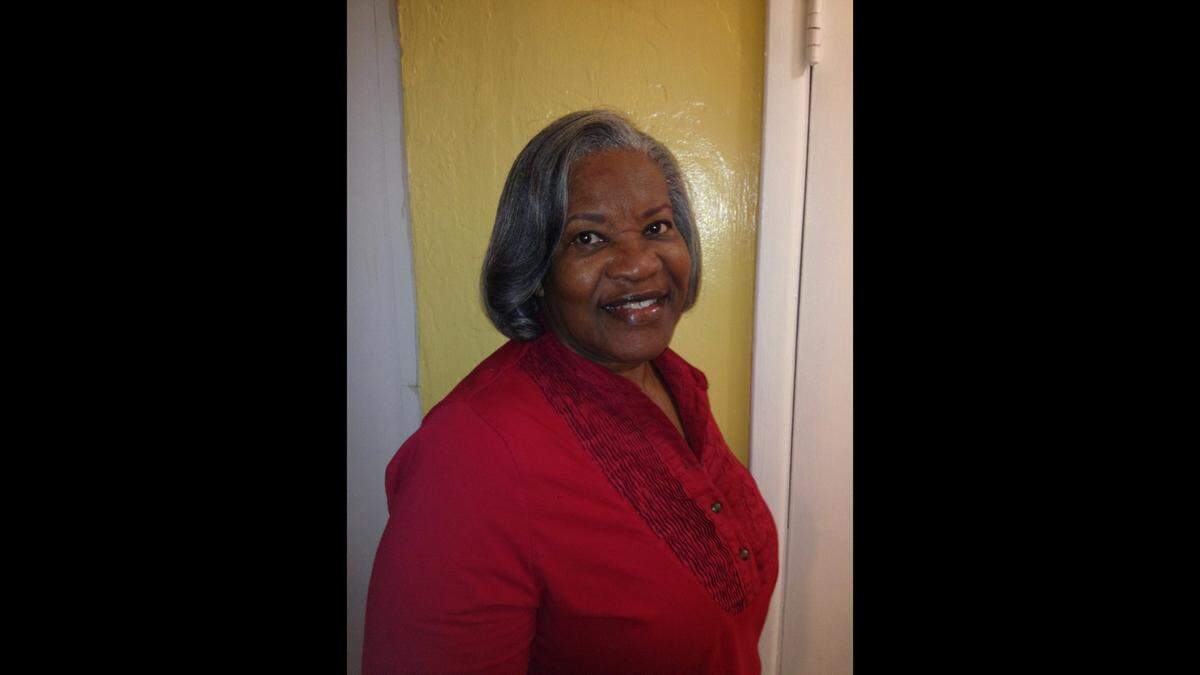
Bea Hines can be reached at bea.hines@gmail.com