
With virtual outreach to kids with diverse backgrounds, program fosters unity
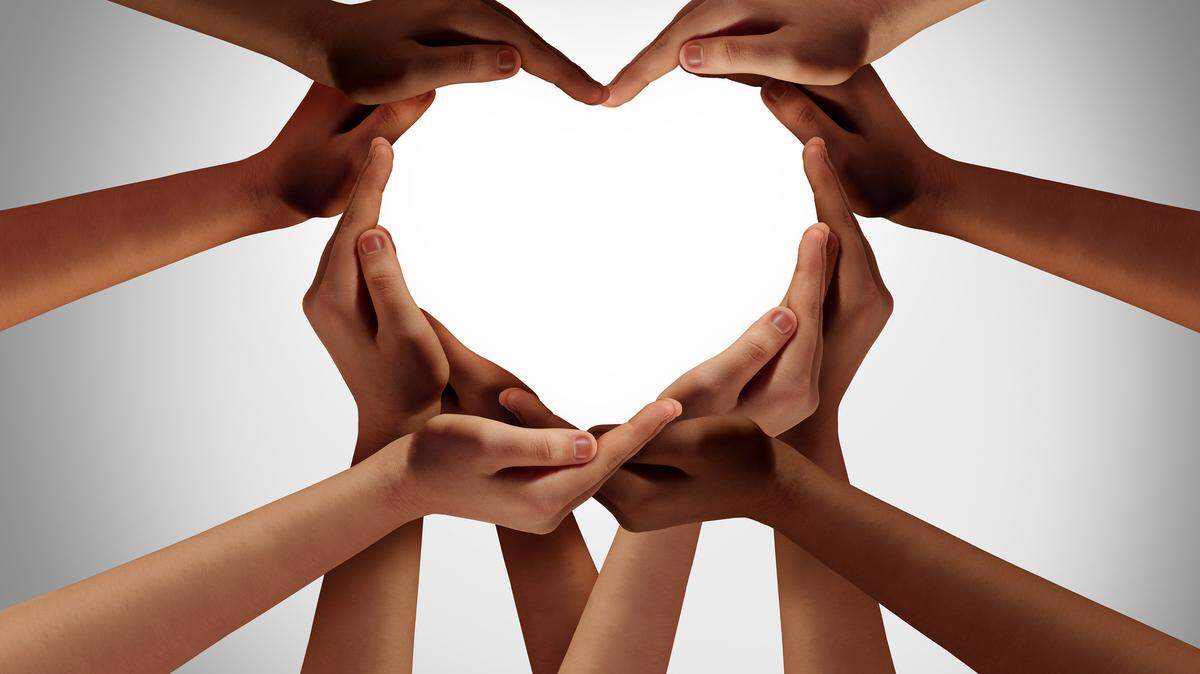
Monday, Jan. 31, will mark the last day of the first month of the new year. Already, I am saying, “My, how fast the time flies.” As I sit thinking about time, and how it does not wait for us to make up our minds about when is the right time to do the right thing; about how to respect and treat others; about making every moment, minute, and hour we are blessed with count for something, I feel a bit guilty.
Perhaps it is because I am living in the evening of my own life, that I am taking the time to pay more attention to the things that I leave undone every day. I am concerned that, perhaps I haven’t reached out enough to those who are different from me; to get to know them and to understand that although our cultures and the color of our skin might be different, we really are more alike than not. We only get to know and understand this when we take the time to reach out to someone different from us.
These thoughts about our differences came to my mind afresh recently, when I spoke to a friend Diane Tannenbaum.
As we discussed the problems of the world and wondered aloud to each other what we could do to bring people of all races together, Diane told me about a friend of hers — Anita Meinbach — who thinks very much like we do, and has already started as program called, “Building Bridges: Joining Hands.” Meinbach is a former associate professor at the University of Miami’s School of Education and Human Development.
Mission: to create a world of understanding
The program’s mission is “…to create a virtual outreach program to unite children and young adults of different diverse backgrounds — cultural, religious, ethnic — through authentic learning opportunities that will allow them to engage and know one another.” Its vision is “To create a ‘Culture of kindness’ — a world of understanding, acceptance and appreciation for all of humanity”
According to information from Meinbach about the program, which is supported by the National Council of Jewish Women Kendall, as one of its initiatives, the idea was born after the neo-Nazi demonstrations in Charlottesville in 2017, the murders at the Tree of Life Synagogue in Pittsburg in 2018, and the attacks at two mosques in New Zealand in 2019. Meinbach called the violent incidents “a clarion call for change”, but armed guards in schools and houses of worship are not the only answer.
In her printed document Meinbach said, “We must begin conversations to learn about the hopes fears, and perceptions of one another in order to find our commonalities and respect our differences. And we must start with the children.”
I agree with Meinbach’s vision. It is something I have said, and have tried to put in action, for years. As the Black History Program chairwoman at my church, I have brought in speakers from other cultures to speak to our children and congregation. Black History, to me, is not only telling our youth the stories of our struggles and successes. It is also about how we have managed to get along with people in cultures that are different from ours.
Understanding doesn’t always extend both ways
One of the reasons Blacks like me found it so much easier to break down race barriers is because we knew so much about the people who did not want us to integrate. After all, many, like me, were now working side-by-side with people we had once served in domestic roles. We knew their religion and their habits, and we knew their lifestyles.
The trouble is, although many of us were servants, the people we served never really got to know us. They allowed us to cook their food, nurse their babies, and clean their houses. While we got to know them, they never got to know us. To many of the people we served, we were still fresh off the slave plantations. They could never see us as equals. Which is one reason why integration was such a scary thing to so many.
Still, I have always felt that if the people I had served, had really gotten to know me as a person, their life, and my life would have been a lot better off. You can’t go to synagogue with someone, hear the heartfelt prayers and chants and the ageless stories from the Torah and not feel better about that person. It’s the same with sitting to break bread with a Muslim or attending Mass with a Catholic. Attending a worship service with someone, and saying grace over a meal, helps you to see that person’s heart.
While “Building Bridges…“ is a school-based initiative to unite students of diverse backgrounds through authentic learning opportunities, its vision of a “Culture of Kindness” is something that all ages can relate to. The program was inspired by the words of Dr. Martin Luther King, Jr.:
“… men hate each other because they fear each other. They fear each other because they don’t know each other, and they don’t know each other because they don’t communicate with each other, and they don’t communicate with each to each other because they are separated from each other.”
Meinbach believes that teachers’ lesson plans are not enough to change minds and hearts: “It is vital that children have the opportunity to meet and better understand others who may not look as they look, pray as they pray, or see the world differently — through a lens shaped by their life experiences.”
Fostering connections among schoolchildren
Using the Zoom technology, “Building Bridges” promotes meaningful interactions by facilitating long-distance, and even global, connections between schools and classrooms, whose students may never have met or known others who represent cultural, religious, and ethnic groups different from their own.
A pilot study, using three schools in South Florida, has been conducted. The schools involved were a Muslim elementary and middle school, a Catholic school, and a Jewish day school. Two fifth-grade classrooms from the Jewish school were paired with the same grade-level students from either the Catholic school or the Muslim school.
According to information from “Building Bridges…” so far, observations and student comments have helped the organization to recognize the project’s impact. While at first the students at the Jewish school were not so eager to meet students in the Muslim school, they later couldn’t wait to have the Zoomed conversations with their new friends. That is because during the conversations the students shared their feelings about being different, such as girls in the Muslim school wearing a hijab, boys in the Jewish and Muslim schools wearing head coverings.
At first, Meinbach said one student asked, “Why would we want to meet them — they hate us?” That has all changed now, she said. “They have started to get to know each other on a personal level. And it is so heartwarming to hear the kids, who once hated each other talk about the different holidays and how they are now friends.”
She said the conversations helped the youngsters see their similarities as well as their differences. Through the conversations, the youngsters were also able to see their common humanity.
Hopefully those children who are fortunate enough to participate in the “Building Bridges…” program will somehow, be able to pass what they learn along to their parents. And their parents to their friends. And so on and so forth…
.JPG "IMG_hines_2_1_3RJQLF6J_L623874409 (1).JPG")